Introduction
There is something magical about discovering a wine that feels like a well-kept secret.
Not because it is expensive or impossible to find, but because it quietly exceeds every expectation. It’s the bottle recommended by the owner of a neighborhood wine shop, the unexpected favorite at a tasting, or the wine that makes you pause after the first sip and wonder, “Why haven’t I heard more about this?”
Carignan is one of those wines.
For decades, this historic Mediterranean grape lived in the shadow of more fashionable varieties. While Cabernet Sauvignon, Pinot Noir, and Syrah became household names, Carignan earned an unfortunate reputation as a workhorse grape, valued more for quantity than quality. It was planted widely across southern Europe, often producing simple wines destined for everyday tables rather than special occasions.
Yet beneath that reputation lay something remarkable.
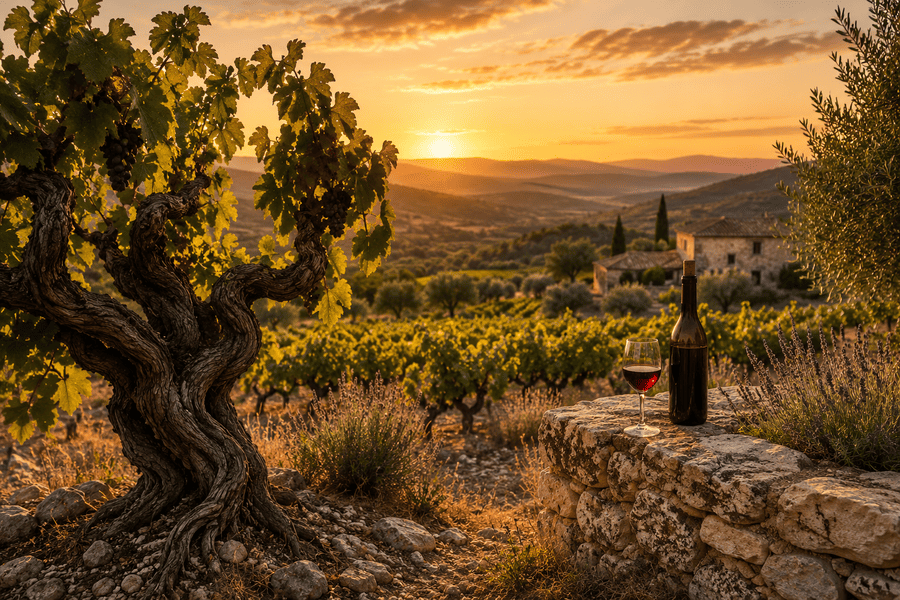
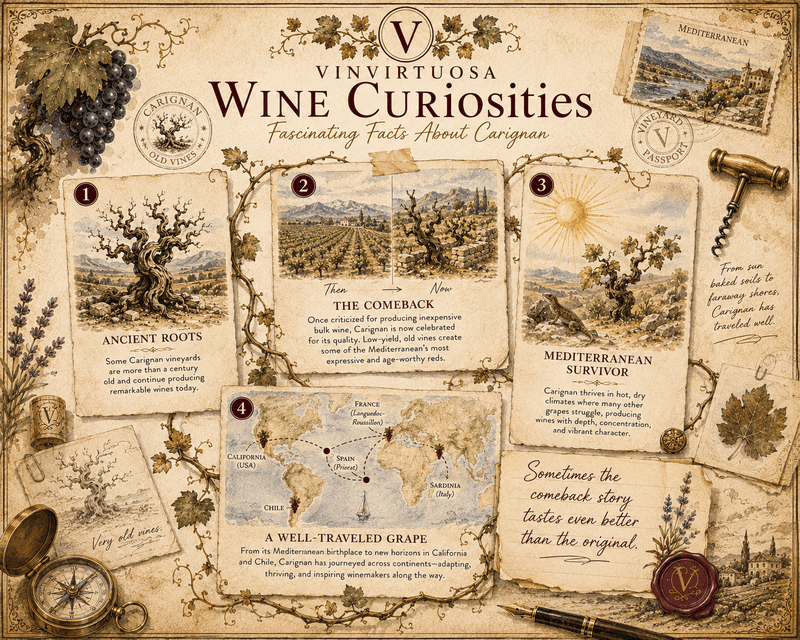
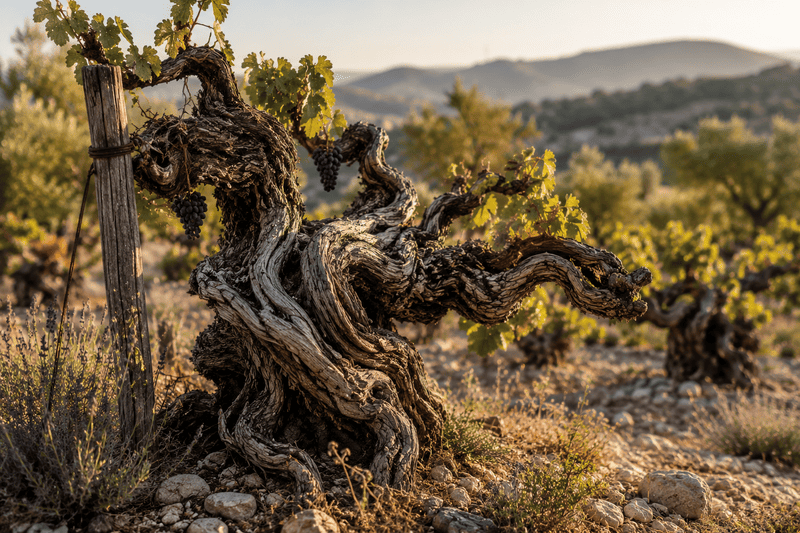
Scattered across the sun-drenched landscapes of southern France, northeastern Spain, Sardinia, and other Mediterranean regions are ancient Carignan vines—some more than a century old. Their thick, twisted trunks have endured scorching summers, relentless winds, and generations of growers who recognized that age, patience, and careful farming could transform this humble grape into something extraordinary.
Today, a new generation of winemakers is proving what those old vineyards have quietly known all along.
When yields are kept low and the fruit is treated with care, Carignan produces wines bursting with dark fruit, vibrant acidity, savory herbs, and a rustic elegance that captures the warmth and character of the Mediterranean. It is a wine that feels both timeless and refreshingly modern—a reminder that some of the world’s greatest discoveries are simply waiting to be rediscovered.
If you’ve never explored Carignan before, consider this your invitation. Whether you’re looking to expand your palate beyond familiar varieties or searching for exceptional value from historic vineyards, this remarkable grape offers a journey well worth taking.
What Is Carignan?
Carignan is one of the Mediterranean’s oldest and most resilient red grape varieties, celebrated today for producing expressive wines with bright acidity, firm structure, and flavors that reflect the rugged landscapes where it thrives.
Although many wine lovers associate Carignan with southern France, its story begins just across the border in northeastern Spain. Most historians believe the grape originated around the town of Cariñena in Aragón, where it has been cultivated for centuries before spreading throughout the western Mediterranean. As vineyards expanded, Carignan found an especially welcoming home in southern France, becoming one of the region’s most widely planted red grapes during the twentieth century.
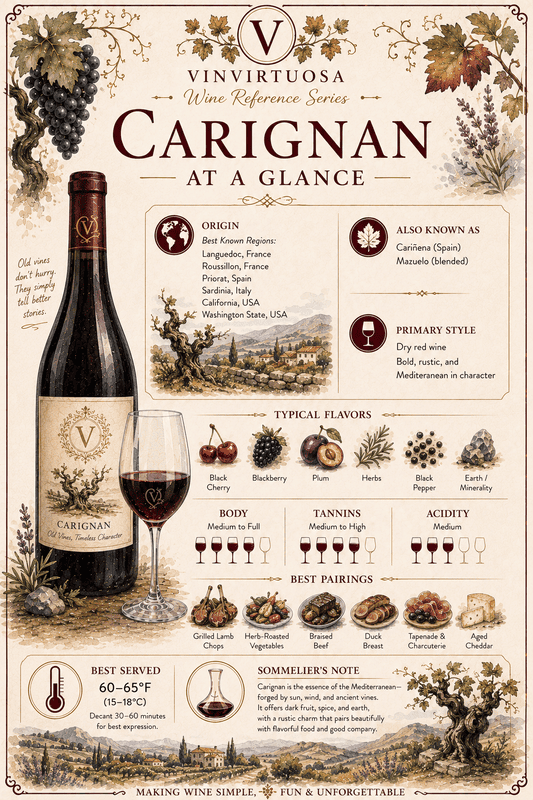
Today, you’ll encounter Carignan under several names depending on where you are in the world. In Spain it is often called Cariñena or Mazuelo, while in Sardinia it is known as Carignano. Despite the different names, each reflects the same hardy variety that has adapted beautifully to warm, dry climates.
Carignan flourishes where long, sunny growing seasons allow its naturally high acidity to remain fresh while the grapes develop deep color and concentrated flavors. It performs especially well in regions shaped by Mediterranean influences, where warm days, cooling breezes, and rocky, well-drained soils encourage balanced ripening.
Today, some of the world’s most exciting expressions of Carignan come from:
- Southern France, particularly the regions of Languedoc-Roussillon and Corbières
- Spain, including Aragón, Priorat, and Catalonia
- Sardinia, Italy
- California, especially from historic old-vine vineyards
- Chile
- Morocco and parts of North Africa
So why does Carignan matter?
Because it represents one of wine’s most inspiring comeback stories.
For many years, Carignan’s reputation suffered because it was planted for quantity rather than quality. High-yield vineyards produced inexpensive bulk wines, causing many people to overlook the grape’s true potential. As consumer tastes changed, countless vineyards were uprooted and replaced with more fashionable varieties.
Fortunately, not every vineyard disappeared.
Many growers chose to preserve their oldest Carignan vines, believing they still had something special to offer. Those decisions are paying off today. Winemakers who farm these mature vineyards with lower yields and thoughtful techniques are crafting wines of remarkable depth, freshness, and complexity—bottles that continue to surprise critics and delight curious wine lovers alike.
In many ways, Carignan embodies everything that makes the world of wine so rewarding. It reminds us that reputation isn’t always reality, that patience often reveals hidden beauty, and that some of the most memorable wines are the ones we least expect to discover.
Why Carignan Deserves a Second Look
Not every great wine begins with a glamorous reputation.
Some earn their place through patience, perseverance, and a second chance.
Carignan is one of those grapes.
During much of the twentieth century, particularly after World War II, Carignan became one of the most widely planted red grape varieties in southern France and parts of Spain. The demand for affordable everyday wine was enormous, and Carignan seemed perfectly suited to meet it. It was vigorous, dependable, and capable of producing impressive harvests, even in hot, dry climates where other varieties struggled.
At first glance, that sounds like the recipe for success.
In reality, it became Carignan’s greatest challenge.
When vineyards are pushed to produce exceptionally high yields, quality almost always suffers. Instead of concentrated fruit and complex flavors, the grapes often ripen unevenly, resulting in wines that can taste thin, rustic, or overly acidic. For decades, Carignan became associated with inexpensive bulk wine rather than carefully crafted bottles meant to showcase the grape’s true character.
As consumer tastes evolved through the 1970s and 1980s, many growers began replacing Carignan with varieties that were viewed as more fashionable or prestigious. Vineyards that had produced wine for generations were uprooted, and for a time, it seemed as though Carignan’s story might quietly fade into history.
Fortunately, not everyone gave up on it.
A growing number of winemakers looked beyond the grape’s reputation and focused instead on the remarkable vineyards that remained. Many of these vines were already fifty, seventy-five, or even more than one hundred years old. Their deep root systems reached far into rocky soils in search of water and nutrients, naturally producing fewer grape clusters with greater concentration and balance.
Those old vines revealed a completely different side of Carignan.
Instead of simple, rustic wines, they produced bottles with vibrant fruit, lively acidity, savory complexity, and an unmistakable sense of place. Careful pruning, lower yields, sustainable farming, and thoughtful winemaking transformed the grape from a forgotten workhorse into one of the Mediterranean’s most exciting rediscoveries.
Today’s best Carignan wines celebrate restraint rather than abundance. Rather than chasing quantity, producers focus on vineyard health, gentle extraction, and preserving freshness. Many also ferment with whole clusters or age the wines in neutral oak or large wooden casks, allowing the fruit and the vineyard to remain the stars of the glass instead of overwhelming them with heavy oak influence.
The result is a wine that feels authentic.
It tells the story of windswept hillsides, ancient vineyards, and generations of growers who believed this grape deserved another opportunity to prove itself.
Perhaps that’s why Carignan has become such a favorite among adventurous wine lovers. It offers something increasingly rare in today’s wine world—a chance to discover exceptional quality without following the crowd.
Sometimes, the wines worth remembering are the ones that quietly waited for the world to notice them.
What Does Carignan Taste Like?
Carignan is often described as bold and rustic, but those words only tell part of the story.
At its best, Carignan combines vibrant freshness with rich, sun-ripened fruit, creating wines that feel energetic rather than heavy. It has a wonderful ability to balance power with brightness, making it equally enjoyable alongside a hearty meal or during a leisurely evening with friends.
Like many grape varieties, its personality varies depending on where it is grown and how it is made. Younger vines or higher-yield vineyards may produce simpler wines with straightforward fruit, while old-vine Carignan reveals impressive depth, elegance, and complexity.
Appearance
Carignan typically displays a deep ruby color that often borders on garnet as it matures. Young examples are vivid and vibrant, while older bottles may develop brick-red hues around the rim, hinting at their age and evolution.
Aromas
Bring the glass to your nose and you’ll often discover an inviting mix of ripe dark fruit layered with distinctly Mediterranean character.
Common aromas include:
- Blackberry
- Black cherry
- Plum
- Raspberry
- Dried herbs
- Rosemary
- Thyme
- Black pepper
- Licorice
- Violet
- Earth
- Leather and tobacco in mature wines
These savory herbal notes are one of Carignan’s defining characteristics, giving the wine a sense of place that immediately recalls warm hillsides scented with wild herbs and sun-baked stone.
Palate
On the palate, Carignan is wonderfully expressive.
Expect generous flavors of blackberry, black cherry, plum, and dark raspberry supported by notes of cracked pepper, dried herbs, baking spices, and subtle earthy undertones. Older or carefully aged examples often develop hints of leather, cedar, dried fig, and forest floor, adding additional layers of complexity.
Despite its generous fruit, Carignan rarely feels jammy or overly sweet. Its naturally high acidity keeps the wine vibrant and refreshing, allowing each sip to remain lively from beginning to end.
Acidity
One of Carignan’s defining strengths is its naturally high acidity.
This bright acidity brings freshness to the wine, balances its ripe fruit, and makes it exceptionally food-friendly. It’s also one of the reasons quality Carignan can age gracefully, developing additional complexity over time.
Tannin
Carignan generally offers medium to medium-plus tannins.
When the fruit is fully ripe and carefully handled, those tannins become pleasantly firm rather than aggressive, providing enough structure to support hearty dishes without overwhelming the palate.
Alcohol
Most Carignan wines fall between 13% and 15% alcohol, depending on the climate and the producer’s style.
Warm Mediterranean regions often produce fuller-bodied examples with slightly higher alcohol, while cooler sites or earlier harvests emphasize freshness and lift.
Body
Most quality Carignan is medium- to full-bodied.
It has enough richness to satisfy lovers of structured red wines while maintaining an energy that keeps each sip inviting rather than heavy.
Finish
A well-made Carignan often finishes with lingering notes of dark fruit, savory herbs, black pepper, and subtle minerality. The bright acidity leaves the palate refreshed, encouraging another sip and making the wine remarkably versatile at the table.
Perhaps the most surprising thing about Carignan is its balance. It offers generous fruit without becoming overpowering, freshness without sharpness, and rustic charm without sacrificing elegance. That combination is exactly why so many wine professionals and curious enthusiasts have fallen in love with this once-overlooked Mediterranean classic.
Where Carignan Calls Home
Some grape varieties seem inseparable from a single place. Mention Pinot Noir, and many people think of Burgundy. Say Malbec, and Argentina quickly comes to mind.
Carignan tells a different story.
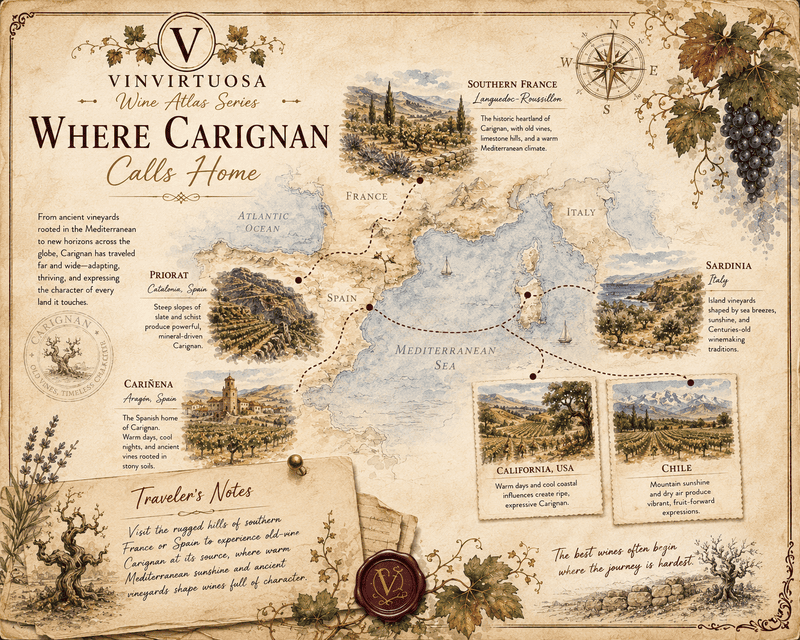
It is a grape that has traveled widely, adapting to diverse landscapes while never losing its Mediterranean soul. Wherever warm sunshine, cooling breezes, and well-drained soils come together, Carignan has an uncanny ability to produce wines with freshness, character, and remarkable food-friendly balance.
Although its expressions vary from region to region, they all share a sense of authenticity—wines shaped as much by the people who farm them as the places they call home.
Southern France
If there is one region that defines modern Carignan, it is southern France.
Stretching from the rugged hills of the Languedoc to the dramatic vineyards of Roussillon and Corbières, this landscape is a tapestry of rocky hillsides, fragrant garrigue, olive groves, and vineyards overlooking the Mediterranean Sea.
For generations, Carignan was planted here primarily for quantity. Today, however, many of the region’s oldest vines have become some of its greatest treasures.
Low-yielding old-vine Carignan from southern France often displays exceptional concentration alongside remarkable freshness. Expect flavors of blackberry, plum, black olive, cracked pepper, and the unmistakable aromas of wild rosemary, thyme, and lavender carried on warm Mediterranean breezes.
These are wines that feel rustic in the best possible way—honest, expressive, and deeply connected to their landscape.
Spain
Although Carignan is closely associated with France today, its roots trace back to Spain.
Known locally as Cariñena or Mazuelo, the grape continues to thrive in regions such as Aragón, Priorat, and Catalonia.
In Priorat, where steep slate vineyards challenge both vines and winemakers, old-vine Carignan contributes remarkable depth and mineral complexity to some of Spain’s most celebrated wines. Here, the grape often produces concentrated flavors of dark berries, licorice, graphite, and smoky spice while maintaining the vibrant acidity that defines its character.
Spanish Carignan beautifully demonstrates how powerful and elegant this variety can become when grown with patience and restraint.
Sardinia
Cross the Mediterranean to the Italian island of Sardinia and you’ll meet Carignan under another name: Carignano.
The island’s coastal vineyards benefit from abundant sunshine, cooling sea breezes, and sandy soils that have protected many vines from phylloxera for generations. These unique growing conditions often produce wines that feel softer and more generous than their French counterparts, with ripe black fruit, Mediterranean herbs, and silky textures balanced by refreshing acidity.
Few places illustrate the harmony between wine and landscape quite like Sardinia, where Carignano feels perfectly at home alongside fresh seafood, grilled lamb, and rustic island cuisine.
California
Carignan may not be the first grape that comes to mind when thinking about California wine, but hidden among the state’s historic vineyards are remarkable old-vine plantings dating back decades.
Many of these vineyards survived because they continued producing fruit long after newer varieties became fashionable. Today, innovative winemakers are rediscovering their potential, crafting vibrant, balanced wines that showcase bright fruit, moderate alcohol, and impressive freshness.
California Carignan often leans toward ripe blackberry, raspberry, and plum, complemented by subtle spice and supple tannins. These approachable expressions make an excellent introduction for wine lovers exploring the grape for the first time.
Chile
Chile’s long, dry growing season has proven to be another ideal home for Carignan.
In regions such as Maule, old vineyards planted by earlier generations have found renewed appreciation among modern producers dedicated to preserving historic vines and traditional farming methods.
Chilean Carignan is frequently energetic and structured, offering vivid black fruit, firm acidity, and earthy complexity. Many examples strike a wonderful balance between New World generosity and Old World freshness, making them especially rewarding at the dinner table.
Morocco and North Africa
Carignan’s remarkable drought tolerance has also helped it flourish across parts of North Africa, particularly Morocco.
The warm climate allows the grapes to ripen fully while retaining the acidity that keeps the wines lively and balanced. Although many of these wines remain relatively undiscovered outside the region, they demonstrate just how adaptable Carignan can be.
Wherever it grows, one thing remains consistent: Carignan reflects its surroundings with honesty.
From windswept French hillsides to volcanic Mediterranean islands and historic vineyards across the New World, this is a grape that tells the story of place in every glass.
Food Pairings
Few red wines feel as naturally at home around the dinner table as Carignan.
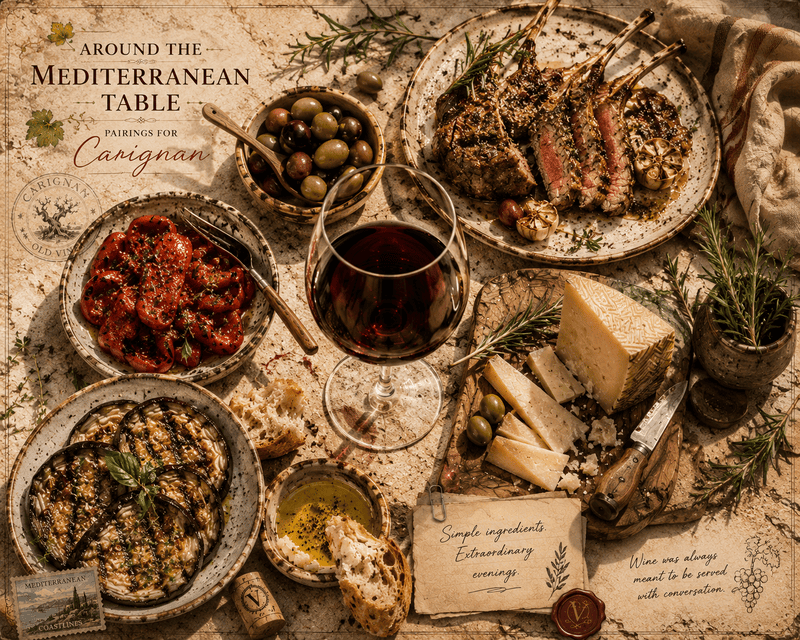
Its vibrant acidity cuts through rich dishes, while its savory herbal notes echo the flavors of Mediterranean cooking. Firm but approachable tannins provide enough structure for hearty meals without overwhelming more delicate ingredients, making Carignan one of the most versatile food wines you’ve probably never considered.
Rather than searching for elaborate pairings, think simple, seasonal, and deeply satisfying.
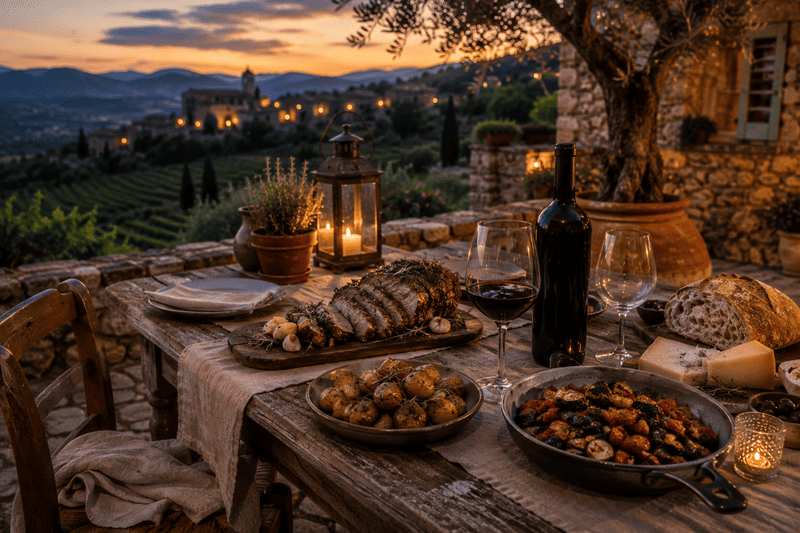
Imagine a rustic wooden table outdoors on a warm evening. Fresh herbs scent the air, olive oil glistens on roasted vegetables, and friends linger over conversation long after the meal has ended.
That is the world Carignan was made for.
Roast Lamb
If there is one classic pairing, it is roast lamb.
Whether seasoned simply with garlic and rosemary or slow-roasted until meltingly tender, lamb highlights Carignan’s dark fruit while complementing its earthy, herbal character. The wine’s acidity refreshes the palate between bites, while its tannins stand comfortably alongside the richness of the meat.
Duck
Duck offers another beautiful partnership.
The richness of the meat and the crisp, flavorful skin balance perfectly against Carignan’s bright acidity and peppery spice. A cherry reduction or roasted figs can further emphasize the wine’s dark fruit profile, creating a pairing that feels elegant without becoming overly formal.
Ratatouille
One of the joys of Carignan is how beautifully it pairs with vegetables.
A classic ratatouille filled with eggplant, zucchini, tomatoes, peppers, garlic, and herbs practically mirrors the wine’s own Mediterranean personality. Rather than competing with the dish, Carignan feels like a natural extension of its flavors.
Slow-Cooked Stews
Whether it’s a Provençal beef stew, hearty lamb casserole, or rustic vegetable braise, slow-cooked dishes bring out Carignan’s comforting side.
As the wine opens in the glass, its savory notes become increasingly expressive, weaving seamlessly into the herbs, spices, and richness of the meal.
Roasted Vegetables
Roasted eggplant, mushrooms, peppers, onions, squash, and carrots develop sweet, caramelized flavors that beautifully complement Carignan’s vibrant fruit and earthy undertones.
A drizzle of olive oil, fresh thyme, and flaky sea salt is often all that’s needed to create a wonderfully satisfying pairing.
Hard Cheeses
Aged cheeses such as Manchego, Pecorino, Comté, or aged Gouda provide enough richness to balance the wine’s lively acidity while allowing its fruit to remain the star.
For an effortless gathering, pair a bottle of Carignan with a simple cheese board featuring cured meats, olives, roasted almonds, and crusty bread. It captures the relaxed spirit of Mediterranean entertaining beautifully.
Grilled Meats
Carignan truly comes alive alongside food cooked over an open flame.
Grilled sausages, herb-marinated pork, steaks, and even smoky vegetables develop charred flavors that harmonize with the wine’s peppery spice and subtle earthiness. It’s the kind of pairing that feels equally appropriate at an elegant outdoor dinner or a casual weekend barbecue.
A Final Pairing Thought
Perhaps the greatest strength of Carignan isn’t any single food pairing—it’s the atmosphere it creates.
This is a wine that encourages lingering conversations, shared meals, and unhurried evenings. It reminds us that some of life’s most memorable moments don’t come from elaborate recipes or rare ingredients, but from gathering around a table with good food, good company, and a bottle that has its own story to tell.
Why Old Vines Make Such a Difference
In wine, age does not automatically guarantee greatness.
An old vine can still produce ordinary wine if it is poorly farmed, planted in the wrong place, or treated carelessly in the cellar. But when an old vineyard is healthy, well-tended, and rooted in the right soil, it can offer something deeply compelling: concentration, resilience, and a sense of quiet wisdom that younger vines often have not yet developed.
Carignan is one of the grapes where this matters most.
Because the variety was once planted so widely for high-volume wine production, many of its best modern examples come from vineyards that survived a less glamorous chapter in wine history. These old vines were not preserved because Carignan was fashionable. They were preserved because growers knew the vineyards still had something valuable to say.
Over time, a vine changes.
Young vines are vigorous. They often produce generous canopies, plenty of fruit, and a certain straightforward energy. Older vines, by contrast, tend to become more naturally balanced. Their root systems reach deep into the earth, drawing water and nutrients from layers of soil that younger vines may not yet access. They are often better equipped to endure drought, heat, and challenging growing seasons.
Most importantly, old vines usually produce fewer grapes.
That may sound like a disadvantage, but for quality wine, lower yields can be a gift. When a vine produces fewer clusters, its energy is concentrated into a smaller amount of fruit. The grapes may develop deeper color, more intense flavor, and greater structural balance. In the case of Carignan, this can mean the difference between a simple rustic red and a wine with dark fruit, herbal complexity, savory depth, and a long, memorable finish.
This is one reason old-vine Carignan can feel so different from the grape’s old bulk-wine reputation.
Instead of thin, sharp, or overly rugged wines, carefully farmed old vines can produce Carignan with richness and freshness at the same time. The fruit feels concentrated, but not heavy. The acidity remains vivid. The tannins provide structure without overwhelming the wine. The savory notes—wild herbs, black olive, pepper, earth, leather—gain dimension.
There is also something emotionally compelling about old vines.
These are living pieces of history. Some Carignan vineyards were planted by previous generations of farmers who may never have imagined that their vines would one day become treasured by sommeliers, winemakers, and curious wine lovers around the world. Their gnarled trunks and low yields tell a story of survival, patience, and rediscovery.
That said, it is important to understand that the term “Old Vine” is not legally defined in many wine regions.
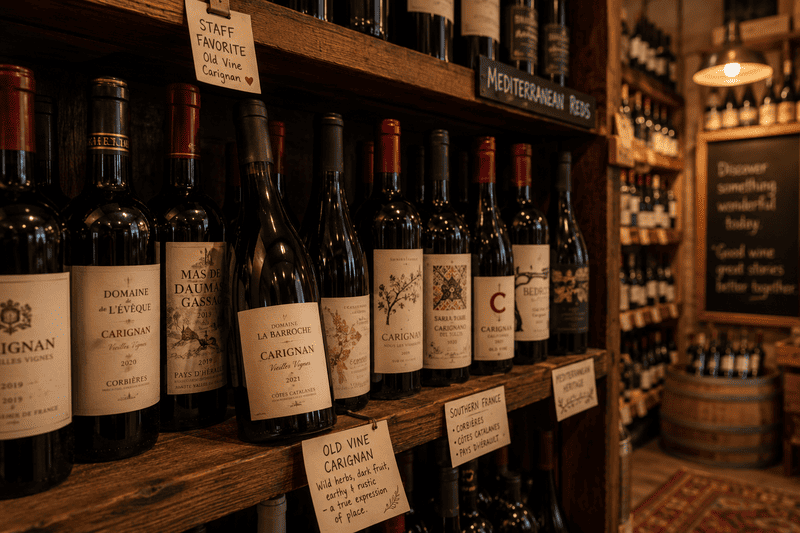
A bottle labeled “Old Vine Carignan” may come from vines that are forty years old, seventy years old, or well over one hundred years old, depending on the producer and region. Because there is no universal legal standard, the phrase should be viewed as a helpful clue rather than an automatic guarantee of quality.
When shopping, look beyond the words alone.
A thoughtful producer will often share more detail: the age of the vines, the vineyard location, farming practices, soil type, harvest method, or winemaking approach. These details help you understand whether “old vine” is being used as meaningful context or simply as romantic marketing language.
Still, when the term is used honestly, it matters.
Old-vine Carignan represents one of the most beautiful ideas in wine: that value can be hidden in places others overlooked. A vineyard once dismissed as ordinary may, with time and care, reveal itself as extraordinary.
Carignan’s comeback is not just about a grape being rediscovered.
It is about old vines finally being heard.
If You Enjoy These Wines…
One of the easiest ways to understand Carignan is to think about wines you may already enjoy.
Carignan does not taste exactly like any one famous grape, and that is part of its charm. It has its own personality—dark-fruited, savory, vibrant, and distinctly Mediterranean. But if you enjoy red wines with freshness, structure, and a slightly rustic edge, Carignan may feel like a natural next pour.
If You Like Grenache
If you enjoy the sun-kissed red fruit, warmth, and Mediterranean charm of Grenache, Carignan offers a slightly darker, more structured alternative.
Where Grenache often leans toward strawberry, raspberry, and soft spice, Carignan brings more blackberry, plum, pepper, herbs, and acidity. It can feel a bit more grounded and savory, making it a wonderful choice when you want something Mediterranean but with firmer edges.
Try Carignan when you want the warmth of Grenache, but with more grip and freshness.
If You Like Syrah
Syrah lovers may appreciate Carignan’s savory side.
While Syrah is often associated with blackberry, violet, pepper, smoke, and cured meat notes, Carignan can echo some of that dark-fruited and peppery character in a slightly more rustic, herbaceous way. It may not have Syrah’s plush texture or dramatic perfume, but it shares that appealing balance of fruit, spice, and earth.
Try Carignan when you want something dark and savory, but a little less expected than Syrah.
If You Like Mourvèdre
Fans of Mourvèdre may find Carignan especially intriguing.
Both grapes thrive in warm Mediterranean climates and can produce wines with dark fruit, firm structure, earthy depth, and a slightly wild, untamed personality. Mourvèdre often feels more brooding and meaty, while Carignan tends to bring brighter acidity and a more lifted finish.
Try Carignan when you enjoy structured, rustic reds but want something with more snap and energy.
If You Like Cinsault
Cinsault lovers may be drawn to Carignan for a different reason.
Cinsault is often lighter, softer, and more fragrant, with red fruit, floral notes, and gentle tannins. Carignan is usually darker, firmer, and more intense, but both grapes share a Mediterranean ease and a beautiful affinity for food.
Try Carignan when you want to move from a lighter, graceful red into something deeper and more structured without losing freshness.
If You Like Zinfandel
For wine lovers who enjoy old-vine Zinfandel, especially from California, old-vine Carignan can be a fascinating discovery.
Both can come from historic vineyards. Both can offer generous fruit, spice, and a sense of depth that comes from mature vines. The difference is that Carignan usually feels more savory and acid-driven, while Zinfandel often feels richer, riper, and more fruit-forward.
Try Carignan when you like the old-vine story but want a wine with more Mediterranean herbs and brighter acidity.
If You Like Cabernet Franc
Cabernet Franc drinkers may appreciate Carignan’s herbal and savory qualities.
Cabernet Franc often brings red fruit, graphite, herbs, bell pepper, and elegant structure. Carignan tends to be darker in fruit profile, but it shares that appealing non-fruity complexity—the sense that there is more happening in the glass than ripe berries alone.
Try Carignan when you enjoy wines with character, freshness, and a little bit of savory intrigue.
Your Next Pour
Carignan is a beautiful choice for wine lovers who want something familiar enough to enjoy, but different enough to feel like a discovery.
It sits in that wonderful space between rustic and elegant, generous and fresh, old-world and adventurous. It is not trying to be Cabernet Sauvignon, Pinot Noir, or Syrah. It does not need to be.
Carignan is at its best when allowed to be exactly what it is: a soulful Mediterranean red with history in its roots, sunshine in its fruit, and a story worth rediscovering.

How to Choose a Great Bottle
One of the most rewarding things about exploring Carignan is that exceptional bottles are often far more affordable than many of the world’s famous red wines.
Because the grape is still relatively unknown to many consumers, you can frequently discover wines with remarkable character and craftsmanship without paying premium prices simply for the name on the label.
Knowing what to look for, however, can make all the difference.
Look for Old-Vine Bottlings
If there is one phrase worth remembering when shopping for Carignan, it is Old Vine or Vieilles Vignes.
As you’ve learned, older vines naturally tend to produce fewer grapes, resulting in greater concentration and complexity. While “Old Vine” isn’t legally regulated in many wine regions, reputable producers use the term thoughtfully to highlight vineyards that have matured over decades rather than years.
If the back label mentions vines that are fifty, seventy-five, or even one hundred years old, you’ve likely found a bottle that showcases Carignan at its finest.
Explore Southern France
For many wine lovers, southern France is the perfect place to begin.
Regions such as Languedoc, Roussillon, Corbières, Minervois, and the Côtes du Roussillon have become home to some of the world’s most exciting Carignan producers. Here, you’ll often find wines that beautifully balance ripe black fruit with herbal complexity, lively acidity, and a strong sense of place.
These bottles frequently offer outstanding value and are an excellent introduction to the grape.
Don’t Overlook Spain
If you enjoy slightly more structured, mineral-driven wines, Spanish Carignan deserves a place on your shopping list.
Look for bottles labeled Cariñena or Mazuelo, particularly from Priorat and other historic regions where old vines continue to produce concentrated, expressive fruit.
Spanish examples often reveal a beautiful tension between power and freshness, making them especially rewarding for lovers of age-worthy red wines.
Discover California’s Hidden Gems
California may not be famous for Carignan, but that is precisely what makes it so exciting.
A number of thoughtful producers have embraced the state’s historic old-vine vineyards, crafting wines that emphasize freshness rather than excessive ripeness. These bottles often display vibrant fruit, moderate alcohol, and a welcoming style that appeals to both seasoned enthusiasts and curious newcomers.
If you’ve enjoyed old-vine Zinfandel, California Carignan may become your next favorite discovery.
Understand the Producer’s Style
Like every grape, Carignan reflects the choices made in both the vineyard and the cellar.
Some winemakers aim for a bright, fruit-forward style that highlights freshness and approachability. Others seek greater structure through extended aging, whole-cluster fermentation, or careful oak maturation.
Neither approach is inherently better.
Instead, think about the styles you already enjoy. If you gravitate toward lively, food-friendly reds, seek producers who emphasize freshness and minimal intervention. If you prefer richer, more contemplative wines, look for old-vine bottlings that have spent additional time developing in the cellar.
The beauty of Carignan is that it can comfortably express both personalities while remaining unmistakably itself.
What Should You Expect to Spend?
Another pleasant surprise is Carignan’s value.
Many excellent bottles can be found between $20 and $35, making them an outstanding choice for exploring a new grape without stretching your budget.
Between $35 and $60, you’ll begin to encounter more serious old-vine selections from respected producers, offering greater depth, complexity, and aging potential.
Above that range, you’ll find exceptional single-vineyard wines and limited-production bottlings that demonstrate just how profound Carignan can become in the hands of skilled growers and winemakers.
Compared to many prestigious Cabernet Sauvignons, Pinot Noirs, or Bordeaux blends, these wines often deliver extraordinary quality for the price.
A Final Shopping Tip
Perhaps the best advice is the simplest.
Visit an independent wine shop.
Tell the person behind the counter that you’ve been reading about Carignan and would like to try a bottle from an old-vine producer.
More often than not, you’ll be met with an enthusiastic smile.
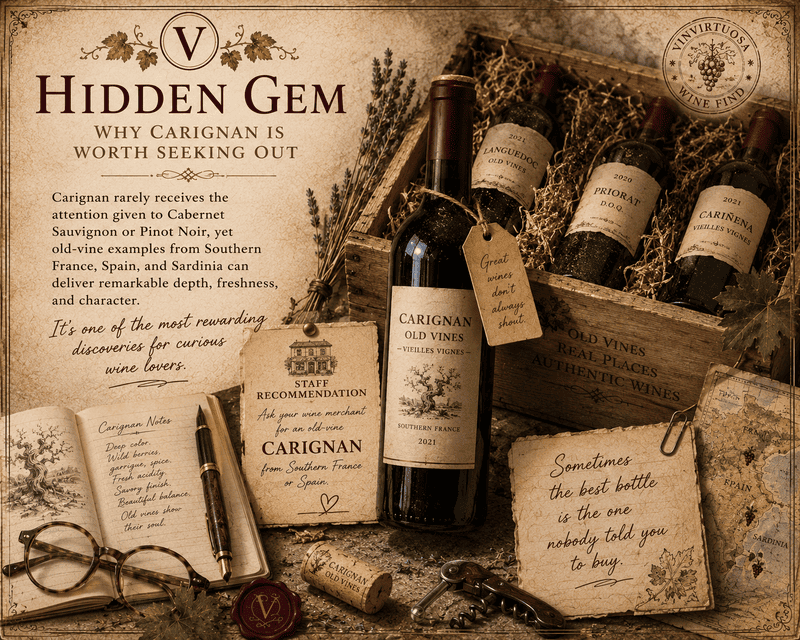
Wine professionals love introducing people to hidden gems, and Carignan is exactly the kind of bottle they enjoy recommending. Sometimes the best discoveries don’t come from searching for the world’s most famous wines—they come from asking for something you’ve never tried before.
Conclusion
Some wines become famous because they have always occupied the spotlight.
Others earn their reputation more quietly.
Carignan belongs to the second group.
Its story is one of resilience, patience, and rediscovery—a grape that spent decades underestimated before thoughtful growers and passionate winemakers revealed what it had been capable of all along.
Today, Carignan offers something increasingly valuable in the world of wine.
It offers authenticity.
It speaks honestly of ancient vineyards, Mediterranean landscapes, generations of dedicated growers, and the quiet confidence that comes from doing one thing exceptionally well.
Whether you’re drawn to its vibrant acidity, savory herbal character, remarkable food-friendliness, or outstanding value, Carignan rewards curiosity with every glass.
More importantly, it reminds us that wine is not simply about collecting famous labels or chasing the highest scores.
It is about discovery.
It is about slowing down long enough to appreciate a place, a history, and the people who cared for a vineyard long before we arrived to enjoy its fruit.
So the next time you’re browsing the shelves of your local wine shop, consider reaching for a bottle that isn’t already familiar.
Choose an old-vine Carignan.
Pour yourself a glass.
Take a moment to notice the aromas before the first sip. Pay attention to the bright acidity, the layers of dark fruit, the wild herbs, the pepper, the quiet earthiness that lingers long after the wine has left your palate.
Then imagine the century-old vines that made it possible.
Some of the world’s most memorable wines aren’t waiting in the spotlight.
They’re waiting for someone curious enough to discover them.
Perhaps your next favorite bottle has been quietly waiting all along.