Introduction: National Grenache Day Is the Perfect Time to Revisit This Overlooked Grape
National Grenache Day is the perfect excuse to spend a little time with one of the wine world’s most lovable, versatile, and surprisingly underappreciated red grapes. Grenache may not always receive the same attention as Cabernet Sauvignon, Pinot Noir, Merlot, or Syrah, but it quietly plays a starring role in some of the most delicious wines in the world.
In fact, many wine lovers have already enjoyed Grenache without necessarily realizing it. If you have sipped a Southern Rhône blend, enjoyed a bottle of Côtes du Rhône, explored Spanish Garnacha, poured a glass of rosé from southern France, or opened a GSM blend, there is a very good chance Grenache was part of the experience. It is one of those grapes that often works beautifully behind the scenes, adding fruit, warmth, softness, spice, and generosity to a wine without always getting top billing on the label.
That may be part of the reason Grenache remains so underrated. It is everywhere, yet somehow still feels like a discovery.
What makes Grenache so compelling is its remarkable range. In some bottles, it is juicy, bright, and full of ripe strawberry, raspberry, and red cherry flavors. In others, it becomes more savory, showing notes of dried herbs, white pepper, spice, earth, and a warm Mediterranean character. It can be easygoing enough for a casual weeknight glass, yet complex enough to satisfy serious wine lovers looking for depth, texture, and regional expression.
Grenache also has one of the most useful personalities at the table. Its generous fruit, moderate tannins, and spicy undertones make it incredibly food-friendly. It can work with grilled meats, roast chicken, Mediterranean dishes, charcuterie, burgers, sausages, roasted vegetables, and even slightly lighter fare when served with a gentle chill. It is the kind of red wine that can carry you from late-summer dinners outdoors into the first cozy meals of fall.
So for National Grenache Day, it is worth asking: why doesn’t this grape get more attention?
In this guide, we will take a closer look at what Grenache is, what it tastes like, why it is so often overlooked, where it grows best, how to pair it with food, and what kinds of bottles to look for if you want to celebrate National Grenache Day in your glass.
“Grenache may not always get top billing, but it quietly produces some of the wine world’s most generous, food-friendly, and rewarding red wines.”
What Is Grenache?
Grenache is a red wine grape known for producing wines that are generous, fruit-forward, spicy, and wonderfully versatile. It is one of the world’s most widely planted red grapes, yet it often does not receive the same recognition as better-known varieties like Cabernet Sauvignon, Pinot Noir, or Merlot. That is part of what makes Grenache so interesting: it is both incredibly important and still somewhat underappreciated.
In Spain, Grenache is known as Garnacha, and Spain is one of the grape’s most historically important homes. From there, it became deeply associated with southern France, especially the Southern Rhône, where it forms the backbone of many beloved blends. Today, Grenache can also be found in regions such as Australia, California, and other warm-climate wine areas around the world.
Grenache thrives in warm, sunny, dry climates. It loves heat, which helps the grapes ripen fully and develop their signature flavors of ripe red fruit, spice, and warmth. This is one reason Grenache has become so important in Mediterranean and Mediterranean-inspired wine regions. Places like Spain, Southern France, Australia’s McLaren Vale and Barossa Valley, and California’s Central Coast all offer the sunshine Grenache needs to shine.
One of the fascinating things about Grenache is how many different forms it can take. It can be made as a single-varietal red wine, where the grape stands on its own and shows off its fruit, spice, perfume, and texture. It can also be blended with other grapes, especially Syrah and Mourvèdre, as in the classic GSM blend. Grenache is also important in rosé production, particularly in southern France, and it can even appear in fortified wines.
Stylistically, Grenache tends to produce wines with ripe red fruit flavors, often suggesting strawberry, raspberry, red cherry, and wild berries. It can also show notes of white pepper, dried herbs, baking spice, orange peel, licorice, or earthy undertones, depending on where it is grown and how it is made. Compared with more tannic red grapes, Grenache usually has a softer, more generous texture. It often feels plush, silky, juicy, and welcoming rather than firm or austere.
There are a few helpful grape facts that explain Grenache’s personality. Grenache is relatively thin-skinned, which means its wines are often lighter in color than deeply pigmented reds like Cabernet Sauvignon, Syrah, or Petite Sirah. It can also ripen to high sugar levels, which often leads to wines with higher alcohol. That warmth can be part of Grenache’s charm, especially when balanced by freshness, spice, and good winemaking.
At its simplest, Grenache can be bright, fruity, and easy to love. At its most serious, it can be layered, savory, age-worthy, and deeply expressive of place. That range is exactly why Grenache deserves more attention. It is not just one style of wine. It is a grape with many personalities, and National Grenache Day is the perfect time to get to know them.
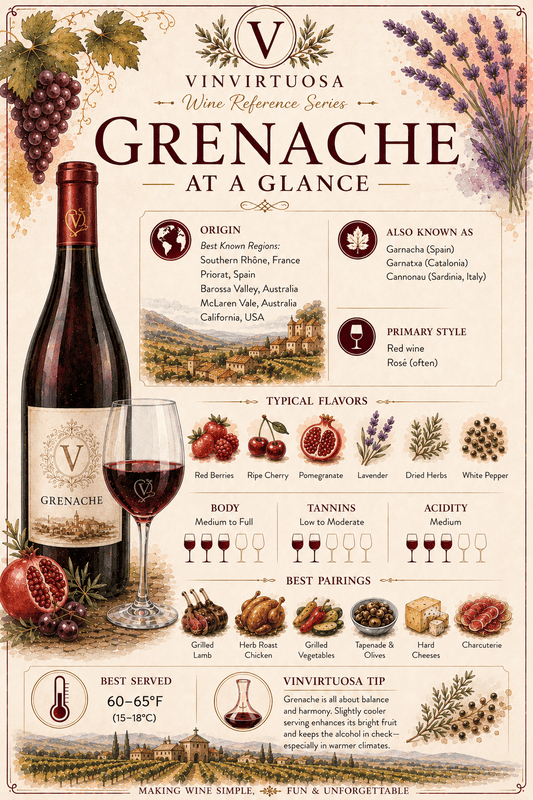
What Does Grenache Taste Like?
One of the reasons Grenache is such a rewarding grape to explore is that it can wear many different faces depending on where it is grown, how it is made, and whether it is enjoyed young or given time to develop. At its most approachable, Grenache is juicy, generous, and full of bright red fruit. At its most serious, it can become layered, savory, spicy, and deeply expressive of place. That range is part of what makes the grape so compelling—and also part of why it can be difficult to sum up in just a few words.
Still, there are a few common threads that show up again and again in Grenache. In general, expect ripe red fruit, warming spice, a silky texture, and an easygoing generosity that makes Grenache one of the wine world’s most food-friendly reds.
Young, Fruit-Forward Grenache
In its fresher, younger expressions, Grenache often bursts with bright red fruit. Strawberry, raspberry, red cherry, and wild berries are among the most common notes, and they are often delivered in a way that feels juicy, lifted, and immediately inviting. These are the kinds of wines that can feel cheerful and approachable from the very first sip.
Alongside the fruit, young Grenache often shows hints of white pepper, baking spice, and dried herbs. Depending on the wine, you might also find a touch of orange peel or a subtle floral note that adds freshness and lift. The overall impression is usually one of warmth, fruit, and softness rather than heavy structure. Grenache tends to be more plush and silky than aggressively tannic, so even fruit-forward examples can feel polished and smooth on the palate.
This is one of the reasons Grenache can be such an appealing choice for casual wine drinkers. It often has enough ripe fruit to feel generous and crowd-pleasing, but enough spice and savory detail to keep it interesting. In a younger, more fruit-driven style, Grenache can be the sort of red you happily pour with burgers, roast chicken, charcuterie, or a relaxed weeknight dinner without overthinking it.
More Serious or Age-Worthy Grenache
Grenache is not only a bright, easygoing red. In the right hands—and especially from old vines, special sites, or top appellations—it can become far more layered and complex. More serious Grenache often moves beyond simple berry fruit and begins to show a deeper, more savory side.
In these wines, the fruit can shift from fresh strawberry and cherry into darker or more dried fruit notes, sometimes suggesting plum, macerated berries, or sun-warmed fruit. Savory notes become more prominent as well: dried herbs, licorice, crushed stone, earth, tobacco, and leather can all emerge depending on the bottle. The wine may still have Grenache’s signature generosity, but it often gains more structure, more concentration, and a greater sense of depth.
This is where Grenache can surprise people who think of it only as an easy-drinking blending grape. A serious bottle of Grenache or Garnacha can be fragrant, textural, and remarkably expressive. It can still feel warm and generous, but it also begins to show the complexity that wine lovers often look for in more “serious” reds: layered aromatics, savory nuances, and a finish that lingers with spice, herbs, and earth.
How Climate Changes Grenache
Climate plays a huge role in how Grenache tastes, which is one reason the grape can be so versatile. In cooler or higher-elevation sites, Grenache often leans brighter and more lifted. Expect more red fruit, more freshness, and a lighter, more elegant feel. These wines may show vibrant strawberry and raspberry notes, lively acidity, and a peppery or herbal edge that gives them energy and finesse.
In hotter or lower-elevation regions, Grenache tends to become riper, fuller, and more powerful. Fruit can move toward darker berry and plum notes, alcohol levels may be higher, and the wine can feel richer and warmer on the palate. These are often the bottles that show Grenache’s plush, sun-soaked side, with plenty of body and generosity.
Vine age can also make a difference. Old-vine Grenache often has more concentration, more complexity, and a stronger sense of place than very simple, youthful bottlings. Winemaking matters too. Some producers aim for freshness and elegance, while others lean into richness, ripeness, and texture.
Grenache’s Texture and Overall Style
No matter the style, Grenache is often defined as much by its texture as by its flavor. It is usually medium to full-bodied, but it rarely feels severe. Instead, it tends to be silky, plush, juicy, and rounded, with moderate tannins rather than a firm, grippy structure. That softer texture is one of the reasons Grenache can feel so welcoming and why it works so well at the table.
If you are trying Grenache for the first time, think of it as a grape that often combines ripe red fruit, spice, warmth, and a smooth, generous mouthfeel. Some bottles will be bright and easygoing, others deeper and more savory, but the best Grenache wines tend to share a sense of charm and openness that makes them incredibly enjoyable to drink.
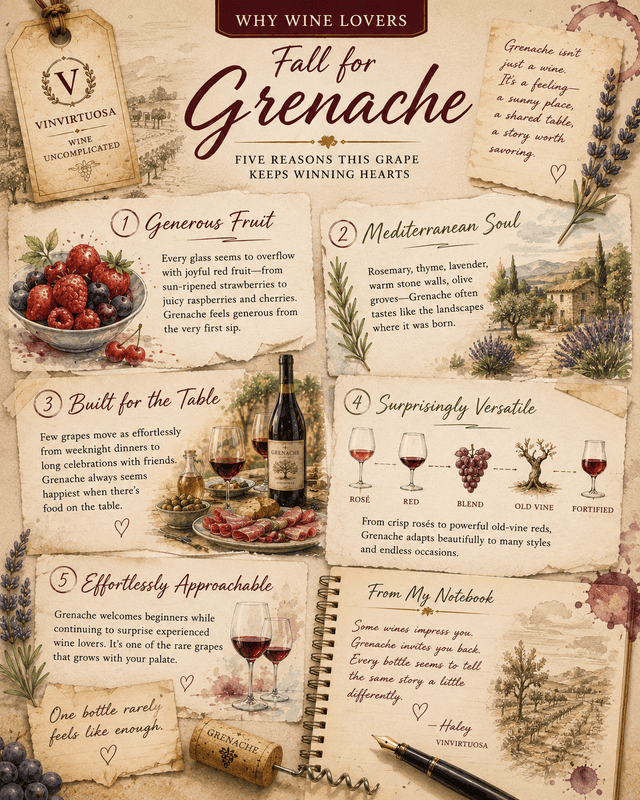
Why Grenache Is One of the Most Underrated Red Wine Grapes
If Grenache is so delicious, versatile, and widely planted, why does it still feel like a grape that rarely gets top billing? Why is it that so many wine drinkers can list Cabernet Sauvignon, Pinot Noir, Merlot, Malbec, and Syrah without necessarily thinking of Grenache in the same breath?
Part of the answer is that Grenache has spent much of its life doing excellent work behind the scenes. It is one of the wine world’s quiet overachievers: a grape capable of producing joyful, fruit-driven wines, serious old-vine bottlings, and some of the most beloved blends in the world—yet it often remains less celebrated than grapes with stronger name recognition.
Grenache Often Plays a Supporting Role in Blends
One of the biggest reasons Grenache is underrated is that many wine drinkers already enjoy it without realizing how important it is. Grenache is a major player in wines such as Châteauneuf-du-Pape, Côtes du Rhône, Gigondas, and countless GSM blends, where it is often responsible for much of the wine’s fruit, warmth, body, and generosity.
When Grenache appears in a blend, it frequently brings the charm. It softens edges, fills out the mid-palate, contributes juicy berry fruit, and adds a sense of warmth and approachability. Syrah may contribute darker fruit, pepper, and structure; Mourvèdre may bring earth, tannin, and savory depth; but Grenache is often the grape that makes the wine feel generous and inviting.
The irony is that Grenache can be central to the wine without being the name people remember. A drinker may fall in love with a Rhône blend and never stop to think that much of its appeal comes from Grenache itself.
It Lacks the Name Recognition of Cabernet Sauvignon, Pinot Noir, and Merlot
Another reason Grenache remains under the radar is simple familiarity. Most wine shoppers gravitate toward grapes they already know. Cabernet Sauvignon, Pinot Noir, Merlot, and increasingly Malbec have become part of the everyday wine vocabulary. Grenache, by contrast, often lacks the same marketing power, shelf visibility, and immediate recognition.
That does not mean Grenache is any less important. In many ways, it is quite the opposite. Grenache is one of the most significant red grapes in the world, but because it does not always dominate wine lists or retail shelves under its own name, it can be overlooked by consumers who are shopping quickly or sticking to familiar territory.
This is especially true in the United States, where a shopper might be more likely to reach for a Pinot Noir or Cabernet simply because those categories feel familiar and easy to understand. Grenache requires a little more curiosity—and that curiosity is often rewarded.
Grenache Can Be Stylistically Broad
Grenache’s versatility is one of its greatest strengths, but it can also make the grape harder to define in a single sentence. Some Grenache is light, juicy, and fresh enough to lightly chill. Some is plush, warming, and fruit-driven. Some old-vine or high-end examples are powerful, concentrated, and deeply savory.
For a wine lover, that range is part of the fun. For a casual shopper, however, it can make Grenache a little harder to categorize. Pinot Noir has a fairly clear identity in the minds of many drinkers. Cabernet Sauvignon does too. Grenache can be a little more slippery. Is it light or full-bodied? Fruity or savory? A blend or a single-varietal wine? Everyday or age-worthy? The answer is often yes to several of those at once.
That stylistic breadth is part of what makes Grenache so exciting, but it may also be one reason it has not always developed the same easy, instant identity as some other red grapes.
It Has Historically Been Overshadowed in Some Regions
Grenache has also spent much of its history sharing the spotlight—or surrendering it entirely. In Spain, Garnacha has often taken a back seat to Tempranillo in terms of prestige and recognition, even though old-vine Garnacha can produce some of the country’s most compelling and expressive wines. In the Rhône, Syrah often captures more of the conversation, especially among wine drinkers who associate the region with pepper, structure, and dark fruit. Yet in many Southern Rhône wines, Grenache is the heart of the blend.
This pattern repeats itself again and again: Grenache is present, important, and influential, but not always the grape people talk about first.
Why That Matters
In a way, Grenache’s underrated status is exactly what makes it so rewarding to explore. It is a grape that offers ripe fruit, spice, warmth, food-friendliness, and a remarkable ability to adapt to different climates and winemaking styles. It can be joyful and easygoing, but it can also be nuanced, layered, and deeply expressive. It can shine in a blend or hold its own beautifully as a single-varietal wine.
Grenache may not always get the same attention as Cabernet Sauvignon, Pinot Noir, or Syrah, but it deserves to be part of that conversation. And for wine lovers willing to look beyond the usual suspects, that is very good news.
“Grenache is one of those grapes many wine lovers already enjoy in blends—without realizing how much of the wine’s charm comes from Grenache itself.”
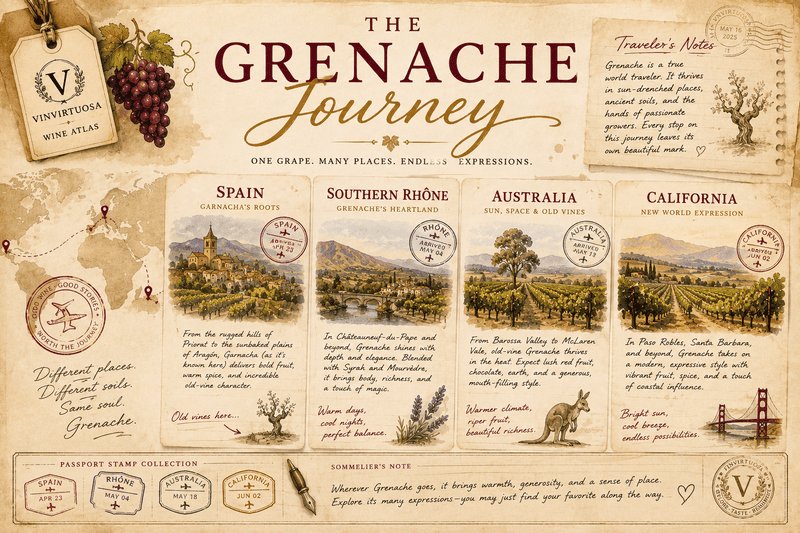
Grenache Around the World
If Grenache is underrated, one reason may be that it refuses to stay in a single stylistic box. Depending on where it is grown, it can be bright and juicy, earthy and herbal, or rich and warming. It can feel casual and fruit-forward in one bottle, then savory, layered, and deeply serious in another. That stylistic range is one of Grenache’s greatest strengths, but it also means the grape can be harder to summarize than varieties with a more fixed identity.
The good news for wine lovers is that Grenache’s global reach makes it endlessly interesting to explore. From old-vine Garnacha in Spain to Grenache-based blends in the Southern Rhône, from elegant modern Australian bottlings to Rhône-inspired wines from California, Grenache has found a home in many of the world’s warm-climate wine regions. Each place brings out something a little different in the grape, whether that means brighter fruit, more savory herbs, greater concentration, or a more sun-soaked sense of warmth and generosity.
Spain: Garnacha’s Historic Home
In Spain, Grenache is known as Garnacha, and it remains one of the grape’s most important historic homes. If you want to understand both Grenache’s value and its versatility, Spain is one of the best places to start. Spanish Garnacha can be cheerful, affordable, and fruit-driven, but it can also be deeply serious, especially when it comes from old vines grown in challenging, dry conditions.
At the more approachable end of the spectrum, Garnacha often offers ripe strawberry, raspberry, red cherry, and wild berry flavors along with touches of spice and herbs. These wines can be open, juicy, and easy to enjoy, which is one reason Spanish Garnacha can be such a satisfying value. It often delivers a lot of pleasure without demanding a luxury price tag.
But Spain also shows Garnacha’s more profound side. In regions with old vines, poor soils, or higher elevations, the wines can gain concentration, structure, and depth while still holding onto Grenache’s characteristic warmth and red-fruited charm. That is especially true in places like Priorat, where Garnacha can produce intense, mineral, age-worthy wines with real power and complexity.
Other regions worth knowing include Campo de Borja, Calatayud, and Cariñena, all of which can offer excellent value and wonderfully expressive Garnacha. Navarra is another important home for the grape, and while Rioja is often more closely associated with Tempranillo, Garnacha plays an important supporting role there as well and occasionally shines in varietal bottlings.
If you are looking for a juicy, fruit-forward, affordable introduction to Grenache, Spain is one of the smartest places to begin. If you want to see how old vines and ambitious winemaking can elevate the grape into something more serious, Spain can do that too.
Southern Rhône: Grenache’s French Stronghold
If Spain is one of Grenache’s historic homes, the Southern Rhône is one of its great strongholds. Here, Grenache is not just important—it is foundational. It forms the backbone of many of the region’s best-known red wines and plays a major role in shaping their warmth, generosity, fruit, and spice.
In Southern Rhône blends, Grenache often brings ripe red fruit, body, alcohol, softness, and a plush, welcoming texture. It is the grape that frequently gives these wines their sense of warmth and abundance. But Rhône Grenache also tends to show a more savory and herbal side than many simpler fruit-forward examples. Alongside strawberry, raspberry, and cherry, you may find notes of dried herbs, garrigue, spice, earth, and sometimes a subtly meaty or leathery complexity, especially in more serious bottles.
Some of the region’s most famous appellations rely heavily on Grenache. Châteauneuf-du-Pape is perhaps the most iconic example, often blending Grenache with grapes like Syrah and Mourvèdre to create wines that are generous, spicy, layered, and age-worthy. Gigondas and Vacqueyras also produce Grenache-based wines with real depth and personality, often with a rustic charm and savory Mediterranean character. At a more accessible level, Côtes du Rhône can be one of the best places to experience Grenache’s warmth and approachability without spending a fortune. Rasteau is another appellation worth knowing, often producing robust, characterful reds with plenty of richness.
One of the joys of Rhône Grenache is that it often balances generosity with complexity. These wines can feel sun-drenched and comforting, but they also carry the imprint of herbs, spice, and place. If Spanish Garnacha often highlights fruit and value, Southern Rhône Grenache frequently emphasizes blending, savory nuance, and a more layered expression of the grape.
Southern France Beyond the Rhône
Grenache’s story in France does not end in the Rhône. It is also an important part of the wine culture of Southern France more broadly, especially in Languedoc-Roussillon, where warm Mediterranean conditions suit the grape beautifully. Here, Grenache appears in a wide range of red blends and often contributes ripe fruit, spice, and a supple, approachable texture.
Grenache is also an important grape in rosé production, particularly in southern France, where it helps create wines with bright berry fruit, soft texture, and easy-drinking charm. While this article is focused primarily on red Grenache, it is worth remembering that part of the grape’s global importance comes from its flexibility. It is not just a red wine grape in the narrowest sense—it is a grape that can contribute to reds, rosés, and fortified wines with equal confidence.
Southern France is also home to Grenache Blanc and Grenache Gris, white and pink-skinned relatives of red Grenache that show how extensive the Grenache family really is. They are not the focus here, but they are a useful reminder that Grenache is far more than a one-note red grape.
Australia
Grenache has become especially exciting in Australia in recent years. For a long time, Australian Grenache was sometimes overshadowed by the country’s famous Shiraz, but a growing number of producers have been proving just how expressive and compelling Grenache can be on its own. Today, Australia is one of the most interesting places to explore modern Grenache styles.
Regions such as McLaren Vale and Barossa Valley are particularly important. These warm regions can certainly produce generous, ripe, full-bodied Grenache, but some of the most exciting Australian examples are not simply big and powerful. Instead, many producers are focusing on freshness, elegance, perfume, and transparency, showing that Grenache can be both sun-loving and refined.
Australian Grenache can range from juicy and aromatic to deeply concentrated old-vine expressions, but the best examples often combine ripe fruit with energy and spice. This is one of the reasons Australia has become such an exciting category for Grenache lovers: it shows the grape in a way that feels modern, vibrant, and increasingly polished.
California and the United States
Grenache has also found a natural home in California, particularly in warmer regions where Rhône-inspired producers have embraced it for both blends and single-varietal wines. In many ways, California suits Grenache beautifully. The grape can soak up the sunshine, develop ripe fruit and warmth, and still retain enough freshness to stay lively in the glass.
Regions such as Paso Robles, Santa Barbara County, and the broader Central Coast are especially worth watching. Here, Grenache can be vibrant, fruit-driven, spicy, and generous, but it does not have to feel heavy. In the hands of thoughtful producers, California Grenache can deliver ripe berry fruit, floral lift, spice, and a silky texture while still showing balance and energy.
Grenache’s appeal in the United States is also tied to the rise of Rhône-style winemaking. Producers interested in Mediterranean varieties and food-friendly wines have increasingly turned to Grenache because it offers both pleasure and flexibility. It can play beautifully in a blend, but it can also stand on its own as a distinctive, expressive red.
Taken together, all of these regions make one thing clear: Grenache is not one wine, one style, or one flavor profile. It is a grape that changes shape depending on climate, soil, vine age, and winemaking choices. That global versatility is one of the strongest arguments for paying more attention to it.
Grenache in Blends vs. Single-Varietal Wines
One of the most useful things to understand about Grenache is that it can play two very different roles in the glass. Sometimes it acts as a team player, quietly making a blend more generous, charming, and complete. Other times it takes center stage on its own, showing off its fruit, spice, texture, and sense of place with remarkable clarity. Both expressions matter, and both help explain why Grenache feels familiar to many wine drinkers even if they have not consciously sought it out.
Grenache in Blends
Grenache is one of the wine world’s great blending grapes. It brings a combination of ripe fruit, body, warmth, softness, and generosity that can make a wine feel open and appealing almost immediately. In many blends, Grenache is the grape responsible for the wine’s plushness and charm—the part that makes you want to pour another glass.
This is especially true in Southern Rhône wines and in GSM blends, where Grenache is often paired with Syrah and Mourvèdre. In that trio, each grape has a role to play. Grenache often contributes the fruit, warmth, plush texture, and approachability. Syrah can bring darker fruit, color, pepper, and structure. Mourvèdre tends to add earth, tannin, savoriness, and depth. Together, the three grapes create wines that feel layered and balanced, but Grenache is frequently the element that ties everything together.
That role is particularly important in the Rhône, where Grenache often forms the heart of the blend. Without it, many Southern Rhône wines would lose some of their warmth, body, and inviting fruit. It is not always the loudest grape in the room, but it is often the one giving the wine its generosity and sense of ease.
Grenache’s talent as a blending grape also helps explain why it can feel so familiar. Many wine lovers already enjoy Grenache in Châteauneuf-du-Pape, Côtes du Rhône, Gigondas, or Rhône-style California blends without necessarily thinking of Grenache as the star. It is there, shaping the wine in important ways, but often without demanding the spotlight.
Grenache on Its Own
Single-varietal Grenache offers a different kind of pleasure. When the grape stands alone, it becomes easier to appreciate just how distinctive it can be. You are able to focus on Grenache’s perfume, its red-fruited personality, its spice, and its texture without the influence of Syrah, Mourvèdre, or other blending partners.
This is where Grenache’s range becomes especially exciting. A single-varietal Grenache from Spain may emphasize ripe strawberry, raspberry, herbs, and warmth. A bottle from the Southern Rhône might lean more savory, earthy, and spice-driven. An Australian example may combine ripe fruit with freshness and perfume, while a California version might feel sun-soaked, silky, and vibrant. Tasting Grenache on its own is one of the best ways to understand how dramatically the grape can change from one region to another.
Single-varietal Grenache also gives drinkers a clearer sense of the grape’s texture. Without other varieties in the mix, you can really notice the way Grenache tends to feel silky, rounded, and generous rather than hard-edged or aggressively tannic. That mouthfeel is part of the grape’s charm and one reason it can be so appealing both at the table and on its own.
Why Both Styles Matter
Grenache in blends and Grenache on its own are not competing ideas—they are simply two different expressions of the same grape. In blends, Grenache often acts as the grape that softens, rounds out, and lifts the whole wine. On its own, it reveals its personality more directly, from its red fruit and spice to its texture and regional character.
For readers just beginning to explore Grenache, this is actually very good news. It means you do not have to limit yourself to one style. You can discover Grenache through a classic Rhône blend, then compare it with a bottle of Spanish Garnacha or a single-varietal California Grenache and see how the grape shifts from one context to another.
And that is part of what makes Grenache so rewarding. It can be both the generous supporting player and the star of the show.

If You Like Pinot Noir, Syrah, or Zinfandel, Try Grenache
One of the easiest ways to understand Grenache is to think about it in relation to wines you may already know and love. Grenache is not a carbon copy of Pinot Noir, Syrah, or Zinfandel, but it often sits in a very appealing middle ground between them. Depending on where it is grown and how it is made, Grenache can offer Pinot Noir drinkers the red fruit and food-friendliness they love, Syrah fans the spice and Rhône character they crave, and Zinfandel lovers the generous fruit and warmth they enjoy—often with its own distinctly Grenache twist.
If Grenache has flown under your radar, this is one of the best reasons to give it a try. Chances are, there is already something about your favorite red wine style that overlaps beautifully with Grenache.
If You Like Pinot Noir, Try Grenache
If you love Pinot Noir, Grenache can be a wonderful next step—especially if what you enjoy most about Pinot is its red fruit character, food-friendliness, and graceful, less tannic feel.
At their best, both grapes can offer bright flavors of strawberry, raspberry, and red cherry, often with a sense of freshness that keeps the wine lively and inviting. Grenache does not usually mimic Pinot Noir’s exact profile—Pinot often leans more toward cranberry, cherry, forest floor, and delicate floral notes, while Grenache tends to be warmer, softer, and a little more sun-kissed—but there is still meaningful overlap. A lighter, fresher style of Grenache can deliver the same kind of red-fruited charm that makes Pinot Noir so appealing.
Grenache can also be a great option for Pinot drinkers who want something a little more generous without going all the way into heavier, more structured reds. It usually has a softer tannic profile than Cabernet Sauvignon or Nebbiolo, and even fuller Grenache wines often feel silky and rounded rather than severe. That makes it a natural fit for readers who enjoy wines with texture and flavor but do not necessarily want something hard-edged or aggressively powerful.
Food-friendliness is another major point of connection. Pinot Noir is famous for how well it plays at the table, and Grenache deserves more credit in that department too. Lighter Grenache styles can be lovely with roast chicken, grilled salmon, charcuterie, mushroom dishes, or Mediterranean fare—exactly the kind of foods many Pinot lovers already gravitate toward.
If you are a Pinot Noir fan, look for Grenache or Garnacha from cooler sites, higher elevations, or producers who emphasize freshness and elegance. These bottlings often show the grape’s more perfumed, lifted side and make a very natural bridge between Pinot Noir and fuller-bodied Mediterranean reds.
If You Like Syrah, Try Grenache
If Syrah is your go-to, Grenache may be one of the most logical grapes to explore next. The two grapes are close companions in many of the world’s great blends, especially in the Rhône and in Rhône-inspired wines, and they often complement each other beautifully.
Syrah lovers are often drawn to spice, savory notes, depth, and a sense of warmth, all of which Grenache can also offer. While Grenache is usually lighter in color and softer in tannin than Syrah, it can still deliver plenty of character. It often shows white pepper, dried herbs, licorice, baking spice, and that sun-drenched warmth that makes Southern Rhône wines so appealing. If you love the savory, herbal side of Syrah, Grenache can feel very familiar—just with a juicier fruit core and a slightly more relaxed structure.
This is especially true if your Syrah preferences lean toward Rhône expressions rather than ultra-oaked, heavily extracted styles. In the Southern Rhône, Grenache and Syrah often work together to create wines with fruit, spice, body, and earthy complexity. Grenache contributes red fruit, warmth, plushness, and generosity, while Syrah often adds darker fruit, pepper, color, and structure. If you already love that Rhône flavor profile, there is a very good chance you already love Grenache more than you realize.
Grenache can also be a good choice for Syrah drinkers who want something a little less brooding but still flavorful and satisfying. It often has enough spice and savory character to keep things interesting, but it tends to feel more open and immediately inviting than Syrah in its youth. Think of it as a slightly softer, redder-fruited, more relaxed cousin in the Rhône family.
If You Like Zinfandel, Try Grenache
If you love Zinfandel, Grenache can be an especially fun discovery. The two grapes share a generosity that makes them both crowd-pleasing and deeply enjoyable, and both can deliver the kind of ripe berry fruit and warming personality that make a bottle feel instantly comforting.
Zinfandel drinkers are often drawn to exuberant fruit, plush texture, spice, and a sense of abundance in the glass. Grenache can absolutely offer that. It frequently shows ripe strawberry, raspberry, red cherry, and sometimes darker berry or plum notes, especially in warmer climates or more concentrated styles. It can also bring warmth, body, and a juicy, rounded feel that makes it incredibly appealing for relaxed dinners, grilling season, or entertaining.
Where Grenache sometimes differs is in its balance and lift. Depending on the producer and region, Grenache can often feel a little less jammy and heavy than some Zinfandels, with more red fruit brightness and a more herbal, peppery edge. That does not make it better or worse—just different. If Zinfandel is your comfort zone, Grenache can offer a similarly generous personality with a slightly different shape: often a bit silkier, a bit more savory, and sometimes a bit more graceful.
This is especially true if you enjoy Zinfandel but occasionally wish for a wine that feels a touch lighter on its feet. Grenache can provide that same ripe, crowd-pleasing charm while still feeling a little more lifted and versatile at the table.
If You Already Love Côtes du Rhône, You May Already Love Grenache
If you are already a fan of Côtes du Rhône, Gigondas, Vacqueyras, or Châteauneuf-du-Pape, there is a very good chance you already appreciate Grenache—even if you have not thought about it in those terms. In many Southern Rhône wines, Grenache is not just part of the blend; it is the heart of it.
That means if you love the warmth, spice, juicy fruit, and herbal complexity of Rhône reds, Grenache may already be one of your favorite grapes. Exploring single-varietal Grenache or Garnacha is simply a way of getting to know that familiar flavor profile more directly.
Why This Matters
One of the reasons Grenache is so easy to fall for is that it connects with several different wine-drinking styles at once. It can offer Pinot Noir drinkers red fruit and elegance, Syrah fans spice and Rhône character, and Zinfandel lovers warmth and generous fruit. It is not identical to any of those grapes, but it shares enough with each of them to feel both recognizable and fresh.
That makes Grenache an ideal discovery bottle. It gives readers a familiar entry point while still opening the door to something new.

Why Grenache Is the Perfect Red for the Summer-to-Fall Transition
Some red wines feel unmistakably tied to a season. A light chillable red may feel perfect in July but out of place by late October. A powerful, full-bodied bottle might shine beside a winter braise but feel too heavy for a warm evening on the patio. Grenache is one of those rare grapes that can move between seasons with surprising ease, which is one reason it deserves a place in your glass from late summer into early fall.
Grenache has the fruit, freshness, and flexibility to work beautifully in warm-weather settings, but it also has enough warmth, spice, and texture to feel right at home once the air starts to cool and meals become a little heartier. It is the kind of red that can handle a casual outdoor dinner in August and still feel completely appropriate beside roast chicken or mushroom dishes in October.
Late Summer: Grenache’s Fresh, Easygoing Side
Late summer is a season of grilling, relaxed dinners, picnics, patio meals, and food that leans smoky, salty, herb-driven, or just plain easy to love. Grenache fits that mood beautifully.
In lighter, fruit-forward styles, Grenache can be refreshing enough to serve with a slight chill, which immediately makes it more versatile in warm weather than many people expect from red wine. That little bit of coolness can sharpen the wine’s red fruit, lift its herbal notes, and make it feel especially vibrant with grilled foods and Mediterranean dishes.
This is where Grenache’s juicy berry fruit and moderate tannins become a huge advantage. It can handle burgers, grilled sausages, chicken skewers, and charcuterie boards without overpowering them, and it works just as naturally with grilled vegetables, roasted peppers, olive tapenade, or a platter of picnic foods. It is substantial enough to feel satisfying, but often not so heavy that it drags down the meal or the mood.
Grenache also has a sociable quality that makes it especially good for entertaining. It tends to be generous and approachable, with enough flavor to please seasoned wine drinkers and enough softness to feel inviting for less experienced ones. If you are setting out a spread of meats, cheeses, olives, grilled vegetables, and dips for a casual gathering, Grenache is exactly the kind of bottle that can quietly make everything on the table feel more delicious.
Early Fall: Grenache’s Warmer, Cozier Side
As summer gives way to fall, Grenache shifts effortlessly with it. Richer bottlings and Grenache-based blends have enough warmth, body, and spice to pair beautifully with the kinds of dishes that begin to show up as the weather cools.
This is where Grenache’s savory side starts to shine. The same grape that worked with grilled sausages in late August can now sit comfortably beside roast chicken, pork tenderloin, mushroom dishes, roasted root vegetables, or a rustic braise. Its red fruit keeps it lively, but its spice, warmth, and texture give it enough depth for more autumnal meals.
That seasonal flexibility is part of what makes Grenache so useful. Some reds feel like a dramatic shift once fall arrives, as though you have to trade your easy summer bottles for something much heavier and more serious. Grenache offers a gentler transition. It can move from the grill to the roast chicken, from charcuterie on the patio to mushrooms and herbs at the dinner table, without feeling like it belongs to one season only.
A Great Wine for Transitional Entertaining
Grenache is also a particularly smart bottle for those in-between weeks when the weather cannot decide what it wants to do. Maybe the afternoons still feel warm, but the evenings are cool enough to eat outside in a sweater. Maybe your menu includes both grilled vegetables and something a little richer from the oven. Maybe you want one bottle that feels flexible enough to carry the table from appetizers to the main course.
That is where Grenache really earns its place. Its combination of red fruit, spice, warmth, and moderate tannins makes it one of the easiest red wines to pair across a wide range of transitional foods. It can be casual enough for burgers and a cheese board, but still polished enough for a more thoughtful dinner. It can be served slightly cool when the weather is warm, then poured at a more traditional cellar temperature once fall settles in.
Why Grenache Works So Well Between Seasons
Ultimately, Grenache succeeds as a summer-to-fall wine because it sits in such a useful middle ground. It is not as delicate as the lightest chillable reds, but it is often more relaxed and flexible than heavier, more tannic reds. It has freshness, but also warmth. It has fruit, but also spice. It can be easygoing, but it does not have to be simple.
That balance makes Grenache one of the most practical and enjoyable red wines to have around as the seasons change. If you are looking for a bottle that can bridge grilling season and cozy dinners, picnic boards and roast chicken, sunny patios and the first cool evenings of fall, Grenache is a very strong candidate.
“Grenache is one of the rare red wines that can feel just as comfortable at a late-summer grill night as it does at the first cozy dinner of fall.”
Grenache Food Pairings
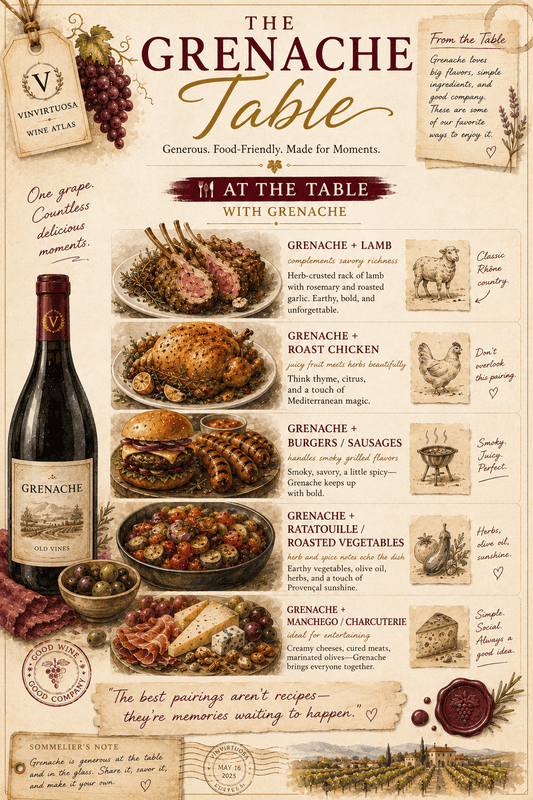
One of Grenache’s greatest strengths is how naturally it fits at the table. Some red wines can feel a little rigid with food, demanding very specific pairings or leaning too heavily toward either rich meats or deeply savory dishes. Grenache is much more flexible. Its combination of juicy fruit, spice, warmth, and moderate tannins makes it one of the easiest red grapes to pair across a wide range of meals, from casual grilling and charcuterie to roast chicken, Mediterranean dishes, and cozy fall dinners.
Part of the magic is balance. Grenache usually has enough fruit to feel generous and satisfying, but not so much tannin that it overwhelms the food. Its red berry flavors can echo sweetness in roasted vegetables or char from the grill, while its herbal and spicy notes make it especially comfortable alongside dishes built around garlic, rosemary, thyme, olive oil, tomatoes, and smoky flavors. In other words, Grenache often feels less like a demanding “wine pairing challenge” and more like a naturally good dinner companion.
Why Grenache Works So Well with Food
Grenache’s food-friendliness starts with its fruit profile. The grape often shows ripe strawberry, raspberry, red cherry, and wild berry notes, which can be surprisingly versatile at the table. Those flavors work beautifully with roasted and grilled foods, where caramelization and smoky edges meet Grenache’s juicy fruit in a very satisfying way. A charred burger, grilled sausage, or roast chicken can all feel even more inviting when paired with a wine that has both freshness and warmth.
Its spice and herb notes are another advantage. Grenache often carries hints of dried herbs, white pepper, licorice, orange peel, or baking spice, depending on where it is grown and how it is made. That makes it a particularly natural partner for Mediterranean cooking, where herbs, olives, tomatoes, roasted vegetables, and olive oil all play central roles. A wine with a little garrigue-like herbal character or a touch of peppery spice feels right at home beside dishes with rosemary, thyme, eggplant, peppers, and garlic.
Texture matters too. Grenache generally has moderate tannins rather than the firmer structure of Cabernet Sauvignon or Nebbiolo, which makes it more forgiving at the table. It can still stand up to grilled meats and richer dishes, but it usually does not bully lighter foods. That softness is part of what makes Grenache such a smart bottle for entertaining. If the table includes a little bit of everything—charcuterie, roast vegetables, grilled meats, cheeses, maybe even a tomato-based pasta or lentil dish—Grenache often has the range to handle it all.
Meat and Poultry Pairings
Grenache and grilled or roasted meats are a very happy match. The grape’s ripe fruit and warmth make it a natural partner for foods with browning, smoke, and savory depth, while its moderate tannins help it stay flexible rather than heavy.
Grilled lamb chops are one of the classic pairings. Lamb’s savory richness and herbal seasonings pair beautifully with Grenache’s red fruit and spice, especially if the wine has a bit of Southern Rhône character. Roast chicken is another excellent choice, particularly when it is seasoned with herbs, garlic, or lemon. A juicy, medium-bodied Grenache can echo the roast flavors without overwhelming the dish.
Pork tenderloin is a particularly smart match because it sits in that sweet spot between lighter and richer meats. Grenache has enough body to handle it, but enough freshness to keep the pairing lively. Duck can work beautifully too, especially if the dish leans toward cherry, herbs, or spice. And of course, Grenache is a terrific grilling wine. Burgers and sausages—especially with smoky, peppery, or herb-forward seasonings—feel completely at home with a fruit-driven but spicy bottle of Grenache.
Mediterranean and Vegetable-Forward Pairings
Grenache is especially good with Mediterranean cooking, which may be one of the strongest arguments for keeping a bottle around from summer into fall. The grape’s fruit, spice, and herbal notes make it incredibly comfortable with foods built around tomatoes, peppers, eggplant, lentils, olive oil, and roasted vegetables.
A classic ratatouille is a natural fit, with its slow-cooked mix of tomatoes, zucchini, eggplant, peppers, and herbs. Grenache’s juicy fruit brightens the dish, while its savory side mirrors the herbs and roasted vegetable sweetness. Roasted eggplant is another excellent pairing, especially when served with tomatoes, yogurt, tahini, or Mediterranean spices. The wine’s warmth and texture help it feel substantial enough for the dish, even when there is no meat involved.
Lentils with herbs may not be the first pairing people think of for red wine, but Grenache’s softer structure makes it surprisingly adaptable. A lentil dish with olive oil, rosemary, thyme, or caramelized onions can work beautifully, especially with a fresher, less heavily oaked Grenache. Tomato-based pasta is another easy win. Grenache’s red fruit naturally complements tomato sauces, while its spice and moderate tannins keep the pairing from feeling too acidic or sharp.
Then there are all the foods that make up a casual Mediterranean spread: grilled peppers, roasted vegetables, olive tapenade, and a selection of tapas. Grenache is one of those wines that can move easily across a table like that, making it especially useful for entertaining when the menu includes a mix of savory bites rather than one formal entrée.
Cheese, Charcuterie, and Entertaining Foods
Grenache is also a wonderful cheese-board and charcuterie wine. Its ripe fruit and moderate tannins make it easier with salty cured meats and aged cheeses than some more structured reds, and its spice and warmth help it feel satisfying enough to anchor an appetizer spread.
Manchego is a particularly good match, especially if you are leaning into the Spanish Garnacha angle. The nutty, salty richness of the cheese plays beautifully with Grenache’s fruit and spice. Aged Gouda can also be lovely, especially with a richer or more concentrated bottle, since the cheese’s caramelized, savory notes pick up Grenache’s warmth and generosity. Sheep’s milk cheeses in general often work well, bringing both richness and tang that Grenache can handle comfortably.
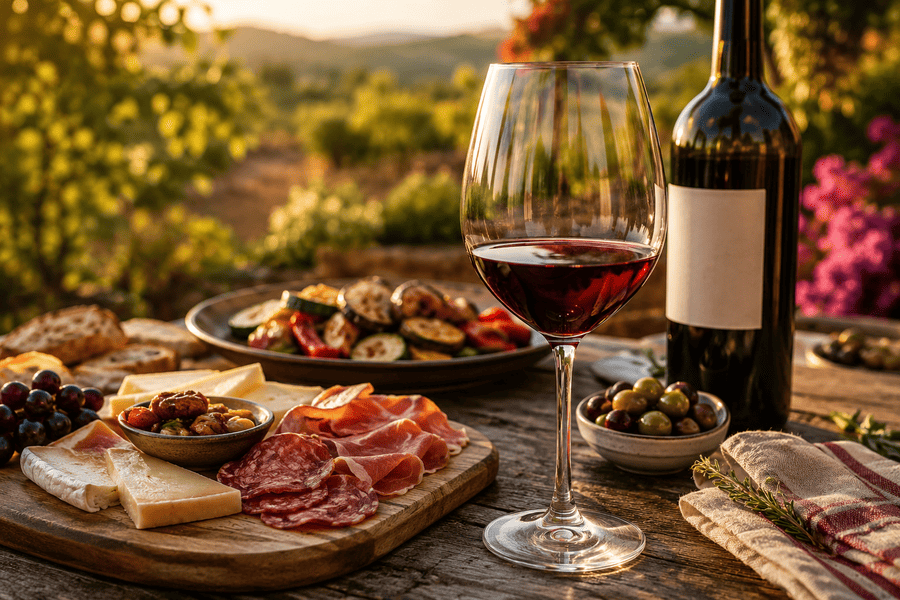
And then there is charcuterie, which may be one of Grenache’s most reliable entertaining partners. Salami, prosciutto, chorizo, pâté, olives, nuts, roasted peppers, and rustic bread all make sense with Grenache because the wine has enough fruit to soften salty, savory edges and enough spice to feel integrated with the whole board. If you are building a late-summer or early-fall grazing table, Grenache is one of the safest and most satisfying bottles you can open.
A Note on Lighter Pairings
One of the most useful things about Grenache is that lighter, fresher styles can work with foods that do not always feel like obvious “red wine foods.” A slightly chilled bottle with grilled salmon, roasted vegetables, herb-roasted chicken, or even a hearty grain salad can be a lot of fun. Grenache is not usually the first grape people think of for these kinds of dishes, but that is part of its charm. It can move comfortably between the grill, the roast chicken, the charcuterie board, and the vegetable platter without feeling out of place.
That versatility is exactly why Grenache deserves so much more credit as a food wine. It can be rustic or refined, casual or dinner-party ready, summery or autumnal. And for a grape that is often called underrated, that kind of flexibility feels like a very strong argument in its favor.
What Bottles to Try for National Grenache Day
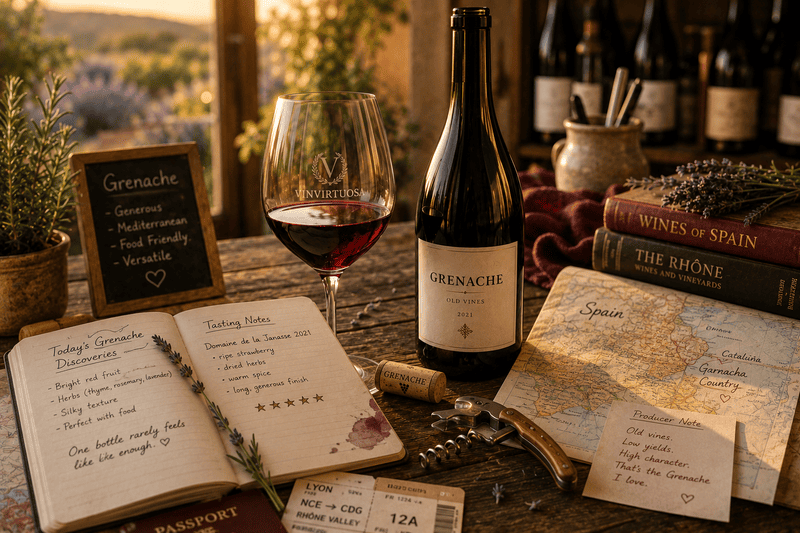
National Grenache Day is the perfect excuse not just to read about Grenache, but to actually open a bottle and see how all of these styles, regions, and personalities come to life in the glass. One of the most enjoyable things about shopping for Grenache is that there is more than one “right” way to celebrate it. You can keep things affordable and juicy with a Spanish Garnacha, lean into a classic Southern Rhône blend, explore a single-varietal New World expression, or treat yourself to a more serious bottle from Châteauneuf-du-Pape.
If you are wondering where to start, I would approach National Grenache Day by thinking about the grape in four different expressions: a value Spanish Garnacha, an accessible Southern Rhône bottle, a New World single-varietal Grenache, and a splurge-worthy Châteauneuf-du-Pape. Together, these bottles show just how versatile Grenache can be.
Borsao Tres Picos Garnacha
Region: Campo de Borja, Spain
Approximate Price: Around $18–25
If you want a bottle that captures the joyful, generous side of Garnacha without requiring a major splurge, Borsao Tres Picos Garnacha is a fantastic place to start. This wine has become something of a modern classic in the “value red wine” category, and for good reason. It shows exactly why Spanish Garnacha deserves more attention: ripe fruit, warmth, spice, and a lot of personality for the price.
In the glass, Tres Picos typically leans into ripe berry fruit, often showing blackberry, raspberry, plum, and dark cherry notes along with hints of pepper, spice, and a touch of Mediterranean warmth. It has a fuller, richer personality than some lighter expressions of Grenache, but it still feels approachable and easy to enjoy. This is not a shy wine—it is generous, plush, and flavorful in a way that makes it incredibly crowd-pleasing.
For National Grenache Day, this is the bottle I would recommend if you want to show readers that Grenache can be affordable, expressive, and immediately satisfying. It is the kind of wine that works beautifully with burgers, grilled sausages, roast chicken, or a charcuterie board, and it makes a very persuasive argument for why Garnacha should be on more people’s shopping lists.
Famille Perrin Côtes du Rhône Rouge
Region: Côtes du Rhône, Southern Rhône, France
Approximate Price: Around $15–20
If Borsao Tres Picos shows Grenache’s plush, fruit-forward Spanish side, Famille Perrin Côtes du Rhône Rouge offers a wonderful introduction to Grenache in one of its most classic contexts: the Southern Rhône blend.
Famille Perrin is one of the Rhône’s most recognizable names, and their Côtes du Rhône Rouge is an excellent bottle for readers who want to understand how Grenache behaves when paired with traditional Rhône blending partners. Grenache is the heart of the wine, bringing juicy red fruit, warmth, and a generous texture, while Syrah, Mourvèdre, and other permitted grapes add structure, spice, and savory complexity.
This is the kind of bottle that tends to show ripe cherry and berry fruit alongside dried herbs, pepper, and that unmistakable Southern Rhône warmth. It feels a little more savory and herbal than the Borsao, which makes it especially useful in the context of this article. It helps illustrate one of the key points about Grenache: the grape can be both fruit-forward and deeply food-friendly, especially when it is part of a Rhône-style blend.
For National Grenache Day, I love this as the “classic, accessible Rhône” pick. It is easy to find, reasonably priced, and versatile at the table. Pair it with roast chicken, lamb, sausages, tomato-based pasta, or a spread of Mediterranean dishes, and it will feel right at home.
Yalumba Samuel’s Collection Bush Vine Grenache
Region: Barossa, Australia
Approximate Price: Around $20–30
To show readers that Grenache is not just a Spanish or Southern French story, I would absolutely include a bottle like Yalumba Samuel’s Collection Bush Vine Grenache. This wine is a great reminder that Grenache can thrive far beyond Europe and that modern Australian examples can be both generous and impressively polished.
Yalumba’s Bush Vine Grenache brings a different expression of the grape into the conversation. Here, Grenache often shows vibrant red berry fruit, spice, and floral lift, with enough ripeness to feel unmistakably warm-climate, but enough freshness to stay balanced and energetic. It is a very useful bottle for the article because it highlights Grenache on its own rather than as part of a blend, allowing readers to focus on the grape’s perfume, fruit profile, and silky texture more directly.
This is the bottle I would recommend if you want to show the New World side of Grenache without losing a sense of elegance. It can appeal to readers who enjoy Pinot Noir for its red fruit and softer tannins, but also to Syrah or Zinfandel drinkers who appreciate spice, warmth, and generosity. It is also a very food-friendly bottle—great with grilled pork, roast chicken, sausages, charcuterie, or Mediterranean vegetable dishes.
Domaine de la Janasse Châteauneuf-du-Pape
Region: Châteauneuf-du-Pape, Southern Rhône, France
Approximate Price: Around $50–70+ depending on the bottling and market
If National Grenache Day feels like the right occasion to open something truly special, Domaine de la Janasse Châteauneuf-du-Pape would be my splurge recommendation. This is the bottle for readers who want to experience Grenache in a more serious, layered, and age-worthy form—one that still reflects the grape’s generosity, but with far more depth and complexity.
Domaine de la Janasse is a highly respected name in Châteauneuf-du-Pape, and it is an excellent choice for a Grenache-focused article because it shows the grape in one of the appellation’s most compelling forms. Depending on the cuvée, you can expect a wine that combines ripe red and dark fruit with spice, dried herbs, warmth, and a savory Southern Rhône character that unfolds beautifully in the glass. There is often a sense of concentration and richness, but also a lovely thread of freshness and structure that keeps the wine from feeling heavy.
This is the bottle I would reach for if you want National Grenache Day to feel like a true event. Open it with lamb, duck, braised meats, or a meal built around herbs, roasted vegetables, and rich, slow-cooked flavors, and it will show exactly why Grenache can be far more than an easygoing weeknight red. It can be generous, yes—but it can also be serious, layered, and deeply expressive.
How I’d Build a National Grenache Day Tasting
If you really want to have fun with the holiday, consider opening two bottles instead of one and tasting them side by side. One of the best combinations would be:
- Borsao Tres Picos Garnacha for the ripe, plush, fruit-driven Spanish expression
- Famille Perrin Côtes du Rhône Rouge or Yalumba Samuel’s Collection Bush Vine Grenache for a more Rhône-inspired or New World take on the grape
That comparison would do a beautiful job of illustrating one of the central ideas of this article: Grenache is not one fixed style of wine. It can be juicy and generous, herbal and savory, plush and warming, or polished and layered depending on where it is grown and how it is made.
A Quick Shopping Guide for National Grenache Day
If you are standing in a wine shop and wondering which direction to go, here is the simplest way to think about it:
- Want something affordable and crowd-pleasing? Try Borsao Tres Picos Garnacha.
- Want a classic Rhône-style introduction to Grenache? Pick up Famille Perrin Côtes du Rhône Rouge.
- Want to taste Grenache on its own in a New World style? Go for Yalumba Samuel’s Collection Bush Vine Grenache.
- Want to splurge on something serious and memorable? Choose Domaine de la Janasse Châteauneuf-du-Pape.
National Grenache Day is ultimately about enjoying the grape in your own way, whether that means opening an affordable Spanish Garnacha with burgers on a weeknight or pouring a serious bottle of Châteauneuf-du-Pape with a special dinner. The important thing is simply to give Grenache the spotlight it so often deserves.
How to Serve Grenache
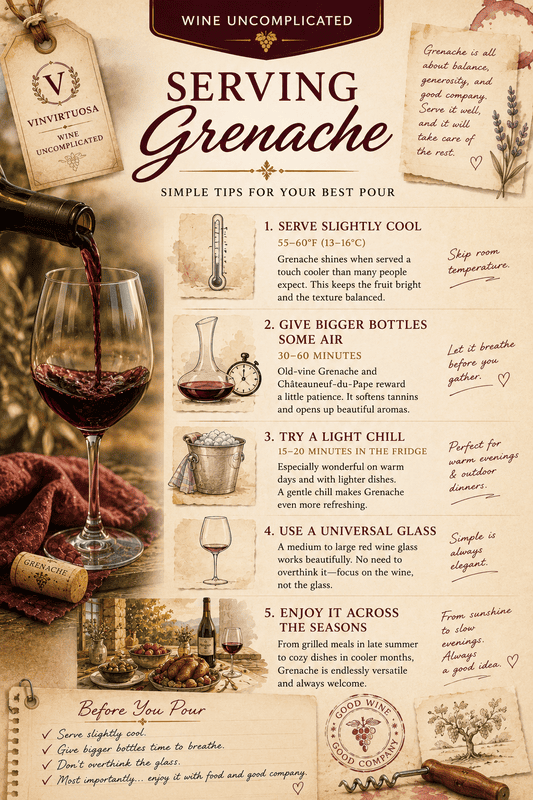
Grenache is one of those grapes that does not require a lot of fuss, but a few small serving choices can make a noticeable difference in how the wine shows in the glass. Because Grenache can range from bright and fruit-forward to rich and serious, there is no single rule that fits every bottle. Still, a few general guidelines will help you get the most out of it.
Serve Grenache Slightly Cool, Not Warm
In most cases, Grenache is best served at about 55–60°F, which is slightly cooler than what many people think of as “room temperature.” This is especially important because Grenache can naturally carry a fair amount of alcohol, and if it is served too warm, the wine can feel heavier, looser, and more alcoholic than it really is. Serving it a bit cooler helps tighten the wine up, sharpen the fruit, and keep the overall impression fresher and more balanced.
If you are opening a lighter, fruit-forward Grenache—especially in warmer weather—it can absolutely benefit from a slight chill. Fifteen to twenty minutes in the refrigerator before serving is often enough to make the wine feel brighter, juicier, and even more refreshing. This can work beautifully with bottles you plan to serve alongside grilled foods, charcuterie, roast chicken, or Mediterranean dishes during late summer and early fall.
Consider Decanting More Serious Bottles
While a simple, everyday Garnacha or Côtes du Rhône usually does not need much air, more serious Grenache-based wines can benefit from a little time in a decanter. Old-vine bottlings, more concentrated single-varietal Grenache, and especially wines from places like Châteauneuf-du-Pape can open up beautifully with some oxygen.
A short decant can help soften the wine’s structure, let the fruit emerge more clearly, and give the spice, herbs, and savory notes more room to unfold. If you are opening a richer or more expensive bottle for National Grenache Day, giving it 30 minutes to an hour of air can be well worth the effort.
Use a Universal Red Wine Glass
Grenache does not require highly specialized glassware. A universal red wine glass works perfectly well and will allow the wine’s fruit, spice, and aromatics to show nicely. If you happen to have a Burgundy-style glass with a slightly wider bowl, that can also work well for more aromatic or serious bottles, but there is no need to overcomplicate things. The goal is simply to give the wine enough space to open up while keeping the experience relaxed and enjoyable.
Drink Most Grenache Young, But Don’t Underestimate the Serious Bottles
Many Grenache wines are made to be enjoyed relatively young, when their fruit is fresh, their texture is generous, and their energy feels lively and inviting. That is especially true for value Garnacha, approachable Côtes du Rhône, and many easygoing everyday bottlings. These wines are all about immediate pleasure, and there is no need to wait around for them to become something else.
That said, it would be a mistake to assume Grenache is only a “drink now” grape. Old-vine Grenache, top examples from Priorat, and serious Châteauneuf-du-Pape can age beautifully, developing more savory depth, dried fruit notes, spice, earth, and complexity over time. If you are opening a bottle in that category, it is worth remembering that Grenache is capable of far more than simple fruit and easy charm.
In other words, Grenache rewards a relaxed approach, but it also rewards attention. Serve it slightly cool, give the serious bottles a little air, and match the style of the wine to the mood of the meal. It is a grape that can be wonderfully unfussy, but when treated well, it has a way of giving even more back.
Final Thoughts
Grenache may not have the same immediate name recognition as Cabernet Sauvignon, Pinot Noir, or Syrah, but that is part of what makes it such a rewarding grape to explore. It often sits just outside the spotlight, quietly doing everything so many wine lovers claim to want from a bottle: generous fruit, spice, warmth, food-friendliness, versatility, and a personality that can shift beautifully from one region and season to the next.
Over the course of this article, Grenache has revealed itself as far more than a simple “easy red.” It can be juicy and cheerful in a value Spanish Garnacha, savory and layered in a Southern Rhône blend, polished and expressive in a New World single-varietal bottling, and deeply serious in a bottle of Châteauneuf-du-Pape or Priorat. It can feel right at home with burgers and charcuterie in late summer, then move seamlessly into roast chicken, mushrooms, and cozy autumn dinners as the weather changes. It can be casual enough for a weeknight meal and complex enough to hold your attention through a special bottle shared slowly over dinner.
That range is exactly why Grenache deserves more attention than it often gets. It is one of the wine world’s great shape-shifters: fruity but not simplistic, warm but often fresh, generous without always being heavy, and capable of both value and depth depending on where you look. It can shine in blends, but it is just as compelling when allowed to speak on its own.
National Grenache Day is the perfect excuse to explore all of those sides of the grape. Open a bottle of Spanish Garnacha if you want something ripe, juicy, and crowd-pleasing. Reach for a Rhône blend if you love savory herbs, spice, and a more classic Southern French expression. Try a single-varietal Grenache from Australia or California if you want to see how the grape behaves on its own in a New World setting. Or make the occasion special with a serious bottle of Châteauneuf-du-Pape and let Grenache show just how layered and age-worthy it can be.
Grenache may be one of the wine world’s quiet overachievers—capable of charm, complexity, and remarkable versatility without always demanding the spotlight. And if National Grenache Day inspires you to pick up a bottle, there is a very good chance you will come away wondering why you did not make room for Grenache in your life sooner.