Opening: Why Evaluation Matters
There is a difference between drinking wine and evaluating wine.
Drinking is about enjoyment. It’s about the setting, the company, the meal, the mood. It’s about whether the wine feels good in the moment.
Evaluating, however, is something more deliberate. It asks you to slow down. To separate preference from quality. To look beyond whether you like something and instead examine how it is constructed, how it moves across the palate, how it holds itself together.
Modern wine culture has been deeply shaped by scores. Critics such as Robert Parker influenced an entire generation of producers and consumers by assigning numbers that could move markets overnight. Publications like Wine Spectator reinforced the idea that wine could be quantified, ranked, and compared in a single glance.
There is value in structure and standards. Scores created a shared language and a sense of accountability. But numbers alone do not tell the full story of a wine.
My approach is different.
When I evaluate a wine, I am looking for structure, integrity, and overall experience. I care about balance more than power. Expression more than trend. I am interested in whether a wine is honest to its origin, thoughtfully constructed, and emotionally resonant.
Wine is both technical and human. It is chemistry and climate, but it is also memory, culture, and craftsmanship. A wine can be perfectly sound yet forgettable. It can also be modest in scale yet profoundly moving.
When I evaluate a wine, I’m not just asking, “Do I like this?” I’m asking something deeper.
Balance: The Foundation of Great Wine
If evaluation has a starting point, it is balance.
Balance is the harmony between a wine’s core components: acidity, tannin, alcohol, fruit concentration, sweetness, and oak. No single element should dominate or feel disconnected from the others. Instead, they should work together in a way that feels seamless — intentional.
When a wine is out of balance, you feel it immediately.
Alcohol can come across as hot, burning slightly at the back of the throat and overshadowing everything else. Acidity can feel flabby or dull, leaving the wine lifeless and heavy. Tannins can be aggressive or drying, stripping the palate rather than framing the fruit. Oak can sit on top of the wine instead of integrating into it.
Imbalance distracts. It pulls your attention toward a flaw rather than allowing you to experience the wine as a whole.
Balance, on the other hand, creates effortlessness. Even powerful wines can feel graceful when their components are aligned. A wine can be rich, concentrated, and full-bodied — but if the acidity supports the fruit and the tannins are polished rather than harsh, it feels composed rather than overwhelming.
This is why balance matters more than power.
Take, for example, a high-alcohol Zinfandel. At 15.5% alcohol, it may deliver bold blackberry jam, baking spice, and intensity. But if the alcohol protrudes and the acidity cannot lift the fruit, the wine feels heavy and short-lived on the palate. Compare that to a similarly ripe Zinfandel where the acidity is vibrant, the tannins are structured yet smooth, and the alcohol is integrated. The second wine feels alive. It carries its weight with purpose.
Power can impress.
Balance endures.
When I evaluate a wine, balance is non-negotiable. Without it, nothing else matters.
Structure: The Architecture Beneath the Flavor
If balance is harmony, structure is architecture.
Structure is what holds a wine upright. It is the framework beneath the fruit, the invisible scaffolding that determines whether a wine feels loose and fleeting or composed and age-worthy.
When I assess structure, I’m looking closely at four primary elements: acidity, tannin, alcohol, and texture.
Acidity is the backbone.
It gives a wine lift, precision, and energy. Acidity is what makes your mouth water and what allows a wine to pair beautifully with food. Without sufficient acidity, even the most aromatic wine can feel flat. With it, the wine feels alive. Structurally, the wine shows tension and direction when acidity is well-defined — it carries the flavors forward rather than letting them collapse.
Tannin is the framework.
Primarily found in red wines (though present in some whites), tannin provides grip and shape. It is the gentle drying sensation on your gums. Fine tannins feel polished and integrated; coarse tannins feel aggressive and angular. The quality of tannin often says more about craftsmanship and grape handling than sheer intensity does.
Alcohol contributes weight.
Alcohol influences body and warmth. A higher alcohol wine will feel fuller and broader across the palate, while a lower alcohol wine often feels lighter and more agile. The key is integration. Alcohol should support the wine’s body without protruding or creating heat.
Texture is the mouthfeel.
This is where evaluation becomes especially nuanced. Is the wine silky? Creamy? Chalky? Linear? Rounded? The mid-palate reveals a great deal about a wine’s structure — whether it expands generously, tightens with tension, or falls away too quickly. Texture often reflects both winemaking choices and grape variety, and it can dramatically shape the overall experience.
When I describe a wine structurally, I am not focusing on flavor alone. Fruit notes can be charming, but structure determines longevity, versatility, and seriousness.
Flavor is the surface.
Structure is the foundation.
A wine with compelling structure doesn’t just taste good in the moment — it holds your attention.
Length: The Finish Tells the Truth
The finish is one of the most revealing — and most overlooked — aspects of wine evaluation.
When professionals refer to a wine’s “finish,” they are talking about how long the flavors persist after you swallow (or spit). Not the immediate impression, not the first burst of fruit — but what remains.
A short finish might last five seconds or less. The flavors fade quickly, sometimes disappearing almost as soon as the wine leaves the palate. There is nothing necessarily wrong with a short finish, especially in simple, everyday wines. But it signals modest concentration and limited depth.
A long finish — 20 seconds or more — is something else entirely. The flavors echo. They evolve. You may notice secondary notes emerging after the fruit subsides: spice, mineral tension, subtle earthiness, or lingering acidity that keeps the wine vibrating on the palate.
This persistence is not about intensity alone. It is about continuity. The wine maintains its composure and presence even after the sip has ended.
The finish often reveals a wine’s true quality more than the first sip.
Many wines make a strong entrance. Ripe fruit, bold aromatics, immediate appeal. But if the structure cannot sustain that impression, the experience falls away quickly. Great wines, by contrast, build momentum. They unfold in stages. The mid-palate expands, and the finish carries the experience forward rather than cutting it short.
Length suggests depth.
Depth suggests intention.
When a wine lingers gracefully, it leaves you with something to consider — and often, something to remember.
Typicity: Does It Express Where It’s From?
Typicity is one of the most nuanced aspects of wine evaluation — and one of the most important.
At its core, typicity asks a simple question:
Does this wine taste like what it claims to be?
Does a Sauvignon Blanc taste like Sauvignon Blanc?
Does a Barolo taste like Barolo?
That may sound obvious, but the answer is not always straightforward.
A classic Sauvignon Blanc should show vibrant acidity, freshness, and recognizable varietal character — whether that leans toward citrus, green herbs, or tropical fruit depending on origin. A Barolo, by definition, should reflect the structure and aromatic profile of Nebbiolo: firm tannins, elevated acidity, and notes that may range from red fruit to rose petal, tar, and earth with age.
Typicity goes beyond grape variety. It also considers place.
A Pinot Noir from Burgundy will typically express itself differently than one from Napa Valley. Burgundy’s cooler climate and limestone-rich soils often produce wines with tension, subtlety, and earthy complexity. Napa Valley’s warmer conditions can yield riper fruit, broader texture, and greater alcohol weight.
Neither is inherently better. The question is whether the wine authentically reflects its origin.
This is where terroir becomes central.
Terroir encompasses climate, soil, elevation, and even vineyard exposure. Climate influences ripeness levels, acidity retention, and aromatic development. Soil can affect drainage and vine stress, subtly shaping texture and minerality. Vintage conditions further refine the expression.
But typicity also intersects with winemaking choices.
Oak usage, extraction levels, fermentation techniques, and stylistic decisions can either highlight regional identity or obscure it. A heavily oaked Sauvignon Blanc may taste more like the barrel than the grape. An over-extracted Pinot Noir may lose the delicacy that defines it.
When I evaluate typicity, I am asking whether the wine honors both its grape and its geography.
Does it speak clearly of where it comes from?
Or does it conform to a trend that could exist anywhere?
A wine that expresses typicity with clarity demonstrates integrity. It shows respect for origin. And in doing so, it offers something more meaningful than flavor alone — it offers context.
For me, that context matters.
Ageability: Does It Have a Future?
Not every great wine needs to age. But every serious evaluation should consider whether it can.
Ageability is not about prestige or price. It is about structural capacity. A wine’s ability to evolve over time depends largely on three core elements: acidity, tannin, and concentration.
Acidity acts as a preservative. Wines with vibrant acidity tend to retain freshness as they mature.
Tannin provides structure and stability, especially in red wines. Firm, well-integrated tannins soften and become more complex with time.
Concentration — the depth and density of fruit and extract — ensures that as primary flavors fade, there is enough substance to support development.
When these elements are in balance, a wine has the framework to evolve rather than decline.
In youth, most wines express primary characteristics — fresh fruit, floral notes, bright aromatics. With time, they begin to show secondary characteristics, often influenced by winemaking: spice from oak, creaminess from lees aging, savory undertones. Over longer periods, tertiary characteristics emerge — dried fruit, earth, mushroom, leather, tobacco, forest floor. These are the notes that make aged wines so compelling and layered.
But here’s the important part: not all wines are meant to travel that journey.
Some wines are crafted for immediacy. Fresh Sauvignon Blanc, Beaujolais meant for early drinking, vibrant rosé — their charm lies in their energy and brightness. There is nothing inferior about a wine designed for pleasure in the present moment.
When I assess ageability, I’m not asking whether a wine should be cellared. I’m asking whether its structure suggests it could be.
Does it have the acidity to carry itself?
Do the tannins feel firm enough to soften gracefully?
Is there depth beneath the fruit?
A wine built to age should feel slightly restrained in youth — as though it is holding something back. It should suggest potential.
At the same time, I believe wine should be enjoyed, not hoarded. Cellaring is a choice, not a requirement. The true measure of quality is not how long a wine can sit untouched, but whether it is thoughtfully constructed for its intended lifespan.
Practicality matters.
Pleasure matters.
Potential is simply one more dimension of evaluation.
When a wine has a future, it shows.
Emotional Impact: The Intangible Factor
After structure, balance, typicity, and ageability, there is one final question I always ask — and it cannot be measured with a number.
How does this wine make me feel?
This is where evaluation moves beyond technical assessment and into something more human. A wine can be perfectly balanced, structurally sound, and true to its origin — and still leave no lasting impression. It can check every box and yet feel forgettable.
Emotional impact is the intangible factor.
Does the wine evoke something?
Does it tell a story?
Would I think about it tomorrow?
Sometimes the emotional connection comes from precision — a wine so focused and elegant that it commands attention. Other times, it comes from warmth and generosity, a sense of hospitality in the glass. Occasionally, it comes from tension — a wine that feels restrained and contemplative, unfolding slowly and asking you to meet it halfway.
This is where I differentiate myself from score-only evaluation.
A number can indicate quality, but it cannot fully capture resonance. It cannot measure whether a wine made you pause mid-conversation. Whether it shifted the energy at the table. Whether it made you curious about the place it came from.
Wine is agricultural, chemical, and technical — yes. But it is also cultural and emotional. It represents land, climate, decisions, and time. When those elements align with intention, the result can feel expressive in a way that transcends flavor notes.
For me, a truly compelling wine is one that lingers not just on the palate, but in the mind.
That is the difference between a good wine and a memorable one.
What I Don’t Focus On
Just as important as what I evaluate is what I intentionally set aside.
I don’t chase trends.
The wine world moves in cycles — natural wine surges, ultra-ripe styles rise and fall, chillable reds become the moment. Trends can be exciting, and they often reflect genuine shifts in consumer interest. But when I evaluate a wine, I am not asking whether it fits the current narrative. I am asking whether it is well-made, balanced, and true to itself.
I don’t score based on price.
Expensive does not automatically mean exceptional. Likewise, affordable does not mean inferior. I have tasted modestly priced wines with remarkable integrity and luxury bottles that felt more impressive in reputation than in execution. Price can reflect rarity, labor, or land value — but it does not replace craftsmanship.
don’t overvalue power.
Intensity can be captivating. High alcohol, bold extraction, heavy oak — these elements can make an immediate statement. But power without precision feels loud rather than compelling. Elegance, restraint, and harmony often reveal more skill than sheer concentration.
And I don’t penalize simplicity if it is well-executed.
Not every wine needs to be profound. Some are meant to be fresh, joyful, and uncomplicated. A clean, balanced, thoughtfully made everyday wine deserves recognition for doing exactly what it set out to do. Complexity is admirable, but clarity and purpose matter just as much.
By staying grounded in these principles, my evaluations remain consistent.
Integrity over hype.
Craft over trend.
Quality over price tag.
That consistency is what builds trust — and trust is everything in wine.
How This Translates Into My Tastings
Evaluation is not reserved for critics. It is a skill — and like any skill, it can be taught.
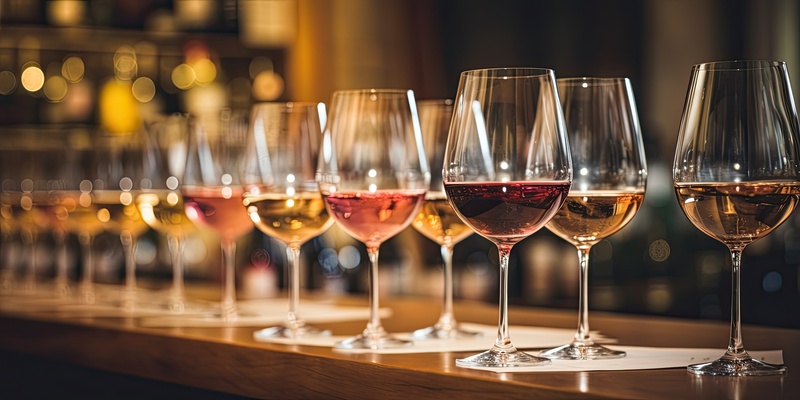
When I host tastings, whether private or corporate, I don’t simply pour wine and describe flavors. I guide people through structure. I show them how to recognize balance. I teach them how to feel acidity, identify tannin, and notice length. We move beyond “I like it” or “I don’t” and into why.
That shift is powerful.
Structured tastings create a shared language in the room. When a group begins to recognize how acidity lifts a dish or how tannin shapes texture, the experience becomes collaborative. People lean in. Conversations deepen. The wine becomes a tool for engagement rather than just a beverage.
Understanding how to evaluate wine transforms the way people taste — and that shift is especially powerful in group settings.
In corporate environments, this structured approach fosters connection without pressure. It encourages observation, discussion, and perspective. There is no right or wrong answer, but there is guidance. Participants leave not just having tasted wine, but having learned something tangible and repeatable.
Most importantly, I make evaluation accessible.
It is never about intimidation or proving knowledge. It is about demystifying what is already happening in the glass. Once people understand balance and structure, their confidence changes. They trust their palate. They ask better questions. They engage more fully.
And that is when wine becomes more than a drink — it becomes an experience.
A Guided Experience
Wine is layered. The more you understand how to evaluate it — balance, structure, length, typicity, ageability — the more intentional and enjoyable the experience becomes.
And that shift doesn’t have to happen alone.
If you’re interested in a guided tasting experience for your team or private group, I design structured, engaging sessions that break down wine in a way that is educational, approachable, and memorable.
Whether in-person or virtual, corporate or private, each tasting is built around clarity and connection. We explore how to detect balance, how structure shapes perception, and how to speak about wine with confidence — without intimidation.
Wine has a unique way of bringing people together. When you add thoughtful structure and shared discovery, it becomes more than a tasting. It becomes a conversation.
You can learn more about my tasting experiences and booking options on my Services page.
Experience Wine with VinVirtuosa
Discover my tasting experiences, private event offerings, and ways we can work together to elevate your next wine gathering.