

Introduction
There’s something timeless about poached salmon—it’s a dish that effortlessly balances elegance and simplicity. Whether you’re planning a quick, healthy weeknight dinner or crafting a centerpiece for a dinner party, poached salmon fits the bill perfectly. Its tender, flaky texture and light, fresh flavor make it a favorite for just about any occasion.
But what truly elevates this dish to gourmet status is the white wine. The gentle poaching process infuses the salmon with delicate, aromatic flavors, as the wine mingles with fresh herbs, citrus, and a hint of spice to create a symphony of taste. The result? A dish that feels refined yet comforting, as if it was made to bridge the gap between casual meals and sophisticated dining.
What’s even better is how simple and versatile this recipe is. With just a few high-quality ingredients and minimal effort, you can create a meal that feels like it took hours to prepare. The white wine does most of the heavy lifting, adding depth and complexity to the poaching liquid, while you get to enjoy the rewards of a perfectly cooked salmon.
This recipe is also wonderfully adaptable—you can pair it with almost any side dish, dress it up with a rich sauce, or keep it light and fresh for a clean, wholesome meal. Whether you’re impressing guests or savoring a quiet evening at home, this poached salmon in white wine is guaranteed to deliver. Let’s dive in and see how easy it is to bring this classic dish to life!
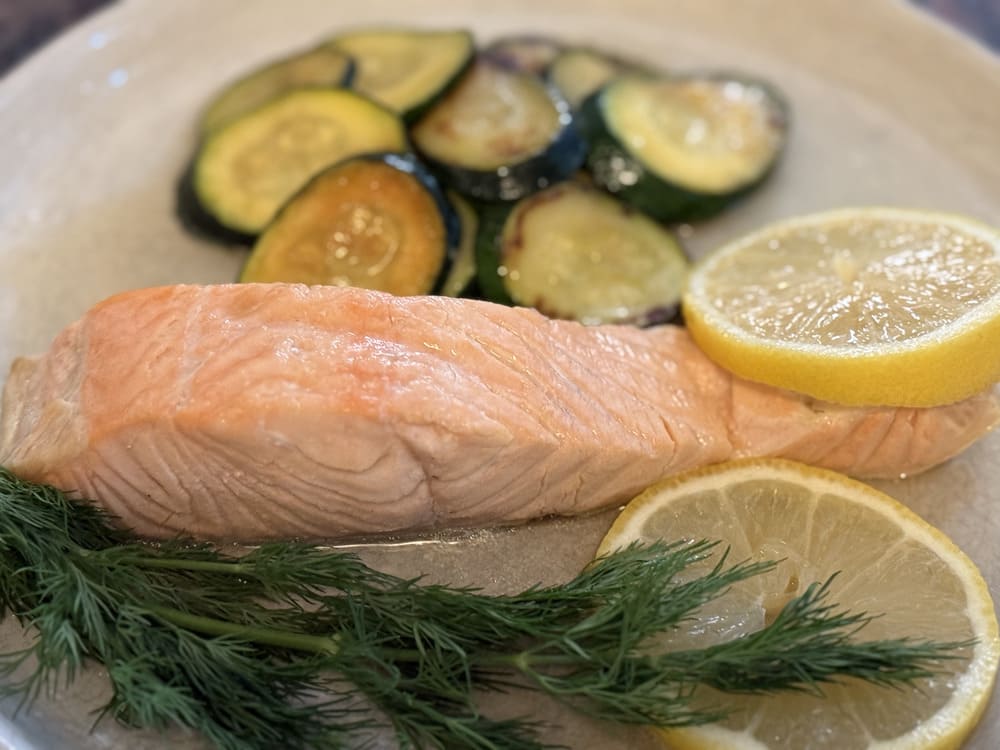
Ingredients and Wine Selection
When it comes to crafting the perfect poached salmon in white wine, every ingredient plays an important role. From the freshness of the fish to the selection of the wine, it’s these thoughtful choices that turn a simple recipe into an unforgettable meal.
Key Ingredients
- Fresh Salmon
The star of this dish is, of course, the salmon. Choose fresh, high-quality fillets or a whole salmon if you’re serving a larger group. Look for vibrant, moist flesh with no strong fishy odor—wild-caught salmon works beautifully for its richer flavor, while farmed varieties offer a milder, buttery taste. - White Wine
The secret weapon of this recipe, white wine adds layers of flavor to the poaching liquid. As it gently simmers, it infuses the salmon with fruity, floral, and slightly acidic notes that enhance its natural richness. - Herbs
Fresh herbs like dill, parsley, thyme, or tarragon are essential for building the aromatic base of the poaching liquid. Each herb adds its unique twist—dill brings a grassy freshness, while tarragon lends a subtle anise-like flavor. - Aromatics
Garlic, shallots, leeks, and citrus slices (like lemon or orange) provide depth and brightness. Black peppercorns or a bay leaf can be added for subtle warmth and complexity. These aromatics harmonize with the wine, creating a balanced and fragrant poaching liquid.
Choosing the Right White Wine
Not all white wines are created equal when it comes to poaching. You’ll want to pick a wine that complements the salmon without overpowering it. Here are some excellent options to consider:
- Sauvignon Blanc: Known for its crisp acidity and herbal notes, Sauvignon Blanc is a top choice. Its zesty, citrus-forward profile highlights the salmon’s natural flavor and pairs beautifully with dill and lemon.
- Chardonnay: Opt for an unoaked or lightly oaked Chardonnay if you’re looking for a richer, rounder flavor. This wine’s creamy texture and notes of apple or pear add a touch of elegance to the dish.
- Pinot Grigio: Light, refreshing, and versatile, Pinot Grigio is an excellent option for a more subtle wine choice. Its clean, mineral-driven character allows the other ingredients to shine.
- Riesling: For a slightly sweeter touch, a dry Riesling works wonderfully. Its stone fruit notes and balanced acidity provide a delightful contrast to the savory richness of the salmon.
Tip: Don’t overthink it—choose a wine you’d enjoy sipping alongside the meal. Since the wine’s flavor becomes more concentrated as it reduces, avoid overly sweet or heavily oaked wines that might overpower the delicate fish.
Balancing Acidity and Flavor
The key to a harmonious poaching liquid lies in balance. The wine provides the acidity needed to tenderize the salmon gently, while the herbs and aromatics build layers of flavor. If your wine feels too sharp or acidic, mellow it with a splash of water or fish stock. Conversely, if the poaching liquid needs more brightness, add a squeeze of fresh lemon juice or an extra dash of wine.
By selecting the right ingredients and thoughtfully balancing the flavors, you’ll create a poaching liquid that transforms your salmon into a dish that’s as refined as it is satisfying. Ready to get started? Let’s dive into the recipe!
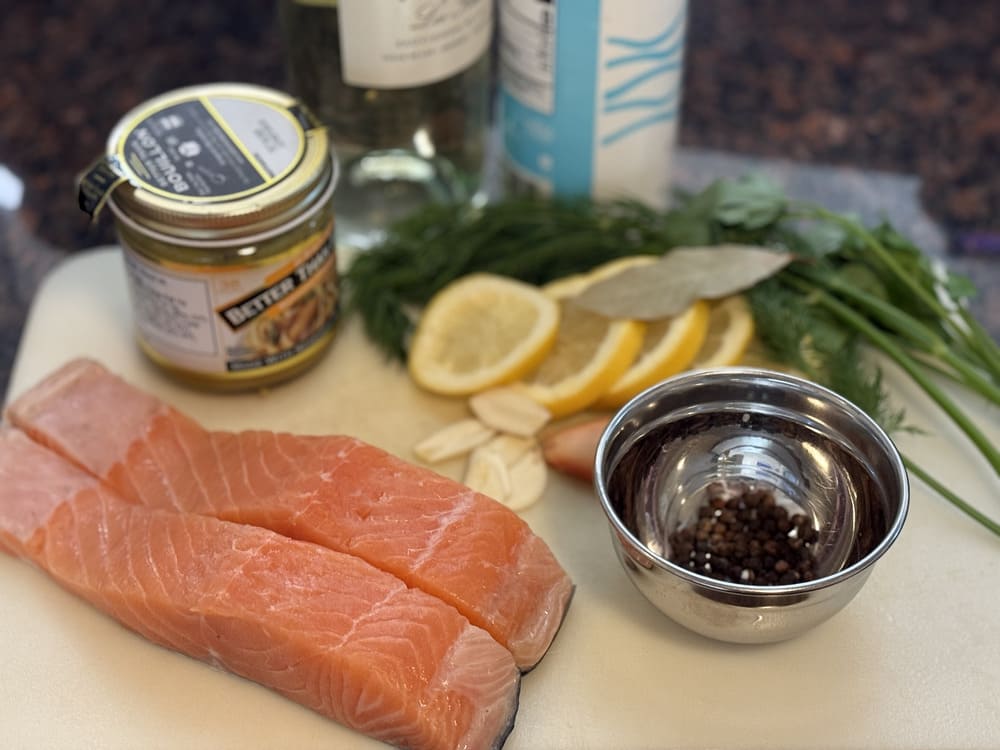
The Recipe
Below is the detailed step-by-step process for making Poached Salmon in White Wine, now including ingredient amounts. These measurements are ideal for serving 4 people and can be adjusted as needed.
Ingredients
- 4 salmon fillets (about 6 oz each), skin on or off, as preferred
- 1 cup white wine (Sauvignon Blanc, Chardonnay, or Pinot Grigio)
- 1 cup low-sodium vegetable or chicken stock
- 1-2 sprigs fresh dill (plus more for garnish)
- 1-2 sprigs fresh parsley
- 1 lemon, thinly sliced
- 2 garlic cloves, thinly sliced
- 1 shallot, thinly sliced (or substitute with 1/4 cup thinly sliced leek)
- 1 bay leaf
- 1 teaspoon black peppercorns
- 1/2 teaspoon salt, plus extra for seasoning the salmon
- Optional garnishes: chopped fresh herbs, lemon slices, or olive oil
Instructions
Step 1: Preparation
- Rinse the salmon fillets under cold water and pat them dry with a paper towel.
- Check for pin bones and remove them with kitchen tweezers if needed.
- Lightly season both sides of the salmon fillets with salt.
Step 2: Creating the Poaching Liquid
- In a large, shallow pan or skillet, combine:
- 1 cup white wine
- 1 cup low-sodium vegetable or chicken stock
- Add the aromatics to the pan:
- 2–3 sprigs fresh dill
- 1 lemon, thinly sliced
- 2 garlic cloves, thinly sliced
- 1 shallot, thinly sliced
- 1 bay leaf
- 1 teaspoon black peppercorns
- Sprinkle in 1/2 teaspoon salt and stir gently to combine.
- Bring the liquid to a gentle simmer over medium heat, avoiding a rapid boil.
Step 3: Poaching the Salmon
- Once the poaching liquid is gently simmering, carefully place the salmon fillets into the pan, ensuring they are fully submerged. Adjust the liquid level with more water if necessary.
- Reduce the heat to low and maintain a very gentle simmer. The surface of the liquid should show minimal bubbling.
- Cook the salmon fillets for 8–10 minutes, depending on thickness. For fillets that are 1 inch thick, 10 minutes is ideal.
- To check for doneness, the salmon should be opaque and flake easily with a fork.
Step 4: Final Touches
- Use a slotted spatula to carefully remove the salmon from the poaching liquid, letting excess liquid drip off.
- Plate the salmon on a serving dish or individual plates.
- Garnish with:
- Chopped fresh herbs, such as dill or parsley
- Additional lemon slices for brightness
- A drizzle of olive oil or a dollop of crème fraîche, if desired

Pairing Suggestions
The beauty of poached salmon in white wine lies in its delicate, nuanced flavors, making it a versatile dish for pairing with both wines and side dishes. Here are thoughtful suggestions to elevate your meal:
Wine Pairing
Poached salmon, with its tender texture and subtle flavor, pairs beautifully with light to medium-bodied white wines. Here are some excellent options:
- Sauvignon Blanc:
- The crisp acidity and citrus notes of Sauvignon Blanc complement the herbal and lemony components of the poaching liquid.
- Look for a bottle with hints of green apple, lime, or subtle herbaceous undertones.
- Chardonnay:
- A lightly oaked Chardonnay adds a touch of creaminess that enhances the richness of the salmon.
- Choose a Burgundy-style or California Chardonnay for balance without overwhelming the dish.
- Pinot Grigio:
- A clean, refreshing Pinot Grigio with notes of pear and lemon makes a lovely match for the dish’s simplicity.
- White Burgundy (Chablis):
- For a more refined pairing, opt for a Chablis. Its mineral-driven profile echoes the delicate flavors of the salmon while providing depth.
- Rosé:
- A dry, Provençal-style rosé offers subtle red fruit notes and a refreshing acidity that pairs surprisingly well with poached salmon.
Non-Alcoholic Options:
- Sparkling water with a twist of lemon or cucumber
- White grape juice blended with a splash of soda water for a crisp mocktail
Side Dishes
To complement the lightness of the salmon, pair it with sides that are equally fresh and vibrant. Here are a few suggestions:
- Steamed Asparagus:
- The grassy, slightly sweet flavor of asparagus is a classic match for salmon. Toss the spears with a drizzle of olive oil and a pinch of sea salt before steaming.
- Herbed Potatoes:
- Lightly roasted or boiled baby potatoes seasoned with fresh parsley, dill, or chives add a hearty yet fresh touch to the meal. A sprinkle of lemon zest ties everything together.
- Citrus Salad:
- Combine mixed greens, orange segments, and thinly sliced fennel. Toss with a light vinaigrette made from olive oil, lemon juice, and a dash of Dijon mustard for a refreshing side.
- Rice Pilaf:
- A simple rice pilaf with slivered almonds and fresh herbs provides a neutral yet flavorful base for the salmon.
- Roasted Vegetables:
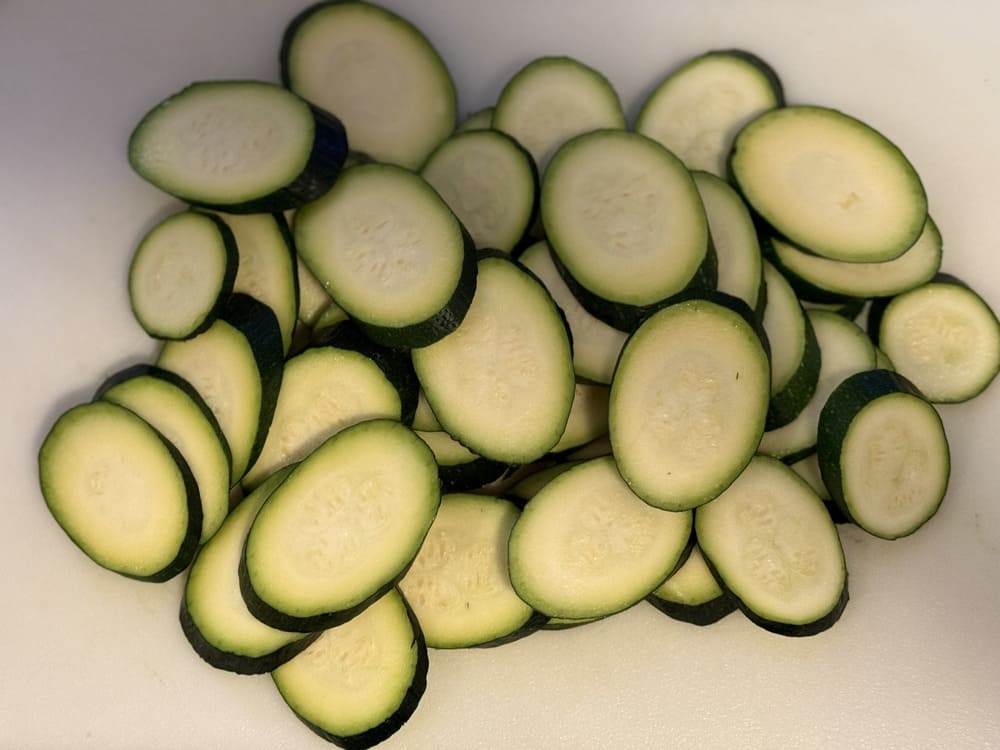
- Seasonal vegetables like zucchini, cherry tomatoes, and bell peppers, roasted with olive oil and a touch of garlic, add color and flavor.
- Cucumber and Dill Salad:
- Thinly sliced cucumbers mixed with a light dressing of yogurt, lemon juice, and fresh dill offer a cool, tangy counterpoint to the warm salmon.
These pairing ideas ensure that the poached salmon remains the star of the meal while creating a balanced, satisfying dining experience. Whether you’re enjoying a casual family dinner or hosting a gathering, this combination of wine and sides is sure to impress!
Why Poach with White Wine?
Poaching salmon with white wine isn’t just about cooking—it’s about creating a culinary experience that balances simplicity with sophistication. Here’s why white wine is the ideal choice for this technique and how it transforms a simple piece of fish into an elegant centerpiece
White Wine Adds Depth and Elegance
- Aromatic Complexity:
- White wine introduces a bouquet of aromas that elevate the dish.
- Depending on the type of wine, you might notice hints of citrus, green apple, floral notes, or even a whisper of honey. These subtle layers add complexity to the salmon without overpowering its delicate flavor.
- A Perfect Match for Salmon:
- Salmon’s natural richness pairs beautifully with the acidity and freshness of white wine.
- The wine enhances the fish’s buttery texture while balancing its slightly oily profile.
- Elegance Through Simplicity:
- Using wine in poaching creates a luxurious depth of flavor with minimal effort. The wine gently infuses the fish, making it taste refined yet approachable.
Benefits of Using Wine for Gentle Cooking
- Moisture Retention:
- The liquid nature of white wine ensures the salmon stays moist and tender throughout the cooking process.
- Unlike high-heat methods like grilling or pan-searing, poaching in wine preserves the fish’s delicate structure and prevents it from drying out.
- Infusion of Flavors:
- White wine acts as a flavor carrier, blending seamlessly with herbs, aromatics, and spices in the poaching liquid.
- As the salmon cooks, it absorbs these subtle flavors, creating a harmonious balance that’s light yet flavorful.
- Gentle Heat for Perfect Texture:
- Poaching with wine provides an even, controlled heat that gently cooks the salmon. This method helps avoid overcooking, resulting in a tender, flaky texture that practically melts in your mouth.
- Enhances the Dining Experience:
- The presence of wine in the dish creates a sensory experience—aromas wafting from the poaching liquid while cooking, flavors complementing each bite, and an elegant pairing when served alongside a glass of the same wine.
A Touch of Culinary Alchemy
Cooking with wine is often considered a hallmark of refined cuisine, but it’s surprisingly simple and accessible. By using white wine as the foundation for poaching salmon, you’re combining the art of cooking with the science of flavor infusion, creating a dish that’s more than just a meal—it’s an experience.
Whether it’s a weeknight dinner or a special occasion, poaching with white wine adds an undeniable touch of elegance to your table.

Variations and Tips
The beauty of poaching salmon in white wine lies in its adaptability. With a few tweaks and creative adjustments, you can personalize the dish to suit your preferences or experiment with new flavors. Here are some ideas and expert tips to take your poached salmon—and the poaching technique—to the next level:
Herbal Variations for Unique Flavors
- Classic Dill:
- Add a handful of fresh dill to the poaching liquid for a bright, slightly tangy aroma that pairs beautifully with salmon.
- Garnish with additional dill for a cohesive, fresh finish.
- Thyme’s Earthiness:
- Incorporate sprigs of thyme for a warm, herbaceous note.
- Perfect for those who enjoy a deeper, more savory flavor profile.
- Parsley and Bay Leaves:
- Fresh parsley and a single bay leaf bring subtle freshness and complexity to the poaching liquid.
- These herbs are a wonderful base if you want the wine’s aroma to shine.
- Experiment with Citrus:
- Add orange slices or a touch of grapefruit zest to the mix for a sweeter, citrus-forward variation.
- Pair this variation with a Pinot Grigio or a dry Riesling for a cohesive flavor theme.
- Fusion Flavors:
- Infuse the liquid with lemongrass and ginger for an Asian-inspired twist.
- Sprinkle the finished salmon with sesame seeds and serve with soy sauce or ponzu.
Alternative Proteins and Vegan Options
- Other Fish or Seafood:
- Cod, halibut, or sea bass work wonderfully with the same poaching technique.
- Shellfish like shrimp or scallops can also be poached in white wine for an elegant starter.
- Chicken Breast:
- Boneless, skinless chicken breasts poached in a white wine and herb mixture yield tender, juicy results.
- Finish with a light lemon butter sauce to enhance the flavors.
- Vegan Options:
- Use firm tofu or thick slices of cauliflower as the “protein.”
- Poach in a flavorful vegetable stock and white wine blend, adding garlic, herbs, and lemon for a delightful vegan centerpiece.
Using the Poaching Liquid as a Sauce
Don’t let the flavorful poaching liquid go to waste! With a few simple steps, you can transform it into a light, aromatic sauce to serve alongside your dish:
- Strain the Liquid:
- Remove the herbs and aromatics by straining the liquid through a fine-mesh sieve.
- Reduce for Concentrated Flavor:
- Pour the strained liquid into a saucepan and simmer over medium heat until it reduces by half, intensifying the flavors.
- Enrich with Butter or Cream:
- For a richer sauce, whisk in a few tablespoons of unsalted butter or a splash of heavy cream.
- Adjust seasoning with salt, pepper, and a squeeze of lemon juice.
- Light and Healthy Option:
- Simply drizzle the reduced liquid over the salmon and sides for a fresh, low-calorie accompaniment.
Pro Tips for Success
- Monitor the Heat: Keep the poaching liquid at a gentle simmer (not a boil) to ensure even cooking and maintain the delicate texture of the salmon.
- Freshness Matters: Use the freshest salmon and herbs available to achieve the best flavor.
- Wine Quality: While you don’t need an expensive bottle, choose a wine you’d enjoy drinking, as its flavor will shine in the dish.
These variations and tips highlight the versatility of poached salmon and encourage you to explore new ideas, ensuring every meal feels unique and tailored to your tastes. Whether you’re swapping herbs, trying a vegan twist, or elevating the dish with a sauce, the possibilities are endless!
Watch the Video on YouTube
Conclusion
Poached Salmon in White Wine is the epitome of culinary elegance wrapped in simplicity. Whether you’re hosting a formal dinner party or preparing a cozy weeknight meal, this dish effortlessly fits the occasion. Its delicate flavors, tender texture, and versatility make it a timeless favorite for seasoned chefs and home cooks alike.
Why This Dish is Perfect for Every Occasion
- Casual and Comforting:
- The light and flavorful combination of salmon, white wine, and herbs is ideal for an easy, satisfying dinner.
- Serve it with simple sides like steamed vegetables or a refreshing salad for a balanced, nutritious meal.
- Sophisticated and Elegant:
- The aromatic infusion of wine and herbs elevates the dish, making it a showstopper for special events.
- Pair it with a chilled glass of white wine and garnish with fresh herbs for a restaurant-quality presentation.
Your Turn to Create
Now it’s your time to shine in the kitchen! This recipe is not only straightforward but also an invitation to experiment with flavors and pairings. Whether you follow it to the letter or add your personal twist, the result is sure to impress.
We’d love to hear from you! After trying the recipe, share your results and any creative variations in the comments. Did you add a unique herb, try a different wine, or pair it with a new side dish? Your insights and experiences inspire others to make the recipe their own.
Discover More Recipes to Pair with White Wine
If you’re inspired by the delicate flavors of white wine in this dish, explore these additional recipes that complement its elegance:
- White Wine Risotto: A creamy, luxurious dish that pairs beautifully with poached salmon.
- Seafood Linguine with Garlic and White Wine: A pasta lover’s dream, perfect for a cohesive menu.
- Lemon and Herb Roasted Chicken: Another crowd-pleaser that highlights white wine’s versatility in cooking.
- Chilled White Wine Sangria: The perfect refreshing drink to complete your meal.
Click here for these recipes and more ideas to expand your white wine-inspired repertoire!
With Poached Salmon in White Wine, you have a dish that celebrates the art of cooking with simplicity and style. It’s a testament to how a few quality ingredients can create something extraordinary. Try it tonight—you won’t be disappointed!


