Sparkling Wine Isn’t Just Champagne
When many people think of sparkling wine, Champagne is usually the first thing that comes to mind. After all, few beverages are as closely associated with celebration, luxury, and life’s special moments. From New Year’s Eve countdowns and weddings to championship victories and milestone anniversaries, Champagne has earned its place as the world’s most famous sparkling wine.
But here’s the thing: Champagne is just one style of sparkling wine.
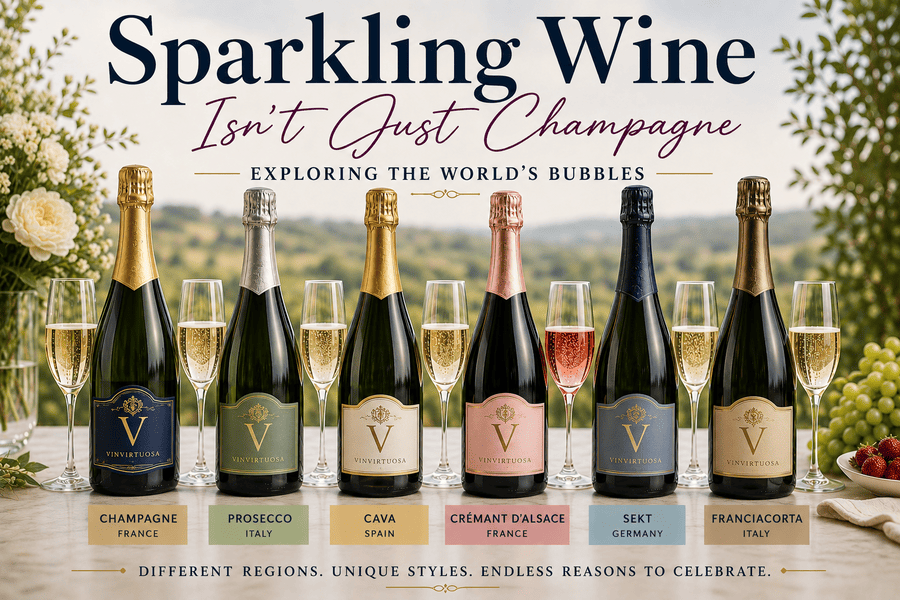
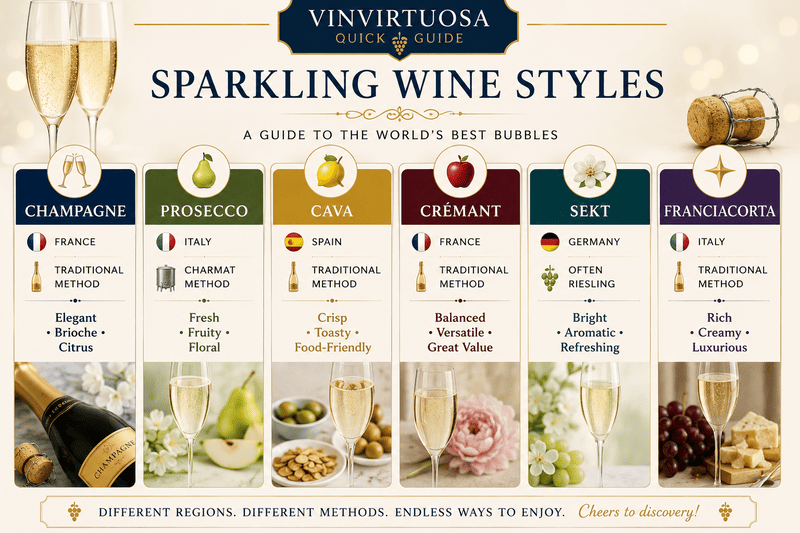
In fact, some of the most exciting sparkling wines in the world are produced far beyond the borders of France’s Champagne region. Italy offers the bright, fruit-forward charm of Prosecco. Spain produces elegant and affordable Cava. France itself is home to several exceptional sparkling wines known as Crémants. Germany crafts vibrant and refreshing Sekt, while regions around the globe continue to produce outstanding sparkling wines that deserve a place in your glass.
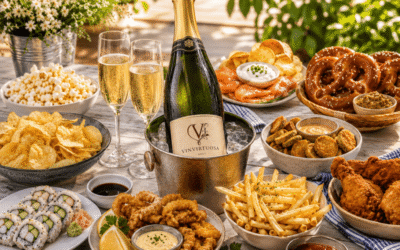
One of the biggest misconceptions among wine drinkers is that sparkling wine is reserved for celebrations. While popping a cork certainly makes any occasion feel more festive, bubbles are surprisingly versatile at the table. Their lively acidity and refreshing character make them wonderful companions for everything from seafood and salads to fried chicken, potato chips, and even spicy cuisine.
Another pleasant surprise? Many excellent sparkling wines are available at prices that make them accessible for everyday enjoyment. While prestige Champagne can command impressive prices, there are countless sparkling wines that deliver exceptional quality and value, allowing wine lovers to enjoy a little sparkle whenever the mood strikes.
In honor of Sparkling Wine Week, let’s venture beyond Champagne and explore the fascinating world of bubbles. Along the way, we’ll discover what makes sparkling wine sparkle, learn about some of the world’s most popular styles, and hopefully inspire you to try something new the next time you’re shopping for wine.
After all, life doesn’t have to be a major celebration to enjoy a glass of sparkling wine.
“Champagne may be the world’s most famous sparkling wine, but it’s only one chapter in a much larger story.”
What Makes a Wine Sparkling?
At its most basic level, sparkling wine is simply wine that contains dissolved carbon dioxide gas. When the bottle is opened, the pressure is released, allowing the carbon dioxide to escape in the form of those beautiful streams of bubbles that dance their way to the surface of your glass.
Those bubbles do more than create a festive appearance. They also influence how a wine smells and tastes. As the bubbles rise, they help carry aromatic compounds toward your nose, enhancing the wine’s bouquet and adding to the overall sensory experience. The texture created by the bubbles—often referred to as the mousse—can range from creamy and delicate to lively and energetic, depending on how the wine was made.
Not all sparkling wines are produced the same way, however. Different production methods influence the wine’s flavor, texture, complexity, and price. Understanding a few of the most common methods can help you better appreciate the wide range of sparkling wines available today.
The Traditional Method
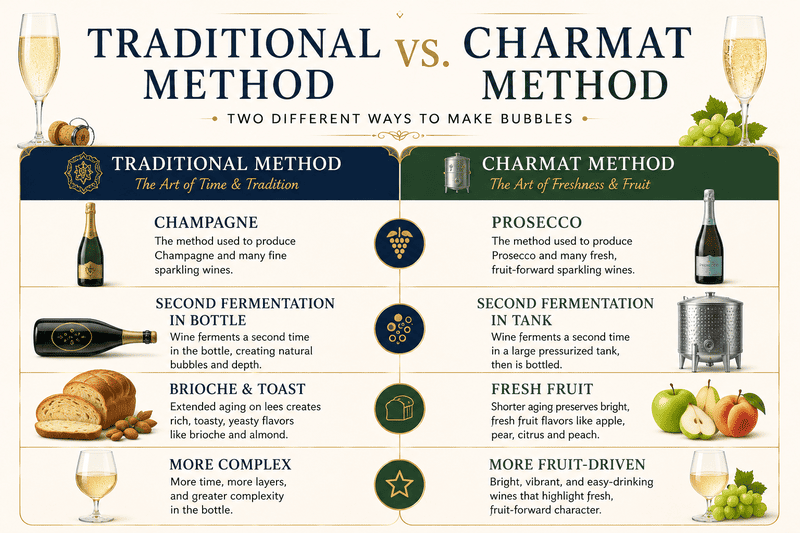
Often considered the gold standard of sparkling wine production, the Traditional Method is used to produce Champagne as well as many other premium sparkling wines around the world.
In this process, a still wine undergoes a second fermentation inside the bottle. During this fermentation, yeast consumes sugar and produces carbon dioxide, which becomes trapped inside the sealed bottle. Because the bubbles are created naturally within the bottle itself, the resulting wines often develop fine, persistent bubbles and complex flavors.
Many Traditional Method wines are aged on their spent yeast cells, known as lees, for months or even years. This aging process can contribute flavors and aromas reminiscent of brioche, toast, nuts, cream, and baked pastries, adding depth and complexity to the finished wine.
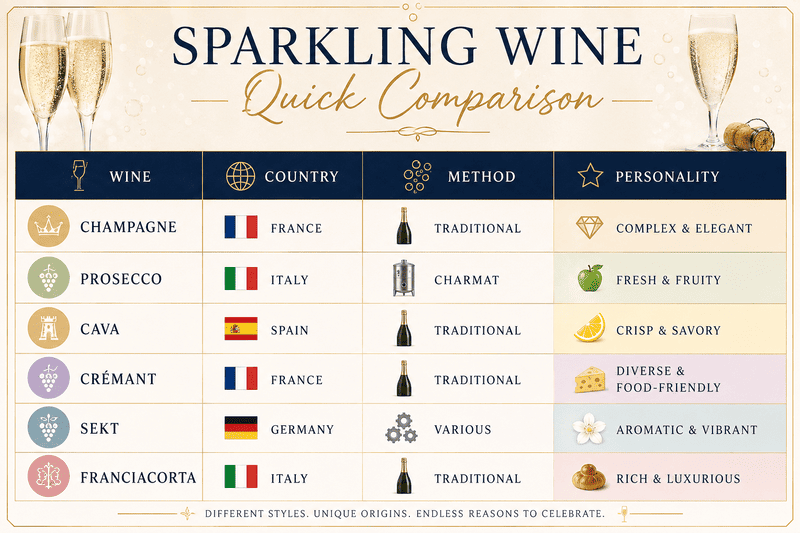
Examples include Champagne, Cava, Crémant, and Franciacorta.
The Charmat Method
The Charmat Method takes a different approach. Instead of conducting the second fermentation inside individual bottles, the wine undergoes its second fermentation in large pressurized tanks.
This method is generally faster and less expensive than the Traditional Method, making it ideal for producing fresh, fruit-driven sparkling wines. Because the wine spends less time aging on yeast, the resulting flavors tend to emphasize primary fruit characteristics such as apple, pear, peach, citrus, and floral notes.
The bubbles are often softer and more approachable, creating a style that many wine drinkers find easy to enjoy.
Prosecco is perhaps the most famous example of a sparkling wine produced using the Charmat Method.
Carbonation
The simplest method of producing sparkling wine involves directly adding carbon dioxide to a finished wine, much like carbonation is added to soft drinks.
While this technique is generally less expensive, it typically produces larger, more short-lived bubbles and lacks the complexity that develops through fermentation-based methods. Carbonated sparkling wines are often intended for casual enjoyment and can still be refreshing and fun, particularly when served well chilled.
Why the Method Matters
The next time you pour a glass of sparkling wine, take a moment to observe the bubbles. Are they tiny and persistent or large and energetic? Does the wine smell of fresh fruit, or do you notice hints of toast and brioche?
The answers often trace back to how the wine was made.
As we’ll see throughout this article, sparkling wines may share one common characteristic—their bubbles—but the methods used to create those bubbles result in a fascinating range of styles, flavors, and experiences. That’s part of what makes exploring the world of sparkling wine so much fun.
Champagne: The Original Icon
If sparkling wine had royalty, Champagne would undoubtedly wear the crown.
For centuries, Champagne has been synonymous with celebration, luxury, and achievement. It is poured at weddings, uncorked on New Year’s Eve, sprayed by victorious athletes, and reserved for life’s most memorable moments. Yet beyond its glamorous reputation lies a fascinating wine with a rich history and a unique identity that cannot be replicated anywhere else in the world.
One of the most important things to understand about Champagne is that it is not simply a type of sparkling wine—it is a place. In order to legally bear the name Champagne, the wine must be produced in the Champagne region of northeastern France according to strict regulations that govern everything from grape growing and harvesting to production and aging.
This protected designation helps preserve the region’s winemaking traditions and ensures that consumers know exactly what they are getting when they purchase a bottle of Champagne.
Most Champagne is produced from a blend of three primary grape varieties:
- Chardonnay
- Pinot Noir
- Pinot Meunier
Each grape contributes something unique to the final wine. Chardonnay often provides elegance, freshness, and citrus-driven aromas. Pinot Noir contributes body, structure, and red fruit characteristics, while Pinot Meunier can add fruitiness and approachability. Winemakers carefully blend these grapes to create wines that reflect both their house style and the character of each vintage.
Champagne is produced using the Traditional Method, the labor-intensive process discussed earlier in which a second fermentation occurs inside the bottle. During this process, yeast transforms sugar into alcohol and carbon dioxide, creating the bubbles naturally. The wine then spends time aging on its lees, the spent yeast cells that remain after fermentation.
This aging process is one of the secrets behind Champagne’s remarkable complexity. Over time, the interaction between the wine and the lees can create aromas and flavors reminiscent of freshly baked bread, brioche, toasted nuts, pastry cream, and biscuits, adding layers of depth beyond the fruit characteristics of the grapes themselves.
While styles vary, many Champagnes display aromas and flavors of green apple, lemon, pear, citrus zest, almond, brioche, toast, and minerality. The best examples balance vibrant acidity with elegance, creating wines that are both refreshing and remarkably complex.Each grape contributes something unique to the final wine. Chardonnay often provides elegance, freshness, and citrus-driven aromas. Pinot Noir contributes body, structure, and red fruit characteristics, while Pinot Meunier can add fruitiness and approachability. Winemakers carefully blend these grapes to create wines that reflect both their house style and the character of each vintage.
Champagne is produced using the Traditional Method, the labor-intensive process discussed earlier in which a second fermentation occurs inside the bottle. During this process, yeast transforms sugar into alcohol and carbon dioxide, creating the bubbles naturally. The wine then spends time aging on its lees, the spent yeast cells that remain after fermentation.
This aging process is one of the secrets behind Champagne’s remarkable complexity. Over time, the interaction between the wine and the lees can create aromas and flavors reminiscent of freshly baked bread, brioche, toasted nuts, pastry cream, and biscuits, adding layers of depth beyond the fruit characteristics of the grapes themselves.
While styles vary, many Champagnes display aromas and flavors of green apple, lemon, pear, citrus zest, almond, brioche, toast, and minerality. The best examples balance vibrant acidity with elegance, creating wines that are both refreshing and remarkably complex.
Why People Love Champagne
Part of Champagne’s appeal lies in its complexity. Few wines offer such a fascinating combination of freshness, richness, fruit, and savory character in a single glass. Every sip seems to reveal something new.
The bubbles themselves are another hallmark of great Champagne. Because they are created through bottle fermentation and extended aging, they are often exceptionally fine and persistent. Rather than aggressively fizzing, they create a creamy, delicate texture that glides across the palate.
Champagne is also celebrated for its aging potential. While many sparkling wines are intended for immediate enjoyment, quality Champagne can evolve beautifully over time, developing additional layers of toast, honey, nuts, dried fruit, and complexity as it matures.
And then there is the prestige factor. Champagne has spent centuries building its reputation as the wine of celebration. While its quality certainly justifies much of its acclaim, there is also something undeniably special about hearing the pop of a Champagne cork and watching those tiny streams of bubbles rise in the glass.
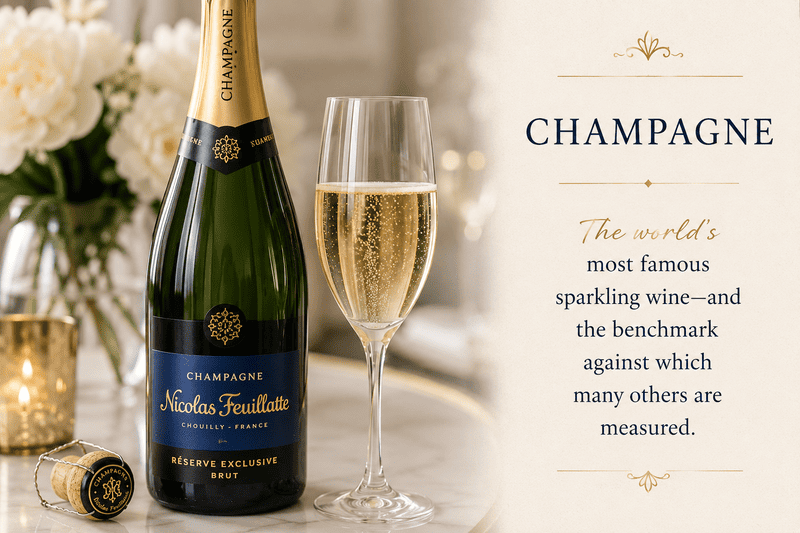
For many wine lovers, Champagne remains the benchmark against which all other sparkling wines are measured.
Prosecco: Italy’s Easygoing Sparkler
If Champagne is the sophisticated guest dressed in black tie attire, Prosecco is the friend who arrives with a warm smile, instantly making everyone feel comfortable.
Bright, cheerful, and approachable, Prosecco has become one of the world’s most popular sparkling wines—and for good reason. Its fresh fruit flavors, lively bubbles, and affordable price point make it a favorite for everything from weekend brunches to backyard gatherings.
Prosecco is produced primarily in northeastern Italy, with some of the most highly regarded examples coming from the rolling hills between Conegliano and Valdobbiadene in the Veneto region. The picturesque vineyards that blanket these steep hillsides have helped establish Prosecco as one of Italy’s most successful wine exports.
Unlike Champagne, which is typically made from a blend of several grape varieties, Prosecco is produced primarily from the Glera grape. This variety is prized for its ability to produce wines that are aromatic, refreshing, and wonderfully expressive.
Most Prosecco is made using the Charmat Method, in which the second fermentation takes place in large pressurized tanks rather than individual bottles. This production method preserves the grape’s vibrant fruit character and floral aromas, creating a wine that feels fresh and youthful.
The resulting flavor profile is often bright and inviting. Depending on the producer and style, Prosecco may offer aromas and flavors of green apple, ripe pear, white peach, citrus, honeysuckle, acacia blossoms, and other delicate floral notes. Compared to Champagne, Prosecco generally places less emphasis on yeast-derived flavors like toast and brioche and more emphasis on pure fruit expression.
The bubbles tend to be lively and refreshing, contributing to the wine’s easy-drinking personality.
Why People Love Prosecco
One of Prosecco’s greatest strengths is its accessibility. It delivers plenty of charm and enjoyment without requiring a special occasion or a significant investment. For many consumers, it offers an affordable entry point into the world of sparkling wine.
Its fresh and fruity character also makes it incredibly versatile. Whether served as an aperitif, paired with light appetizers, enjoyed with brunch, or incorporated into sparkling cocktails such as Bellinis and Spritzes, Prosecco adapts effortlessly to a variety of occasions.
Perhaps most importantly, Prosecco feels fun. It doesn’t demand analysis or ceremony. Instead, it invites people to relax, pour a glass, and enjoy the moment.
While Champagne may be the sparkling wine reserved for milestone celebrations, Prosecco reminds us that sometimes the best reason to open a bottle of bubbles is simply because it’s a beautiful day.
Cava: Spain’s Best-Kept Secret
If there is one sparkling wine that consistently overdelivers for the price, it might just be Cava.
For years, wine enthusiasts have quietly celebrated Cava as one of the wine world’s best values. While Champagne often receives the spotlight and Prosecco enjoys widespread popularity, Cava frequently flies under the radar despite offering impressive quality, complexity, and versatility.
Produced primarily in Catalonia, a region in northeastern Spain, Cava has a long history that dates back to the late nineteenth century. Inspired by the sparkling wines of Champagne, Spanish winemakers adopted similar production techniques while incorporating local grape varieties, ultimately creating a sparkling wine with its own distinct personality.
Like Champagne, Cava is produced using the Traditional Method, meaning the second fermentation occurs inside the bottle. This process allows the wine to develop naturally occurring bubbles while also gaining additional complexity through contact with the lees. As a result, many Cavas offer a depth and sophistication that can surprise those who have only encountered inexpensive sparkling wines.
Unlike Champagne, which relies primarily on Chardonnay, Pinot Noir, and Pinot Meunier, traditional Cava is made from indigenous Spanish grape varieties:
- Macabeo
- Xarel·lo
- Parellada
Each grape contributes something unique to the blend. Macabeo often provides fresh fruit and floral notes. Xarel·lo contributes structure, body, and complexity, while Parellada adds elegance, acidity, and delicate aromatics. Together, they create a sparkling wine that is unmistakably Spanish.
A typical glass of Cava often reveals aromas and flavors of green apple, lemon, citrus zest, pear, and subtle floral notes. Thanks to its Traditional Method production and lees aging, many examples also develop appealing hints of toasted bread, almonds, and pastry. The result is a sparkling wine that balances freshness with complexity.
One of Cava’s greatest strengths is its remarkable versatility at the table. Its crisp acidity and savory undertones make it a natural companion for a wide range of foods, from tapas and charcuterie to seafood, roasted vegetables, and fried foods.
Why People Love Cava
For many wine lovers, Cava represents one of the best bargains in the sparkling wine world.
Because it is made using the same bottle-fermentation process as Champagne, Cava often delivers a similar level of craftsmanship and complexity at a fraction of the price. While it may not possess the same prestige or centuries-old reputation, it frequently offers tremendous value for consumers seeking a high-quality sparkling wine without the luxury price tag.
Wine enthusiasts also appreciate Cava’s balance. It offers more yeast-driven complexity than many Proseccos while remaining approachable, refreshing, and food-friendly. It can feel elegant enough for a celebration while still being affordable enough for a casual dinner.
In many ways, Cava is the sparkling wine world’s hidden gem—a reminder that some of the most rewarding discoveries are the ones that haven’t yet become household names.
Crémant: France Beyond Champagne
When people think of French sparkling wine, Champagne understandably dominates the conversation. Yet some of France’s most exciting sparkling wines come from regions far beyond Champagne’s famous vineyards.
These wines are known collectively as Crémant.
For wine lovers seeking French craftsmanship, Traditional Method production, and outstanding value, Crémant may be one of the wine world’s best-kept secrets.
The term Crémant refers to sparkling wines produced outside the Champagne region using the Traditional Method. Like Champagne, these wines undergo a second fermentation inside the bottle and often spend time aging on their lees, developing complexity and refinement. However, because they originate from different regions and utilize different grape varieties, each Crémant offers its own unique personality.
One of the reasons Crémant is so fascinating is that it provides a sparkling tour of France. Each region brings its own climate, traditions, and grape varieties to the glass.
Crémant d’Alsace
Produced in eastern France near the German border, Crémant d’Alsace is one of the most popular styles of Crémant. These wines are often made from grapes such as Pinot Blanc, Pinot Gris, Riesling, Chardonnay, and Pinot Noir.
They tend to be bright, refreshing, and aromatic, showcasing notes of apple, citrus, pear, white flowers, and occasionally hints of stone fruit.Produced in eastern France near the German border, Crémant d’Alsace is one of the most popular styles of Crémant. These wines are often made from grapes such as Pinot Blanc, Pinot Gris, Riesling, Chardonnay, and Pinot Noir.
They tend to be bright, refreshing, and aromatic, showcasing notes of apple, citrus, pear, white flowers, and occasionally hints of stone fruit.
Crémant de Loire
Produced in France’s Loire Valley, Crémant de Loire often incorporates grapes such as Chenin Blanc, Chardonnay, and Cabernet Franc.
Chenin Blanc, one of the Loire Valley’s signature grapes, brings vibrant acidity and remarkable versatility to these sparkling wines. Crémant de Loire often displays flavors of apple, quince, citrus, honey, and subtle brioche notes, ranging from light and refreshing to surprisingly complex.
Crémant de Bourgogne
Produced in Burgundy, Crémant de Bourgogne frequently utilizes the same grapes that have made the region famous: Chardonnay and Pinot Noir.
As a result, many examples offer a profile that may feel familiar to Champagne enthusiasts, with notes of citrus, green apple, toast, almond, and baked pastry. They often combine elegance and richness while maintaining excellent value.
A Sparkling Wine for Every Taste
Unlike Champagne, which follows relatively consistent stylistic traditions, Crémant offers tremendous diversity. Depending on the region and grape varieties used, one bottle may emphasize fresh fruit and floral aromas, while another may lean toward richness, minerality, or yeast-driven complexity.
This variety is part of Crémant’s charm. Exploring different Crémants is like taking a sparkling journey through some of France’s most celebrated wine regions.
Why Wine Lovers Seek Out Crémant
Ask experienced wine drinkers about their favorite sparkling wine values, and Crémant often enters the conversation.
One reason is simple: value. Because Crémants do not carry the same prestige pricing as Champagne, consumers can often enjoy exceptional quality for significantly less money.
Another reason is heritage. These wines are deeply rooted in French winemaking traditions, utilizing the same meticulous bottle-fermentation process that has made Champagne famous.
Finally, there is the sheer diversity of styles available. Whether you prefer something crisp and citrus-driven, rich and toasty, or floral and aromatic, there is likely a Crémant that fits your palate.
For many wine lovers, Crémant represents the sweet spot between quality and affordability—a sparkling wine that delivers French elegance without requiring a special-occasion budget.
And once you discover a favorite bottle, you may find yourself reaching for Crémant far more often than you expected.
“For many wine lovers, Crémant is the sweet spot between quality and affordability.”
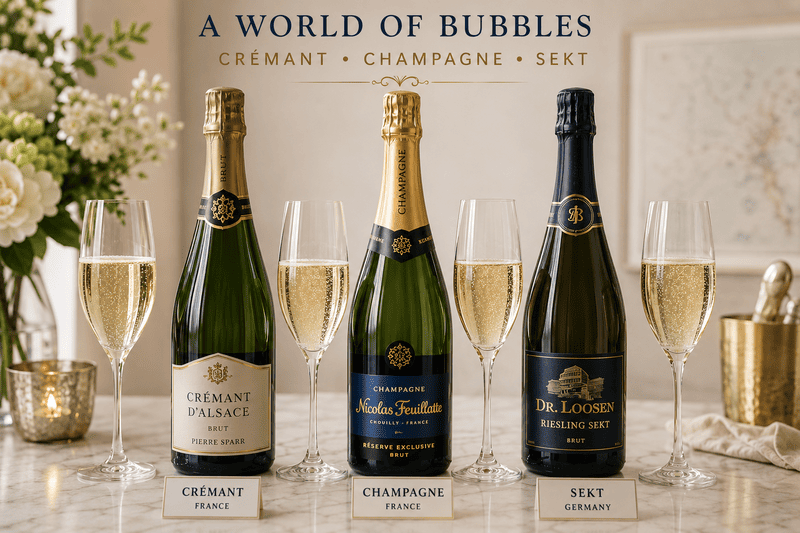
Sekt: Germany’s Sparkling Treasure
When most wine lovers think of Germany, their minds immediately turn to Riesling. The country has earned a well-deserved reputation for producing some of the world’s finest examples of this noble grape, crafting wines that range from bone dry to lusciously sweet.
What many people don’t realize, however, is that Germany is also one of the world’s largest producers and consumers of sparkling wine.
Known as Sekt, Germany’s sparkling wine category encompasses a wide range of styles, from simple everyday bottles to exceptionally high-quality wines that can rival some of the world’s most respected sparkling wines. Yet despite its popularity in Germany, Sekt remains relatively unknown outside the country, making it one of the wine world’s most intriguing discoveries.
Part of what makes Sekt so fascinating is its diversity. Depending on the producer, region, and production method, Sekt can vary dramatically in style. Some examples are light, fruity, and easy-drinking, while others are crafted using the Traditional Method and undergo extended aging, resulting in wines of remarkable complexity and finesse.
Among the most celebrated examples are those made from Riesling, a grape that seems uniquely suited to sparkling wine production. Riesling’s naturally high acidity helps create wines that are energetic, refreshing, and capable of maintaining balance even as they develop additional complexity.
A glass of premium Riesling Sekt often bursts with aromas of citrus, green apple, white peach, jasmine, and spring flowers. On the palate, these wines frequently showcase vibrant acidity, delicate minerality, and exceptional freshness. Depending on age and production techniques, some may also reveal subtle notes of toast, honey, and brioche.
One of the characteristics that sets Sekt apart is its sense of precision. While some sparkling wines emphasize richness and creaminess, many German Sekts are defined by purity, brightness, and laser-focused acidity. The result is a style that feels energetic and refreshing from the first sip to the last.
Why It Deserves More Attention
Sekt offers wine lovers something genuinely different.
While Champagne often highlights richness and complexity and Prosecco focuses on fresh fruit, premium Sekt frequently showcases a striking combination of aromatic intensity, elegance, and refreshing acidity. It occupies a unique space within the sparkling wine world.
Sekt is also one of the most food-friendly sparkling wines available. Its bright acidity and citrus-driven character allow it to pair beautifully with a wide range of dishes. Seafood, sushi, smoked salmon, pork, roasted chicken, salads, and even spicy cuisines can all shine alongside a well-made Sekt.
For adventurous wine drinkers seeking something beyond the familiar choices, Sekt provides an opportunity to discover a sparkling wine that is both distinctive and deeply rooted in one of the world’s great wine-producing countries.
It may not have the global recognition of Champagne or Prosecco, but those who discover Sekt often wonder why it remained a secret for so long.
Did You Know?
Germany is one of the world’s largest consumers of sparkling wine, and many premium Sekts are made from Riesling, one of the country’s signature grapes.
Franciacorta: Italy’s Luxury Sparkling Wine
If Prosecco is Italy’s most famous sparkling wine, Franciacorta may be its most prestigious.
Nestled in the rolling hills of Lombardy in northern Italy, near picturesque Lake Iseo, Franciacorta has quietly built a reputation as one of the world’s finest sparkling wines. While it may not yet enjoy the household recognition of Champagne, many wine professionals and enthusiasts regard Franciacorta as one of Italy’s greatest wine achievements.
At first glance, comparisons to Champagne are understandable.
Like Champagne, Franciacorta is produced using the Traditional Method, with the second fermentation taking place inside the bottle. The wines also undergo extensive aging on their lees, allowing them to develop the complexity, texture, and refinement associated with the world’s top sparkling wines.
Franciacorta is typically produced from Chardonnay, Pinot Nero (Pinot Noir), and Pinot Bianco grapes, though regulations permit different blends depending on the style. The region’s unique climate and soils contribute to wines that are distinctly Italian while maintaining exceptional elegance and balance.
A well-crafted Franciacorta often reveals aromas and flavors of lemon, citrus blossom, ripe apple, stone fruit, toasted almonds, brioche, and pastry. With age, additional layers of honey, hazelnut, and baked bread may emerge, creating an increasingly complex tasting experience.
One of Franciacorta’s defining characteristics is its texture. Many examples possess a creamy mousse and remarkable richness that give the wines a luxurious feel on the palate. At the same time, vibrant acidity helps maintain freshness and balance, ensuring that the wines never feel heavy.
The result is a sparkling wine that combines power and elegance in equal measure.
Why It Stands Out
Franciacorta stands out because it successfully occupies a rare position in the sparkling wine world: it delivers luxury-level quality while retaining its own distinct identity.
Rather than attempting to imitate Champagne, Franciacorta expresses the character of its Italian origins. The wines often feel slightly more generous and fruit-driven while still offering the complexity and sophistication that sparkling wine enthusiasts seek.
Wine lovers are also increasingly drawn to Franciacorta’s commitment to quality. Strict production standards, extended aging requirements, and meticulous vineyard practices help ensure that even entry-level examples deliver a high level of craftsmanship.
As more consumers look beyond traditional choices, Franciacorta’s reputation continues to grow internationally. Sommeliers, wine educators, and collectors increasingly praise the region for producing sparkling wines that can compete with the very best in the world.
For those willing to explore beyond the familiar names, Franciacorta offers an exciting discovery: a sparkling wine that combines Italian charm, world-class craftsmanship, and undeniable elegance in every glass.
If Champagne is the world’s most famous sparkling wine, Franciacorta may be one of its most compelling challengers.
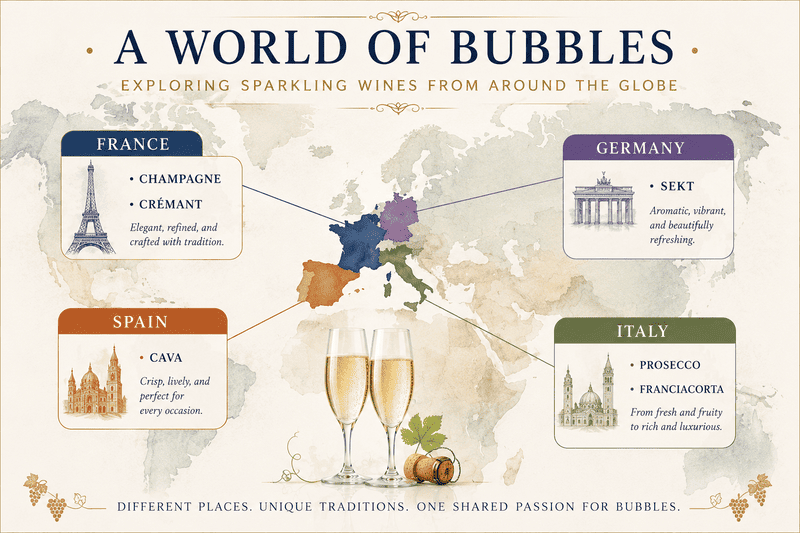
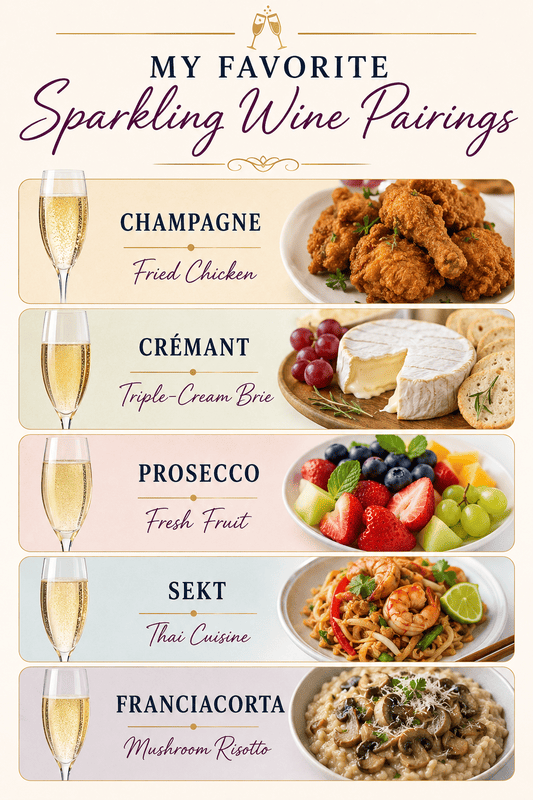
Sparkling Wine Food Pairings
One of the greatest strengths of sparkling wine is its versatility at the table.
Many people think of sparkling wine as something reserved for toasts and celebrations, but wine professionals often reach for bubbles when faced with challenging food pairings. The combination of acidity, freshness, and effervescence allows sparkling wines to complement a remarkable variety of dishes.
The bubbles help cleanse the palate between bites, while the wine’s acidity can cut through rich foods and enhance delicate flavors. Whether you’re planning an elegant dinner party or a casual weekend brunch, there is likely a sparkling wine that will shine alongside your meal.
Champagne
Champagne’s combination of vibrant acidity, fine bubbles, and complex brioche-like flavors makes it one of the most food-friendly wines in the world.
Classic pairings include:
- Oysters
- Lobster
- Fried chicken
The contrast between Champagne’s elegance and the crispy, savory richness of fried chicken has become legendary among wine lovers. It is proof that great wine pairings do not always have to be formal.
Prosecco
With its fresh fruit character and approachable style, Prosecco works beautifully with lighter fare.
Try pairing Prosecco with:
- Light appetizers
- Fresh fruit dishes
- Brunch favorites
Think fruit tarts, prosciutto and melon, quiche, avocado toast, or smoked salmon. Its bright, cheerful personality makes it a natural choice for leisurely weekend gatherings.
Cava
Cava’s crisp acidity and subtle savory notes make it exceptionally versatile.
Excellent pairings include:
- Tapas
- Seafood
- Charcuterie
Whether you’re enjoying grilled shrimp, Manchego cheese, marinated olives, or Spanish-inspired small plates, Cava often feels perfectly at home on the table.
Crémant
Because Crémant styles vary by region, it can pair with an impressive range of foods.
Some reliable options include:
- Soft cheeses
- Roast chicken
- Salads
A Crémant from Alsace can beautifully complement a cheese board, while a richer Crémant de Bourgogne may be equally comfortable alongside roasted poultry or creamy dishes.
Sekt
Germany’s signature sparkling wine is often a secret weapon for food pairing.
Consider serving Sekt with:
- Asian cuisine
- Pork dishes
- Spicy foods
Its lively acidity and citrus-driven profile can refresh the palate and balance dishes that might overwhelm many still wines.
Franciacorta
Franciacorta’s richness and elegance make it a wonderful partner for more refined cuisine.
Try it alongside:
- Risotto
- Seafood
- Cream-based dishes
Its creamy texture and complex flavors often mirror the richness of the food while its acidity keeps every bite feeling fresh and balanced.
The Beauty of Bubbles
If there is one takeaway from the world of sparkling wine, it is this: don’t save it solely for celebrations.
Some of the most memorable sparkling wine experiences happen around the dinner table, where bubbles can transform an ordinary meal into something just a little more special.
How to Choose the Right Sparkling Wine
With so many excellent sparkling wines available today, choosing the right bottle can feel overwhelming. Fortunately, the best choice often depends less on price and more on the occasion, your personal preferences, and what you’re planning to eat.
Here are a few simple guidelines to help you navigate the world of bubbles.
For Celebrations
When the occasion calls for something memorable, reach for Champagne or Franciacorta.
Both wines offer exceptional craftsmanship, complexity, and elegance. Their fine bubbles, layered flavors, and sense of occasion make them natural choices for weddings, anniversaries, milestone birthdays, holidays, and other special moments.
If you’re looking to make a statement, these wines rarely disappoint.
For Everyday Enjoyment
Not every bottle needs a special occasion.
Prosecco’s bright fruit flavors, refreshing style, and approachable price point make it an excellent choice for casual gatherings, weeknight dinners, or relaxing on the patio after a long day.
Sometimes bubbles are simply a way to celebrate being alive.
For Value Seekers
Wine lovers looking for outstanding quality without Champagne prices should explore Cava and Crémant.
Both are produced using the Traditional Method and often deliver remarkable complexity and food-friendliness for the money. They represent some of the best values in the sparkling wine world and frequently surprise consumers who try them for the first time.
For Wine Adventurers
If you enjoy discovering wines that fly under the radar, seek out Sekt.
Its vibrant acidity, aromatic character, and distinctive personality offer a refreshing departure from more familiar sparkling wines. It is a style that rewards curiosity and often leaves a lasting impression.
There Is No Wrong Choice
Perhaps the most wonderful thing about sparkling wine is that there is no single “best” style.
Some days you may crave the richness and complexity of Champagne. Other times, the fresh fruit of Prosecco or the value of Crémant may be exactly what you’re looking for.
The real joy lies in exploring the differences and discovering which styles speak to your palate.
After all, the world of sparkling wine is far bigger—and far more exciting—than many people realize.
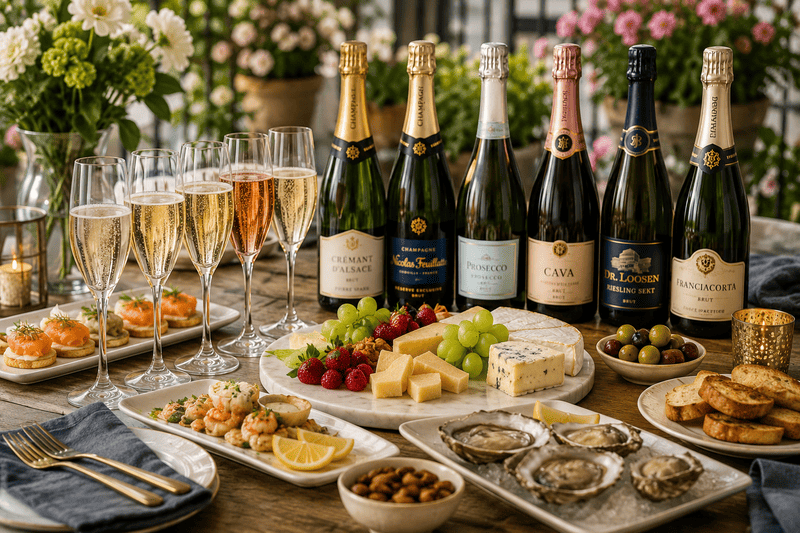
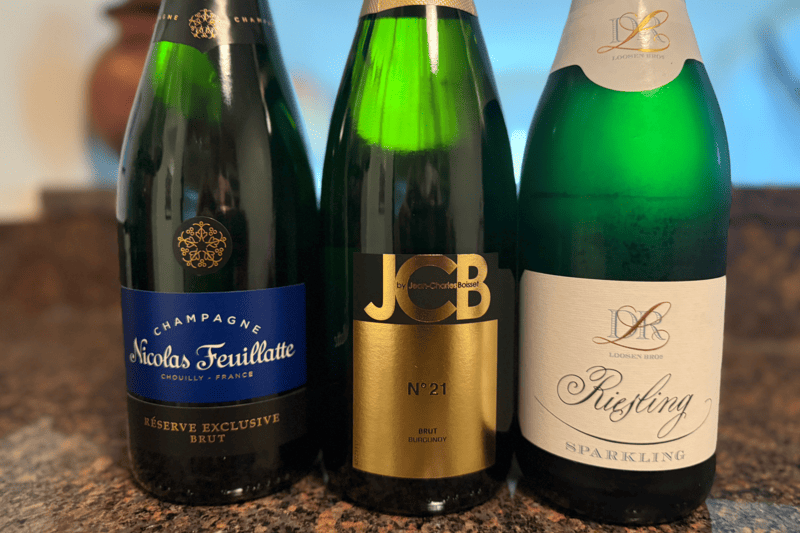
Three Bottles That Show Just How Different Sparkling Wine Can Be
If this article has inspired you to branch out beyond your usual bottle, one of the best ways to learn more about sparkling wine is simply to try a few different styles over time. You do not need to open six bottles at once or turn it into a formal tasting. Sometimes all it takes is choosing a few thoughtfully selected bottles that show just how broad the world of bubbles can be.
For this article, I picked up three bottles that each tell a different sparkling wine story: a classic Champagne, a Crémant de Bourgogne, and a German Riesling Sekt. Together, they offer a great introduction to the diversity of sparkling wine and a reminder that Champagne is only one expression of the category.
Nicolas Feuillatte Brut Champagne
A bottle of Champagne is still one of the best ways to understand why this region became the benchmark for sparkling wine. Nicolas Feuillatte offers a classic introduction to the style, with fine bubbles, bright acidity, and the layered complexity that Champagne lovers expect. Look for notes of citrus, orchard fruit, and subtle brioche, along with that polished, elegant texture that makes Champagne feel so special. It serves as a useful point of reference for the rest of the sparkling wine world because it shows what Traditional Method bubbles can taste like when they come from the region that made them famous.
JCB No. 21 Crémant de Bourgogne
If you love Champagne but do not always want to pay Champagne prices, Crémant is one of the smartest categories to explore, and JCB No. 21 is a great example of why. Made in Burgundy using the Traditional Method, it offers many of the qualities sparkling wine lovers appreciate in Champagne—lively acidity, elegant bubbles, and a touch of toasty complexity—while remaining more approachable in price. It is the kind of bottle that reminds you French sparkling wine extends well beyond Champagne itself. For readers looking to discover a versatile, food-friendly sparkler that still feels celebratory, Crémant de Bourgogne is an excellent place to start.
Dr. Loosen Riesling Sekt
If Champagne and Crémant represent the more familiar French side of sparkling wine, German Sekt shows just how different the category can be. Dr. Loosen Riesling Sekt brings a brighter, more aromatic personality to the table, highlighting the citrus, green apple, floral notes, and zippy acidity that make Riesling such a compelling grape. It feels lighter on its feet than many traditional French sparklers, yet still offers plenty of character and food-pairing potential. For wine lovers who enjoy discovering bottles that fly a little further under the radar, Sekt is a wonderful reminder that some of the most exciting sparkling wines come from places many drinkers overlook.
A Simple Way to Explore the World of Bubbles
What I love about this trio is that each bottle highlights a different side of sparkling wine. Champagne shows the category’s most iconic expression. Crémant demonstrates that excellent Traditional Method sparkling wine can be found elsewhere in France, often at a friendlier price. Sekt brings a fresh perspective entirely, proving that sparkling wine can also be aromatic, racy, and Riesling-driven.
If you have been curious about sparkling wine but are not sure where to begin, choosing a few bottles like these can be one of the most enjoyable ways to learn. You do not need to host a formal tasting or compare every style in a single sitting. Simply opening one bottle at a time, paying attention to the bubbles, aromas, texture, and overall personality, can teach you a great deal about what makes each sparkling wine unique.
Final Thoughts: A World of Bubbles Awaits
Champagne may be the most famous sparkling wine in the world, but as we’ve discovered, it is only one chapter in a much larger story.
From the fruit-forward charm of Prosecco and the exceptional value of Cava to the French elegance of Crémant, the vibrant personality of Sekt, and the luxury of Franciacorta, sparkling wine comes in a remarkable variety of styles. Each offers its own unique expression of place, tradition, and craftsmanship.
Perhaps that’s what makes sparkling wine so exciting. A bottle of bubbles can transport you from the hills of northeastern Italy to the vineyards of Spain, the valleys of Germany, or the cellars of France—all without leaving your dining room table.
And while these wines may differ in grape varieties, production methods, and flavor profiles, they share a common ability to elevate ordinary moments. Whether you’re celebrating a milestone, gathering with friends, enjoying brunch on a sunny weekend, or simply winding down after a long day, sparkling wine has a way of making the occasion feel just a little more special.
This Sparkling Wine Week, consider stepping beyond the familiar. If Champagne is your usual choice, try a Crémant or Franciacorta. If Prosecco is your go-to brunch wine, explore a bottle of Cava or Sekt. You may discover a new favorite—and perhaps even a new appreciation for the incredible diversity found within the world of sparkling wine.
After all, life’s best moments don’t always require a reason to celebrate.
Sometimes, all you need is a good bottle of bubbles.