
Introduction
There’s a moment many wine lovers recognize—the first sip of a crisp white wine that instantly makes your mouth water. It feels refreshing, vibrant, and almost electric on the palate. Yet other wines can feel softer, rounder, or even a little flat by comparison.
That difference comes down to one of the most important elements in wine: acidity.
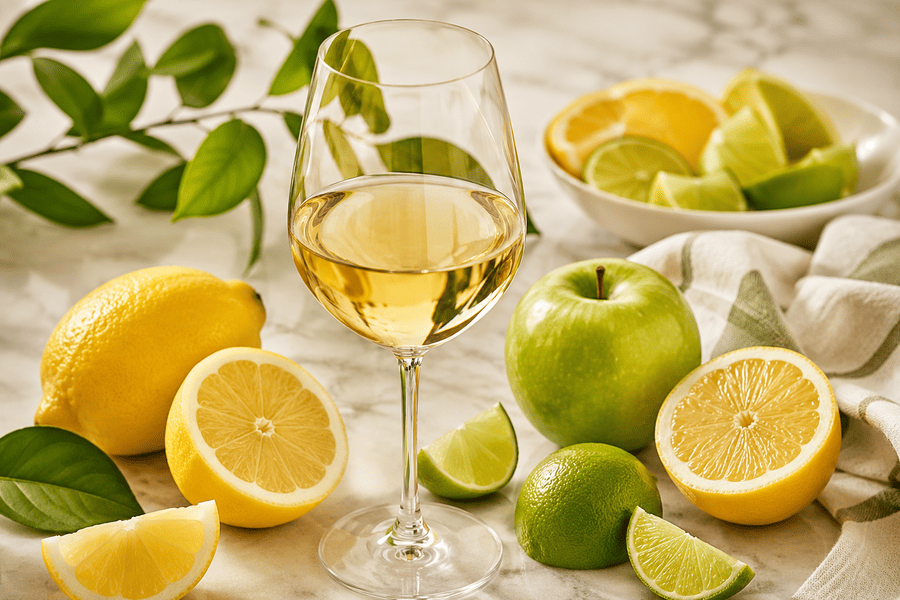
Acidity is what gives wine its freshness, balance, and energy. It’s the reason a wine feels lively and refreshing rather than heavy or dull. Whether you’re enjoying a bright white or an elegant red, acidity plays a key role in how the wine tastes and feels.
Understanding acidity can transform the way you experience wine. It helps explain why some wines feel crisp and vibrant, while others feel smoother and more rounded—and why certain wines pair so beautifully with food.
🍋 Did You Know?
The pH of most wines falls between 3.0 and 4.0, making wine naturally more acidic than many people realize. In fact, the acidity in wine is one reason it pairs so beautifully with food and can age for years—even decades.
What Is Acidity in Wine?
Acidity in wine refers to the natural acids found in grapes. These acids develop as the grapes grow and are preserved throughout the winemaking process, playing an essential role in the wine’s final character.
The most common acids found in wine include tartaric acid, malic acid, and citric acid. While you don’t need to memorize these, it’s helpful to know that they are responsible for the bright, refreshing qualities you taste in many wines.
In simple terms, acidity is what makes a wine taste fresh, crisp, or zesty. It’s the sensation that makes your mouth water and gives wine its sense of lift and liveliness.
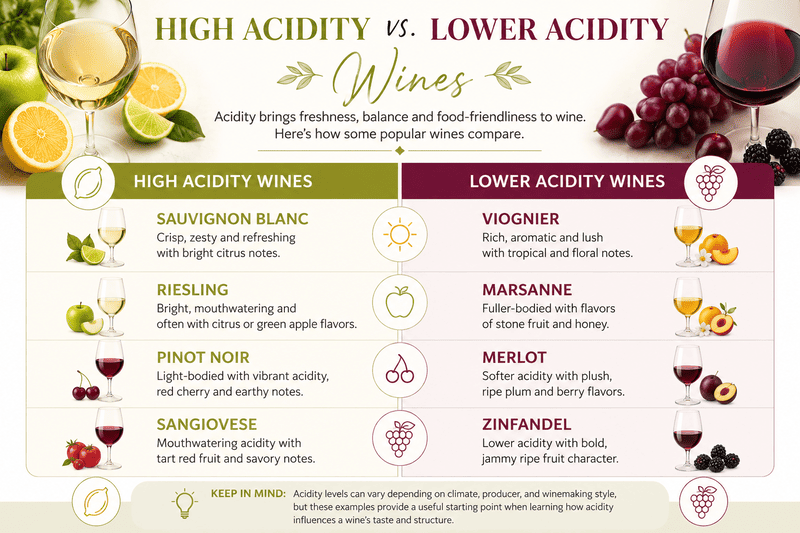
Some grape varieties are naturally known for their higher acidity. Wines made from Sauvignon Blanc, Riesling, and Pinot Noir often display bright, vibrant acidity that makes them feel refreshing and energetic.
On the other hand, wines made from grapes like Chardonnay—especially when oak-aged—and Viognier tend to have lower perceived acidity, giving them a softer, rounder texture.
Acidity is one of the key building blocks of wine, shaping not only how it tastes, but how it feels on the palate.
How Acidity Affects the Taste of Wine
Acidity plays a major role in how a wine feels on the palate. It’s often described using terms like crisp, refreshing, zesty, bright, and lively—all words that suggest energy and lift in a wine.
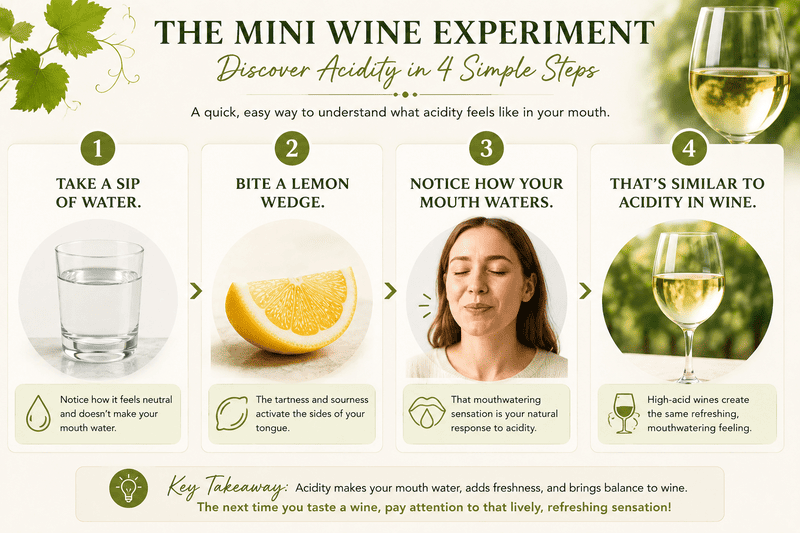
One of the easiest ways to recognize acidity is by the physical sensation it creates. Quite simply, acidity makes your mouth water. After taking a sip, you may notice a tingling or refreshing feeling that draws saliva to the sides of your mouth. That’s acidity at work.
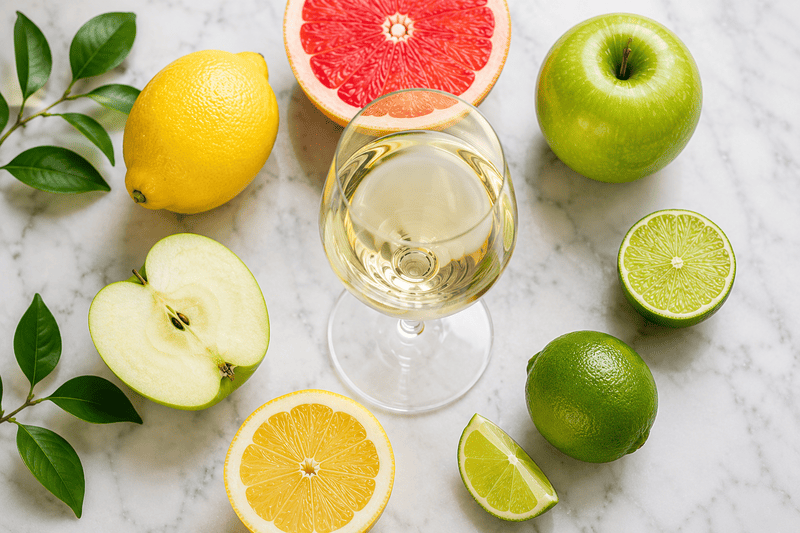
This sensation is similar to what you experience when tasting certain foods. Think of the sharpness of a squeeze of lemon, the tart bite of a green apple, or even the subtle tang of vinegar. These familiar flavors help illustrate how acidity shows up in wine.
Acidity doesn’t just add flavor—it adds structure and energy. Wines with higher acidity tend to feel more vibrant and refreshing, while wines with lower acidity can feel softer and rounder.
When a wine lacks enough acidity, it can taste flat, heavy, or dull, especially alongside food. Without that lift, the wine may feel unbalanced, as if something is missing. This is why acidity is often considered one of the key elements that keeps a wine lively and enjoyable from the first sip to the last.
Signs of High Acidity
✓ Makes your mouth water
✓ Feels crisp and refreshing
✓ Creates a long, lively finish
✓ Pairs well with food
✓ Often ages well
Why Acidity Matters in Wine
Acidity is more than just a refreshing sensation—it plays a fundamental role in the overall structure and quality of a wine.
Structure
Acidity gives wine its shape and definition. It provides a framework that supports the wine’s flavors, helping them feel focused and precise rather than loose or undefined.
Balance
One of acidity’s most important roles is balancing other elements in wine, such as sweetness, alcohol, and richness. A wine with good acidity feels harmonious, where no single component overwhelms the others. This balance is a key part of how professionals evaluate wine, something I explore further in How I Evaluate a Wine.
Freshness
Acidity is what keeps a wine feeling lively and drinkable. It adds a sense of brightness that makes you want to take another sip. Without it, even a flavorful wine can feel tiring or overly heavy.
Aging Potential
Acidity also plays a crucial role in how well a wine can age. Wines with higher acidity tend to evolve more gracefully over time, maintaining their freshness and structure as they develop more complex flavors.
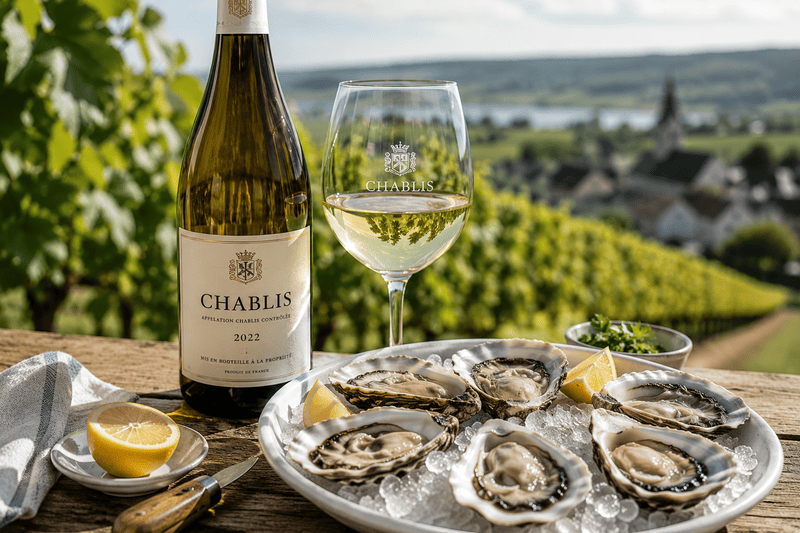
A classic example can be found in wines from Chablis, a region known for producing wines with bright, focused acidity and remarkable longevity. These wines often start out crisp and mineral-driven, then develop deeper complexity as they age.
“Without acidity, wine can feel flat and lifeless. With it, wine becomes vibrant, refreshing, and food-friendly.”
What Influences Acidity in Wine?
The level of acidity in a wine doesn’t happen by chance. It’s influenced by several key factors, beginning in the vineyard and continuing through the winemaking process.
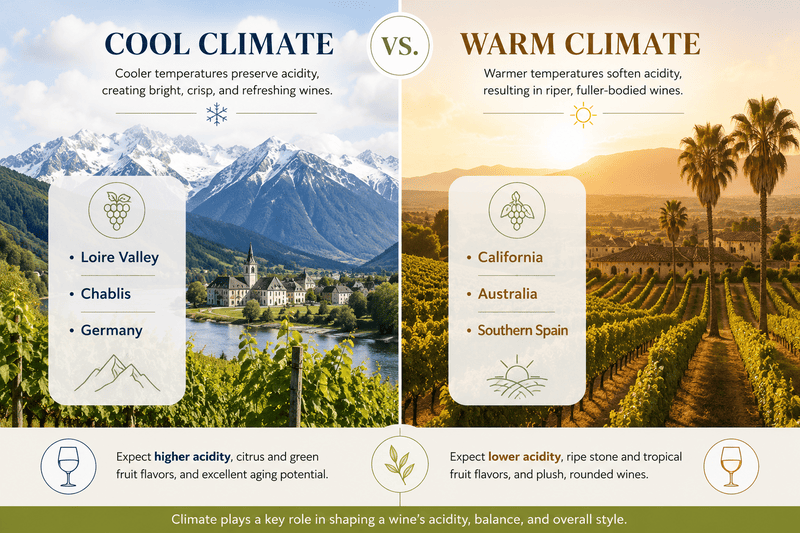
Climate
One of the most important influences on acidity is climate.
In cooler wine regions, grapes tend to retain more of their natural acidity because they ripen more slowly. This results in wines that feel brighter and more refreshing. A great example is the Loire Valley, where many wines are known for their crisp, vibrant character.
In warmer climates, grapes ripen more quickly, which causes acidity levels to drop. Wines from regions like California often have a softer, rounder profile as a result.
Ripeness of Grapes
The ripeness of the grapes at harvest also plays a major role.
- Less ripe grapes → higher acidity
- Riper grapes → lower, softer acidity
This is why timing the harvest is such an important decision for winemakers. It directly affects the balance between freshness and richness in the final wine.
Winemaking Choices
One common technique is malolactic fermentation, a process that converts sharper malic acid (which tastes similar to green apple) into softer lactic acid (which is more creamy in texture). This process reduces the perception of acidity and creates a smoother, rounder mouthfeel—often associated with certain styles of Chardonnay.
Together, these factors help shape the overall acidity of a wine, influencing how it tastes, feels, and evolves over time.
Acidity and Food Pairing
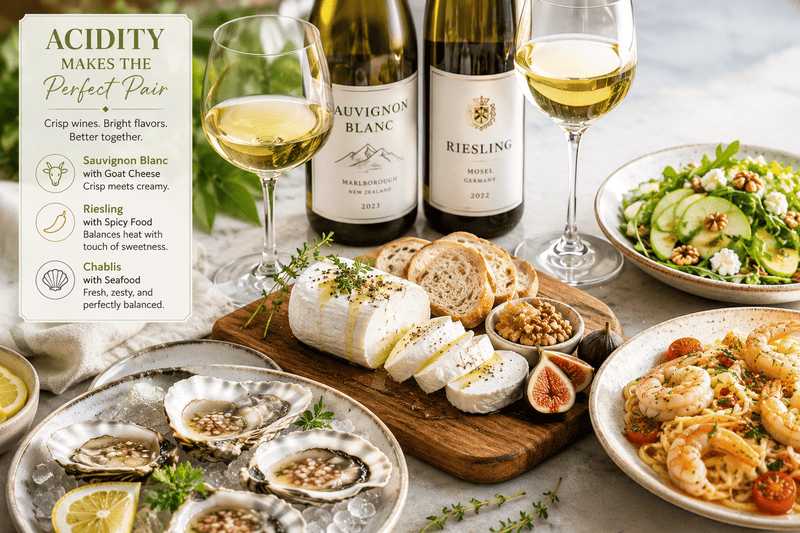
Acidity is one of the most important reasons why wine pairs so beautifully with food. In many ways, it acts as a bridge that connects flavors and enhances the overall dining experience.
Wines with good acidity have the ability to cut through richness, making them an ideal match for dishes that are creamy, fatty, or indulgent. That refreshing lift helps cleanse the palate, so each bite and sip feels balanced rather than heavy.
Acidity also helps balance flavors, particularly in dishes with richness or spice. It can brighten a dish, highlight subtle ingredients, and create a more harmonious pairing overall.
For example, a wine like Sauvignon Blanc pairs beautifully with goat cheese because its bright acidity complements the tangy character of the cheese while keeping the palate fresh. Similarly, Riesling works exceptionally well with spicy cuisine, as its acidity and slight sweetness help balance heat and enhance aromatic flavors.
If you’d like to explore more classic combinations, you can read 7 Classic Food and Wine Pairings Every Wine Lover Should Know, where these principles come to life through real-world examples.
How to Recognize Acidity When Tasting Wine
Understanding acidity becomes much easier once you know what to look for—and more importantly, what to feel.
Start with a simple approach:
Take a sip of wine and let it move across your palate. Then pause for a moment and notice what happens next. Does your mouth begin to water? Do you feel a refreshing or tingling sensation?
That reaction is acidity.
You’ll often feel this sensation along the sides of your tongue and throughout your mouth as a general mouthwatering effect. It’s what gives wine that lively, refreshing quality and makes you want to take another sip.
Another helpful step is to pay attention to the finish—the impression the wine leaves after you swallow. Wines with higher acidity tend to leave a clean, crisp finish, while lower-acid wines may feel softer and linger more heavily on the palate.
If you’re new to tasting wine, developing this awareness is an important step. Learning to recognize elements like acidity, tannin, and balance can greatly enhance your experience, something explored in Wine Tasting 101: How to Taste Wine Like a Pro.
A simple way to think about it:
- High-acid wines feel refreshing, bright, and sharp
- Low-acid wines feel softer, rounder, and smoother
With practice, this becomes easier to recognize, helping you better understand why you enjoy certain wines over others.
Can a Wine Have Too Much or Too Little Acidity?
Like most elements in wine, acidity is all about balance.
While acidity is essential for freshness and structure, too much of it can make a wine feel overly sharp or even sour. In these cases, the wine may come across as harsh or unbalanced, with the acidity overpowering the other flavors.
On the other hand, a wine with too little acidity can feel flat, heavy, or dull. Without that refreshing lift, the wine may lack energy and seem less enjoyable, especially when paired with food.
The goal is not high acidity or low acidity—it’s balanced acidity.
In a well-made wine, acidity works in harmony with fruit, alcohol, and other structural elements. It enhances the wine without dominating it, creating a sense of cohesion and elegance.
This balance is one of the key characteristics that separates a good wine from a truly memorable one.
“Acidity is the backbone that supports a wine’s freshness, balance, and longevity.”
Acidity vs Tannins: What’s the Difference?
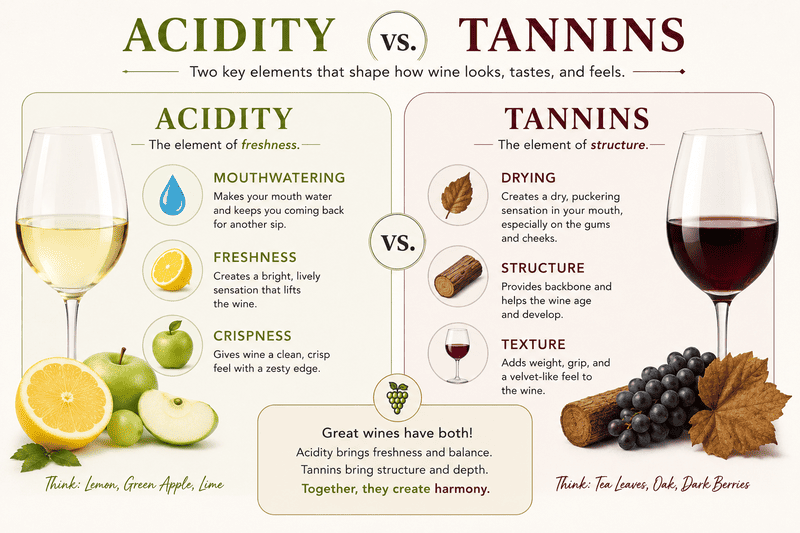
As you begin to explore wine more deeply, two terms come up again and again: acidity and tannins. While both are essential to a wine’s structure, they create very different sensations on the palate.
In simple terms:
- Acidity gives wine its freshness and liveliness
- Tannins provide structure and texture
You can feel the difference quite clearly when tasting.
Acidity creates that mouthwatering sensation—the crisp, refreshing quality that makes a wine feel bright and energetic.
Tannins, on the other hand, create a drying sensation, often felt along the gums and sides of the mouth. They give wine grip and structure, especially in red wines.
Together, acidity and tannins work in balance to shape how a wine feels and evolves on the palate. While acidity lifts and refreshes, tannins add depth and framework.If you’d like to explore tannins in more detail, including how they affect taste, texture, and aging, you can read What Is Tannin in Wine? (And Why It Matters).
Conclusion
Acidity is one of the most important elements in wine, shaping not only how a wine tastes, but how it feels from the first sip to the final impression.
It brings freshness, balance, and structure, helping wines feel vibrant, lively, and complete. Without it, even the most flavorful wines can seem flat or heavy.
The next time you taste a wine, take a moment to notice how it feels. Does it make your mouth water? Does it feel crisp and refreshing, or soft and round? These small observations can reveal a great deal about the wine in your glass.
Understanding acidity is a simple yet powerful step toward tasting wine with more confidence, awareness, and enjoyment.
“The next time a wine makes your mouth water, you’re experiencing one of wine’s most important structural elements.”
Frequently Asked Questions
What does acidity taste like in wine?
Acidity makes wine taste crisp, fresh, and refreshing, often creating a mouthwatering sensation.
Which wines have the highest acidity?
Wines like Sauvignon Blanc, Riesling, and Pinot Noir are known for their bright acidity.
Is acidity good in wine?
Yes, acidity is essential for balance, freshness, and aging potential.
How can I tell if a wine has low acidity?
Low-acid wines tend to taste softer, rounder, and sometimes slightly flat.
Discover Wine Through Experience
Reading about wine is just the beginning. Experience how elements like acidity and structure come to life through guided tastings designed to make wine approachable and engaging.