From Vineyard to Winery: The Most Important Season in Winemaking
Every bottle of wine begins with a harvest.
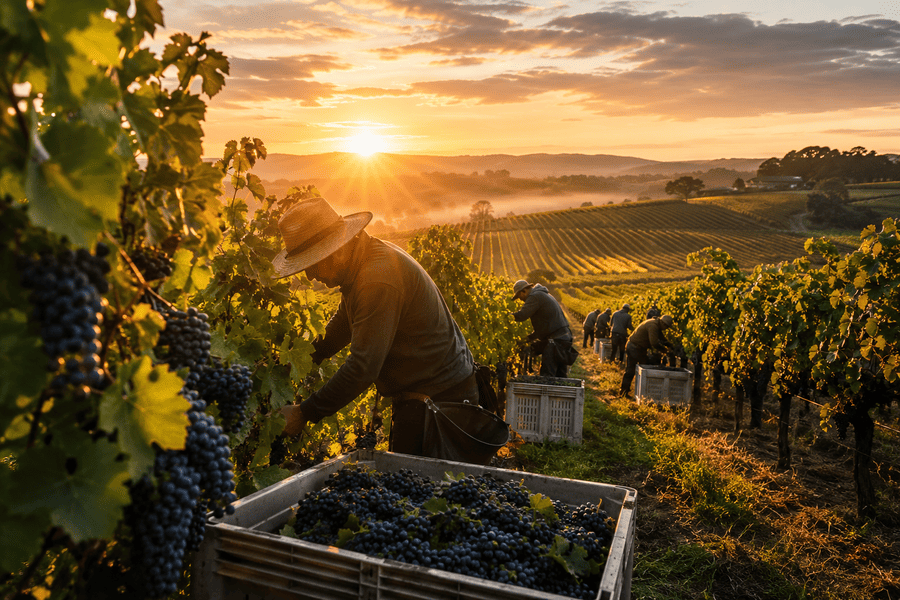
While wine lovers often focus on what’s in the glass—the aromas, flavors, food pairings, and stories behind their favorite bottles—the journey of wine starts long before fermentation begins. It starts in the vineyard during one of the most exciting and demanding times of the year: harvest season.
For winemakers and vineyard managers, harvest represents the culmination of an entire year’s worth of work. Months of pruning, canopy management, pest control, irrigation decisions, and careful monitoring all lead to this critical moment when grapes are finally ready to be picked. It’s a season filled with anticipation, long hours, difficult decisions, and sometimes a bit of anxiety as growers watch weather forecasts and evaluate fruit ripeness on a daily basis.
Harvest is often considered the most important time of year in the wine industry because timing can have a profound impact on the final wine. Pick too early, and grapes may lack flavor development and sufficient sugar. Wait too long, and acidity can drop while sugar levels climb, resulting in wines that taste very different from the winemaker’s intended style.
The stakes are high. A sudden rainstorm, heat wave, or unexpected pest pressure can dramatically alter the quality of a vintage. As a result, harvest season often feels like a race against both nature and the calendar.
Wine enthusiasts frequently hear wineries talk about “harvest” or “the vintage,” but many people aren’t entirely sure what happens during this crucial period. What exactly determines when grapes are picked? Why do some vineyards harvest at night? And what happens once the grapes arrive at the winery?
Let’s take a closer look at wine harvest and explore why this annual event plays such a critical role in every bottle of wine we enjoy.
What Is Wine Harvest?
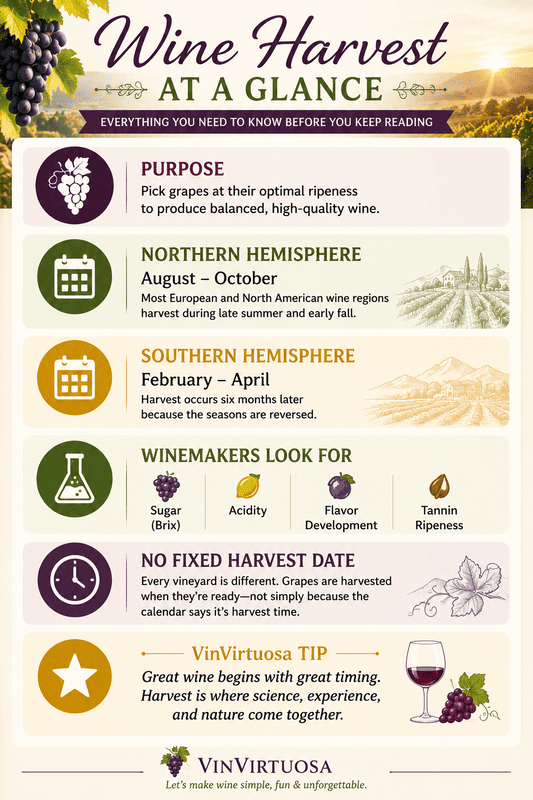
At its simplest, wine harvest is the process of picking grapes that will be used to make wine.
While that definition sounds straightforward, harvest involves far more than simply gathering fruit from the vine. It marks the transition from vineyard management to winemaking and represents one of the most important decision points of the entire growing season.
Unlike many agricultural crops that may be harvested multiple times throughout the year, wine grapes are typically harvested once annually when they reach optimal ripeness. Determining that moment requires careful evaluation of sugar levels, acidity, flavor development, and overall grape health.
Harvest timing varies significantly depending on climate, grape variety, and location.
In the Northern Hemisphere, where many of the world’s most famous wine regions are located—including California, France, Italy, Spain, and Germany—harvest generally occurs between August and October. Early-ripening varieties may be picked in late summer, while later-ripening grapes such as Cabernet Sauvignon often remain on the vine well into autumn.
In the Southern Hemisphere, the seasons are reversed. Regions such as Argentina, Chile, South Africa, Australia, and New Zealand typically harvest between February and April.
The exact timing changes from year to year depending on weather conditions and the desired style of wine. Some grapes intended for sparkling wine may be harvested earlier to preserve bright acidity, while grapes destined for rich, full-bodied red wines are often left on the vine longer to achieve greater ripeness.
No matter where it takes place, harvest marks the beginning of a fascinating transformation. Once the grapes leave the vineyard, they begin their journey toward becoming the wines that eventually fill our glasses.
For winemakers, harvest is not simply the end of the growing season—it’s the beginning of the winemaking process itself.
How Do Winemakers Know When Grapes Are Ready?
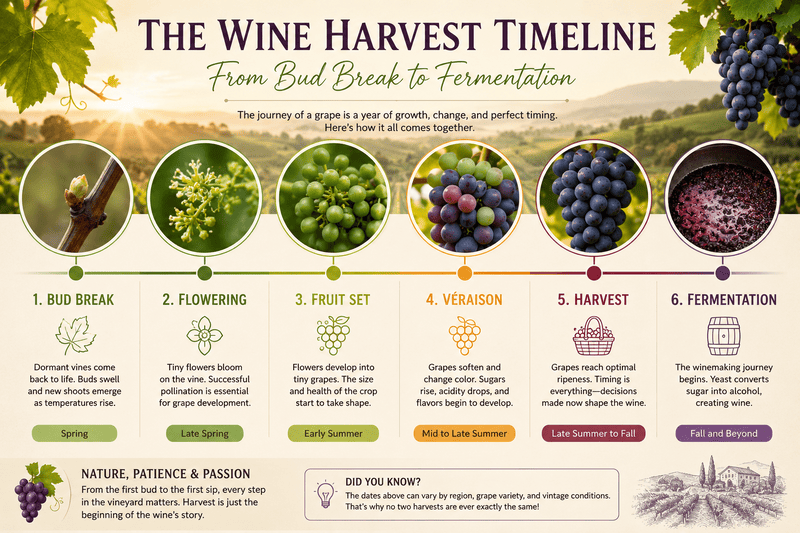
One of the most common misconceptions about wine harvest is that grapes are picked on a specific date every year. In reality, determining the perfect harvest moment is one of the most important—and challenging—decisions a winemaker makes.
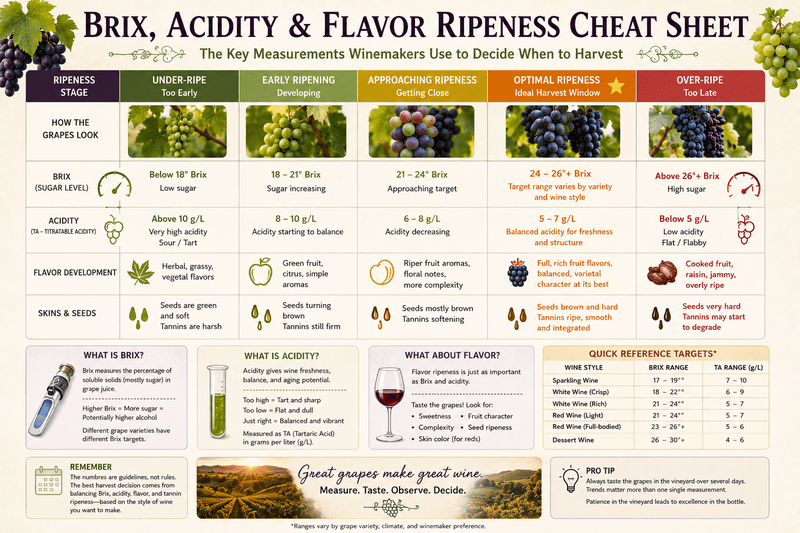
There is no universal harvest day. Instead, winemakers carefully monitor their vineyards for weeks as grapes approach ripeness, evaluating a combination of scientific measurements and sensory observations. The goal is to achieve the ideal balance between sugar, acidity, and flavor development.
Sugar Levels: Measuring Potential Alcohol
One of the primary tools winemakers use is a measurement called Brix, which indicates the amount of sugar present in grape juice.
As grapes ripen on the vine, they accumulate sugar through photosynthesis. During fermentation, yeast converts that sugar into alcohol, which means sugar levels directly influence the potential alcohol content of the finished wine.
Generally speaking:
- Lower Brix = lower potential alcohol
- Higher Brix = higher potential alcohol
For example, grapes harvested at 20° Brix may produce a lighter-bodied wine with lower alcohol, while grapes harvested at 25° Brix could result in a richer wine with significantly more alcohol.
Winemakers regularly collect grape samples from different areas of the vineyard and analyze them throughout the ripening season. Watching sugar levels rise helps them narrow down the ideal harvest window.
Acidity: The Key to Freshness
Sugar is only part of the equation.
Acidity is what gives wine its freshness, energy, and food-friendly character. It’s the quality that makes your mouth water when you sip a crisp Sauvignon Blanc or a vibrant Riesling.
As grapes ripen, acidity naturally declines. This creates a balancing act for winemakers. Waiting longer may produce more developed fruit flavors and higher sugar levels, but it can also reduce the acidity that gives wine structure and brightness.
Finding the sweet spot between sugar and acidity is often one of the most critical harvest decisions.
For sparkling wines, preserving acidity is especially important. That’s one reason grapes destined for sparkling wine production are often harvested earlier than those intended for still wines.
Flavor Development: Beyond the Numbers
While laboratory measurements provide valuable information, experienced winemakers know that numbers alone don’t tell the whole story.
Many winemakers spend harvest season walking their vineyards and tasting grapes directly from the vine.
They evaluate:
- Fruit character
- Skin texture
- Tannin ripeness
- Seed maturity
- Overall flavor intensity
A grape may show ideal sugar levels on paper but still lack the flavor complexity desired for the finished wine.
For red varieties such as Cabernet Sauvignon, Syrah, and Pinot Noir, tannin ripeness is particularly important. Unripe tannins can create harsh, bitter wines, while fully ripe tannins contribute smoother textures and greater complexity.
Winemakers often examine grape seeds as well. Immature seeds tend to be green and bitter, while mature seeds develop a brown color and less aggressive flavor profile.
Ultimately, determining ripeness requires both science and intuition. The best harvest decisions come from combining analytical data with firsthand observation and tasting experience.
“Harvest isn’t determined by a calendar—it’s determined by the grapes.”
Every vintage is different, which means every harvest season presents its own unique challenges and opportunities.
The Challenge of Perfect Timing
If determining ripeness sounds complicated, that’s because it is.
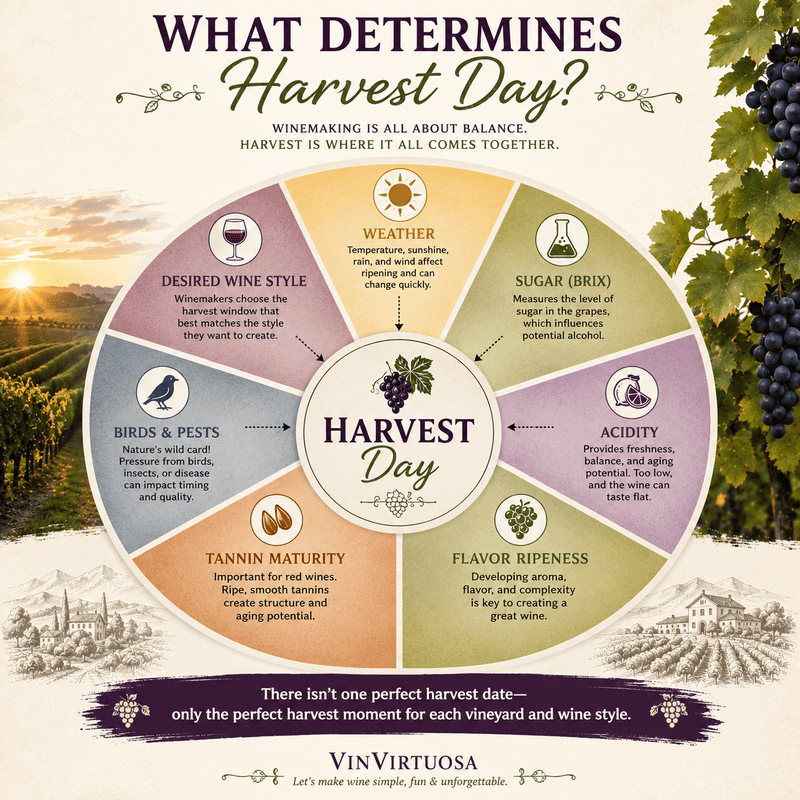
Even after grapes have reached an ideal balance of sugar, acidity, and flavor, winemakers still face another challenge: deciding exactly when to harvest.
In many cases, the ideal harvest window may be only a few days long. Waiting too long or picking too early can significantly alter the style and quality of the finished wine.
To make matters even more challenging, Mother Nature rarely follows a winemaker’s schedule.
Watching the Weather
Weather forecasts become an obsession during harvest season.
A vineyard may be approaching perfect ripeness when a forecast suddenly predicts several days of rain. Winemakers must decide whether to harvest immediately or risk leaving fruit exposed to potentially damaging conditions.
Rain can cause grapes to absorb water and swell, diluting flavors and reducing concentration. Extended moisture can also increase the risk of fungal diseases and rot.
In some years, entire harvest schedules are adjusted because of a single weather event.
Heat Waves and Rapid Ripening
Excessive heat can create a different set of problems.
A late-season heat wave may accelerate sugar accumulation faster than flavor development, forcing winemakers to make difficult decisions.
Should they harvest immediately to preserve balance?
Or wait and hope the fruit continues developing desired flavors?
These decisions often happen under significant time pressure.
Birds, Insects, and Other Vineyard Visitors
As grapes become sweeter, they become increasingly attractive to wildlife.
Birds can strip vines surprisingly quickly, sometimes consuming significant amounts of fruit within days. Vineyard managers may use netting, sound devices, or other deterrents to protect crops as harvest approaches.
Insects and other pests can also become concerns during the final weeks of ripening.
The longer grapes remain on the vine, the greater the potential exposure to these risks.
The Desired Wine Style Matters
Perhaps the most important factor influencing harvest timing is the style of wine the producer hopes to create.
Different wine styles require different levels of ripeness.
For example:
Sparkling Wine Grapes
- Typically harvested earlier
- Higher acidity
- Lower sugar levels
- Greater freshness and vibrancy
Cabernet Sauvignon
- Often harvested later
- More developed tannins
- Greater concentration
- Richer fruit character
Late-Harvest Dessert Wines
- Intentionally left on the vine long after traditional harvest dates
- Higher sugar concentration
- Rich, luscious sweetness
- Often influenced by noble rot or natural dehydration
These examples illustrate why there is no universally “correct” harvest date. The ideal timing depends on the grape variety, the growing conditions, and the vision of the winemaker.
For this reason, harvest season is often described as a combination of science, experience, and educated risk-taking. Every decision made during these crucial weeks can influence the wine for years to come.
Hand Harvesting vs. Machine Harvesting
Once a vineyard manager or winemaker decides that grapes have reached optimal ripeness, the next question becomes: how will they be harvested?
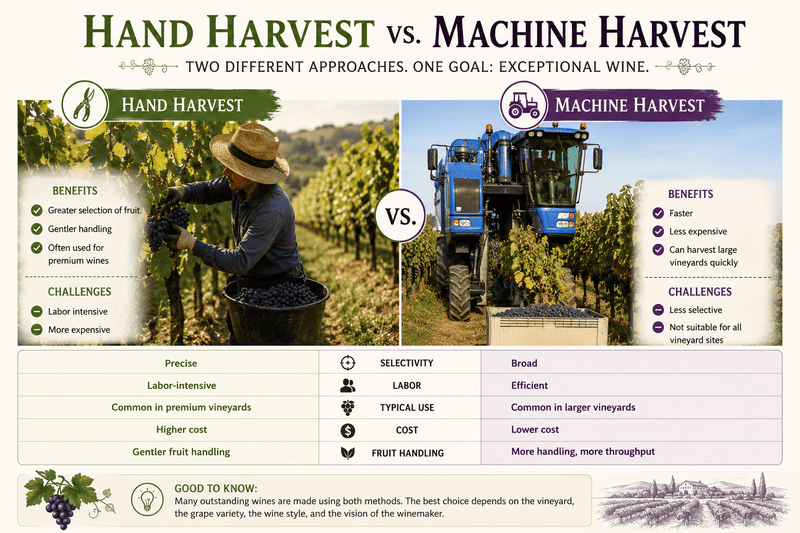
Today, vineyards around the world use two primary methods—hand harvesting and machine harvesting. Each approach has advantages and challenges, and the choice often depends on factors such as vineyard size, terrain, labor availability, budget, and the style of wine being produced.
While many wine enthusiasts romanticize the image of workers carefully picking grapes by hand, modern harvesting machines have become increasingly sophisticated and play an important role in many wine regions.
Hand Harvesting
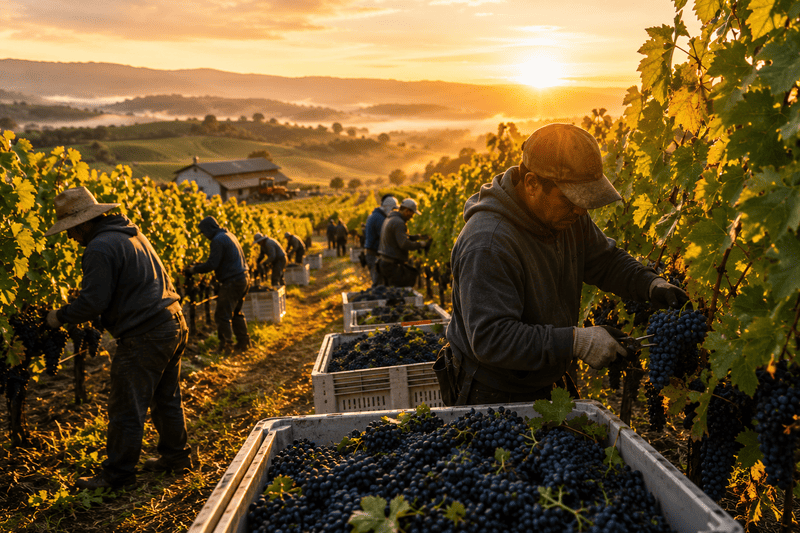
Hand harvesting is the traditional method of picking grapes and remains the preferred approach for many premium wineries.
Workers move through vineyard rows carrying small knives or pruning shears, carefully cutting grape clusters from the vine and placing them into collection bins.
The process is labor-intensive but offers several important advantages.
Greater Selection of Fruit
One of the biggest benefits of hand harvesting is precision.
Workers can evaluate each cluster individually, selecting healthy fruit while leaving behind damaged, underripe, diseased, or sunburned grapes. This level of selectivity can significantly improve overall fruit quality.
In vineyards producing high-end wines, this careful sorting often begins before the grapes even leave the vineyard.
Gentler Handling
Hand-picked grapes typically experience less physical stress than machine-harvested fruit.
Whole clusters remain largely intact, reducing juice release and minimizing oxidation before the grapes reach the winery.
This can be especially important for delicate varieties such as Pinot Noir and for sparkling wine production, where preserving freshness is critical.
Often Used for Premium Wines
Many prestigious wine regions—including steep hillside vineyards in Burgundy, the Mosel, and parts of Italy—rely heavily on hand harvesting.
In some locations, the terrain is so steep that machinery simply cannot operate safely.
Even where machines are possible, wineries producing luxury wines often choose hand harvesting because of the additional quality control it provides.
Challenges of Hand Harvesting
Despite its advantages, hand harvesting is not without drawbacks.
Labor Intensive
Harvest crews often work long days under demanding conditions.
Finding enough skilled workers during harvest season has become increasingly difficult in many wine regions around the world.
Higher Cost
Labor represents one of the largest expenses in vineyard management.
As wages and labor shortages continue to rise, hand harvesting can significantly increase production costs.
For many wineries, these additional expenses are reflected in the final price of the wine.
Machine Harvesting
Machine harvesting has become increasingly common, particularly in larger vineyards and regions where labor is scarce.
Modern harvesting machines straddle vineyard rows and use a system of gentle vibrations or shaking mechanisms to remove grapes from the vines.
The fruit is collected onboard and transported directly to waiting bins or trailers.
While machine harvesting once carried a reputation for lower quality, advances in technology have dramatically improved its effectiveness.
Faster Harvesting
Speed is perhaps the greatest advantage of machine harvesting.
A machine can harvest in a matter of hours what might take an entire crew a full day—or longer—to complete.
This allows wineries to respond quickly when ideal harvest conditions arrive.
Lower Cost
Although harvesting equipment represents a significant investment, machines can reduce ongoing labor expenses and increase efficiency.
For large-scale vineyards, machine harvesting often provides substantial economic advantages.
Ideal for Large Vineyards
Some wineries manage hundreds or even thousands of acres of vineyards.
Harvesting such vast areas by hand would require enormous labor resources and coordination.
Machines make it possible to bring large quantities of fruit into the winery within a very short period of time.
Challenges of Machine Harvesting
Despite its efficiency, machine harvesting does have limitations.
Less Selective
Machines harvest virtually all grapes on a vine regardless of quality.
As a result, additional sorting is often required at the winery to remove leaves, stems, and less desirable fruit.
Not Suitable for Every Vineyard
Steep slopes, narrow vineyard rows, old vines, and certain trellising systems may make machine harvesting impractical or impossible.
Many of the world’s most iconic vineyard sites continue to rely on hand harvesting because machinery simply cannot access the terrain.
What Happens on Harvest Day?
For vineyard workers and winemakers, harvest day often begins long before most people are awake.
The atmosphere is a mixture of excitement, urgency, and anticipation. Months of vineyard work have led to this moment, and every step must be carefully coordinated to ensure the fruit arrives at the winery in the best possible condition.
Before Sunrise: An Early Start
Many harvest crews begin working before dawn, sometimes as early as midnight or 2:00 a.m.
At first glance, harvesting in darkness may seem unusual, but there are several important reasons why wineries prefer cooler hours.
Cooler Temperatures Protect the Fruit
Grapes harvested in the cool morning air retain their freshness and are less likely to begin unwanted fermentation before reaching the winery.
Lower temperatures also help preserve delicate aromas and flavors, particularly in white wine varieties.
Better Quality Control
Cool fruit is easier to process once it arrives at the winery.
Winemakers can maintain greater control over fermentation and reduce the risk of oxidation or spoilage.
In warmer regions such as California, Australia, and parts of Spain, night harvesting has become increasingly common for precisely these reasons.
Picking the Grapes
As the sun begins to rise, crews move systematically through the vineyard rows.
Workers carefully cut grape clusters from the vine and place them into collection buckets or bins.
Depending on the vineyard’s quality standards, workers may also perform an initial sorting process in the field.
They look for:
- Damaged fruit
- Underripe grapes
- Diseased clusters
- Leaves and debris
Only the healthiest fruit continues on its journey to the winery.
In premium vineyards, this vineyard-level sorting can significantly improve overall wine quality before the grapes ever reach a sorting table.
“Great wine begins long before fermentation—it begins with how the grapes are harvested.” 🍇🍷
Filling the Bins
Once harvested, grapes are transferred into larger collection bins or containers.
At this stage, careful handling remains essential.
Excessive crushing can release juice prematurely, increasing the risk of oxidation and potentially affecting quality.
The goal is to move the fruit quickly while keeping clusters as intact as possible.
The Race to the Winery
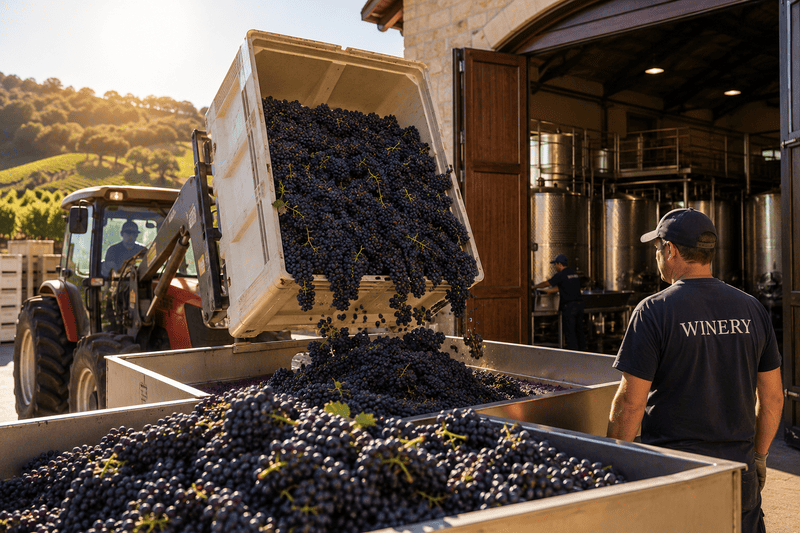
After the grapes are collected, they are transported to the winery as quickly as possible.
Speed matters.
From the moment grapes are picked, natural biological processes begin to change the fruit.
Winemakers work to minimize delays in order to:
- Preserve freshness
- Prevent oxidation
- Avoid unwanted fermentation
- Maintain fruit integrity
- Protect delicate aromas and flavors
Many wineries schedule harvest crews and winery teams with military-like precision to ensure grapes move seamlessly from vineyard to processing equipment.
For some producers, grapes harvested before sunrise may already be sorted, destemmed, and preparing for fermentation by mid-morning.
The journey from vine to winery often takes only a few hours, but those hours are among the most important in the entire winemaking process. The care taken during harvest day helps set the stage for every step that follows.
The First Steps at the Winery
The moment grapes arrive at the winery, the pace shifts from harvesting to winemaking.
For vineyard crews, the harvest may be complete, but for the winemaking team, the work is just beginning. Every decision made during these first few hours can influence the character, quality, and style of the finished wine.
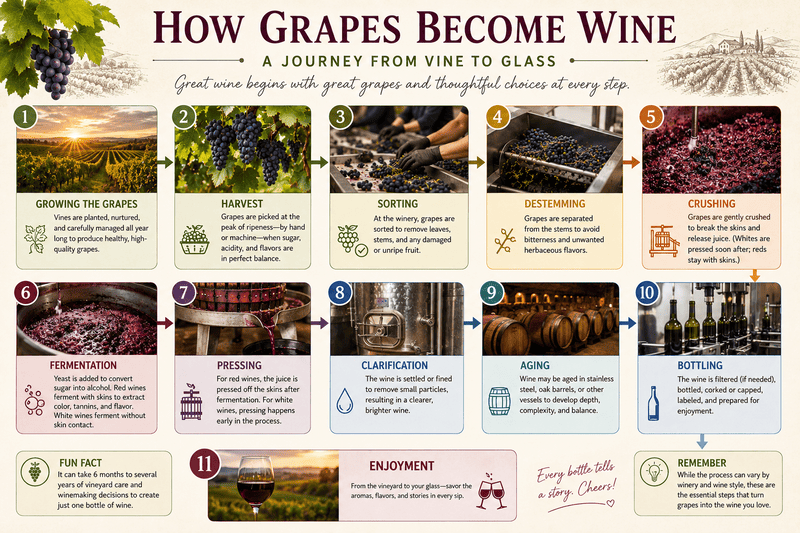
While the exact process varies depending on the grape variety and the type of wine being produced, most grapes go through three important early stages: sorting, destemming, and crushing.
Sorting: Selecting the Best Fruit
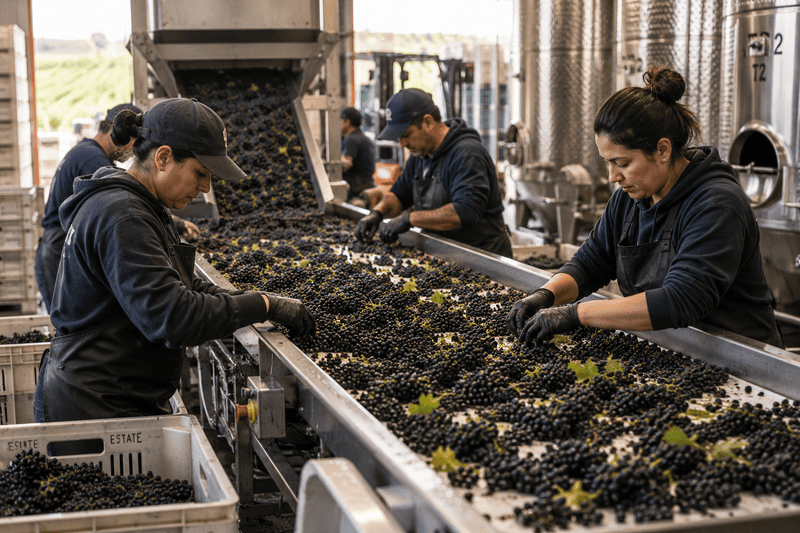
Before fermentation begins, winemakers carefully inspect the incoming grapes.
The goal is simple: keep the best fruit and remove anything that doesn’t belong.
Depending on the winery, sorting may be performed by hand, by machine, or through a combination of both methods.
During sorting, workers remove:
- Leaves
- Pieces of vine
- Stems
- Insects or debris
- Damaged grapes
- Underripe fruit
- Diseased clusters
Many premium wineries use sorting tables where workers visually inspect the fruit as it moves along a conveyor belt.
Some wineries also utilize advanced optical sorting systems that use cameras and sensors to identify and remove grapes that don’t meet quality standards.
This attention to detail helps ensure that only the healthiest fruit moves forward in the winemaking process.
Destemming: Separating Grapes from the Stems
Once the fruit has been sorted, many wineries choose to destem the grapes.
Destemming is exactly what it sounds like—the process of separating individual grapes from the stems that connect them to the cluster.
Why remove the stems?
Stems contain tannins and other compounds that can contribute bitterness or herbaceous flavors if included during fermentation.
By removing them, winemakers gain greater control over the wine’s texture and flavor profile.
That said, some producers intentionally include a portion of whole clusters during fermentation. This practice is especially common in certain Pinot Noir, Syrah, and traditional Burgundian winemaking styles, where stems can contribute additional structure and complexity.
Like many aspects of winemaking, there is no single correct approach.
Crushing: Preparing the Fruit for Fermentation
After sorting and destemming, the grapes are prepared for fermentation.
Historically, grapes were crushed by foot—a romantic image that still appears in wine festivals around the world. Today, modern wineries use specialized equipment designed to gently break the grape skins while preserving quality.
Interestingly, not all wines are crushed in the same way.
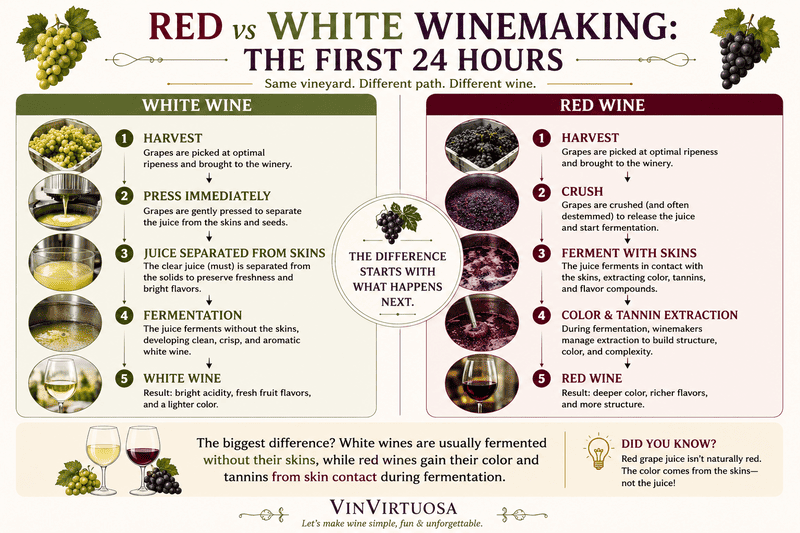
White Wine Processing
For most white wines, the goal is to separate the juice from the grape skins as quickly as possible.
After gentle crushing, the grapes are typically pressed, allowing the juice to flow into tanks where fermentation will begin.
By limiting skin contact, winemakers preserve the fresh fruit flavors, bright acidity, and lighter color associated with white wines.
Red Wine Processing
For red wines, the process takes a different path.
Instead of immediately separating the juice from the skins, the juice, skins, and often seeds remain together during fermentation.
This extended skin contact is what gives red wines their color, tannins, and much of their flavor complexity.
At this point, fermentation is just around the corner, and the choices made during these first winery steps begin shaping the style of wine that will eventually emerge from the cellar.
Harvest Looks Different for Red and White Wines
Although all wine grapes begin their journey in the vineyard, the path they take after harvest can vary dramatically depending on whether the goal is to produce a white wine or a red wine.
One of the biggest differences lies in how long the grape juice remains in contact with the skins.
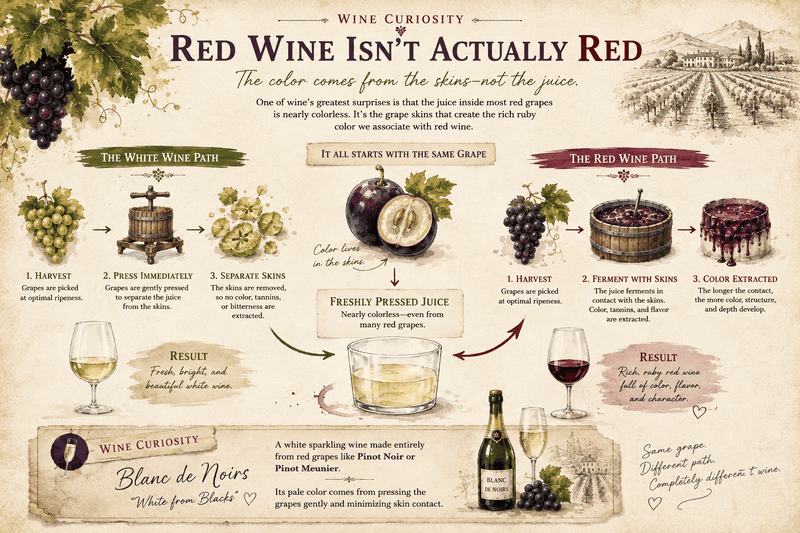
Surprisingly, the juice inside most grapes—including many red grape varieties—is nearly colorless. The pigments that create a wine’s color are primarily found in the skins.
Because of this, winemakers handle white and red grapes very differently once they arrive at the winery.
White Wines: Preserving Freshness and Purity
For white wine production, preserving freshness is usually the primary goal.
After harvest, grapes are generally pressed soon after arriving at the winery. The juice is separated from the skins, seeds, and other solids before fermentation begins.
By minimizing skin contact, winemakers create wines that emphasize:
- Bright fruit flavors
- Crisp acidity
- Floral aromas
- Freshness and elegance
The juice is then transferred into stainless steel tanks, oak barrels, or other fermentation vessels depending on the style desired.
Examples of White Wines
Sauvignon Blanc
Sauvignon Blanc is often prized for its vibrant acidity and expressive aromas of citrus, grapefruit, green apple, passion fruit, and fresh herbs. Early separation from the skins helps preserve these bright characteristics.
Chardonnay
Chardonnay offers tremendous stylistic flexibility. Some versions emphasize crisp apple and citrus flavors, while others undergo oak aging and malolactic fermentation to develop richer notes of vanilla, butter, and baking spices. Regardless of style, the juice is typically separated from the skins before fermentation.
Red Wines: Building Color, Structure, and Complexity
Red wine production follows a very different path.
After harvest and processing, the juice remains in contact with the skins throughout fermentation.
As fermentation progresses, color compounds, tannins, flavors, and aromatic compounds are gradually extracted from the skins.
This process gives red wines their characteristic color and contributes much of their structure and aging potential.
The length of skin contact varies depending on the grape variety and the style of wine being produced.
Some lighter red wines may spend only a short time on the skins, while more powerful wines can remain in contact with skins for several weeks.
Examples of Red Wines
Pinot Noir
Pinot Noir typically produces lighter-colored wines with silky tannins and delicate flavors of cherry, raspberry, cranberry, earth, and spice. Winemakers often seek gentle extraction to preserve elegance and finesse.
Cabernet Sauvignon
Cabernet Sauvignon generally undergoes longer skin contact to extract the deep color, firm tannins, and concentrated flavors that make the variety famous. These wines often display notes of black currant, blackberry, plum, cedar, and baking spices and are well suited for aging.
One Harvest, Two Very Different Journeys
Standing in a vineyard during harvest, it’s easy to assume that all grapes follow the same path once they’re picked.
In reality, the decisions made immediately after harvest set white and red wines on remarkably different journeys.
A Sauvignon Blanc and a Cabernet Sauvignon may begin growing under the same sun and harvested from neighboring vineyard blocks, yet the way they are handled in the winery ultimately leads to two entirely different wine styles.
Understanding these early winemaking choices helps explain why wines can vary so dramatically in color, texture, flavor, and aging potential—even when they start with the same simple ingredient: grapes.
Night Harvesting: Why Some Vineyards Pick in the Dark
If you’ve ever imagined wine harvest as a leisurely daytime activity beneath sunny vineyard skies, you might be surprised to learn that some of the world’s most respected wineries harvest their grapes in complete darkness.
In many wine regions, harvest crews begin working long before sunrise. Headlights illuminate vineyard rows, tractors move quietly through the darkness, and workers carefully pick grapes under the stars.
While it may seem unusual, night harvesting has become an increasingly common practice, especially in warm wine-growing regions where daytime temperatures can climb rapidly during harvest season.
For many wineries, harvesting at night isn’t just a convenience—it’s a quality decision.
Cooler Temperatures Mean Better Fruit
One of the biggest advantages of night harvesting is temperature control.
During warm afternoons, grape temperatures can rise significantly. By the time fruit reaches the winery, those elevated temperatures may increase the risk of oxidation, encourage unwanted microbial activity, and make it more difficult to preserve delicate aromas.
At night, grapes are naturally cooler.
Harvesting during the coolest hours of the day helps maintain fruit freshness and protects many of the aromatic compounds that contribute to a wine’s character.
This is particularly important for white varieties such as Sauvignon Blanc, Riesling, and Albariño, where vibrant fruit aromas and crisp acidity are central to the wine’s appeal.
Preserving Freshness and Quality
Think of grapes as highly perishable fruit.
Once they are removed from the vine, biological changes begin immediately. Warm temperatures can accelerate these changes, potentially affecting flavor, aroma, and overall quality.
Cool fruit arrives at the winery in better condition and gives winemakers greater control over the next stages of production.
Many winemakers compare it to starting with fresher ingredients in a recipe—the better the condition of the grapes, the greater the opportunity to create exceptional wine.
Lower Energy Costs at the Winery
Night harvesting can also improve efficiency once the fruit arrives at the winery.
Because the grapes are already cool, wineries often require less energy to chill the fruit before processing.
This can help reduce refrigeration costs while supporting gentler handling of the grapes during crushing, pressing, and fermentation preparation.
For larger wineries processing hundreds of tons of fruit, these energy savings can be significant.
Common in Warm Wine Regions
Night harvesting is especially popular in warmer climates where daytime temperatures can be intense during harvest season.
Regions where night harvesting is frequently used include:
- California
- Australia
- Parts of Spain
- Argentina
- Southern Italy
In areas such as California’s Napa Valley and Central Valley, harvest crews may begin work around midnight and continue through the early morning hours before temperatures begin to rise.
As climate change continues to influence growing conditions around the world, many wineries are increasingly relying on night harvesting as a way to maintain fruit quality and preserve freshness.
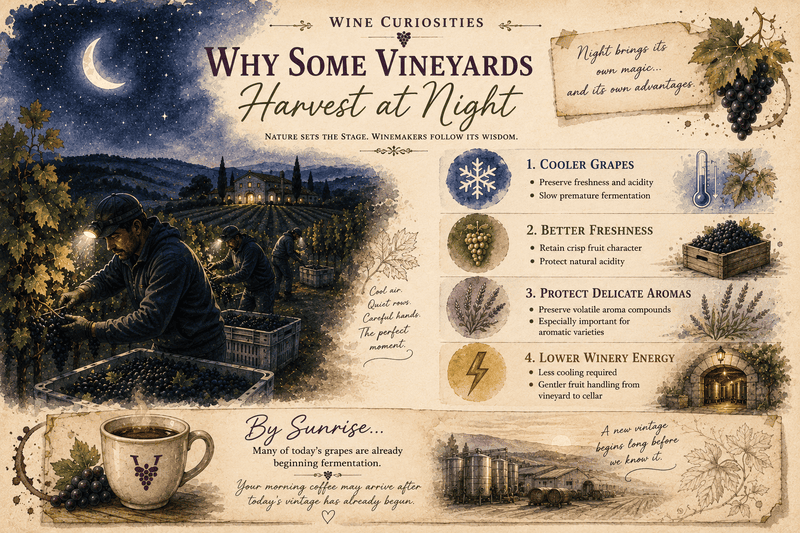
By the time many people are pouring their morning coffee, winery teams may already have harvested, transported, sorted, and begun processing several tons of grapes.
Harvest season truly never sleeps.
How Long Does Harvest Season Last?
While the word “harvest” often sounds like a single event, the reality is far more complex.
Harvest is rarely completed in a single day or even a single week. Instead, it unfolds over an extended period as different grape varieties reach maturity and vineyard blocks achieve optimal ripeness.
For many wineries, harvest season becomes a marathon rather than a sprint.
Every Grape Ripens on Its Own Schedule
Not all grape varieties mature at the same pace.
Some grapes naturally reach ripeness earlier in the season, while others require additional time on the vine to develop flavor, tannin maturity, and sugar levels.
As a result, wineries often harvest in stages.
For example:
Sauvignon Blanc
- Often among the first grapes harvested
- Picked earlier to preserve acidity and freshness
- Commonly harvested in late summer
Chardonnay
- Typically harvested after Sauvignon Blanc
- Timing varies depending on desired wine style
Pinot Noir
- Usually harvested mid-season
- Requires careful monitoring because of its thin skins and delicate nature
Cabernet Sauvignon
- Frequently among the final grapes harvested
- Benefits from extended ripening
- Often remains on the vine well into autumn
This staggered schedule means harvest activity can continue for weeks as different varieties reach their ideal ripeness.
Vineyard Location Matters
Even within the same winery, not all vineyards ripen simultaneously.
Factors that influence ripening include:
- Elevation
- Sun exposure
- Soil composition
- Slope orientation
- Proximity to water
- Local climate conditions
A vineyard planted on a warm, south-facing slope may ripen significantly earlier than another vineyard located just a few miles away at a higher elevation.
This variation requires vineyard managers to evaluate each block individually rather than harvesting everything at once.
Small Wineries vs. Large Wineries
The length of harvest season often depends on the size and scope of the operation.
A small boutique winery with a limited number of vineyard blocks may complete harvest in just a few weeks.
Larger wineries that produce multiple wine styles from numerous grape varieties often harvest continuously for months.
During peak harvest season, trucks loaded with fruit may arrive at the winery around the clock as different vineyard sites reach maturity.
For winemaking teams, this can mean weeks of long days, late nights, and very little downtime.
A Season of Constant Decision-Making
One reason harvest lasts so long is that winemakers are constantly reassessing conditions.
A vineyard that isn’t quite ready today may become perfect three days later.
Weather forecasts, sugar levels, acidity measurements, and flavor development are continually monitored throughout the season.
As a result, harvest schedules remain flexible and can change quickly.
More Than a Single Moment
For wine lovers, harvest is often imagined as a picturesque snapshot—a basket of grapes, vineyard workers, and autumn sunshine.
In reality, harvest is a dynamic season that unfolds over many weeks, sometimes months, as nature determines the pace.
From the first Sauvignon Blanc grapes picked in late summer to the final Cabernet Sauvignon clusters harvested in autumn, each vineyard follows its own timetable. Together, these countless decisions help shape the wines that will eventually fill bottles and reach our tables.
Why Harvest Matters to Wine Quality
After exploring the vineyard decisions, harvest methods, winery processing, and the challenges of timing, one thing becomes clear: harvest is far more than simply picking grapes.
It is one of the most important factors influencing the quality and style of the finished wine.
Many wine lovers think of fermentation, barrel aging, or blending as the defining moments of winemaking. While those stages are certainly important, the reality is that many of the wine’s key characteristics are determined long before fermentation even begins.
The decisions made during harvest help establish the foundation for everything that follows.
Finding the Balance
Great wine is often described as a balance between several essential components:
- Sugar
- Acidity
- Tannin
- Flavor concentration
- Aroma development
Harvest timing directly affects each of these elements.
As grapes remain on the vine, sugar levels continue to increase while acidity gradually declines. Meanwhile, tannins mature, flavors become more complex, and aromas evolve.
The challenge for winemakers is identifying the moment when all of these components are working together in harmony.
Harvest too early and the wine may feel thin, tart, or underdeveloped.
Harvest too late and the wine may become overly alcoholic, heavy, or lacking freshness.
The goal is balance.
Earlier Harvest: Freshness and Energy
When grapes are harvested earlier in the ripening cycle, they generally retain higher levels of acidity and lower sugar concentrations.
These wines often display:
- Bright acidity
- Lower alcohol levels
- Crisp fruit flavors
- Greater freshness
- Lighter body
Many sparkling wines are intentionally harvested earlier because vibrant acidity is a critical component of their style.
Some producers of Sauvignon Blanc, Riesling, and other aromatic whites may also favor slightly earlier harvest dates to preserve freshness and expressive fruit character.
These wines often feel lively, energetic, and refreshing in the glass.
Later Harvest: Richness and Concentration
Allowing grapes to remain on the vine longer creates a different style of wine.
As sugar levels rise and flavors continue developing, wines tend to become:
- Richer
- Fuller-bodied
- More concentrated
- Higher in alcohol
- More intensely flavored
This approach is common for varieties such as Cabernet Sauvignon, Syrah, and Zinfandel, where deeper fruit expression and greater tannin maturity are often desired.
Late-harvest dessert wines take this concept even further by leaving grapes on the vine well beyond normal harvest dates. The result is highly concentrated fruit and elevated sugar levels that create luxurious sweet wines.
Every Decision Shapes the Final Wine
Two wineries may grow the same grape variety in the same region and still produce dramatically different wines simply because they choose different harvest dates.
A Sauvignon Blanc harvested a week earlier may emphasize citrus, green apple, and minerality.
The same vineyard harvested later could produce a wine with riper tropical fruit flavors and a richer texture.
Neither choice is necessarily right or wrong—they simply reflect different stylistic goals.
This is why harvest season is often viewed as the moment when vineyard management and winemaking truly intersect.
The choices made during those crucial days and weeks ultimately influence the wine’s flavor, texture, aroma, balance, aging potential, and overall personality.
“The quality of a wine doesn’t begin in the barrel—it begins with the decision of when to harvest.”
What Harvest Means for Wine Lovers
For wine professionals, harvest season is a period of intense work and critical decision-making.
For wine lovers, however, harvest offers something equally valuable: a chance to connect with the origins of the wines they enjoy.
Understanding harvest provides a deeper appreciation for the effort, expertise, and countless decisions that go into every bottle.
A Unique Time to Visit Wine Country
If you’ve never visited a wine region during harvest season, it’s an experience worth considering.
Vineyards are alive with activity.
Workers move through the rows collecting fruit, tractors transport freshly picked grapes, and wineries buzz with energy as fruit arrives throughout the day.
The sights, sounds, and aromas of harvest provide a fascinating glimpse into a side of wine production that most consumers rarely see.
For many wine regions, harvest is one of the most exciting times of the year.
Attend Harvest Festivals
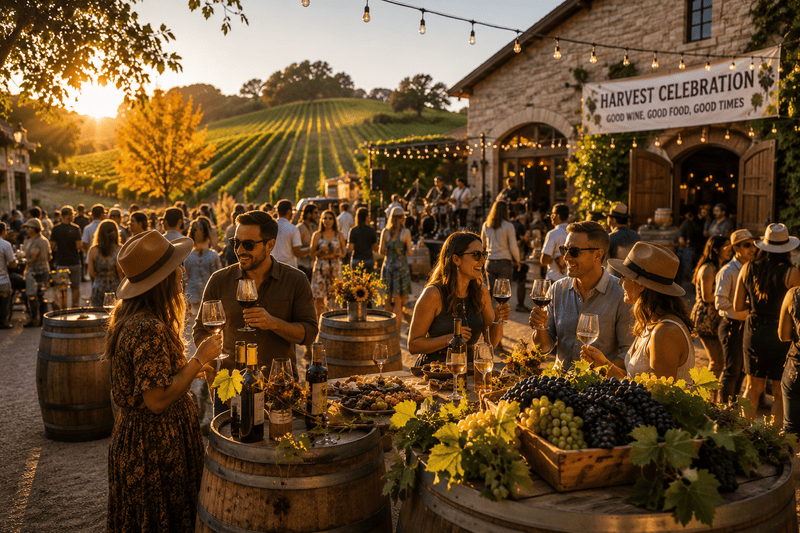
Many wine regions celebrate harvest with special events and festivals.
These gatherings often feature:
- Winery tours
- Vineyard walks
- Grape stomping demonstrations
- Food and wine pairings
- Live music
- Seasonal celebrations
Harvest festivals provide an enjoyable way to learn more about wine while experiencing the culture and traditions that surround the annual harvest.
Follow Your Favorite Wineries
Even if you can’t travel to wine country, you can still experience harvest season from afar.
Many wineries share harvest updates on social media, offering behind-the-scenes photos and videos of:
- Vineyard sampling
- Picking crews
- Night harvesting
- Fruit arrivals
- Fermentation activity
Watching harvest unfold in real time can help wine lovers better understand the journey from grape to glass.
Pay Attention to Vintage Reports
Harvest conditions often become part of a vintage’s story.
Weather patterns, harvest timing, and growing season challenges can all influence the character of a wine.
Reading winery newsletters, vintage reports, and producer updates can provide valuable insight into why a particular vintage tastes the way it does.
A Rare Glimpse Behind the Curtain
Perhaps the most fascinating aspect of harvest season is that it offers a rare opportunity to see winemaking at its beginning.
Most consumers encounter wine only after it has been bottled, labeled, and placed on a store shelf.
Harvest reveals the process before any of that happens.
It is the moment when agriculture and artistry come together—when months of vineyard work culminate in the first steps toward creating a new vintage.
The next time you open a bottle of wine, consider the harvest that made it possible. Behind every glass is a season of careful observation, hard work, and countless decisions that helped transform grapes into the wine you’re enjoying today.
Final Thoughts
Wine harvest is much more than simply picking grapes.
It is the culmination of an entire year’s worth of work, observation, patience, and decision-making. Long before the first grape is harvested, vineyard teams spend months nurturing the vines, monitoring weather conditions, managing growth, and carefully guiding the fruit toward ripeness. Harvest season represents the moment when all of those efforts finally come together.
As we’ve seen, every step matters. From measuring sugar levels and monitoring acidity to evaluating flavor development and choosing the perfect harvest date, winemakers constantly balance science, experience, and intuition. Once the grapes leave the vineyard, careful sorting, processing, and fermentation decisions continue shaping the wine’s future.
What makes harvest so fascinating is that there is no single formula for success. Every vineyard, every grape variety, and every vintage presents its own unique challenges. A sudden rainstorm, a late-season heat wave, or a few extra days of ripening can dramatically influence the style and character of the finished wine.
“Every great bottle has a harvest story waiting to be told.”
In many ways, harvest is where agriculture and artistry meet.
The vineyard provides the raw material, but it is the countless decisions made during harvest season that help determine whether a wine will be crisp and refreshing, rich and powerful, delicate and elegant, or capable of aging for decades.
For wine lovers, understanding harvest offers a deeper appreciation of what lies behind every bottle. The next time you pour a glass of Sauvignon Blanc, Chardonnay, Pinot Noir, Cabernet Sauvignon, or any other favorite wine, take a moment to think about the journey that began in the vineyard.
Picture the vineyard rows at sunrise. Imagine workers carefully selecting grape clusters, tractors carrying fruit to the winery, and winemakers tasting grapes as they search for the perfect moment to harvest. Consider the weeks of planning, the long hours, and the decisions made under the pressure of changing weather and ripening fruit.
All of those moments are part of the story in your glass.
The next time you enjoy a bottle of wine, remember that harvest season made it possible. Behind every vintage is a remarkable combination of nature, craftsmanship, and dedication—one that begins with a simple grape and ends with an experience meant to be shared, savored, and enjoyed.
Raise a Glass to Harvest
The next time harvest season arrives, follow a favorite winery online, visit a vineyard if you have the opportunity, or simply pay a little closer attention to the vintage date on a bottle. You may discover that harvest is not just one step in the winemaking process—it’s the heartbeat of the entire wine year.
After all, every great bottle has a harvest story waiting to be told.