Welcome to an Evening Worth Savoring
As the days grow shorter and the air turns crisp, something begins to change. We gather a little more often. We linger around the table a little longer. The holidays invite us to slow down, reconnect with the people we care about, and create moments that become lasting memories.
Picture this.
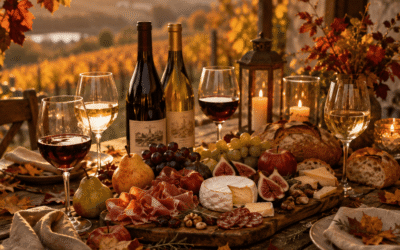
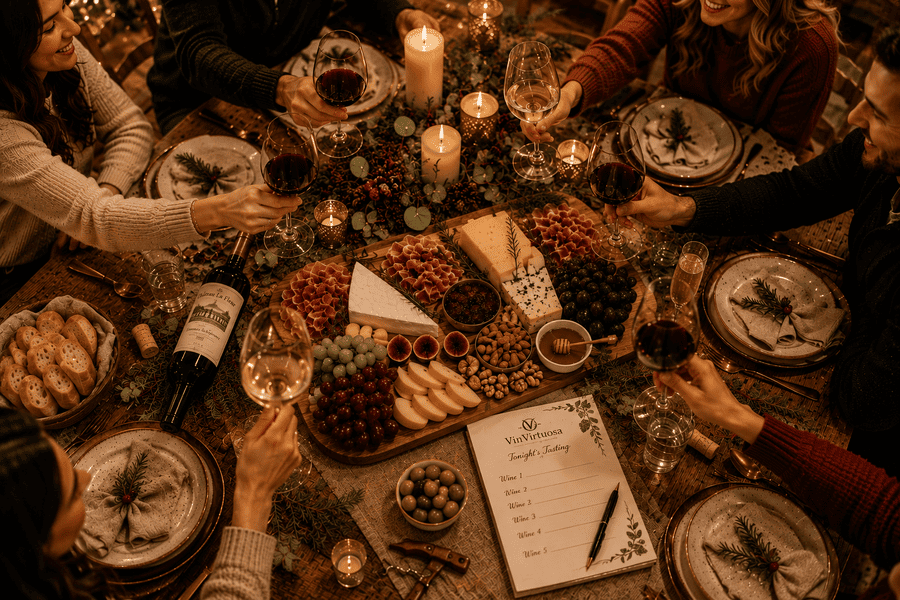
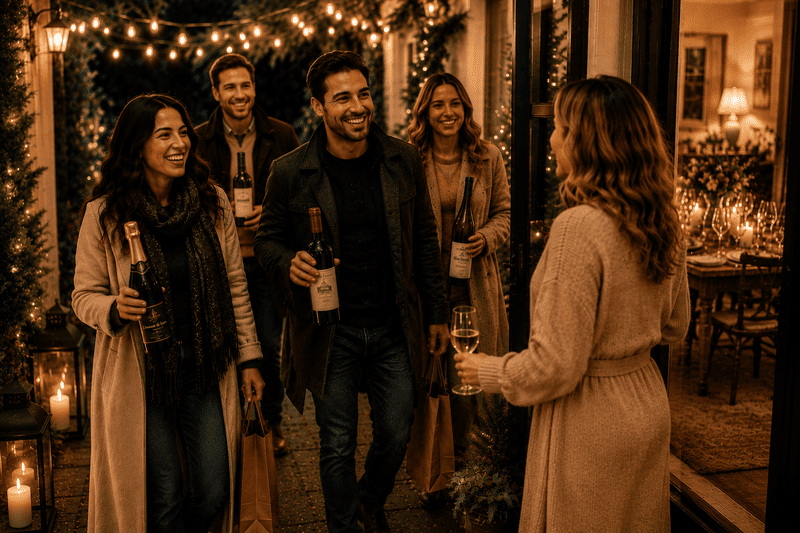
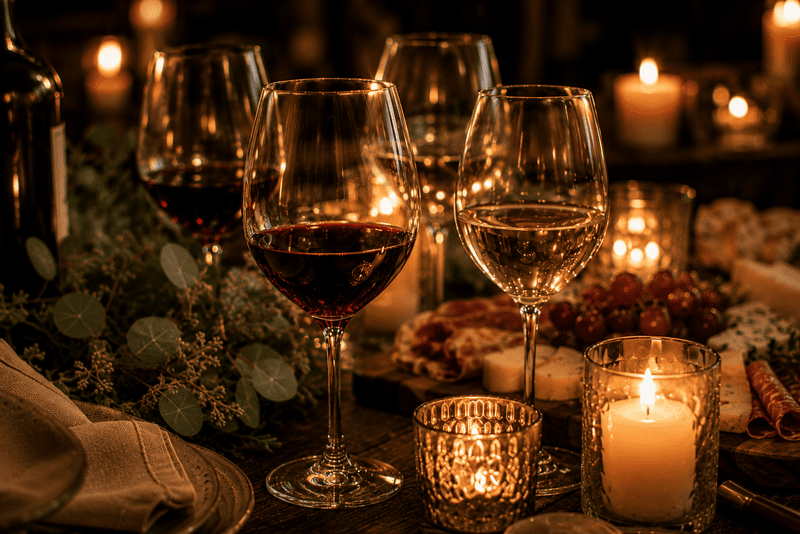
Soft candlelight flickers across the table. Wine glasses catch the warm glow as they’re arranged beside a simple charcuterie board filled with artisan cheeses, fresh fruit, roasted nuts, and slices of warm bread. Someone arrives carrying a bottle they’ve been saving for a special occasion. Jackets are hung by the door, laughter fills the room, and with the satisfying pop of the very first cork, the evening officially begins.
This isn’t a formal dinner party.
It isn’t a wine class.
It’s something even better.
It’s friends and family gathering to discover new wines, share stories, compare favorites, and simply enjoy being together.
One of the wonderful things about hosting a wine tasting at home is that it feels special without being complicated. You don’t need expensive bottles, matching crystal stemware, or professional wine knowledge to create an unforgettable evening. With just a little planning and a thoughtful approach, you can host an experience that feels welcoming, relaxed, and surprisingly elegant.
Whether you’re planning a cozy Friendsgiving gathering, a holiday get-together with neighbors, a family celebration, or simply looking for a new way to spend an evening with fellow wine lovers, hosting a wine tasting is one of the easiest—and most enjoyable—ways to bring people together.
The candles are lit.
The glasses are waiting.
Your guests will be here soon.
Let’s uncork the evening.
Why a Wine Tasting Is the Perfect Holiday Gathering
The holidays are filled with opportunities to gather, but they can also come with a surprising amount of pressure. Someone is cooking an elaborate meal. Someone else is worrying about decorations. Before long, the host spends more time in the kitchen than with their guests.
A wine tasting changes the rhythm of the evening.
Instead of everyone focusing on a large meal, the wine itself becomes the shared experience. Conversation begins naturally as guests compare aromas, flavors, and favorites. Even people who are new to wine quickly discover that there are no right or wrong answers—only personal preferences.
It’s also wonderfully relaxed.
You don’t need a five-course menu. A thoughtfully arranged cheese board, a few seasonal bites, and four to six carefully chosen wines are more than enough to create an evening that feels both festive and memorable.
Perhaps my favorite part is that everyone participates. No one is waiting for the next course to be served. No one is sitting quietly at the end of the table. Each bottle becomes a new conversation, each pour a new discovery, and every guest leaves having found a favorite they may never have tried otherwise.
That, to me, is what wine is really about.
Not memorizing tasting notes.
Not impressing anyone with obscure regions or difficult pronunciations.
Simply slowing down, sharing a bottle, and creating moments that become part of the stories we tell long after the holidays have passed.
Choose a Theme: Give Your Evening a Story
Every memorable wine tasting begins with a simple idea.
Think of your theme as the thread that ties the entire evening together. It gives your guests something to discover, sparks conversation around the table, and transforms a few bottles of wine into a shared journey.
The good news? Your theme doesn’t have to be complicated.
In fact, the simpler it is, the more enjoyable the evening tends to be.
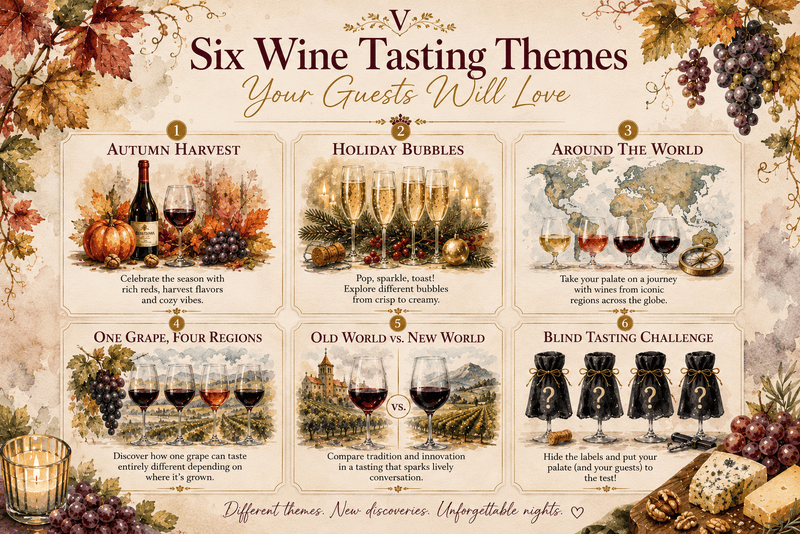
You might explore a single grape variety, such as Pinot Noir, and discover how it changes from the rolling hills of Burgundy to the valleys of California or the vineyards of New Zealand. Or perhaps you’d like to travel without leaving your dining room by featuring wines from Italy, Spain, or South America.
If you’re entertaining during the holidays, seasonal themes can make the evening feel even more memorable. Imagine gathering friends for an Autumn Harvest tasting featuring rich Cabernet Sauvignon, velvety Merlot, spicy Syrah, and elegant Grenache. Or celebrate with a Holiday Bubbles evening showcasing Champagne, Crémant, Cava, and Prosecco, each bringing its own personality to the table.
For guests who enjoy a little friendly competition, an Old World vs. New World tasting is always a conversation starter. Pour two wines made from the same grape—perhaps Cabernet Sauvignon or Chardonnay—and compare how climate, tradition, and winemaking shape each one.
Whatever theme you choose, keep it focused.
Four to six wines are usually the perfect number. It’s enough variety to notice meaningful differences while keeping everyone’s palate fresh and engaged.
Remember, you’re not trying to impress your guests with the size of your wine collection.
You’re inviting them to share a story—one glass at a time.
Choose the Wines: Build a Lineup That Invites Discovery
Now comes one of the most enjoyable parts of planning your tasting: selecting the wines themselves.
Rather than searching for the most expensive bottles, look for wines that create interesting comparisons. A thoughtful lineup almost always leads to better conversations than an impressive price tag.
If your theme is based on a single grape, choose bottles from different regions or producers and let your guests discover how each expresses itself. If your evening focuses on a country or region, include wines that showcase different styles—from crisp and refreshing to rich and full-bodied.
The holidays are also the perfect excuse to include one bottle that’s a little unexpected. Perhaps it’s a sparkling wine to welcome your guests, a dessert wine to finish the evening, or a bottle you’ve been saving for a special occasion. Those surprise moments often become the stories everyone remembers long after the evening ends.
As you choose your lineup, look for contrasts that encourage conversation:
- Light-bodied and full-bodied
- Crisp and creamy
- Fruit-forward and earthy
- Young and mature
- Old World and New World
There isn’t a single “correct” lineup.
The goal isn’t to identify the best wine in the room—it’s to discover how different wines express themselves and to encourage everyone to find the styles they enjoy most.
One final piece of advice: if possible, taste each wine yourself before your guests arrive. It doesn’t have to be a formal tasting. Simply opening the bottles ahead of time helps you feel more familiar with what you’ll be serving and gives you a few stories to share throughout the evening.
After all, the most memorable hosts aren’t the ones who know every tasting note.
They’re the ones who make everyone around the table feel welcome, curious, and excited to pour the next glass.
Set the Scene: Create an Atmosphere Guests Will Remember
One of the wonderful things about wine is that it isn’t experienced by taste alone.
The room matters.
The lighting matters.
The music matters.
Even the conversations around the table become part of the wine itself.
Long before the first bottle is opened, you’re already setting the tone for the evening.
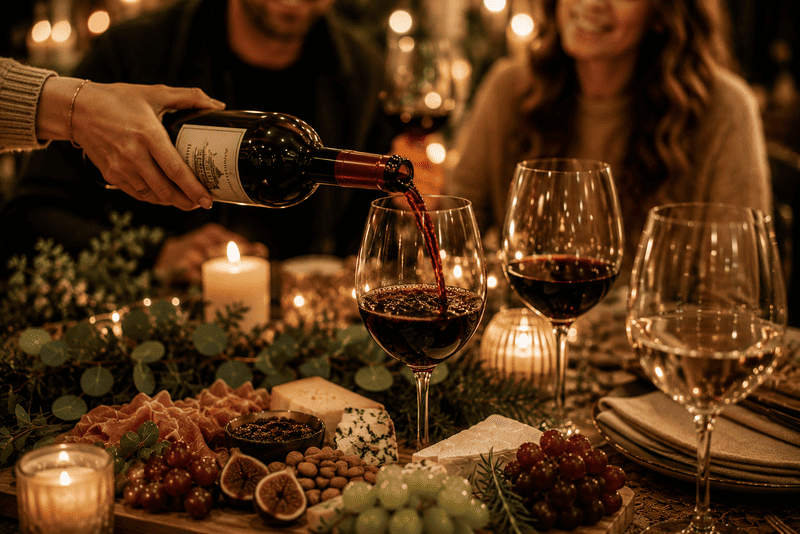
Start with the lighting. Soft, warm light instantly creates an inviting atmosphere and encourages people to relax. If you have candles, now is the perfect time to light them. Their gentle glow adds warmth to the table and makes every glass of wine sparkle just a little more.
Next, think about the soundtrack to your evening.
Choose music that complements the conversation rather than competing with it. Gentle jazz, acoustic guitar, instrumental classics, or mellow holiday playlists create an elegant backdrop without ever becoming the center of attention. The goal is for your guests to notice how comfortable they feel—not necessarily what song is playing.
A few simple seasonal touches can make the gathering feel even more memorable. A small arrangement of fresh greenery, eucalyptus, pine branches, or autumn leaves brings the beauty of the season indoors without overwhelming the table. If flowers are more your style, choose understated arrangements that leave plenty of room for eye contact and conversation across the table.
When it comes to serving pieces, simplicity almost always wins. Wooden boards, slate platters, linen napkins, and neutral-colored dishes allow the wines and the food to become the stars of the evening. Rather than creating a table that feels formal, aim for one that feels welcoming.
Most importantly, leave a little space.
Space for glasses.
Space for bottles.
Space for tasting notes.
And perhaps most importantly, space for stories to unfold.
By the time your guests take their seats, they should already feel like they’re somewhere special—not because everything is elaborate, but because every detail has been chosen with care.
Build the Perfect Tasting Table
Now it’s time to bring everything together.
Picture your table before anyone arrives.
The wine glasses are polished and waiting.
The bottles are arranged in the order they’ll be served.
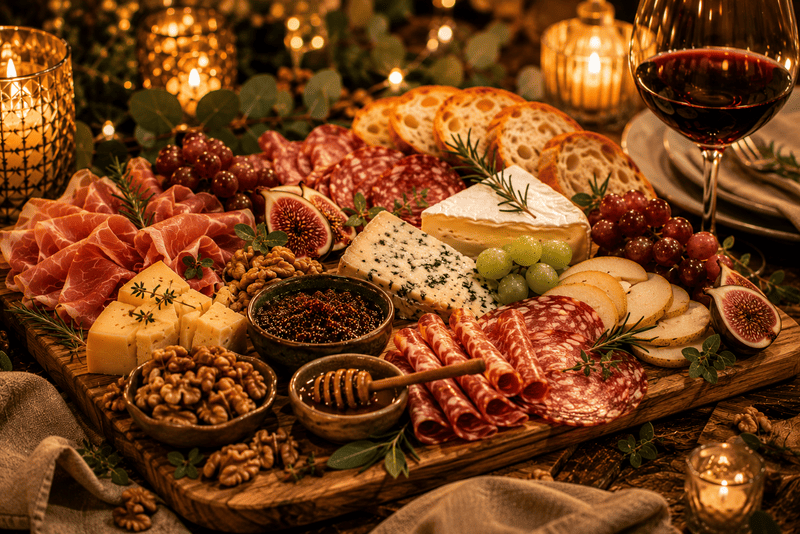
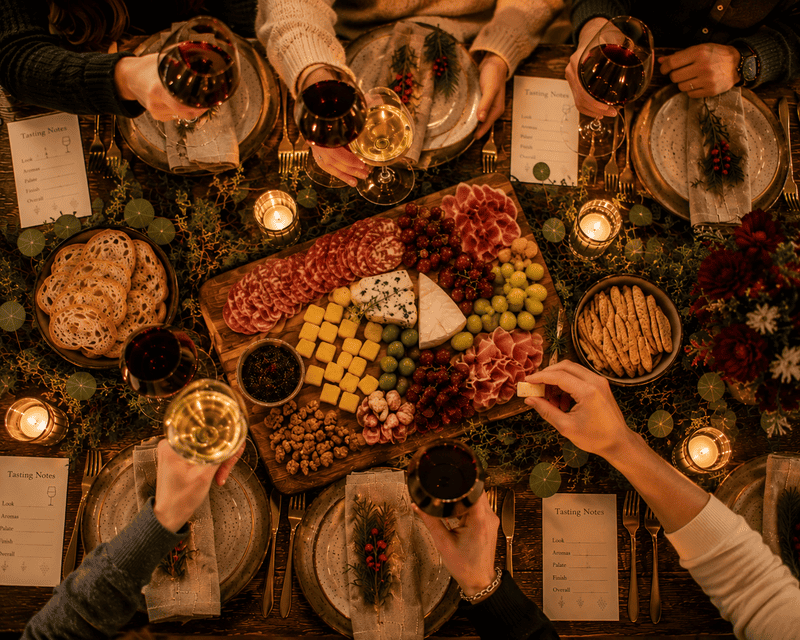
A beautiful wooden board is filled with artisan cheeses, seasonal fruit, roasted nuts, fresh bread, and a few thoughtful accompaniments. Water glasses are filled, cloth napkins are folded, and a simple vase of greenery quietly completes the scene.
Nothing feels crowded.
Nothing feels overdone.
Everything has room to breathe.
One of the easiest mistakes hosts make is trying to put too much on the table. Resist the temptation. A thoughtfully arranged tasting table feels calm, inviting, and effortless, allowing your guests to focus on what really matters—the wines, the conversation, and each other.
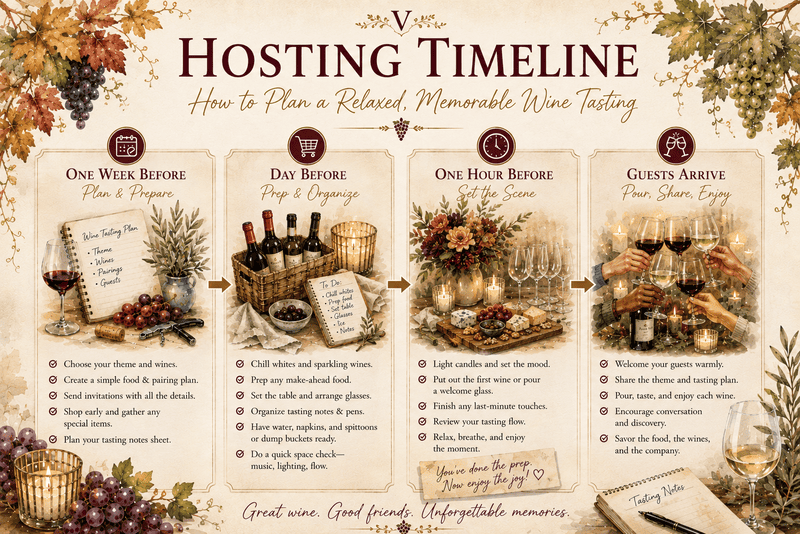
If you’re serving four to six wines, consider arranging them from left to right in the order they’ll be tasted. Place tasting sheets or small notepads beside each setting for guests who enjoy jotting down their impressions, but keep them optional. Some people love taking notes, while others simply want to enjoy the experience.
Don’t forget a few practical touches that make hosting easier:
- A pitcher or carafe of chilled water
- Plain crackers or slices of baguette for cleansing the palate
- A corkscrew (or two)
- A small ice bucket for chilled wines
- A discreet dump bucket for guests who wish to taste without finishing every pour
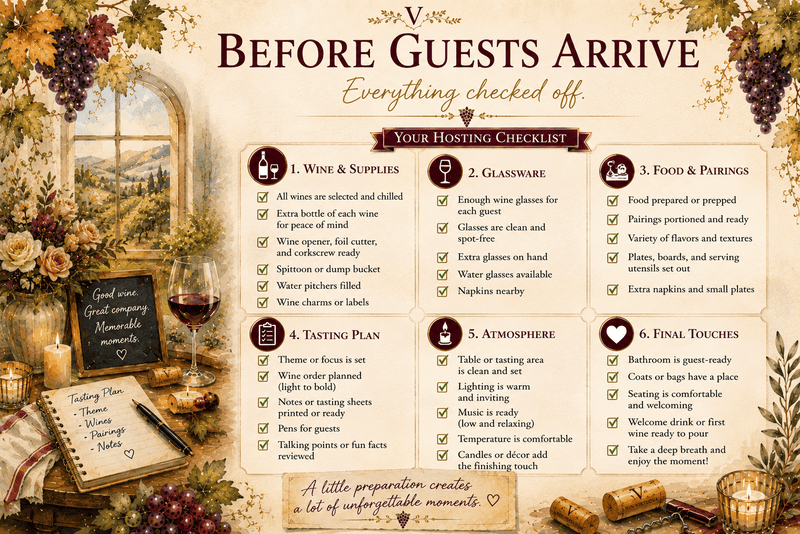
These little details often go unnoticed—and that’s exactly the point. When everything is ready before your guests arrive, you’re free to enjoy the evening alongside them instead of constantly stepping away to find something you forgot.
The best hosts aren’t the ones who create the most elaborate table.
They’re the ones who create a space where everyone feels comfortable enough to relax, discover something new, and linger just a little longer over one more glass.
Guide the Tasting: Slow Down and Savor the Moment
By the time everyone has settled into their seats, the candles are glowing, the first wine has been poured, and the conversation is already flowing.
Now comes the easiest part.
You don’t need to become a sommelier.
You simply need to guide the experience.
One of my favorite ways to introduce guests to wine is through what I call the 5 S’s of Wine Tasting. It’s a simple approach that helps everyone slow down, become a little more observant, and enjoy the wine without feeling intimidated.
See
Hold the glass up to the light and notice the wine’s color and clarity. Is it pale or deep? Bright or golden? Sometimes the wine tells part of its story before you even take your first sip.
Swirl
Give the glass a gentle swirl to release the wine’s aromas. Watching the wine move around the bowl is part of the experience—and it prepares your senses for what’s to come.
Sniff
Take a slow breath and see what you notice first.
Fresh berries.
Citrus.
Warm baking spices.
Vanilla.
Flowers.
There are no wrong answers. Everyone experiences aroma a little differently, and that’s part of the fun.
Sip
Take a small sip and let the wine move across your palate before swallowing.
Does it feel light and refreshing?
Rich and velvety?
Bright and lively?
Pay attention to how the wine changes as it opens in the glass.
Savor
This is my favorite step—and perhaps the one we rush through most often.
Pause for a moment.
Notice the finish.
Think about what surprised you.
Would you pour another glass?
More importantly, would you share this bottle with someone again?
Throughout the tasting, encourage simple conversations rather than technical analysis.
Ask questions like:
- Which wine surprised you the most?
- Which one would you happily take home?
- Does this remind you of another wine you’ve enjoyed?
- Which bottle do you think would be perfect for Thanksgiving dinner?
- Which one belongs at your holiday table?
The goal isn’t to identify every tasting note.
It’s to slow down enough to enjoy the experience together.
Pair Simple Seasonal Foods
One of the greatest joys of a holiday wine tasting is discovering how beautifully food and wine bring out the best in one another.
Fortunately, creating memorable pairings doesn’t require an elaborate menu.
In fact, some of the most successful tastings are built around a thoughtfully arranged seasonal grazing board filled with simple, high-quality ingredients.
Imagine placing a large wooden board in the center of the table.
Creamy Brie sits beside nutty Gruyère. Thin slices of prosciutto curl alongside fresh pears and crisp apples. A small bowl of fig jam adds a touch of sweetness, while roasted almonds and walnuts provide satisfying crunch. Warm slices of fresh baguette invite guests to build their own perfect bite, and sprigs of fresh rosemary add a subtle fragrance that feels unmistakably like autumn.
It’s beautiful.
It’s approachable.
And it encourages people to gather around the table before the tasting even begins.
As each wine is poured, invite your guests to experiment.
Try the Sauvignon Blanc with creamy goat cheese.
Pair a silky Pinot Noir with prosciutto and Gruyère.
See how a bold Cabernet Sauvignon changes when enjoyed alongside aged cheddar or roasted nuts.
You may be surprised by how dramatically the flavors evolve.
One bite can soften a wine’s tannins.
Another can brighten its fruit.
Sometimes the simplest pairing becomes everyone’s favorite discovery of the evening.
Most importantly, don’t feel obligated to match every wine perfectly.
A relaxed approach often creates the best conversations, because guests are free to experiment and discover combinations they might never have tried on their own.
Just like the wine itself, the food is there to bring people together.
The pairings don’t have to be perfect.
The memories are what matter.
Make It Interactive: Turn a Tasting into an Experience
The wines may bring everyone to the table, but it’s the conversations that people remember.
One of the easiest ways to make your tasting unforgettable is to invite your guests to become part of the experience. They don’t need to know anything about wine to participate—just encourage them to stay curious.
After each pour, ask a simple question.
Not, “What tasting notes do you get?”
Instead, ask questions that invite stories.
- Which wine surprised you the most?
- Which bottle would you happily bring to your next dinner party?
- If this wine were a season, which one would it be?
- Which one reminds you of a favorite vacation or special memory?
- Which bottle belongs on your holiday table this year?
There are no wrong answers.
In fact, some of the most memorable conversations happen when two people experience the same wine completely differently.
If your guests enjoy a little friendly competition, introduce a blind tasting.
Cover one bottle with a simple wine bag or wrap it in a kitchen towel before pouring. Let everyone guess the grape, the country, or even whether it’s Old World or New World. You’ll be amazed at how quickly the room fills with laughter, debate, and playful guesses.
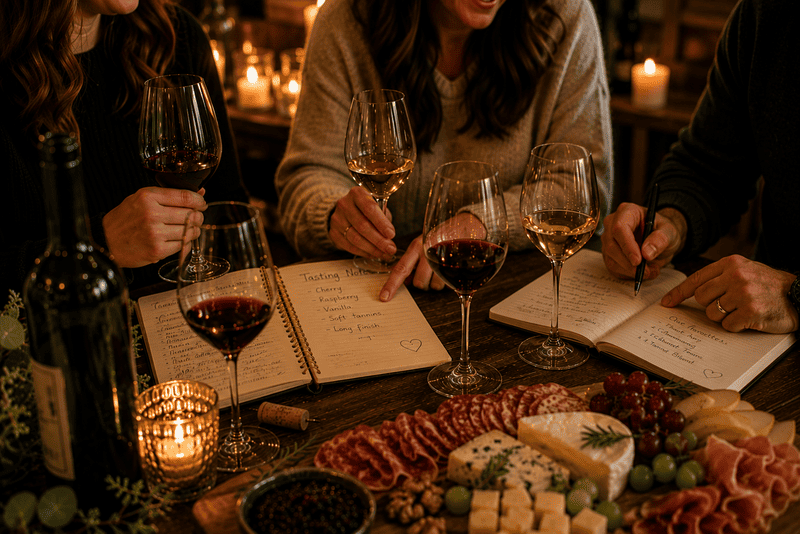
For guests who enjoy writing things down, provide simple tasting sheets or small notebooks. Some people love keeping track of their favorites, while others prefer to enjoy the evening without taking a single note. Both approaches are perfectly fine.
Before the evening comes to a close, ask everyone to vote for their favorite bottle.
It’s always fascinating to see which wine wins.
Sometimes it’s the most expensive bottle.
More often, it’s the one nobody expected.
That’s one of the wonderful things about wine.
Personal taste will always matter more than the price tag.
Host Like a Sommelier (Without Pretending to Be One)
Professional sommeliers have an incredible depth of knowledge, but the best ones all share something else in common.
They make people feel comfortable.
That’s the real secret.
You don’t need to memorize every wine region in the world or describe aromas with poetic precision. A few thoughtful hosting habits can make your evening feel polished while keeping it warm, relaxed, and welcoming.
Here are a few of my favorites.
Welcome Guests with a First Pour
If you’re serving a sparkling wine or a light white wine, have a small welcome pour ready as guests arrive. It immediately sets a celebratory tone and gives everyone something to enjoy while introductions and conversations begin.
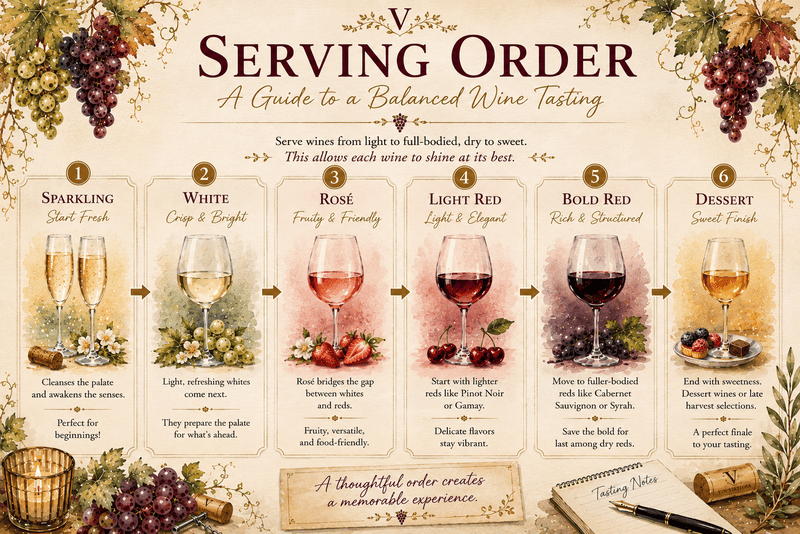
Serve Wines in a Thoughtful Order
Move from lighter wines to fuller-bodied wines whenever possible. This allows each bottle to shine without overpowering the next.
Tell the Story, Not Just the Statistics
Instead of reciting alcohol percentages or technical tasting notes, share something interesting about the wine.
Perhaps it’s a family-owned winery.
A historic region.
A grape with an unusual history.
People tend to remember stories far longer than numbers.
Pour Smaller Servings
Professional tastings use surprisingly modest pours.
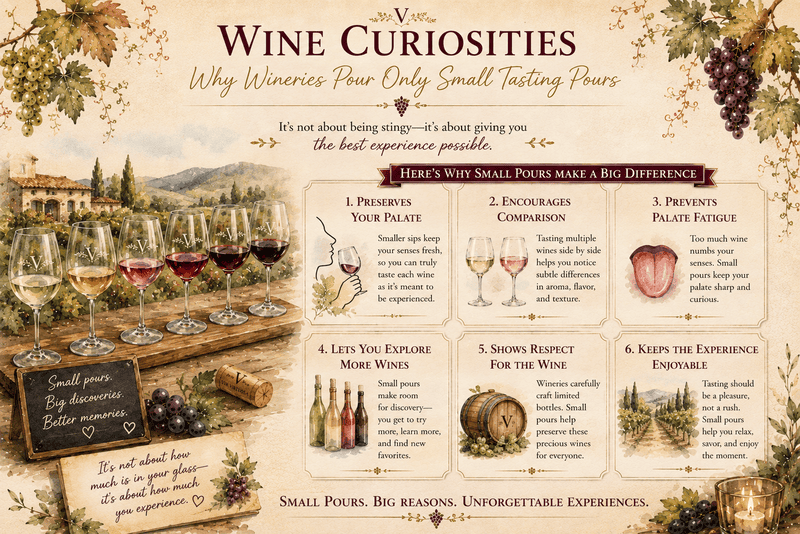
A small pour gives guests the opportunity to revisit the wine throughout the evening without feeling rushed or overwhelmed—and it leaves plenty of room to enjoy every bottle in the lineup.
Never Rush the Conversation
Some of the best moments happen between pours.
If guests are laughing, telling stories, or comparing favorites, let the conversation unfold naturally. The schedule can wait.
Finish with One Small Surprise
If you have a special bottle you’ve been saving, consider opening it at the end of the evening.
It might be a beautiful dessert wine.
A bottle of Champagne.
Or simply a wine that means something to you.
Ending with an unexpected final pour gives everyone one last memory to take home.
The truth is, the best hosts aren’t remembered because they knew the most about wine.
They’re remembered because they made people feel welcome.
And that’s something anyone can do.
Relax: The Best Evenings Are Never Perfect
As the host, it’s easy to feel like everything has to go exactly as planned.
It doesn’t.
Someone may prefer the least expensive bottle.
Someone else might accidentally spill a little wine.
The conversation may drift from tasting notes to holiday traditions, favorite vacations, or stories that have nothing to do with wine at all.
That’s perfectly okay.
In fact, it’s exactly what you want.
The purpose of hosting a wine tasting isn’t to create a flawless event—it’s to create an evening that feels warm, welcoming, and memorable.
If your guests leave smiling, talking about a new favorite wine, and asking when you’ll host the next tasting, you’ve done everything right.
Relax.
Pour yourself another glass.
And enjoy the evening you’ve created.
An Evening They’ll Remember
As the last glasses are emptied and the evening begins to wind down, someone asks where they can find the Pinot Noir they loved.
Another guest is already planning to recreate the cheese board at Thanksgiving.
Someone who insisted they “weren’t really a wine person” leaves with a new favorite bottle tucked into their phone’s notes.
The candles have burned low.
The serving board is nearly empty.
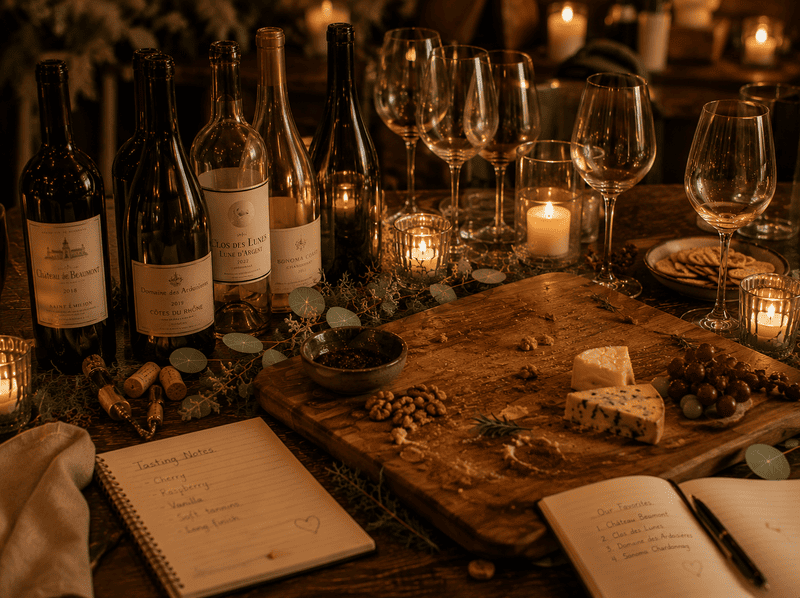
A few corks rest beside the bottles that sparked the evening’s best conversations.
Long after your guests head home, those moments are what they’ll remember.
Not whether every wine was served at the perfect temperature.
Not whether every pairing was flawless.
They’ll remember laughing around the table.
Discovering something unexpected.
Sharing stories over one more glass.
That’s the real magic of hosting a wine tasting at home.
It’s never just about the wine.
It’s about creating an experience that brings people together.
And those are the evenings we carry with us long after the last bottle has been opened.
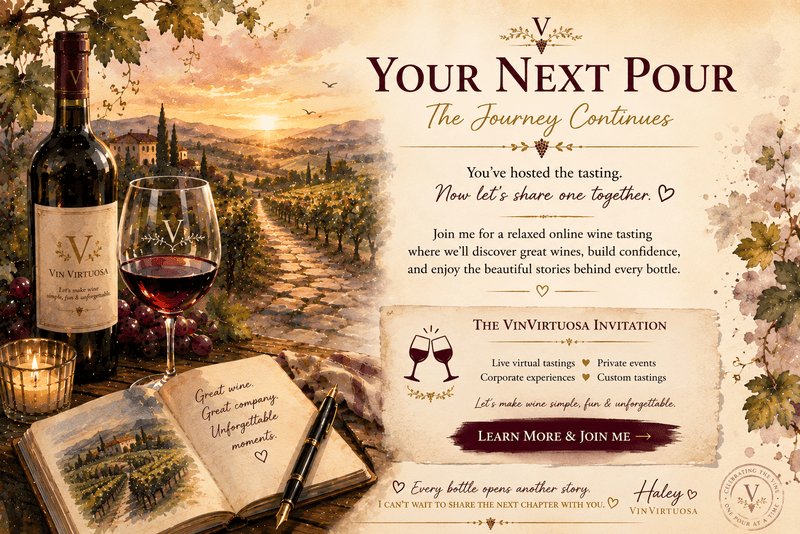
Your Next Pour
If hosting your first wine tasting has inspired you to keep exploring, your journey is only beginning.
Here are a few more ways to continue discovering the world of wine with VinVirtuosa:
🍷 Learn to Taste with Confidence
Explore Wine Tasting 101: How to Taste Wine Like a Pro and discover how the Five S’s can help you enjoy every glass with a little more confidence.
🧀 Master Food & Wine Pairing
Continue with 7 Classic Food and Wine Pairings Every Wine Lover Should Know and learn why the right pairing can completely transform both the food and the wine.
🍇 Discover New Grapes
Expand your palate with beginner-friendly guides to grapes like Cabernet Sauvignon, Pinot Noir, Chenin Blanc, Albariño, Pinotage, Grenache, Prosecco, and many more.
🎉 Plan Your Next Wine Night
Try a new tasting theme inspired by the seasons:
- Autumn Harvest Reds
- Holiday Bubbles
- Around the World
- Old World vs. New World
- One Grape, Four Regions
- Blind Tasting Challenge
Every bottle has a story.
Every gathering creates another one.
Here’s to making wine simple, fun, and unforgettable.
Cheers!
Relax: The Best Evenings Are Never Perfect
As the host, it’s easy to feel like everything has to go exactly as planned.
It doesn’t.
Someone may prefer the least expensive bottle.
Someone else might accidentally spill a little wine.
The conversation may drift from tasting notes to holiday traditions, favorite vacations, or stories that have nothing to do with wine at all.
That’s perfectly okay.
In fact, it’s exactly what you want.
The purpose of hosting a wine tasting isn’t to create a flawless event—it’s to create an evening that feels warm, welcoming, and memorable.
If your guests leave smiling, talking about a new favorite wine, and asking when you’ll host the next tasting, you’ve done everything right.
Relax.
Pour yourself another glass.
And enjoy the evening you’ve created.
An Evening They’ll Remember
As the last glasses are emptied and the evening begins to wind down, someone asks where they can find the Pinot Noir they loved.
Another guest is already planning to recreate the cheese board at Thanksgiving.
Someone who insisted they “weren’t really a wine person” leaves with a new favorite bottle tucked into their phone’s notes.
The candles have burned low.
The serving board is nearly empty.
A few corks rest beside the bottles that sparked the evening’s best conversations.
Long after your guests head home, those moments are what they’ll remember.
Not whether every wine was served at the perfect temperature.
Not whether every pairing was flawless.
They’ll remember laughing around the table.
Discovering something unexpected.
Sharing stories over one more glass.
That’s the real magic of hosting a wine tasting at home.
It’s never just about the wine.
It’s about creating an experience that brings people together.
And those are the evenings we carry with us long after the last bottle has been opened.
Your Next Pour
If hosting your first wine tasting has inspired you to keep exploring, your journey is only beginning.
Here are a few more ways to continue discovering the world of wine with VinVirtuosa:
🍷 Learn to Taste with Confidence
Explore Wine Tasting 101: How to Taste Wine Like a Pro and discover how the Five S’s can help you enjoy every glass with a little more confidence.
🧀 Master Food & Wine Pairing
Continue with 7 Classic Food and Wine Pairings Every Wine Lover Should Know and learn why the right pairing can completely transform both the food and the wine.
🍇 Discover New Grapes
Expand your palate with beginner-friendly guides to grapes like Cabernet Sauvignon, Pinot Noir, Chenin Blanc, Albariño, Pinotage, Grenache, Prosecco, and many more.
🎉 Plan Your Next Wine Night
Try a new tasting theme inspired by the seasons:
- Autumn Harvest Reds
- Holiday Bubbles
- Around the World
- Old World vs. New World
- One Grape, Four Regions
- Blind Tasting Challenge
Every bottle has a story.
Every gathering creates another one.
Here’s to making wine simple, fun, and unforgettable.
Cheers!