Introduction
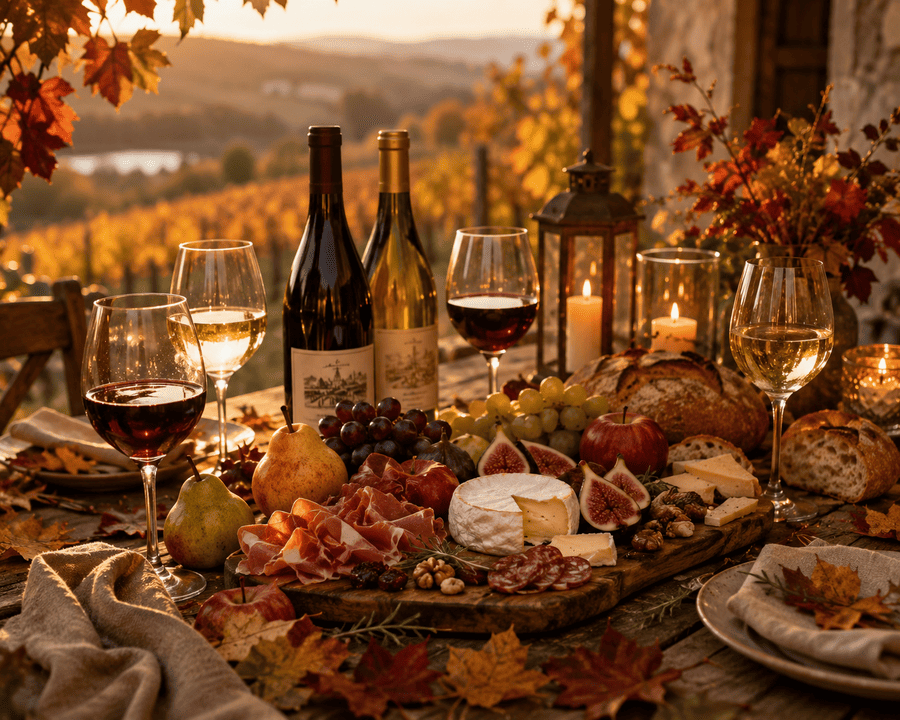
As summer’s bright sunshine begins to fade and the air turns crisp, a new wine season arrives. Fall invites us to slow down, gather around the table, and enjoy meals that are richer, heartier, and full of comforting flavors. It’s the season of colorful leaves, apple orchards, pumpkin patches, harvest festivals, and evenings spent wrapped in a blanket with a favorite bottle of wine nearby.
Autumn also brings a welcome shift in the kitchen. Grills give way to roasting pans, fresh summer salads are replaced by soups and stews, and simple weeknight dinners become cozy meals shared with family and friends. Roasted vegetables, earthy mushrooms, slow-braised meats, creamy risottos, and seasonal desserts all find their place on the table—and each offers new opportunities for memorable wine pairings.
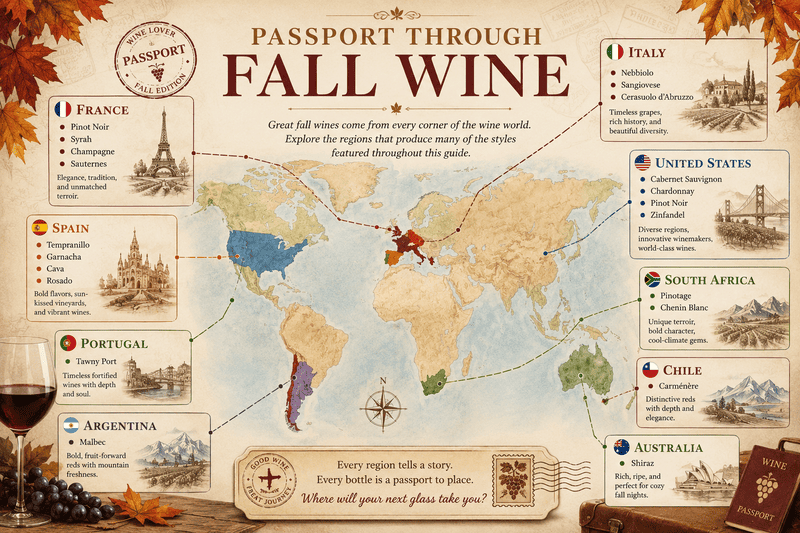
For wine lovers, fall is more than just another season. Vineyards around the world are alive with the excitement of harvest, one of the most important times of the year in winemaking. Grapes are being picked at their peak ripeness, wineries are buzzing with activity, and a new vintage begins its journey from vineyard to bottle. It’s a season that celebrates both the beauty of the vineyard and the pleasures of the table.
Fall is one of the most exciting seasons for wine lovers because it bridges the freshness of summer with the richness of winter. The best fall wines offer warmth, spice, vibrant fruit, balanced acidity, and enough structure to pair beautifully with everything from roasted vegetables and herb-roasted chicken to slow-cooked stews and holiday feasts.
Whether you’re planning a Thanksgiving dinner, hosting friends for a cozy evening, exploring new grape varieties, or simply looking for the perfect bottle to enjoy beside a crackling fire, there’s a fall wine for every occasion.
In this guide, we’ll explore the styles, grape varieties, and regions that truly shine during autumn. You’ll discover why certain wines feel perfectly suited to the season, what foods they pair with best, and how to build a versatile collection that will carry you from the first cool days of September through the celebrations of late November.
What Makes a Wine Feel Like Fall?
Unlike wines that are perfect for hot summer afternoons or crisp spring picnics, fall wines are all about comfort, warmth, and balance. As the weather cools and our meals become richer, the wines we reach for often change as well.
There’s no official category called “fall wine.” Instead, certain styles naturally complement the flavors, textures, and atmosphere of the season. They tend to offer a little more depth, a little more richness, and the kind of complexity that invites you to slow down and savor each glass.
Flavor: Warm, Earthy, and Comforting
Many of the wines associated with autumn share a familiar collection of aromas and flavors that seem perfectly at home alongside seasonal dishes.
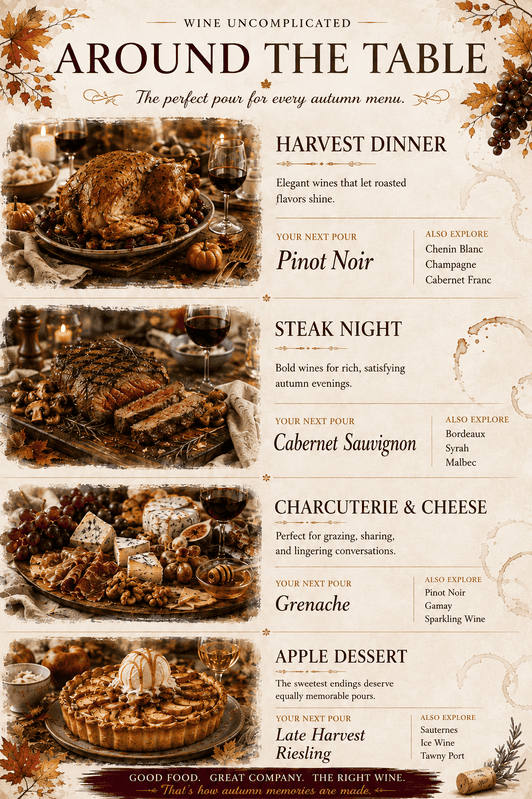
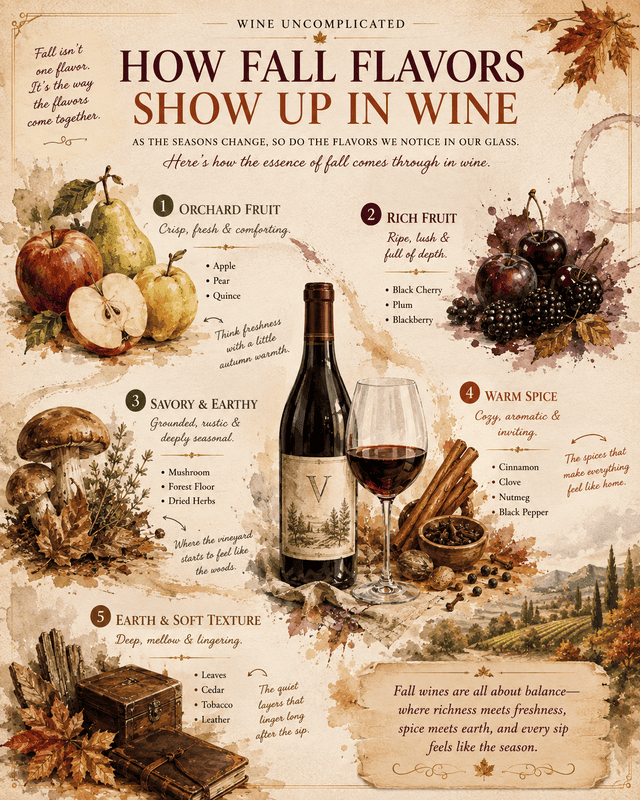
Rather than bright tropical fruit or zesty citrus, fall wines often showcase orchard fruits like apple, pear, and quince, along with darker berries such as blackberry, black cherry, and plum. As wines become more complex, you’ll often notice notes of baking spices like cinnamon, clove, nutmeg, and allspice, especially in wines that have spent time aging in oak.
Earthy characteristics also become more prominent during the fall. Aromas of forest floor, mushrooms, cedar, dried herbs, tobacco, and subtle savory spices add depth and make these wines especially enjoyable with roasted meats, mushrooms, root vegetables, and hearty casseroles.
These aren’t just tasting notes—they’re many of the same flavors that define autumn cooking, which is one reason these wines feel so naturally at home during the season.
Texture: A Little More Weight in the Glass
Fall wines also tend to have a richer texture than the light, crisp wines many people enjoy during the summer months.
Medium- to full-bodied wines provide a satisfying sense of warmth without necessarily feeling heavy. Red wines often feature silky, well-integrated tannins that add structure while remaining smooth enough for relaxed sipping. White wines may develop a creamy texture from oak aging or extended contact with the yeast, creating a rounder, more luxurious mouthfeel.
This added richness makes these wines ideal partners for comfort foods like roasted chicken, creamy pasta dishes, braised meats, squash, mushrooms, and aged cheeses.
Acidity: The Secret to Balance
While richer flavors often take center stage in autumn, acidity remains one of the most important elements in a great fall wine.
As seasonal dishes become heartier—with roasted vegetables, buttery sauces, creamy soups, and slow-cooked meats—a wine’s acidity acts like a squeeze of fresh lemon over a finished dish. It refreshes your palate, cuts through richness, and keeps each bite and sip tasting vibrant rather than heavy.
This is why even fuller-bodied wines with bright acidity can feel wonderfully balanced. A creamy Chardonnay remains lively alongside roasted turkey, a vibrant Chenin Blanc complements roasted pork and apples, and a well-balanced Pinot Noir brings freshness to earthy mushroom dishes.
The best fall wines don’t simply deliver bold flavors—they combine richness with freshness, fruit with savory complexity, and structure with elegance. That balance is what makes them so versatile throughout the season, whether you’re enjoying a quiet weeknight dinner or gathering around the Thanksgiving table.
The Best Fall Red Wines
As the days grow shorter and evenings become cooler, many wine lovers naturally begin reaching for red wines. Their deeper fruit flavors, savory complexity, and comforting textures seem perfectly matched to the foods and traditions of autumn. From roasted vegetables and hearty stews to cozy dinners by the fire and festive holiday gatherings, red wines often become the centerpiece of the season.
But not every red wine offers the same experience. Some are light and elegant enough for the first cool evenings of September, while others are bold, structured, and ideal for the coldest nights of late autumn. Understanding each wine’s personality makes it easier to choose the perfect bottle for every occasion.
Whether you enjoy silky, food-friendly reds or rich, full-bodied classics, these are some of the finest red wines to enjoy throughout the fall months.
Pinot Noir: Autumn Elegance in a Glass
If there is one wine that perfectly captures the feeling of early autumn, it may be Pinot Noir. Elegant rather than overpowering, Pinot Noir offers enough richness for cooler weather while retaining the freshness and vibrant acidity that make it incredibly versatile at the table.
Its aromas often evoke the season itself—red cherry, cranberry, raspberry, forest floor, dried leaves, mushrooms, and subtle baking spices. In cooler-climate examples, you’ll frequently find earthy notes and hints of dried herbs that pair beautifully with many of autumn’s favorite ingredients.
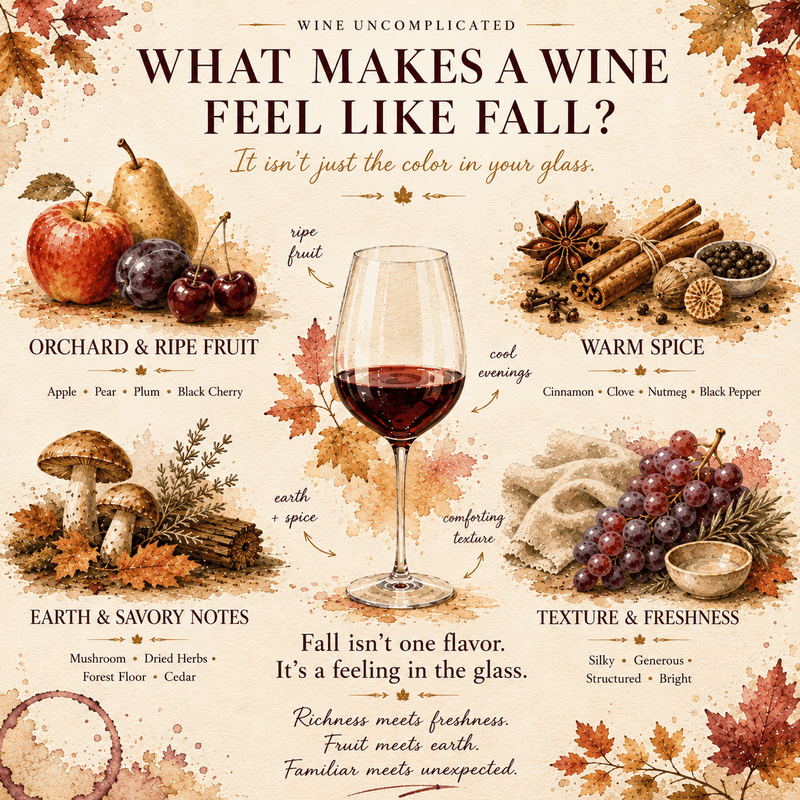
Pinot Noir truly shines alongside foods that celebrate the harvest season. Roast chicken with herbs, mushroom risotto, pork tenderloin, roasted root vegetables, duck breast, turkey, and wild mushroom dishes all complement its graceful structure without overwhelming its delicate fruit.
It’s also one of the most versatile wines for Thanksgiving, pairing comfortably with everything from herb stuffing and roasted turkey to cranberry sauce and roasted vegetables. Few red wines move around a holiday table as effortlessly.
Pinot Noir is especially enjoyable during those first crisp evenings when the weather has cooled enough for a sweater but not yet for a heavy winter coat. It’s the wine of apple orchard visits, walks beneath colorful leaves, and dinners shared on a cool patio wrapped in a blanket.
If you’d like to explore this remarkable grape in more depth—including its major growing regions, tasting profile, and food pairings—be sure to read our complete Pinot Noir guide.
Grenache: The Perfect Transition from Summer to Fall
Grenache is one of autumn’s most underrated wines. Sitting comfortably between lighter-bodied reds and the richer wines of late fall and winter, it serves as the perfect bridge between the seasons.
Typically medium-bodied with soft tannins and generous fruit, Grenache delivers flavors of ripe strawberry, raspberry, cherry, dried herbs, white pepper, and warm baking spices. As temperatures begin to cool, these comforting flavors feel increasingly at home on the dinner table without becoming too heavy for milder September afternoons.
Grenache is remarkably food-friendly thanks to its bright fruit and approachable structure. It pairs wonderfully with roasted vegetables, herb-roasted chicken, grilled sausages, Mediterranean dishes, charcuterie boards, mushroom tarts, and roasted squash. Its subtle herbal character also complements dishes seasoned with rosemary, thyme, oregano, and sage—herbs that appear frequently in fall cooking.
One of Grenache’s greatest strengths is its versatility. Whether you’re enjoying a casual weekend picnic surrounded by changing leaves or hosting friends for an evening of appetizers and conversation, Grenache feels relaxed, welcoming, and effortlessly enjoyable.
If your wine collection transitions with the seasons, Grenache deserves a place near the front of the rack. It’s often the bottle you’ll reach for while summer slowly gives way to autumn.
To learn more about this wonderfully versatile grape, explore our complete Grenache guide.
Syrah: Warm, Bold, and Made for Sweater Weather
When autumn settles in and the nights grow noticeably colder, Syrah begins to feel right at home. Rich, expressive, and wonderfully savory, it’s a wine that seems made for fireplaces, slow-cooked meals, and evenings spent lingering around the dinner table.
Depending on where it’s grown, Syrah can offer layers of blackberry, plum, black cherry, cracked black pepper, smoked meat, olive, violet, and earthy spice. Many examples also develop notes of cedar, cocoa, espresso, or smoky oak with age, adding even greater depth and complexity.
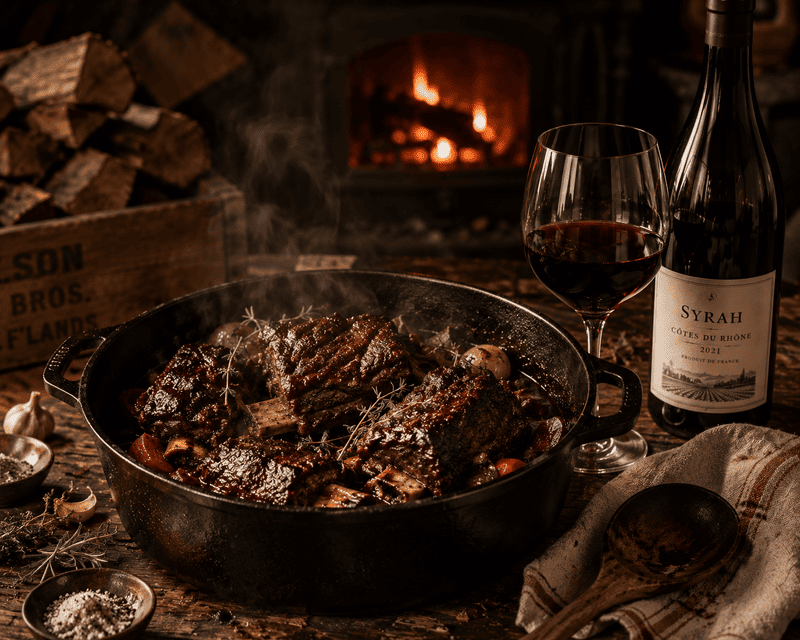
Its fuller body and firm structure make Syrah an exceptional companion for hearty autumn cooking. Braised short ribs, lamb shanks, beef stew, shepherd’s pie, smoked sausages, grilled steaks, venison, and mushroom-based dishes all highlight the wine’s savory character. Few wines complement roasted lamb with rosemary and garlic as naturally as Syrah.
Cool evenings are where Syrah truly shines. It’s the bottle to uncork after spending the afternoon outdoors, whether you’ve been apple picking, hiking through colorful forests, or simply enjoying the crisp autumn air. As the temperature drops, Syrah’s generous fruit, peppery spice, and warming richness create exactly the kind of comfort many wine lovers crave.
For a deeper look at how climate influences this fascinating grape—and how it compares with its Australian counterpart—don’t miss our complete guide to Syrah vs. Shiraz.
Cabernet Sauvignon: The Classic Choice for Chilly Autumn Evenings
As the temperatures continue to fall and comfort foods take center stage, Cabernet Sauvignon naturally earns its place on the autumn table. Bold, structured, and deeply satisfying, it’s a wine that feels perfectly suited to cool evenings, hearty meals, and long conversations around the dinner table.
Cabernet Sauvignon is known for its rich flavors of blackcurrant, blackberry, black cherry, and plum, often layered with notes of cedar, graphite, tobacco, vanilla, and toasted oak. Firm tannins provide the wine with its signature structure, while careful oak aging adds warmth and complexity that seem almost tailor-made for the season.
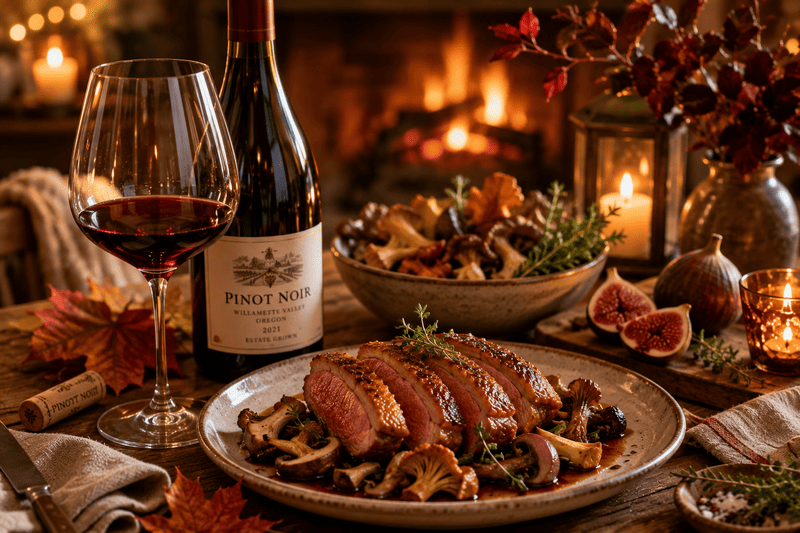
This is the bottle to uncork when the menu features grilled steaks, braised short ribs, beef bourguignon, pot roast, or slow-cooked lamb. The wine’s robust tannins soften beautifully alongside richly marbled meats, while its dark fruit and savory notes complement roasted mushrooms, caramelized onions, and root vegetables.
Cabernet Sauvignon also deserves a place at the Thanksgiving table—particularly once the holiday meal gives way to leftovers. Thick slices of roast turkey layered onto sandwiches, topped with stuffing and cranberry sauce, find a wonderful companion in a well-balanced Cabernet. Even leftover roast beef or rich casseroles seem elevated by its bold character.
There is something undeniably comforting about enjoying Cabernet Sauvignon on a crisp autumn evening. Whether you’re gathered around a fire pit outdoors or relaxing inside beside a glowing fireplace, this is a wine that invites you to slow down, linger over dinner, and appreciate the richness of the season.
If you’d like to learn more about Cabernet Sauvignon’s history, flavor profile, and the world’s most celebrated regions, be sure to explore our complete Cabernet Sauvignon guide.
Carménère: Autumn’s Best-Kept Secret
While Cabernet Sauvignon and Pinot Noir often receive the spotlight, Carménère quietly remains one of the most rewarding wines to discover during the fall months. Originally from Bordeaux but now most closely associated with Chile, this distinctive grape offers a fascinating balance of ripe fruit, savory herbs, and gentle spice that feels almost tailor-made for autumn cooking.
Carménère typically delivers flavors of blackberry, black plum, and dark cherry layered with notes of roasted red pepper, paprika, black pepper, cocoa, tobacco, and fresh green herbs. Unlike many bold red wines, its tannins are often softer and rounder, creating a smooth, approachable texture while still providing enough structure for hearty seasonal meals.
Its savory personality makes Carménère particularly versatile around the dinner table. Herb-roasted turkey, roasted peppers, wild mushrooms, stuffed squash, beef chili, grilled sausages, and roasted root vegetables all highlight the wine’s earthy complexity. Fresh herbs like rosemary, thyme, oregano, and sage seem to echo the subtle herbal notes already present in the glass.
Carménère is also an outstanding Thanksgiving wine. Its moderate body allows it to pair comfortably with turkey, stuffing, mushroom gravy, roasted vegetables, and many of the meal’s herbal flavors without overwhelming the food. For guests looking to try something a little different, it often becomes one of the most memorable bottles on the table.
If you’re looking to expand your wine horizons this autumn, Carménère is an excellent place to begin. Familiar enough to feel approachable yet distinctive enough to surprise even experienced wine lovers, it’s one of the season’s true hidden gems.
For a closer look at this fascinating grape, including its history and ideal food pairings, visit our complete Carménère guide.
Merlot: The Everyday Comfort Wine of Fall
Not every autumn evening calls for the biggest, boldest bottle in the cellar. Sometimes the perfect wine is simply one that’s smooth, welcoming, and effortlessly enjoyable. That’s where Merlot shines.
Known for its plush texture and generous fruit, Merlot offers flavors of plum, black cherry, blackberry, and raspberry, often accompanied by hints of cocoa, vanilla, cedar, baking spice, and mocha when aged in oak. Its softer tannins and rounded body make it exceptionally easy to enjoy, whether you’re sharing a casual dinner with family or unwinding after a busy day.
Merlot excels with many of the comforting meals that define the season. Roast chicken, meatloaf, beef stroganoff, mushroom pasta, baked lasagna, shepherd’s pie, and creamy risotto all pair beautifully with its smooth, fruit-forward character. It also complements roasted vegetables and aged cheeses, making it a wonderful choice for cozy evenings spent grazing over a charcuterie board.
Because Merlot rarely demands attention, it fits naturally into everyday life. It’s the bottle you open for a weeknight pasta dinner, an impromptu gathering with friends, or a quiet Sunday meal after an afternoon spent enjoying crisp autumn weather. Its approachable style makes it equally appealing to newer wine drinkers and longtime enthusiasts.
As autumn settles into its comfortable rhythm, Merlot reminds us that great wine doesn’t always need to be powerful or complex. Sometimes the greatest pleasure comes from a beautifully balanced glass that simply makes dinner taste even better.
If you’d like to explore Merlot’s growing regions, tasting profile, and food pairing possibilities in greater detail, don’t miss our complete Merlot guide.
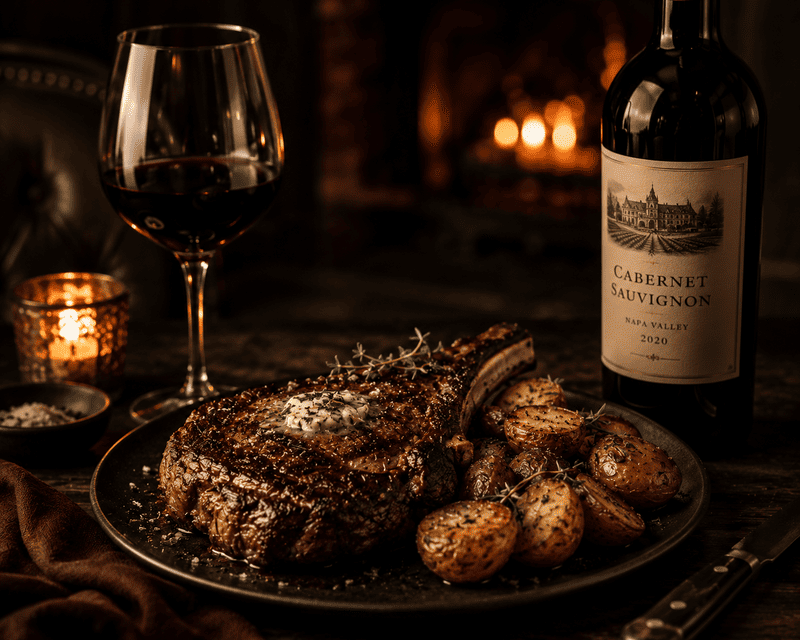
Zinfandel: A Thanksgiving Favorite with Bold Autumn Charm
Zinfandel is one of the most joyful red wines to bring into fall. Generous, fruit-forward, and full of personality, it has the kind of bold charm that works beautifully with the season’s richer flavors and festive gatherings.
In the glass, Zinfandel often shows flavors of blackberry, raspberry, cherry, plum, black pepper, licorice, and sweet baking spices. Some examples lean plush and jammy, while others are brighter and more structured, but the best fall Zinfandels offer a wonderful balance of ripe fruit, spice, and warmth.
This makes Zinfandel especially appealing at the Thanksgiving table. Its juicy fruit can echo cranberry sauce, while its spice notes pair beautifully with stuffing, glazed ham, roasted turkey, sweet potatoes, and herb-roasted vegetables. It also works surprisingly well with dishes that include a touch of sweetness, smoke, or spice.
Beyond Thanksgiving, Zinfandel is a fantastic match for barbecue, grilled sausages, smoky ribs, chili, burgers, and roasted pork. Its bold fruit and peppery character can stand up to sauces and seasonings that might overwhelm more delicate red wines.
Zinfandel feels like a bottle made for gathering. It is not quiet or shy; it brings warmth, abundance, and a little bit of celebration to the table. For fall dinners where the food is flavorful and the mood is relaxed, Zinfandel can be exactly the right choice.
Pinotage: A Smoky Red for Adventurous Fall Wine Lovers
For those who like their fall wines with a little edge, Pinotage is one of the most interesting bottles to explore. South Africa’s signature red grape is bold, distinctive, and often wonderfully smoky, making it a natural fit for late-autumn meals and adventurous wine drinkers.
Pinotage can show flavors of blackberry, black cherry, plum, fig, smoke, earth, cocoa, coffee, and spice. Depending on the style, it may be smooth and fruit-driven or more rustic and savory. That range is part of its appeal: Pinotage does not taste like every other red wine on the shelf.
Its smoky, earthy character makes it especially good with grilled and roasted foods. Think game meats, lamb, venison, smoked sausages, barbecue, roasted mushrooms, charred vegetables, and richly seasoned stews. It is also a natural partner for braai, South Africa’s beloved tradition of cooking over open flame.
In fall, Pinotage feels especially fitting for evenings when the food has depth and the atmosphere is relaxed. It is not necessarily the safest bottle for every crowd, but it can be one of the most memorable. If Cabernet Sauvignon is the familiar classic and Merlot is the comforting favorite, Pinotage is the bottle that sparks conversation.
For wine lovers who enjoy discovering something different, Pinotage is a wonderful autumn choice. It brings smoke, spice, dark fruit, and a sense of place to the glass.
Honorable Mentions: More Red Wines to Explore This Fall
While Pinot Noir, Grenache, Syrah, Cabernet Sauvignon, Carménère, Merlot, Zinfandel, and Pinotage all deserve special attention, they are far from the only red wines that shine during autumn. Fall is one of the best seasons to experiment with reds that offer earthiness, structure, spice, and food-friendly acidity.
Tempranillo is a beautiful choice for roasted meats, tapas, mushrooms, and cozy dinners with Spanish-inspired flavors. With notes of red cherry, leather, tobacco, dried herbs, and vanilla, it feels especially at home with roasted lamb, chorizo, and aged cheeses.
Nebbiolo is ideal for wine lovers who enjoy elegance with structure. Known for its firm tannins, bright acidity, red fruit, roses, tar, herbs, and earthy complexity, Nebbiolo pairs beautifully with truffle dishes, braised meats, mushroom risotto, and rich pasta.
Sangiovese brings brightness and savory charm to the fall table. Its red cherry, tomato leaf, dried herb, and earthy notes make it a natural partner for pasta with tomato sauce, roasted vegetables, pork, pizza, and rustic Italian dishes.
Malbec is a generous, crowd-pleasing choice for cooler evenings. With flavors of blackberry, plum, cocoa, violet, and spice, it pairs wonderfully with steak, burgers, roasted meats, empanadas, chili, and hearty weeknight dinners.
Together, these honorable mentions give fall wine lovers even more ways to explore the season. Whether you prefer something rustic, elegant, savory, bold, or fruit-driven, autumn offers the perfect excuse to open a new bottle and discover another side of red wine.
The Best Fall White Wines
As soon as the weather begins to cool, many wine drinkers instinctively reach for red wines and leave white wines behind until spring. It’s an understandable habit—but it’s also one of the biggest misconceptions in the wine world.
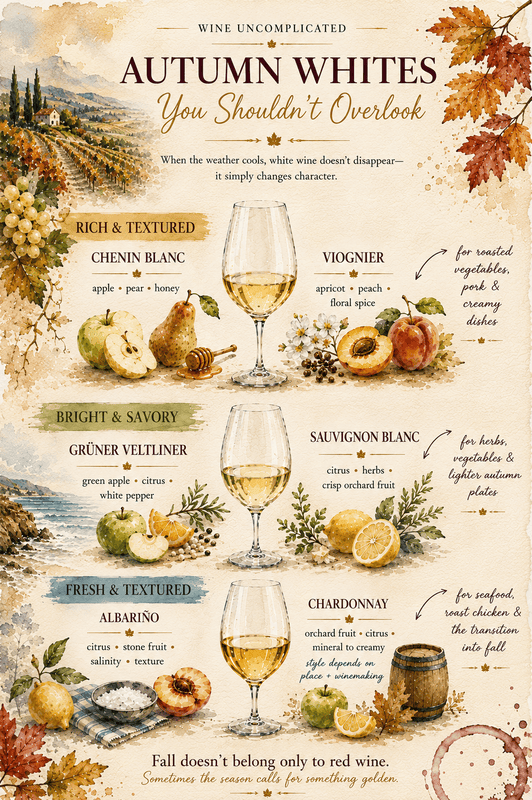
The truth is that many white wines are perfectly suited to autumn. While the bright, citrus-driven styles of summer may become less appealing as temperatures drop, richer whites with orchard fruit, subtle oak, creamy textures, and vibrant acidity come into their own during the fall months.
These wines pair beautifully with roasted vegetables, herb-roasted poultry, creamy soups, squash, mushrooms, pork, seafood, and many of the comforting dishes that define the season. They also have enough freshness to balance richer meals without feeling heavy.
If you’ve packed away your white wine glasses until next summer, autumn may be the perfect time to bring them back out.
Chardonnay: Autumn’s Most Versatile White Wine
Few white wines adapt to the changing seasons as effortlessly as Chardonnay. While crisp, unoaked styles are wonderfully refreshing in summer, lightly oaked and moderately rich Chardonnays seem almost tailor-made for autumn.
These wines often showcase flavors of baked apple, ripe pear, yellow apple, citrus, and stone fruit layered with notes of vanilla, toasted oak, butter, hazelnut, and baking spice. The best examples balance this richness with lively acidity, creating a wine that feels both comforting and fresh.
That balance makes Chardonnay one of fall’s most versatile food wines. It pairs beautifully with roast chicken, turkey, creamy mushroom dishes, butternut squash soup, roasted root vegetables, pork tenderloin, seafood in butter sauces, and creamy risottos. Its gentle oak character also complements herbs like thyme, sage, and rosemary that frequently appear in autumn cooking.
Chardonnay is equally at home during an elegant dinner party or a quiet evening spent cooking at home. It’s a wine that transitions seamlessly from early harvest meals in September to festive holiday gatherings later in the season.
For fall, look for Chardonnays with restrained oak rather than heavily buttery styles. A touch of oak adds warmth and texture without overshadowing the wine’s fruit and freshness, making it an exceptional companion for the flavors of autumn.
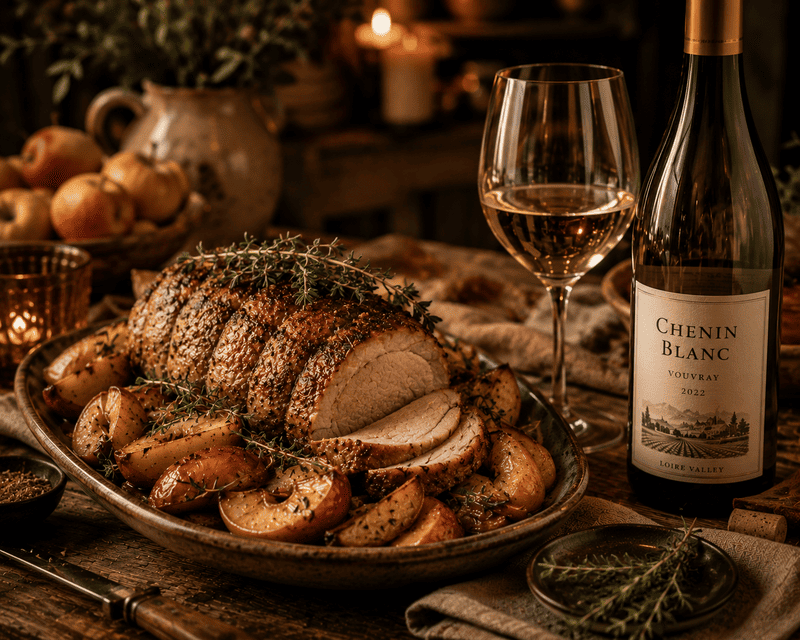
Chenin Blanc: The Hidden Star of Autumn
If there is one white wine that deserves far more attention during the fall season, it’s Chenin Blanc. Incredibly versatile, beautifully balanced, and wonderfully food-friendly, Chenin Blanc combines bright acidity with generous fruit and enough texture to stand up to many of autumn’s richest dishes.
Depending on where it’s grown and how it’s made, Chenin Blanc can offer flavors of apple, pear, quince, honey, chamomile, citrus, and stone fruit, often accompanied by subtle notes of beeswax, almonds, baking spices, and wet stone. Dry styles feel vibrant and energetic, while barrel-aged examples develop additional richness without losing their signature freshness.
Its versatility at the table is one of Chenin Blanc’s greatest strengths. Roasted pork with apples, herb-roasted chicken, butternut squash, roasted carrots, creamy pasta, roasted root vegetables, and fall-inspired salads all find a natural partner in this remarkable grape. Its bright acidity also helps balance richer dishes while complementing the sweetness found in roasted apples, caramelized onions, and winter squash.
For Thanksgiving, Chenin Blanc may be one of the smartest white wine choices available. It pairs comfortably with turkey, stuffing, roasted vegetables, sweet potatoes, and many of the meal’s savory and subtly sweet flavors, making it an easy crowd-pleaser.
Elegant yet approachable, refreshing yet comforting, Chenin Blanc quietly becomes one of autumn’s most rewarding discoveries for anyone willing to venture beyond Chardonnay.
If you’d like to learn more about this fascinating grape, explore our complete Chenin Blanc guide.
Viognier: Rich, Aromatic, and Perfect for Harvest Season
For wine lovers who enjoy whites with generous texture and expressive aromas, Viognier is one of autumn’s hidden treasures. Rich without being heavy and fragrant without being overly sweet, it captures many of the flavors and aromas we naturally associate with the harvest season.
Viognier is known for its lush notes of apricot, peach, ripe pear, honeysuckle, orange blossom, and subtle spice. Many examples also reveal hints of ginger, vanilla, almond, and warm baking spices, creating a wine that feels wonderfully comforting as the weather begins to cool.
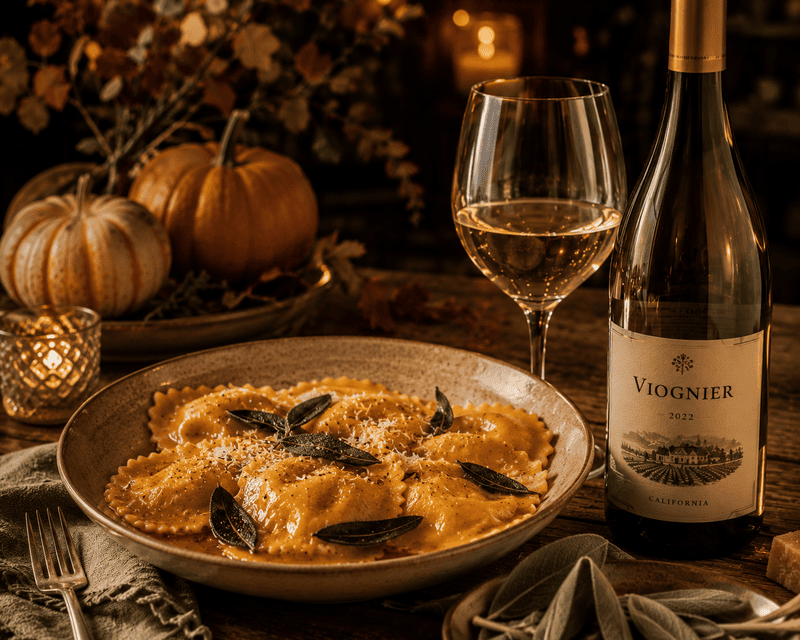
Unlike many lighter white wines, Viognier offers a fuller body and silky mouthfeel that allow it to pair with dishes often reserved for reds. Roasted chicken, pork with apples, roasted squash, pumpkin ravioli, creamy curries, grilled seafood, and roasted root vegetables all complement its rich texture and aromatic character.
Viognier also excels alongside dishes that feature autumn spices. Ingredients like cinnamon, nutmeg, ginger, sage, and thyme seem to enhance the wine’s naturally floral and stone-fruit profile, creating pairings that feel warm, inviting, and unmistakably seasonal.
Whether enjoyed during a harvest dinner, a weekend gathering with friends, or a quiet evening at home, Viognier offers something a little unexpected. It reminds us that white wines can be every bit as comforting and satisfying as reds when the leaves begin to change.
White Rhône Blends: Rich, Elegant, and Made for Autumn
If Chardonnay is the familiar favorite of fall, White Rhône blends may be one of the season’s best-kept secrets. Often crafted from grapes like Marsanne and Roussanne, these wines offer remarkable depth, texture, and complexity while remaining beautifully balanced.
Rather than relying on bold oak or buttery richness, White Rhône blends build their character through the natural qualities of the grapes themselves. The result is a wine that feels luxurious yet refined—perfect for crisp autumn evenings and comforting seasonal meals.
Marsanne contributes body, richness, and generous flavors of ripe pear, quince, melon, baked apple, almond, and honey. As the wine ages, it can develop intriguing notes of hazelnut, beeswax, and subtle spice that add even more depth.
Roussanne, by contrast, brings freshness, elegance, and aromatic lift. Its flavors often include pear, apricot, chamomile, herbal tea, citrus blossom, and delicate floral notes, along with vibrant acidity that keeps richer blends lively and balanced.
Together, these grapes create wines with a silky texture and layered flavors that pair beautifully with many of autumn’s finest dishes. Roast chicken, turkey with herb stuffing, pork loin, creamy mushroom risotto, roasted squash, root vegetables, and seafood in cream sauces all find an exceptional partner in White Rhône blends. Their combination of richness and freshness also allows them to bridge the gap between lighter white wines and fuller-bodied reds.
These are wines made for lingering dinners. They reward slow sipping, thoughtful cooking, and evenings when conversation stretches long after the plates have been cleared. For wine lovers looking to discover something beyond the usual Chardonnay, White Rhône blends offer one of autumn’s most rewarding experiences.
Dry Riesling: Bright Acidity for Rich Fall Flavors
At first glance, Riesling may not seem like an obvious choice for autumn. Many people associate the grape with spring or summer thanks to its vibrant acidity and refreshing character. Yet dry Riesling can be one of the smartest—and most versatile—white wines to enjoy throughout the fall.
The secret lies in its balance.
Dry Riesling typically offers flavors of green apple, ripe citrus, white peach, pear, and sometimes hints of stone, minerality, or delicate floral notes. While these flavors remain bright and expressive, the wine’s naturally high acidity allows it to perform an important role alongside richer seasonal foods.
Think of acidity as the element that keeps a meal feeling fresh. As autumn menus become filled with roasted meats, buttery sauces, creamy soups, roasted vegetables, and savory casseroles, a wine with lively acidity refreshes the palate between bites. Instead of competing with rich flavors, it lifts them, preventing meals from becoming heavy or overwhelming.
This makes dry Riesling an outstanding companion for roast pork with apples, turkey, roasted chicken, butternut squash soup, sausage stuffing, roasted Brussels sprouts, apple-based dishes, and even lightly spiced cuisines that feature ginger, cinnamon, or warming fall spices.
Dry Riesling also deserves serious consideration for Thanksgiving. Its bright acidity, moderate alcohol, and exceptional food-pairing ability allow it to complement a surprising variety of dishes across the holiday table—from turkey and stuffing to sweet potatoes, roasted vegetables, cranberry sauce, and herb-forward sides.
Perhaps the greatest strength of dry Riesling is its ability to prove that freshness belongs in every season. Autumn meals may become richer, but they still need balance, and few wines deliver that balance more gracefully than a beautifully made dry Riesling.
Rosé Isn’t Just for Summer
For many wine drinkers, rosé arrives with the first warm days of spring and quietly disappears once autumn begins. As patio season ends, the bottles are often pushed aside in favor of heavier reds and richer whites.
But that assumption overlooks one of wine’s best-kept seasonal secrets.
Not all rosé is light, delicate, or made for sipping beside the pool. Some of the world’s finest rosés are deeply colored, beautifully structured, and surprisingly complex—qualities that make them outstanding companions for fall cooking.
These fuller-bodied rosés bridge the gap between white and red wine, offering bright acidity alongside enough fruit, texture, and savory character to stand up to many of autumn’s favorite meals. They deliver freshness without feeling summery and richness without becoming heavy.
If you’ve never explored rosé beyond the pale pink bottles of Provence, autumn may be the perfect season to discover an entirely new side of this versatile style.
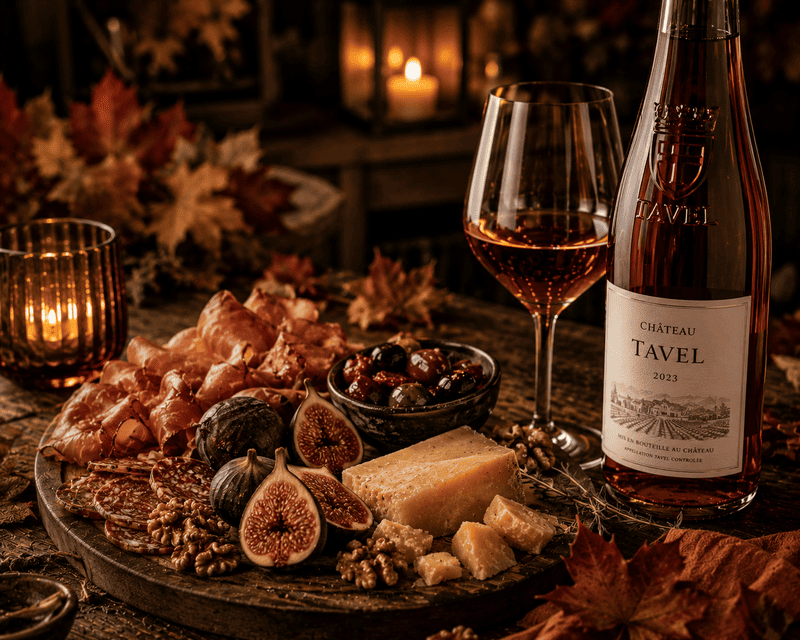
Tavel: The Rosé That Drinks Like a Light Red
Often called the “King of Rosés,” Tavel is unlike almost any rosé many wine lovers have tasted. Produced exclusively in the southern Rhône Valley of France, Tavel is made only as rosé, yet it possesses enough depth, color, and structure to rival many lighter red wines.
Its deep ruby-pink hue hints at what awaits in the glass. Expect generous flavors of ripe strawberry, raspberry, red cherry, watermelon, blood orange, dried herbs, and subtle spice, often accompanied by earthy undertones that become even more expressive with age.
Unlike many rosés designed for immediate refreshment, Tavel has remarkable texture and concentration. It pairs beautifully with roasted chicken, grilled pork, herb-roasted vegetables, charcuterie boards, mushroom dishes, Mediterranean cuisine, and even roasted turkey.
Tavel is the perfect bottle for those early autumn weekends when the afternoons remain pleasantly warm but the evenings invite sweaters and outdoor dinners around the fire. It offers the freshness of rosé with much of the versatility associated with lighter red wines.
Bandol Rosé: Elegant, Structured, and Surprisingly Age-Worthy
Few wines demonstrate the sophistication of rosé quite like Bandol. Produced along the Mediterranean coast of southern France and made primarily from Mourvèdre, Bandol rosé is celebrated for its structure, complexity, and ability to develop beautifully with age.
These wines often display aromas of wild strawberry, peach, blood orange, herbs, dried flowers, and subtle mineral notes. As they mature, hints of spice, leather, dried herbs, and savory complexity begin to emerge, creating a rosé that feels remarkably refined.
Bandol’s fuller body makes it exceptionally food-friendly throughout the fall. It pairs beautifully with grilled salmon, roast chicken, herb-crusted pork, Provençal vegetables, mushroom dishes, and roasted root vegetables. It also complements Thanksgiving turkey surprisingly well, offering enough body to stand beside the meal while maintaining the freshness that keeps every bite lively.
Bandol reminds us that rosé is not simply a seasonal novelty—it is a serious wine capable of remarkable elegance.
Cerasuolo d’Abruzzo: Italy’s Vibrant Autumn Rosé
If you’re looking for a rosé that feels joyful yet substantial, Cerasuolo d’Abruzzo deserves a place on your autumn table. Made primarily from Montepulciano grapes in central Italy, this style is famous for its vivid cherry-colored appearance and expressive fruit.
The name cerasuolo comes from the Italian word for “cherry,” a fitting description of both its brilliant color and its generous flavors of ripe cherry, raspberry, pomegranate, red plum, and subtle herbs.
While fresh and energetic, Cerasuolo also offers more body than many traditional rosés. That extra weight allows it to pair effortlessly with tomato-based pasta dishes, roasted vegetables, grilled sausages, pizza, herb-roasted chicken, and mushroom risotto. Its lively acidity also complements many dishes featuring roasted tomatoes, garlic, and olive oil.
As the days grow shorter and family dinners move indoors, Cerasuolo provides the perfect middle ground between refreshing white wines and fuller-bodied reds.
Spanish Rosado: Bright Fruit with Harvest Charm
Spain produces some of the world’s most food-friendly rosés, many labeled simply as Rosado. Often crafted from Tempranillo, Garnacha, or a blend of traditional Spanish varieties, these wines are typically deeper in color and fuller in flavor than many pale rosés.
Rosado often showcases ripe strawberry, raspberry, red cherry, watermelon, citrus, and subtle spice, supported by refreshing acidity and enough body to accompany a wide variety of seasonal foods.
These wines feel particularly at home alongside tapas, roasted peppers, grilled vegetables, chorizo, paella, roasted chicken, Manchego cheese, and charcuterie boards filled with cured meats and olives. Their bright fruit also pairs beautifully with dishes featuring smoked paprika, roasted garlic, and fresh herbs.
For relaxed autumn gatherings where the menu includes a little bit of everything, Rosado is often one of the easiest wines to enjoy. It is approachable, versatile, and endlessly food-friendly.
Why Rosé Deserves a Place on Your Fall Table
The beauty of autumn rosé lies in its versatility. It brings enough freshness to balance rich seasonal dishes while offering more texture and depth than many people expect from pink wine.
Whether you’re serving roasted turkey, pork with apples, grilled vegetables, mushroom risotto, charcuterie, roasted squash, or herb-roasted chicken, a fuller-bodied rosé can often bridge the gap between white and red wine, making it one of the most adaptable choices for entertaining.
So before you pack away the rosé until next spring, consider reaching for one of these richer styles instead. You may discover that some of the year’s most memorable rosé experiences happen not beneath the summer sun, but among colorful leaves, harvest tables, and crisp autumn evenings.
Sparkling Wines for Fall
When most people think of sparkling wine, they picture celebrations, warm-weather brunches, or a toast at midnight on New Year’s Eve. Yet some of the most memorable sparkling wine pairings happen long before the holiday season officially begins.
Autumn’s richer foods, roasted vegetables, creamy dishes, and comforting flavors are often exactly what sparkling wines need to showcase their versatility. The lively bubbles and vibrant acidity cleanse the palate after each bite, while the wines themselves bring freshness and elegance to meals that might otherwise feel heavy.
In many ways, sparkling wine is one of the most underrated choices for fall entertaining.
Whether you’re hosting Thanksgiving dinner, assembling a beautiful charcuterie board, enjoying fried comfort foods on a chilly evening, or gathering friends for a harvest celebration, there’s a sparkling wine that fits the occasion beautifully.
Champagne: Autumn’s Most Elegant Food Wine
Champagne is often reserved for life’s biggest celebrations, but it may be even more impressive at the dinner table than it is in a flute during a toast.
Traditional-method Champagne offers remarkable complexity, combining crisp acidity with delicate bubbles and flavors of green apple, citrus, brioche, toasted almonds, hazelnut, baked pear, and subtle pastry notes. As bottles mature, layers of honey, mushroom, and toasted bread emerge, making them even more compelling alongside fall cuisine.
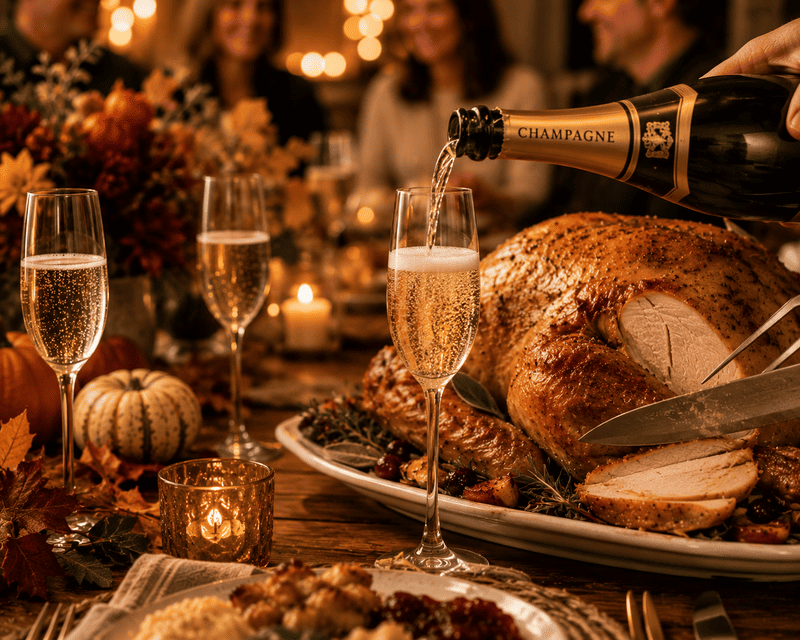
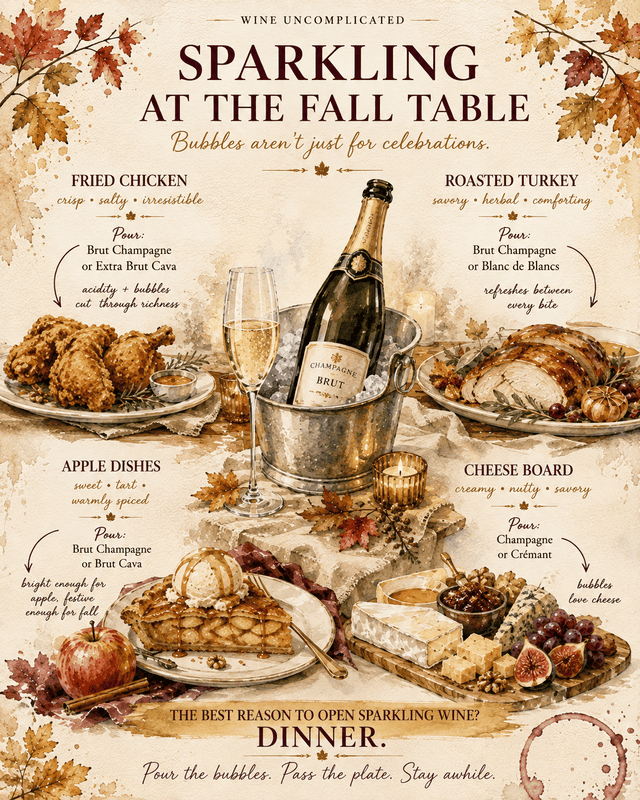
One of Champagne’s greatest strengths is its ability to pair with foods that seem completely different from one another. Roast turkey, herb stuffing, roasted chicken, creamy mushroom dishes, baked Brie, roasted root vegetables, smoked salmon, fried chicken, potato gratin, and even potato chips all become elevated when paired with a well-made Champagne.
The bubbles lift rich flavors from the palate, while the wine’s bright acidity refreshes each bite, making it possible to enjoy an entire meal without either the food or wine becoming overwhelming.
If you’re choosing just one bottle to serve throughout Thanksgiving dinner, Champagne may be one of the most versatile options on the table.
Crémant: French Elegance Beyond Champagne
For those who enjoy the traditional method but want to explore beyond Champagne itself, Crémant offers exceptional quality and remarkable value.
Produced throughout several French wine regions using the same labor-intensive method as Champagne, Crémant develops many of the same refined characteristics—fine bubbles, lively acidity, and complex aromas—while expressing the personality of its own region and grape varieties.
Depending on its origin, Crémant may display flavors of apple, pear, citrus, white flowers, brioche, toasted almonds, or gentle mineral notes. The wines often have a graceful, creamy texture that makes them wonderfully food-friendly.
Crémant pairs beautifully with roast chicken, turkey, mushroom tarts, creamy soups, seafood, goat cheese, roasted vegetables, and elegant appetizers. It also shines during autumn dinner parties, offering sophistication without requiring a special occasion.
For wine lovers looking to expand their sparkling horizons, Crémant is one of the most rewarding discoveries of the season.
Cava: Spain’s Hidden Sparkling Treasure
Spain’s Cava deserves far more recognition than it often receives. Produced using the traditional method, Cava offers freshness, complexity, and impressive versatility, often at a remarkably approachable price.
Expect lively flavors of citrus, green apple, pear, toasted bread, almonds, and subtle herbal notes. Many Reserva and Gran Reserva bottlings develop additional richness through extended aging on the lees, making them especially appealing during the cooler months.
Cava’s bright acidity and persistent bubbles make it an outstanding companion for a wide variety of fall foods. It pairs beautifully with roasted vegetables, Manchego cheese, tapas, grilled seafood, roasted pork, fried appetizers, croquettes, charcuterie, and dishes seasoned with smoked paprika.
Its lively personality also makes it a wonderful choice for casual gatherings. Whether you’re hosting friends to watch football, serving appetizers before dinner, or simply enjoying a cozy weekend afternoon, Cava brings energy and freshness to the table without feeling formal.
Sparkling Rosé: Festive, Flavorful, and Surprisingly Versatile
Sparkling rosé captures the best qualities of both sparkling wine and rosé, making it one of autumn’s most overlooked bottles.
Beyond its beautiful blush color, sparkling rosé often offers vibrant flavors of strawberry, raspberry, cranberry, cherry, blood orange, and delicate floral notes, supported by crisp acidity and lively bubbles. Depending on the producer, it may also reveal subtle hints of brioche, toasted almond, or baking spice.
Its combination of bright fruit and refreshing structure allows it to pair with an impressive range of fall dishes. Roast turkey, glazed ham, duck breast, charcuterie boards, cranberry chutney, roasted squash, baked Brie, apple-based appetizers, smoked salmon, and berry desserts all complement sparkling rosé beautifully.
It’s also one of the most visually inviting wines for autumn entertaining. Whether served during a harvest brunch, a Thanksgiving gathering, or an outdoor evening beneath colorful leaves, sparkling rosé brings warmth, elegance, and a sense of celebration to every occasion.
Why Sparkling Wine Belongs on Every Fall Table
Perhaps the greatest misconception about sparkling wine is that it should be saved for special occasions. In reality, its versatility makes it one of the most practical wines you can own throughout the fall.
The combination of vibrant acidity, refreshing bubbles, and layered flavors allows sparkling wines to pair with an extraordinary variety of seasonal dishes—from creamy soups and roasted vegetables to fried foods, turkey dinners, mushroom dishes, charcuterie, and even comforting snacks enjoyed beside the fire.
Autumn is a season built around gathering. Friends come together, families share meals, and celebrations begin to fill the calendar. Sparkling wine naturally complements those moments, adding brightness, elegance, and a quiet sense of occasion without ever feeling reserved only for holidays.
So this fall, don’t wait for midnight on December 31st to uncork a bottle. Open one for Sunday dinner, your next charcuterie board, Thanksgiving afternoon, or simply because the weather has turned cool and the table is full. You may find that sparkling wine feels just as much at home among autumn leaves as it does beneath holiday lights.
Sweet Wines for Autumn Desserts
No autumn meal feels quite complete without dessert, and few things are more magical than discovering the right sweet wine to accompany it.
Many people assume dessert wines are simply “very sweet,” but the best examples offer far more than sugar alone. They balance luscious fruit with vibrant acidity, creating wines that are rich without becoming cloying. The result is a pairing that enhances both the dessert and the wine, allowing each to shine.
From warm apple pie fresh from the oven to pumpkin cheesecake, pecan pie, and an after-dinner cheese board, dessert wines bring an elegant finishing touch to the season. They invite guests to linger a little longer, pour one last glass, and savor the final moments of a memorable meal.
Late Harvest Riesling: Bright Sweetness with Refreshing Balance
Late Harvest Riesling is one of the most approachable dessert wines for those new to sweeter styles. Produced from grapes left on the vine longer than usual, the fruit develops concentrated sugars while retaining the naturally high acidity that makes Riesling so refreshing.
The result is a wine bursting with flavors of ripe peach, apricot, baked apple, honey, citrus marmalade, and delicate floral notes. Despite its sweetness, it remains lively and energetic, never feeling heavy on the palate.
Its vibrant acidity makes it an exceptional partner for many autumn desserts. Apple pie, apple crisp, baked pears, peach cobbler, fruit tarts, cinnamon pastries, and lightly spiced pumpkin desserts all complement the wine beautifully. It also pairs wonderfully with creamy blue cheeses, where the sweetness balances the cheese’s salty intensity.
For many wine lovers, Late Harvest Riesling is the perfect introduction to the world of dessert wines—elegant, refreshing, and wonderfully food-friendly.
Tokaji: Hungary’s Legendary Sweet Wine
Few dessert wines carry as much history and prestige as Tokaji. Produced in Hungary from grapes affected by noble rot, this remarkable wine has been celebrated for centuries and was once known as “the wine of kings and the king of wines.”
Tokaji offers extraordinary layers of flavor, combining apricot preserves, dried peach, orange zest, baked apple, honey, saffron, ginger, chamomile, caramel, and toasted nuts with remarkable freshness. Its naturally vibrant acidity keeps the wine beautifully balanced, even at its sweetest.
Autumn is when Tokaji truly shines. It pairs effortlessly with apple desserts, pumpkin pie, roasted pears, bread pudding, crème brûlée, spiced cakes, and aged blue cheeses. The wine’s rich honeyed character also complements roasted nuts and desserts featuring cinnamon, nutmeg, cloves, and ginger.
Sharing a bottle of Tokaji after dinner feels less like serving dessert wine and more like continuing the evening’s celebration.
Sauternes: Luxurious, Elegant, and Timeless
Sauternes is one of the world’s most iconic sweet wines, celebrated for its remarkable complexity and ability to age for decades. Produced in Bordeaux from grapes transformed by noble rot, it offers richness without sacrificing elegance.
Expect luxurious flavors of honey, baked apricot, peach, pineapple, candied citrus peel, vanilla, toasted almonds, and warm baking spices. With age, notes of caramel, roasted nuts, beeswax, and dried fruits emerge, creating extraordinary depth.
Sauternes pairs beautifully with pumpkin pie, pecan pie, apple tart, crème brûlée, bread pudding, and roasted stone fruits. Yet one of its most famous pairings is also one of its most surprising: blue cheese.
The contrast between the wine’s honeyed sweetness and the salty, creamy intensity of blue cheese creates one of the classic food and wine pairings. It’s an unforgettable way to end an autumn dinner and a wonderful reminder that dessert wines aren’t limited to dessert alone.
Ice Wine: Nature’s Sweetest Gift
Ice Wine is one of the most fascinating wines in the world because nature determines when it can be made. The grapes remain on the vine until winter temperatures freeze them naturally, concentrating both sugars and flavors before harvest.
The resulting wine is intensely aromatic, offering vibrant flavors of peach, apricot, tropical fruit, baked apple, honey, citrus, and delicate floral notes. Despite its richness, Ice Wine often maintains striking acidity that keeps every sip bright and refreshing.
Its pure fruit character makes it an outstanding companion for fruit-based desserts. Apple pie, poached pears, baked apples, pumpkin cheesecake, vanilla panna cotta, fruit tarts, and creamy custards all pair beautifully with its concentrated sweetness.
Even a small pour of Ice Wine feels luxurious, making it an ideal choice for holiday gatherings and special autumn celebrations.
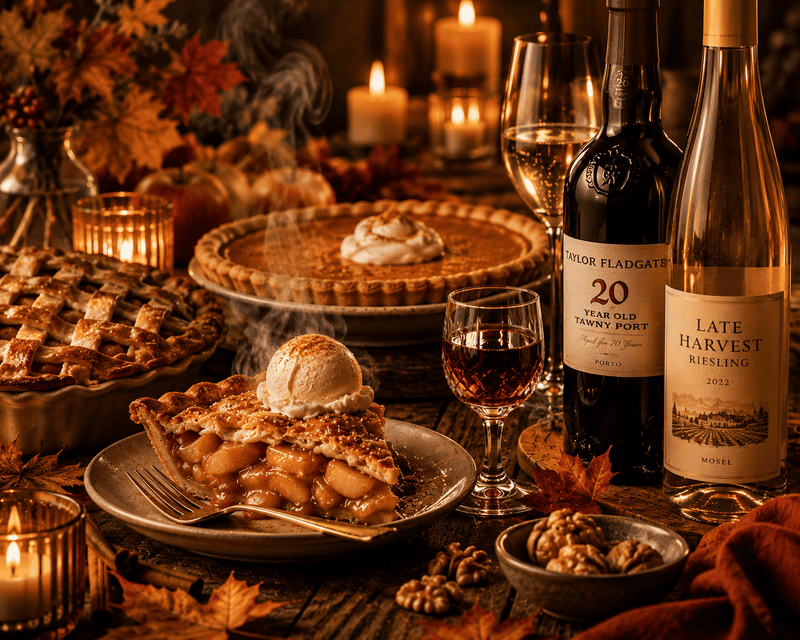
Tawny Port: The Taste of Cozy Evenings
If autumn had an official dessert wine, Tawny Port would certainly be among the strongest contenders.
Unlike youthful Ruby Port, Tawny Port spends years aging in wooden barrels, gradually developing layers of complexity while taking on its signature amber color. The result is a wonderfully smooth wine filled with flavors of caramel, toasted walnuts, pecans, dried figs, raisins, toffee, cinnamon, orange peel, and warm baking spices.
These rich, nutty flavors seem almost tailor-made for the season.
Tawny Port is exceptional with pecan pie, pumpkin pie, apple crisp, caramel desserts, bread pudding, roasted nuts, and dark chocolate. It also pairs beautifully with aged cheeses and blue cheese, creating an elegant finish to a holiday meal without requiring a traditional dessert.
Perhaps the greatest pleasure of Tawny Port is how naturally it fits the atmosphere of autumn. A small glass enjoyed beside a fireplace, shared with friends after dinner, or sipped while watching the leaves fall outside feels like the very definition of seasonal comfort.
The Sweet Finish to the Perfect Autumn Meal
Dessert wines are often the forgotten bottles on the wine shop shelf, yet they create some of the most memorable moments around the table.
Whether you choose the lively freshness of Late Harvest Riesling, the historic elegance of Tokaji, the luxurious richness of Sauternes, the concentrated beauty of Ice Wine, or the comforting warmth of Tawny Port, these wines transform dessert into an experience rather than simply the final course.
As the evenings grow longer and gatherings become more frequent, don’t be afraid to save one special bottle for the end of the meal. Sometimes the last glass is the one everyone remembers most.
Matching Wine to Fall Activities
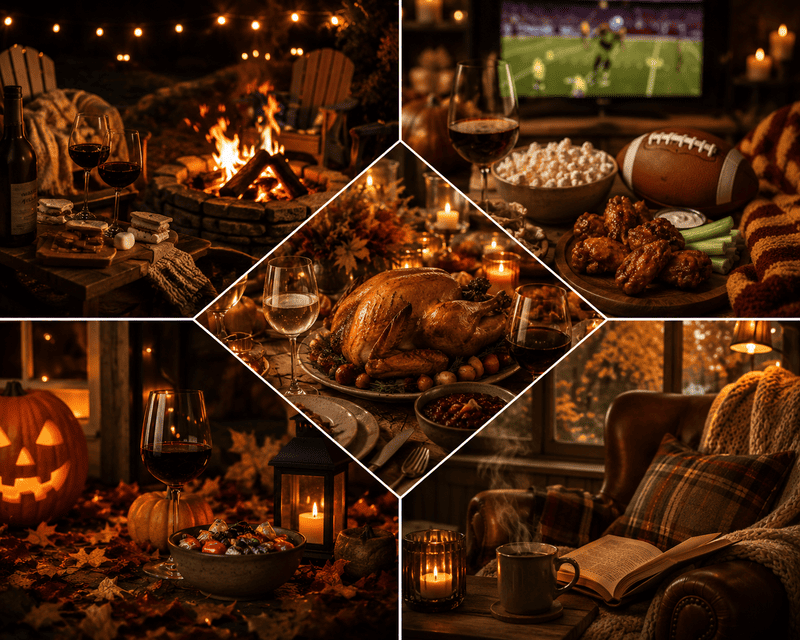
One of the joys of autumn is that every weekend seems to bring a new tradition. From afternoons spent cheering on your favorite football team to evenings gathered around a crackling fire, the season is filled with moments that deserve the perfect bottle of wine.
Rather than choosing wine only by grape variety or region, consider matching it to the occasion itself. The atmosphere, the food, and even the weather all influence what feels most satisfying in your glass.
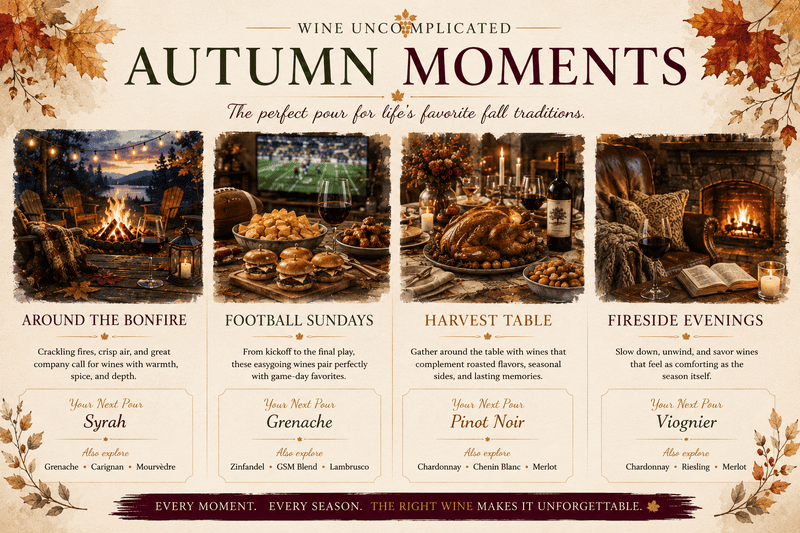
Here are a few of our favorite fall moments—and the wines that make them even more memorable.
🔥 Bonfire Nights: Reach for Syrah
There’s something magical about sitting around a bonfire on a cool autumn evening. The smell of wood smoke drifts through the air, friends gather under blankets, and conversations linger long after sunset.
Few wines capture that atmosphere better than Syrah.
Its flavors of blackberry, black pepper, smoked meat, olive, and warm spice naturally echo the aromas of a glowing fire. The wine’s rich texture and savory complexity seem almost made for chilly evenings outdoors.
Pair Syrah with grilled sausages, smoked brisket, roasted marshmallows, hearty chili, or simply a charcuterie board enjoyed beneath the stars. As the evening grows cooler, Syrah somehow becomes even more inviting.
🏈 Football Sunday: Zinfandel Takes the MVP Award
Football season is all about relaxed gatherings, comfort food, and sharing plates that are big on flavor.
That’s exactly where Zinfandel shines.
Its generous fruit, lively spice, and approachable personality pair beautifully with barbecue ribs, burgers, chili, pulled pork sandwiches, wings, smoked sausages, pizza, and game-day snacks of every kind. Even foods with a touch of sweetness or smoky barbecue sauce find a natural partner in Zinfandel’s bold character.
It’s a wine that doesn’t ask you to overthink the pairing. Instead, it encourages everyone to pour another glass, grab another plate, and enjoy the afternoon together.
🦃 Thanksgiving: Build a Table, Not Just a Pairing
If there’s one meal that challenges wine lovers every year, it’s Thanksgiving.
The table is filled with roasted turkey, herb stuffing, mashed potatoes, cranberry sauce, sweet potatoes, roasted vegetables, buttery rolls, gravy, and countless family recipes. No single wine pairs perfectly with every dish—and that’s part of the fun.
Instead of searching for one “correct” bottle, consider offering a small selection.
Pinot Noir remains one of the most versatile reds for Thanksgiving, with bright fruit, gentle earthiness, and lively acidity that complement turkey, mushrooms, herbs, and cranberry sauce.
Chenin Blanc is an exceptional white wine choice, balancing orchard fruit with refreshing acidity that complements both savory dishes and subtly sweet sides.
And don’t overlook sparkling wine. Whether it’s Champagne, Crémant, or Cava, bubbles bring freshness to every course while adding a festive touch to the celebration.
Thanksgiving is one of the few meals where opening several different bottles isn’t excessive—it’s part of the experience.
🎃 Halloween: Try Something Unexpected with Carménère
Halloween has always carried a little mystery, making it the perfect excuse to pour a wine that’s just a bit different.
Carménère fits that role beautifully.
Its notes of blackberry, roasted red pepper, herbs, cocoa, and gentle spice feel wonderfully autumnal while offering something many guests have never tasted before. It’s familiar enough to be approachable yet distinctive enough to spark conversation around the table.
Pair it with roasted peppers, mushroom dishes, chili, grilled sausages, shepherd’s pie, or hearty pizzas during a Halloween movie night or neighborhood gathering.
Who knows? Your guests may discover a new favorite grape before the evening is over.
🕯️ Cozy Night In: Let Merlot Do the Rest
Not every memorable fall evening requires a celebration.
Sometimes the best moments are the quiet ones.
A favorite book, a comforting meal, soft music playing in the background, rain tapping gently against the windows, or a fire quietly glowing in the fireplace—these simple pleasures often call for a wine that’s equally comforting.
Merlot is that wine.
Its soft tannins, generous plum and cherry fruit, and velvety texture make it effortless to enjoy alongside roast chicken, creamy pasta, mushroom risotto, beef stew, or simply a small cheese board after dinner.
Merlot doesn’t demand attention. Instead, it quietly complements the evening, allowing the food, the conversation, and the moment itself to take center stage.
Every Autumn Moment Has a Perfect Pour
One of the reasons fall is such a rewarding season for wine lovers is its incredible variety. One weekend may call for a smoky Syrah beside a bonfire, while the next is best enjoyed with sparkling wine shared around the Thanksgiving table.
There are no rigid rules—only opportunities to match the character of the wine with the mood of the moment.
As the leaves continue to change and your calendar fills with seasonal traditions, don’t be afraid to experiment. Open a bottle that fits the occasion, gather the people you enjoy most, and let the wine become part of the memory. After all, the best fall wines aren’t simply chosen for what’s on the plate—they’re remembered for the moments they help create.
Building a Simple Fall Wine Collection
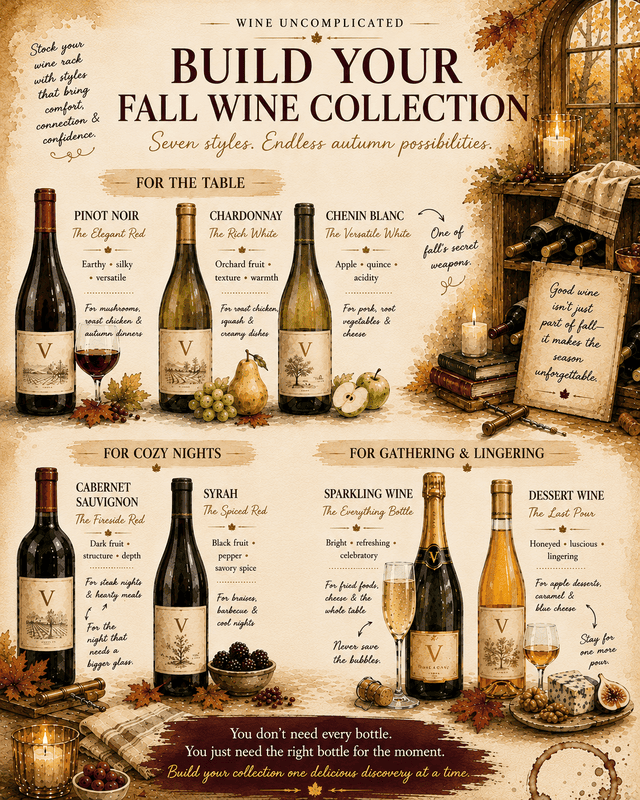
You don’t need a sprawling wine cellar or dozens of bottles to enjoy the best that autumn has to offer. In fact, a thoughtfully chosen collection of just a few wines can carry you through nearly every meal, gathering, and celebration the season brings.
Think of it as creating a seasonal wardrobe for your wine rack. Just as a few well-chosen sweaters, jackets, and boots can take you through months of changing weather, a small collection of versatile wines can prepare you for everything from quiet weeknight dinners to festive holiday meals.
Whether you’re stocking a home cellar, filling a small wine rack, or simply planning your next shopping trip, these seven wines create an excellent foundation for the season.
🍷 Pinot Noir: Your Most Versatile Red
If you could choose only one red wine for fall, Pinot Noir would be a strong contender.
Its bright acidity, silky texture, and earthy elegance make it one of the most adaptable wines you’ll own. It pairs effortlessly with roast chicken, pork, salmon, mushrooms, turkey, and countless autumn vegetables, making it especially valuable as Thanksgiving approaches.
Pinot Noir is your dependable “goes-with-almost-everything” bottle—perfect for dinners when you’re not quite sure what will end up on the table.
🥩 Cabernet Sauvignon: For Rich, Hearty Meals
Every fall collection deserves one bold, structured wine for cooler evenings and comfort food.
Cabernet Sauvignon shines alongside grilled steaks, braised short ribs, pot roast, beef stew, burgers, and aged cheeses. Its firm structure and dark fruit bring warmth and richness to meals that call for something substantial.
Save this bottle for the nights when the temperatures drop and dinner becomes the main event.
🔥 Syrah: The Cozy Evening Specialist
Syrah fills a unique role that few other wines can.
Its peppery spice, smoky notes, and savory complexity make it ideal for chili, lamb, smoked meats, roasted mushrooms, and evenings gathered around the fireplace or outdoor fire pit.
If Cabernet Sauvignon is your formal dinner companion, Syrah is your favorite oversized sweater—comfortable, warming, and always welcome on a cool autumn night.

🍏 Chardonnay: The Crowd-Pleasing White
A lightly oaked Chardonnay belongs in every fall collection.
Its balance of orchard fruit, gentle oak, and refreshing acidity allows it to pair beautifully with roast chicken, turkey, creamy pasta, squash soup, seafood, and rich vegetable dishes.
Because so many guests enjoy Chardonnay, it’s also one of the safest bottles to keep on hand for unexpected visitors or impromptu dinners.
🍏 Chenin Blanc: The Secret Weapon
If there is one bottle that consistently surprises people, it’s Chenin Blanc.
Its lively acidity and generous orchard-fruit flavors allow it to pair with an astonishing range of foods, including roasted pork, turkey, apples, squash, creamy dishes, roasted vegetables, and cheeses.
Many wine lovers discover that Chenin Blanc quietly becomes one of the bottles they reach for most often throughout the season.
✨ Sparkling Wine: For Every Celebration
No seasonal collection feels complete without at least one bottle of sparkling wine.
Whether you choose Champagne, Crémant, or Cava, sparkling wine is one of the most versatile bottles you can own. It welcomes guests, complements appetizers, pairs beautifully with Thanksgiving dinner, and transforms an ordinary evening into something worth celebrating.
One bottle has an amazing ability to make any gathering feel just a little more special.
🍯 Dessert Wine: The Perfect Finale
Complete your collection with one memorable dessert wine.
Whether it’s Late Harvest Riesling, Tokaji, Sauternes, Ice Wine, or Tawny Port, having a bottle tucked away allows you to finish an autumn dinner with elegance. These wines pair beautifully with apple pie, pumpkin desserts, pecan pie, blue cheese, roasted nuts, and quiet conversations that continue long after dessert has been served.
Many people overlook dessert wines until they experience the right pairing. Once they do, they often become one of the highlights of the season.
Your Seven-Bottle Fall Cellar
With just these seven wines, you’ll be prepared for nearly every autumn occasion.
- Pinot Noir for versatility and Thanksgiving.
- Cabernet Sauvignon for hearty comfort foods.
- Syrah for smoky evenings and slow-cooked meals.
- Chardonnay for creamy dishes and roast poultry.
- Chenin Blanc for exceptional food pairing versatility.
- Sparkling Wine for celebrations and entertaining.
- Dessert Wine for the perfect ending.
Together, these bottles create a balanced collection that reflects everything autumn has to offer—from quiet weeknight dinners to festive holiday gatherings.
The beauty of a seasonal wine collection isn’t that it contains every great bottle. It’s that each wine has a purpose. When every bottle on your shelf is there for a reason, choosing what to pour becomes less about guesswork and more about enjoying the moment.
How to Serve Fall Wines
Choosing the right bottle is only part of the experience. How you serve your wine can have just as much impact on what you taste in the glass.
Temperature, oxygen, glassware, and storage all influence a wine’s aromas, flavors, and overall balance. Fortunately, you don’t need expensive equipment or a professional wine cellar to enjoy wine at its best. A few simple habits can make every bottle—from an everyday weeknight wine to a special holiday selection—taste even better.
Serve Wine at the Right Temperature
One of the most common wine myths is that red wine should be served at “room temperature.” That advice dates back to centuries-old European homes, where rooms were much cooler than they are today.
Modern homes are often around 70–75°F (21–24°C), which can make many red wines taste overly alcoholic, flat, or heavy.
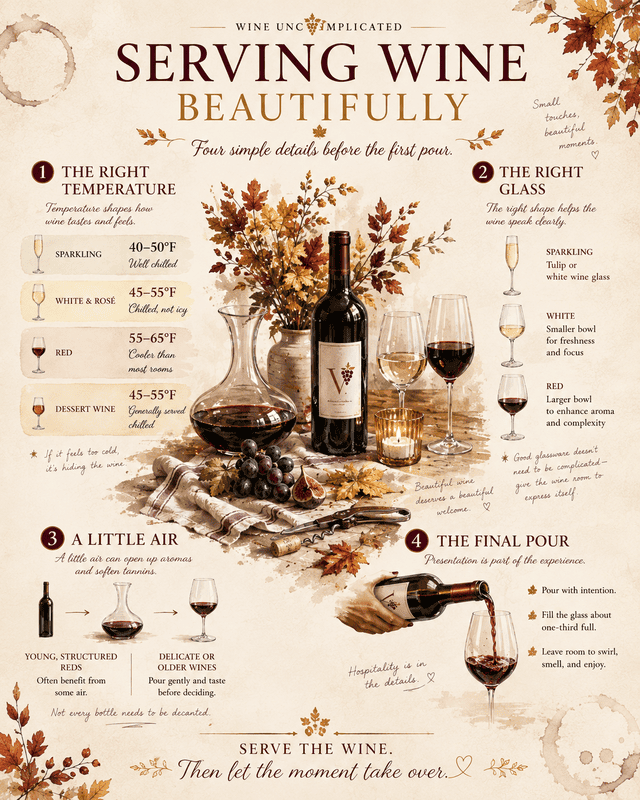
Instead, aim for these serving temperatures:
Light to Medium-Bodied Reds
Pinot Noir, Grenache
55–60°F (13–16°C)
A brief 15 to 20 minutes in the refrigerator before serving helps preserve freshness while allowing delicate aromas to shine.
Full-Bodied Reds
Cabernet Sauvignon, Syrah, Merlot, Zinfandel, Pinotage
60–65°F (16–18°C)
These wines benefit from being slightly cooler than most living rooms, allowing their fruit, tannins, and structure to remain balanced.
Fuller-Bodied Whites
Chardonnay, Chenin Blanc, Viognier, White Rhône Blends
50–55°F (10–13°C)
Serving these wines too cold can mute their rich textures and subtle aromas. Allowing them to warm slightly after removing them from the refrigerator reveals far more complexity.
Sparkling Wines
45–50°F (7–10°C)
Well-chilled sparkling wines maintain their lively bubbles while allowing delicate fruit and brioche notes to emerge.
Dessert Wines
45–55°F (7–13°C)
Serve sweeter wines lightly chilled to highlight both their freshness and their rich, concentrated flavors.
Give Some Wines Time to Breathe
Not every bottle needs to be decanted, but many wines benefit from a little extra oxygen before serving.
Young, full-bodied reds such as Cabernet Sauvignon, Syrah, and some Zinfandels often become noticeably more expressive after 30 to 60 minutes in a decanter. Oxygen helps soften tannins, open aromatic layers, and reveal greater complexity.
Older wines, on the other hand, usually require less aeration. In these cases, decanting is often done gently to separate the wine from any natural sediment that may have developed during aging.
Lighter wines such as Pinot Noir, Grenache, Chenin Blanc, Chardonnay, and sparkling wines rarely require decanting. Simply pouring them into the glass is usually enough to allow their aromas to develop naturally.
If you’re ever unsure, remember that patience is often the best accessory. Even letting a wine sit in the glass for ten or fifteen minutes can dramatically change its character.
Choose Glassware That Lets the Wine Shine
You don’t need a cabinet filled with specialty glasses for every grape variety.
A few well-made glasses will comfortably serve almost every wine in your collection.
A universal wine glass is one of the best investments any wine lover can make. Its gently rounded bowl allows both red and white wines to develop their aromas while remaining practical for everyday use.
For fuller-bodied reds like Cabernet Sauvignon and Syrah, a larger bowl gives the wine additional surface area, helping aromas unfold as it breathes.
White wines generally benefit from slightly smaller bowls that preserve freshness while concentrating delicate aromas.
Sparkling wines are traditionally served in flutes, but many wine professionals now prefer tulip-shaped sparkling glasses or even standard white wine glasses for high-quality Champagne and traditional-method sparkling wines. These shapes better showcase the wine’s complex aromas while still preserving the bubbles.
Ultimately, clean glassware matters far more than expensive crystal. A spotless glass allows the wine—not detergent residue or dust—to take center stage.
Store Your Wines for the Season
You don’t need a dedicated wine cellar to care for your autumn wines properly.
The most important goal is consistency.
Store bottles in a cool, dark place away from direct sunlight, heating vents, radiators, kitchens, or windows where temperatures fluctuate dramatically. Excessive heat can accelerate aging, while frequent temperature swings may gradually diminish a wine’s freshness.
If your wines are sealed with natural corks and intended for longer storage, keeping bottles on their side helps maintain moisture inside the cork and reduces the risk of unwanted air entering the bottle.
Once opened, most still wines remain enjoyable for three to five days when resealed and refrigerated. Sparkling wines generally retain their bubbles for one to three days when closed with a sparkling wine stopper, while many dessert wines can remain fresh for several weeks thanks to their higher sugar content.
The most important advice, however, is also the simplest:
Wine is meant to be enjoyed.
While proper storage and serving can certainly enhance the experience, don’t let the pursuit of perfection keep you from opening a bottle on an ordinary Tuesday. Some of the most memorable glasses of wine are shared not because everything was perfect, but because the moment itself was worth celebrating.

Frequently Asked Questions
Can you drink white wine in the fall?
Absolutely. While many people naturally reach for red wines as the weather cools, autumn is actually one of the best seasons to enjoy fuller-bodied white wines. Chardonnay, Chenin Blanc, Viognier, White Rhône blends, and dry Riesling all pair beautifully with roasted vegetables, poultry, pork, creamy soups, squash, mushrooms, and many of the comforting dishes that define the season. The key is choosing whites with enough texture and acidity to complement richer meals.
Is rosé still appropriate after summer?
Definitely. Rosé isn’t just a summer wine—it simply changes with the seasons. Richer, darker styles such as Tavel, Bandol, Cerasuolo d’Abruzzo, and Spanish Rosado offer more body, deeper fruit flavors, and savory complexity that make them wonderful companions for autumn cooking. They bridge the gap between white and red wine, making them some of the most versatile bottles on the fall table.
What wines pair best with Thanksgiving dinner?
Thanksgiving is unique because no single wine perfectly matches every dish. Instead of choosing just one bottle, consider offering a small selection.
Pinot Noir is one of the most versatile red wines for turkey, stuffing, mushrooms, and cranberry sauce. Chenin Blanc beautifully complements both savory and subtly sweet dishes, while Champagne, Crémant, or Cava add freshness and elegance throughout the meal. Together, these wines create a balanced selection that allows every guest to discover a favorite pairing.
Should red wines really be served at room temperature?
Usually not.
The traditional advice to serve red wine at room temperature dates back to centuries-old homes that were much cooler than today’s houses. Most modern living rooms are simply too warm.
For the best experience, serve lighter reds like Pinot Noir and Grenache around 55–60°F (13–16°C) and fuller-bodied reds such as Cabernet Sauvignon, Syrah, Merlot, and Zinfandel around 60–65°F (16–18°C). Even placing a bottle in the refrigerator for 15 to 20 minutes before serving can dramatically improve balance and freshness.
What’s the best wine for apple desserts?
Apple desserts are among the most wine-friendly treats of the season.
Late Harvest Riesling is a classic choice thanks to its bright acidity and flavors of baked apple, honey, and stone fruit. Tokaji and Sauternes pair beautifully with richer apple pies and tarts, while Tawny Port complements caramelized apple desserts and apple crisp with its notes of toasted nuts and warm baking spices.
Ultimately, the best pairing depends on the style of dessert, but almost every apple dessert has a delicious wine waiting to accompany it.
Final Thoughts
There is something special about wine in the fall.
Perhaps it’s the excitement of harvest season, the return of comforting meals, or simply the way cooler weather encourages us to slow down and savor what we’re eating and drinking. Whatever the reason, autumn offers more opportunities for memorable food and wine pairings than almost any other time of year.
From elegant Pinot Noir enjoyed beneath colorful leaves to a bold Cabernet Sauvignon beside a crackling fire, from a richly textured Chenin Blanc shared over roasted pork to a glass of Tawny Port enjoyed with apple pie after dinner, every bottle tells a different story. The beauty of the season is that there isn’t just one perfect choice—there are countless delicious possibilities waiting to be explored.
Don’t be afraid to step outside your usual routine. Try a fuller-bodied rosé after Labor Day. Open a bottle of sparkling wine for Sunday dinner instead of saving it for New Year’s Eve. Discover a grape you’ve never tasted before, or revisit an old favorite with a new seasonal dish.
Wine isn’t about memorizing rules or finding the single “best” bottle. It’s about curiosity, discovery, and sharing meaningful moments with the people around your table.
So as the leaves begin to change and autumn settles in, visit a local wine shop, ask for a recommendation, cook something seasonal, and uncork a bottle that feels right for the occasion.
You may discover that fall isn’t just another wine season—it may just become your favorite one.
After all, every season has great wines.
But autumn has a way of making every glass feel a little warmer, every meal a little more memorable, and every gathering a reason to celebrate.