Introduction: The Grape That Captures Hearts
Some wines impress. Pinot Noir seduces.
For many wine lovers, Pinot Noir is more than just a grape variety—it’s an obsession. It inspires passionate debates, devoted collectors, and countless journeys to wine regions around the world. From the hallowed vineyards of Burgundy to the misty hills of Oregon and the sun-kissed valleys of California, Pinot Noir has earned a reputation as one of the most captivating wines on the planet.
What makes this devotion even more remarkable is that Pinot Noir is anything but easy. In fact, it is one of the most challenging grapes to grow and vinify successfully. It demands ideal conditions in the vineyard, meticulous attention in the winery, and a bit of cooperation from Mother Nature. A late spring frost, an untimely rainstorm, or a few extra degrees of heat can dramatically alter the final wine.
These challenges have earned Pinot Noir one of the most famous nicknames in the wine world: “The Heartbreak Grape.”
The term reflects the frustration that growers and winemakers often experience when working with this delicate variety. Pinot Noir can be temperamental, unpredictable, and unforgiving. Yet despite the risks—or perhaps because of them—winemakers continue to pursue it with unwavering passion.
Because when everything goes right, Pinot Noir can be extraordinary.
A great Pinot Noir has a way of combining elegance, complexity, and emotion in a single glass. It can be vibrant and fresh, earthy and contemplative, delicate yet deeply expressive. Few wines are capable of conveying a sense of place with such precision, and few grapes reward patience and attention quite so generously.
For many wine enthusiasts, their first truly memorable Pinot Noir becomes a wine they never forget.
So what makes this delicate grape inspire such devotion?
What Is Pinot Noir?
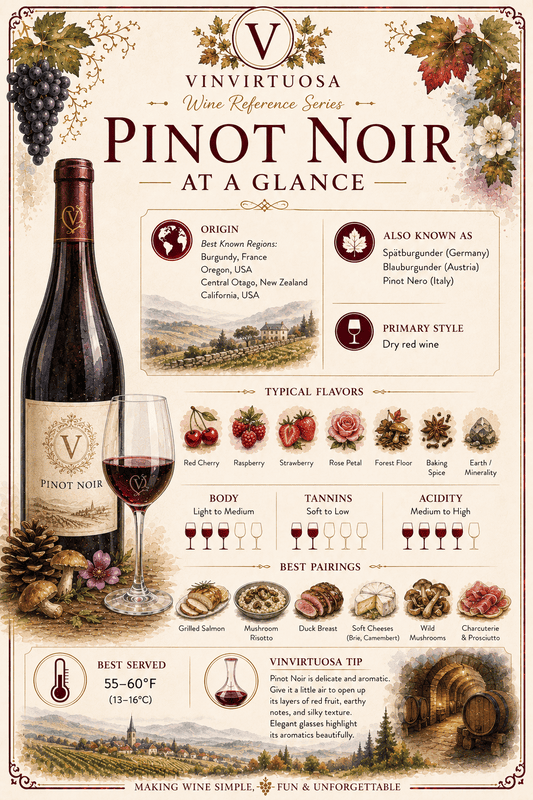
Pinot Noir is a red grape variety that traces its origins to France, where it has been cultivated for centuries. Most famously associated with Burgundy, Pinot Noir is considered one of the world’s oldest and most revered wine grapes. Its history stretches back so far that many modern grape varieties are believed to be descendants or close relatives.
Unlike bold, deeply colored grapes such as Cabernet Sauvignon or Syrah, Pinot Noir is naturally thin-skinned and sensitive to its environment. Those delicate skins contribute to wines that are typically lighter in color and lower in tannin, but they also make the grape more vulnerable to disease, weather fluctuations, and vineyard challenges.
The result is a wine that prioritizes finesse over force.
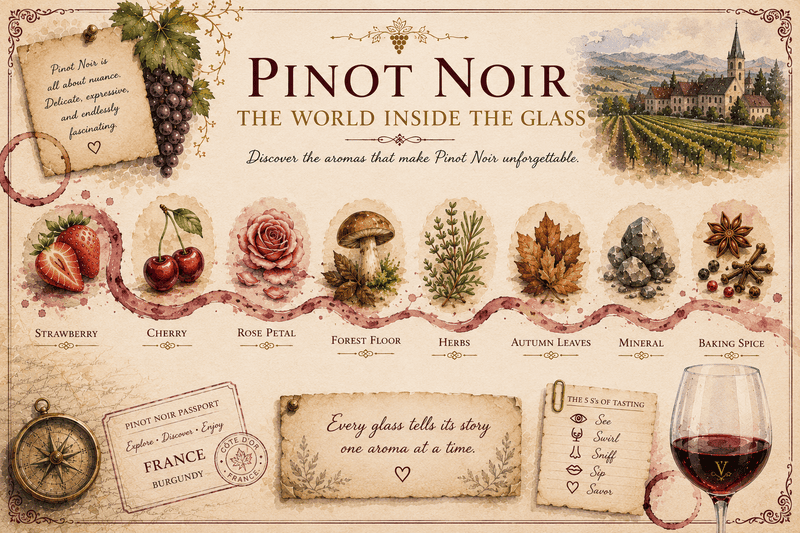
Rather than overwhelming the palate with power, Pinot Noir often charms drinkers with its balance, nuance, and layered complexity. Depending on where it is grown and how it is made, the wine can display an incredible range of aromas and flavors.
Common fruit notes include:
- Cherry
- Raspberry
- Strawberry
- Cranberry
As Pinot Noir matures, more savory and earthy characteristics often emerge, including:
- Rose petals
- Mushroom
- Forest floor
- Dried herbs
- Baking spices
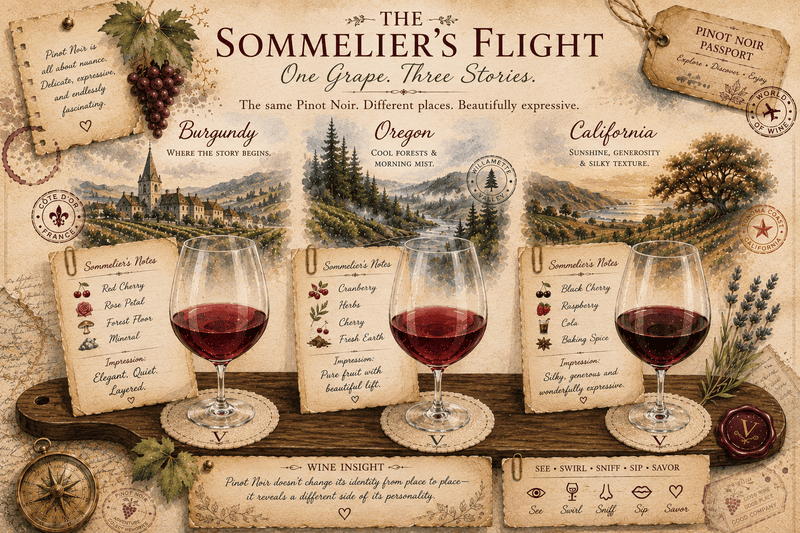
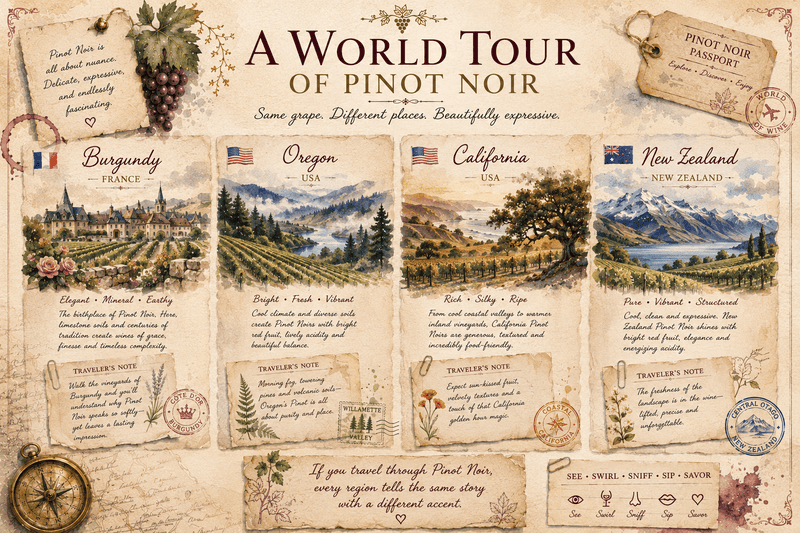
This combination of bright fruit and earthy complexity is part of what makes Pinot Noir so fascinating. A bottle from Burgundy may evoke autumn leaves and damp earth, while one from Oregon might showcase vibrant red berries and floral notes. A California example may lean toward richer cherry and spice flavors. Yet despite these differences, Pinot Noir almost always retains an unmistakable elegance.
Its ability to be both delicate and expressive has helped make it a favorite among casual wine drinkers and seasoned professionals alike.
“Pinot Noir doesn’t shout. It whispers—and wine lovers lean in to listen.”
Why Pinot Noir Is Called “The Heartbreak Grape”
Every great love story has its challenges, and Pinot Noir is no exception.
Among winemakers, Pinot Noir has earned the nickname “The Heartbreak Grape” because it can be one of the most frustrating varieties to grow and produce. While many grapes are relatively forgiving, Pinot Noir demands near-perfect conditions from vineyard to bottle. Success is never guaranteed, and even experienced growers can find themselves at the mercy of nature.
Difficult Vineyard Conditions
The challenges begin in the vineyard.
Pinot Noir’s thin skins contribute to its elegance and delicate character, but they also make the grape particularly vulnerable. Thin-skinned grapes are more susceptible to rot, mildew, and disease, especially in regions that experience humidity or excessive rainfall.
The vine itself is notoriously sensitive to weather. A spring frost can damage young buds before the growing season has truly begun. Excessive heat can push the grapes toward over-ripeness, while cool temperatures may prevent them from ripening fully. Even harvest timing becomes a delicate balancing act, as growers must decide exactly when the fruit has reached its ideal balance of sugar, acidity, and flavor.
Unlike hardier grape varieties, Pinot Noir offers little room for error.
Small Changes Matter
One of the reasons wine lovers are so fascinated by Pinot Noir is also one of the reasons growers lose sleep over it.
Small differences can have enormous consequences.
A slight increase in temperature may result in riper fruit flavors. A cooler season can emphasize tart cranberry and bright cherry notes. Changes in sunlight exposure, rainfall patterns, or even the composition of the soil can dramatically influence the finished wine.
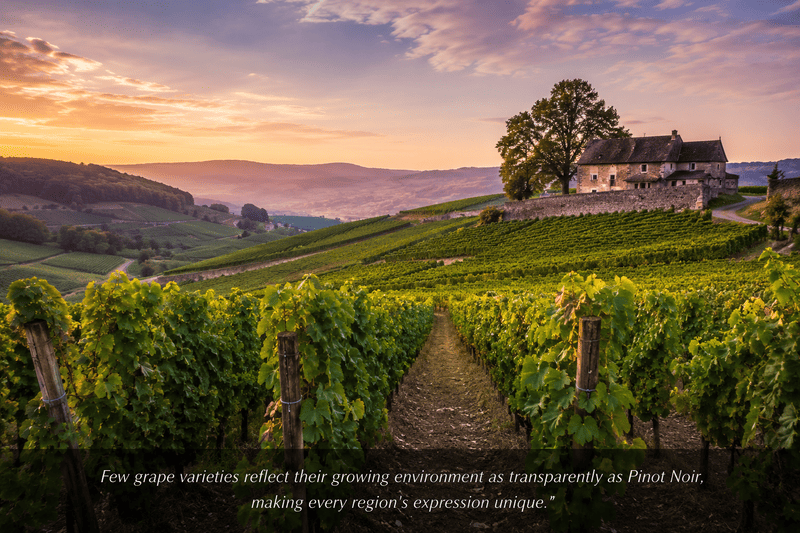
This extraordinary sensitivity is why Pinot Noir is often considered one of the purest expressions of terroir. The grape acts almost like a translator, faithfully reflecting the conditions in which it was grown.
For wine drinkers, that’s exciting. For growers, it can be nerve-racking.
Difficult in the Winery
The challenges don’t end once the grapes are harvested.
Pinot Noir’s delicate nature requires careful handling throughout the winemaking process. Because the grape has relatively low tannins and lighter color, over-extraction during fermentation can easily overwhelm its subtle aromas and textures. Too much oak can mask its elegance. Too little structure can leave the wine feeling thin or unbalanced.
Winemakers often describe working with Pinot Noir as a balancing act. Every decision matters, and small adjustments can have a significant impact on the final wine.
Yet these challenges are precisely why exceptional Pinot Noir is so treasured.
When the weather cooperates, the vineyard thrives, and the winemaker successfully guides the wine through its journey, Pinot Noir can achieve a level of grace and complexity that few other grapes can match. The very qualities that make it difficult are also what make it extraordinary.
“Pinot Noir asks everything of the grower and rewards them only when nature cooperates.”
Burgundy: Pinot Noir’s Spiritual Home
To truly understand Pinot Noir, one must begin in Burgundy.
Located in eastern France, Burgundy is more than simply a wine region—it’s the birthplace of many of the ideas that continue to shape the wine world today. For centuries, Pinot Noir has been cultivated here, producing wines that have become benchmarks against which all other Pinot Noirs are measured.
The story stretches back to the Middle Ages, when Cistercian and Benedictine monks carefully tended vineyards throughout the region. Over generations, they observed which slopes produced the finest fruit, which soils yielded the most complex wines, and how subtle differences in location influenced quality. Long before modern science could explain these variations, the monks recognized that certain vineyard sites consistently produced exceptional wines.
Their observations helped lay the foundation for one of wine’s most important concepts: terroir.
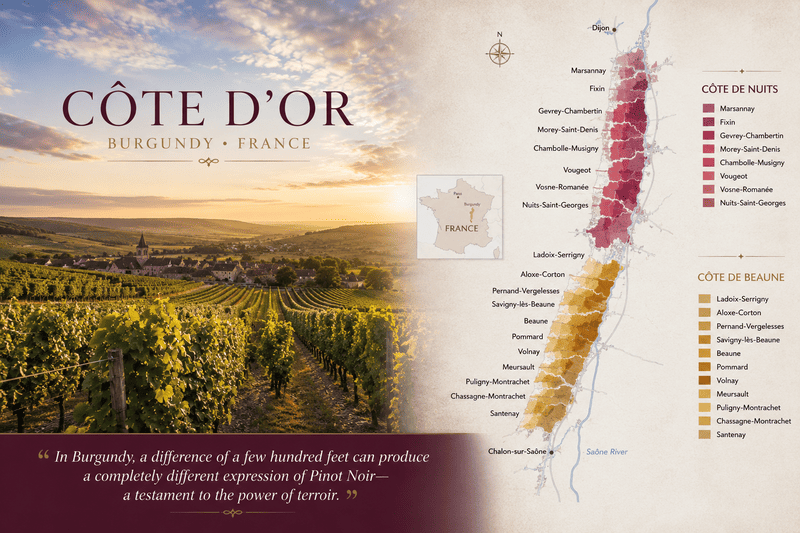
Terroir refers to the unique combination of climate, soil, elevation, exposure, and local conditions that influence a wine’s character. Nowhere is this concept more celebrated than in Burgundy, where neighboring vineyards can produce remarkably different expressions of Pinot Noir despite being separated by only a few hundred feet.
Today, Burgundy remains home to some of the most sought-after and collectible wines in the world.
The Villages That Define Great Pinot Noir
Among Burgundy’s many famous villages, a few names stand out for their historic contributions to Pinot Noir.
Gevrey-Chambertin is known for producing wines with structure, depth, and remarkable aging potential. These wines often combine dark fruit flavors with earthy complexity and a powerful sense of place.
Vosne-Romanée is often considered the crown jewel of Burgundy. Home to some of the world’s most prestigious vineyards, the wines here are celebrated for their elegance, perfume, silky texture, and extraordinary complexity.
Pommard, meanwhile, has traditionally been associated with fuller-bodied, more robust expressions of Pinot Noir. These wines often display rich fruit alongside savory notes that evolve beautifully with age.
The Burgundy Style
For many wine lovers, Burgundy represents Pinot Noir in its most profound form.
While New World Pinot Noirs often emphasize vibrant fruit, Burgundy frequently highlights more subtle and savory characteristics. Notes of earth, mushroom, forest floor, crushed stone, and dried flowers often accompany red fruit flavors, creating wines that reward contemplation as much as enjoyment.
These wines are rarely about power. Instead, they emphasize balance, nuance, minerality, and complexity. Many of Burgundy’s finest examples also possess remarkable age-worthiness, evolving over decades into wines of extraordinary depth and character.
It is this ability to capture both place and time in a single bottle that has cemented Burgundy’s reputation as Pinot Noir’s spiritual home—and why wine lovers continue to make pilgrimages there in search of the grape’s most profound expressions.
How Pinot Noir Found a New Home Around the World
While Burgundy may be Pinot Noir’s spiritual home, it is far from the only place where this remarkable grape thrives.
Over the past century, growers around the world have discovered that certain cool-climate regions can coax extraordinary expressions from Pinot Noir. Although these wines often share the grape’s hallmark elegance and bright acidity, each region brings its own personality to the glass.
The result is one of the most fascinating journeys in wine: following Pinot Noir across continents and discovering how dramatically a single grape can change when planted in different soils, climates, and cultures.
Oregon: America’s Pinot Noir Success Story
If Burgundy inspired the dream, Oregon helped prove it could flourish elsewhere.
Located in the Pacific Northwest, Oregon’s Willamette Valley has become one of the world’s premier destinations for Pinot Noir. Beginning in the 1960s and 1970s, a handful of pioneering winemakers believed that the region’s cool climate, long growing season, and diverse soils could produce wines capable of rivaling some of the world’s finest examples.
They were right.
The Willamette Valley’s moderate temperatures allow Pinot Noir to ripen slowly and evenly, preserving freshness and acidity while developing complex flavors. The resulting wines often showcase vibrant notes of cherry, raspberry, cranberry, and wild strawberry, accompanied by floral aromas and subtle earthy undertones.
Many wine lovers are drawn to Oregon Pinot Noir because it strikes a beautiful balance between Old World restraint and New World fruit expression. The wines tend to be elegant, energetic, and food-friendly, with a purity that reflects the region’s unique character.
For those seeking a bridge between Burgundy and California, Oregon often provides the perfect middle ground.
California: Richness and Generosity
Travel south to California and Pinot Noir takes on a different personality.
California’s best Pinot Noir regions are strongly influenced by the Pacific Ocean, which helps moderate temperatures and preserve the grape’s delicate character. Among the most celebrated are the Russian River Valley in Sonoma County and Santa Barbara County along California’s Central Coast.
In the Russian River Valley, cooling fog rolls inland from the Pacific each morning, creating ideal conditions for slow ripening. The wines often display lush flavors of black cherry, ripe raspberry, baking spice, and subtle hints of cola, all wrapped in a silky texture that makes them immediately appealing.
Farther south, Santa Barbara County benefits from an unusual east-west mountain orientation that allows cool ocean air to flow deep into the vineyards. Here, Pinot Noir often combines vibrant fruit with freshness and structure, creating wines that are both expressive and balanced.
Compared to many Burgundian examples, California Pinot Noirs typically offer:
- Riper fruit flavors
- Fuller body
- Richer texture
- Softer tannins
- Notes of black cherry, plum, spice, and cola
These qualities have helped make California Pinot Noir one of the most popular styles among American wine drinkers.
Other Notable Pinot Noir Regions
The Pinot Noir story doesn’t end in France or the United States.
Around the globe, winemakers continue to discover exciting new expressions of this adaptable grape.
New Zealand has earned international acclaim for Pinot Noir, particularly from regions such as Central Otago and Martinborough. These wines often combine vivid fruit flavors with impressive structure and freshness.
Germany, where Pinot Noir is known as Spätburgunder, has quietly become one of the world’s most exciting sources for the grape. German examples can be elegant, mineral-driven, and remarkably refined, often surprising drinkers who associate the country primarily with Riesling.
Chile has also emerged as a compelling Pinot Noir producer. Cool coastal regions influenced by the Pacific Ocean create wines that balance bright fruit, lively acidity, and excellent value.
Each of these regions tells a different chapter in Pinot Noir’s story, demonstrating the grape’s remarkable ability to adapt while still retaining its essential character.
Why Sommeliers Love Pinot Noir
Ask a group of sommeliers to name their favorite grape, and Pinot Noir is likely to appear near the top of the list.
This isn’t because Pinot Noir is the biggest, boldest, or most powerful wine. In fact, quite the opposite is true. Wine professionals often gravitate toward Pinot Noir because it rewards curiosity, attention, and exploration in ways few other grapes can.
It Reflects Place
One of Pinot Noir’s most celebrated qualities is its ability to express terroir.
Many grape varieties are influenced by where they are grown, but Pinot Noir often seems to magnify those differences. It acts like a translator, turning soil, climate, elevation, and vineyard conditions into flavors and aromas that can be experienced in the glass.
A Pinot Noir from Burgundy may emphasize earth, mushroom, and mineral notes. An Oregon example may lean toward bright red berries and floral aromas. A California bottling might showcase darker fruit and a richer texture.
The grape changes dramatically depending on where it is planted, making every bottle a lesson in geography and terroir.
For sommeliers, that makes Pinot Noir endlessly fascinating.
It Works at the Table
Few wines are as versatile with food as Pinot Noir.
Its moderate body, bright acidity, and generally gentle tannins allow it to complement a remarkably wide range of dishes. While a powerful Cabernet Sauvignon may overwhelm delicate foods, Pinot Noir often enhances them.
It can pair beautifully with:
- Roast chicken
- Duck
- Salmon
- Pork tenderloin
- Mushroom dishes
- Charcuterie
- Soft cheeses
This versatility makes Pinot Noir a favorite recommendation in restaurants, particularly when diners are unsure what wine to choose.
When in doubt, Pinot Noir often finds a way to work.
It Rewards Exploration
Perhaps the greatest reason sommeliers love Pinot Noir is that no two bottles are ever quite the same.
Different regions, producers, vintages, vineyard sites, and winemaking choices can all dramatically influence the final wine. A Pinot Noir from one village may taste entirely different from a bottle produced just a few miles away.
For wine professionals, that endless variety is part of the appeal.
There is always another vineyard to discover, another vintage to compare, another producer to explore. Even after years of tasting Pinot Noir, the grape still finds ways to surprise and delight.
That sense of discovery keeps wine lovers coming back—and keeps Pinot Noir firmly established as one of the most beloved grapes in the world.
“If Cabernet Sauvignon is a statement, Pinot Noir is a conversation.”
Perfect Food Pairings for Pinot Noir
One of the reasons Pinot Noir has earned such a devoted following among sommeliers and wine lovers is its remarkable versatility at the table.
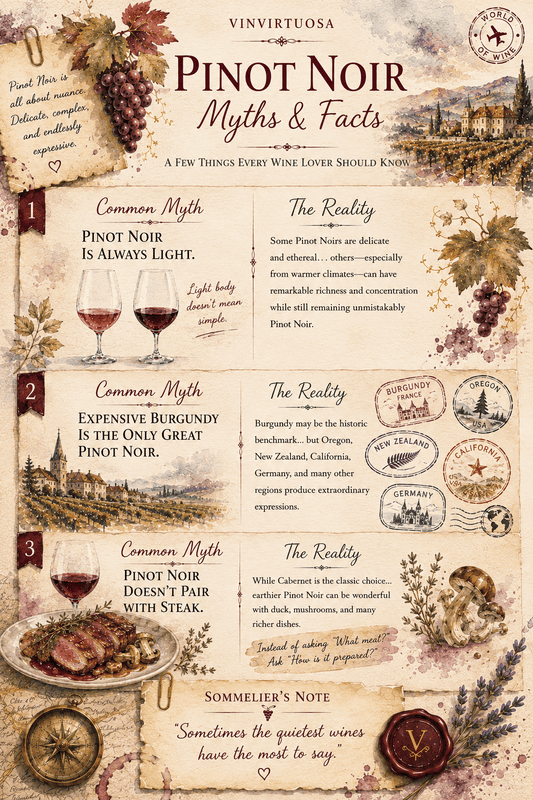
Many red wines excel with a specific category of food. Cabernet Sauvignon often shines alongside steak. Syrah loves grilled meats and bold flavors. Pinot Noir, however, seems to thrive in a much wider range of culinary situations.
Its moderate tannins, bright acidity, and elegant body allow it to complement food rather than dominate it. The wine has enough structure to stand up to richer dishes while remaining delicate enough to avoid overwhelming more subtle flavors.
In many ways, Pinot Noir is one of the most food-friendly red wines in the world.
Poultry
Pinot Noir and poultry are a classic pairing for good reason.
The wine’s bright fruit and refreshing acidity enhance roasted poultry without masking its natural flavors. Whether you’re serving a simple roast chicken on a weeknight or an elaborate holiday turkey dinner, Pinot Noir often feels like it was made for the occasion.
Particularly successful pairings include:
- Roast chicken with herbs
- Duck breast with cherry sauce
- Thanksgiving turkey with traditional sides
- Herb-roasted Cornish hens
Duck deserves special mention. The richness of the meat finds balance in Pinot Noir’s acidity, while the wine’s cherry and berry notes often echo fruit-based sauces commonly served alongside duck.
Pork
Pork occupies a sweet spot between white and red meats, making it a natural partner for Pinot Noir.
The wine’s gentle tannins won’t overpower the meat, while its acidity cuts through richer preparations and complements savory herbs and seasonings.
Excellent pairings include:
- Pork tenderloin
- Herb-roasted pork loin
- Pork chops with mushroom sauce
- Prosciutto-wrapped pork dishes
The combination often feels effortless—one of those pairings where neither the food nor the wine steals the spotlight.
Salmon
If Pinot Noir has a superpower, it may be its ability to pair beautifully with salmon.
Many red wines can clash with fish, creating metallic or unpleasant flavors. Pinot Noir is one of the rare exceptions. Its lighter body and restrained tannins allow it to complement salmon’s richness without overwhelming its delicate texture.
Whether grilled, roasted, cedar-planked, or prepared with a glaze, salmon and Pinot Noir can create one of the most satisfying food-and-wine pairings you’ll encounter.
For wine lovers who generally prefer red wine, Pinot Noir often becomes the answer when seafood is on the menu.
Mushrooms
Few pairings feel as natural as Pinot Noir and mushrooms.
The earthy, savory qualities that develop in many Pinot Noirs seem to mirror the flavors found in mushrooms, creating a harmony that is greater than the sum of its parts.
Particularly delicious combinations include:
- Mushroom risotto
- Wild mushroom pasta
- Truffle-infused dishes
- Mushroom tart
- Mushroom and thyme flatbread
This pairing is especially magical with Burgundy, where earthy notes often emerge naturally in the wine itself.
Soft Cheeses
Pinot Noir’s elegance extends beautifully to the cheese board.
Unlike highly tannic red wines that can clash with creamy cheeses, Pinot Noir typically complements them with ease. Its acidity refreshes the palate while its fruit flavors provide a pleasing contrast to the richness of the cheese.
Try Pinot Noir alongside:
- Brie
- Camembert
- Triple-cream cheeses
- Mild washed-rind cheeses
For an easy entertaining tip, a bottle of Pinot Noir, a wheel of Brie, and a crusty baguette can create a surprisingly memorable wine-and-cheese experience.
Why Pinot Noir Works So Well with Food
The secret lies in balance.
Pinot Noir typically combines moderate alcohol, refreshing acidity, and relatively gentle tannins. That combination allows it to adapt to a wide range of dishes while remaining elegant and refreshing throughout the meal.
It isn’t often the loudest wine at the table—but it is frequently the one that makes dinner better.
Three Pinot Noirs to Try
Ready to explore Pinot Noir for yourself? The good news is that excellent examples can be found at a variety of price points.
These three bottles offer a great introduction to the different styles discussed throughout this article, from Oregon’s cool-climate elegance to California’s expressive fruit and Burgundy’s classic Old World character.
Budget-Friendly Pick
A to Z Wineworks Pinot Noir (Oregon)
Approximate Price: $18–25
If you’re looking for an affordable introduction to Oregon Pinot Noir, A to Z Wineworks is a fantastic place to start.
One of Oregon’s most recognizable producers, A to Z has built a reputation for delivering consistent quality vintage after vintage. The wine typically showcases the characteristics that have made Oregon famous: bright red fruit, lively acidity, subtle spice, and an elegant structure that makes it exceptionally food-friendly.
Expect flavors of cherry, raspberry, and cranberry, supported by just enough earthiness to remind you that Pinot Noir is a grape of nuance rather than power.
For many wine drinkers, this bottle serves as an ideal gateway into the world of cool-climate Pinot Noir.
Mid-Range Pick
Au Bon Climat Pinot Noir (California)
Approximate Price: $30–40
Founded by the late Jim Clendenen, often called “The Mind Behind the Wine,” Au Bon Climat helped establish Santa Barbara County as one of California’s premier regions for Pinot Noir.
The winery’s style has always leaned toward balance and restraint rather than sheer ripeness, making these wines particularly appealing to Burgundy lovers. Bright cherry and raspberry flavors are layered with baking spice, floral notes, and a silky texture that reflects careful winemaking.
What makes Au Bon Climat especially appealing is its ability to deliver classic California fruit while maintaining the elegance and freshness that Pinot Noir lovers seek.
It’s a bottle that consistently overdelivers for the price.
Splurge Pick
Louis Jadot Bourgogne Pinot Noir (Burgundy)
Approximate Price: $35–50
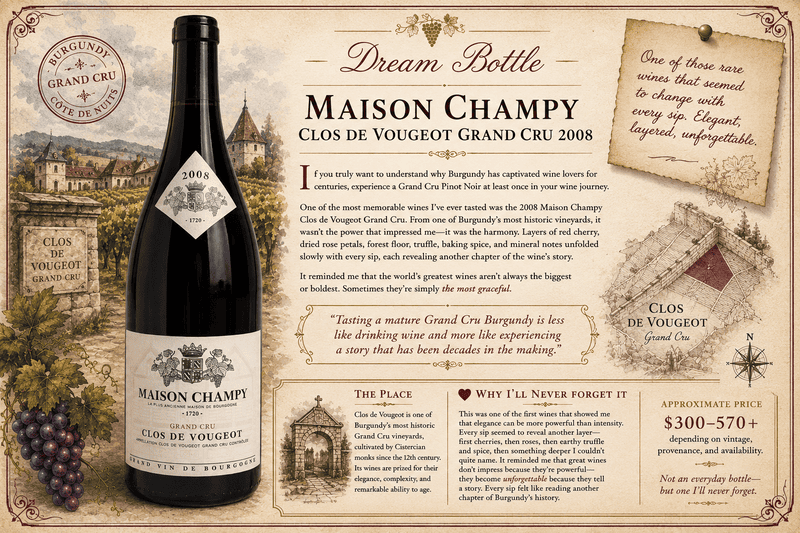
For wine lovers eager to experience Pinot Noir closer to its historical roots, Louis Jadot offers one of the most accessible introductions to Burgundy.
Founded in 1859, the house has become synonymous with traditional Burgundian winemaking and remains one of the region’s most respected producers. While the Bourgogne Pinot Noir represents the entry level of the portfolio, it beautifully captures many of the characteristics that make Burgundy so revered.
Expect bright red cherry fruit alongside earthy undertones, subtle spice, floral aromas, and a mineral-driven finish. Compared to many New World examples, the wine often feels more restrained, emphasizing complexity and finesse over richness.
It is an excellent reminder that Pinot Noir’s greatest strength is not power—but elegance.
A Simple Tasting Challenge
If you really want to understand Pinot Noir, purchase two or three bottles from different regions and taste them side by side.
Compare Oregon’s vibrant freshness, California’s generous fruit, and Burgundy’s earthy complexity. Pay attention to the differences in aroma, texture, acidity, and finish.
The exercise is one of the most enjoyable ways to experience why Pinot Noir has captivated wine lovers for centuries.
How to Start Exploring Pinot Noir
One of the most rewarding things about Pinot Noir is that there is always something new to discover.
Unlike some grape varieties that maintain a relatively consistent personality regardless of where they are grown, Pinot Noir is a chameleon. It absorbs the character of its surroundings and reflects it back in the glass. That means every bottle has the potential to teach you something about a vineyard, a region, a vintage, or a winemaking philosophy.
The best way to understand Pinot Noir isn’t by reading about it—it’s by tasting it.
Compare Regions Side by Side
One of the most enjoyable wine exercises is tasting Pinot Noirs from different regions during the same sitting.
Try comparing:
- Burgundy vs. Oregon
- Oregon vs. California
- Old World vs. New World
As you taste, ask yourself:
- Which wine feels lighter or richer?
- Which wine emphasizes fruit?
- Which wine leans toward earthy or savory flavors?
- Which wine would you most enjoy with dinner?
There are no right or wrong answers. The goal isn’t to identify the “best” wine but to discover the styles that speak to you personally.
Pay Attention to Texture
When people begin exploring wine, they often focus almost entirely on flavors. While flavors matter, texture is often where Pinot Noir truly shines.
Notice how the wine feels on your palate.
Is it silky and smooth?
Light and delicate?
Rich and velvety?
One of Pinot Noir’s most captivating qualities is its ability to create a sense of elegance through texture alone. Many great examples seem to glide across the palate rather than announce themselves with power.
Fruit vs. Earth
Pinot Noir provides a wonderful opportunity to train your palate because it often balances fruit and savory characteristics.
As you taste, consider where the wine falls on the spectrum.
Does it remind you of:
- Fresh cherries
- Strawberries
- Raspberries
- Cranberries
Or do you notice more earthy notes such as:
- Mushrooms
- Forest floor
- Dried leaves
- Herbs
- Minerals
Many wine lovers discover that their preferences evolve over time. The fruit-forward California Pinot Noir they loved initially may eventually lead them toward the earthy complexity of Burgundy—or vice versa.
That’s part of the fun.
Keep Tasting Notes
You don’t need an elaborate wine journal or a sommelier certification to benefit from taking notes.
Simply record:
- The producer
- The region
- The vintage
- A few aromas or flavors you noticed
- Whether you would buy it again
Over time, patterns begin to emerge. You may discover that you consistently prefer Oregon Pinot Noir over California examples, or that certain producers align particularly well with your palate.
Wine appreciation is ultimately a journey of self-discovery, and Pinot Noir is one of the best guides you could ask for.
Conclusion: A Grape Worth Falling For
Few grapes inspire the devotion that Pinot Noir does.
Perhaps it’s because the grape is so difficult to grow. Perhaps it’s because every bottle tells a different story. Or perhaps it’s because Pinot Noir manages to achieve something that many wines strive for but few accomplish: it combines elegance, complexity, and emotion in equal measure.
From the historic vineyards of Burgundy to the rolling hills of Oregon and the cool coastal regions of California, Pinot Noir has captivated wine lovers for centuries. It reflects its environment with remarkable honesty, rewards patience and curiosity, and continually reveals new dimensions to those willing to explore it.
It isn’t always the easiest wine to understand.
It certainly isn’t the easiest grape to grow.
But for many wine enthusiasts, those challenges are exactly what make Pinot Noir so compelling.
Every bottle represents a unique intersection of climate, soil, vineyard, vintage, and human craftsmanship. Every glass offers an opportunity to discover something new.
Whether you’re enjoying a simple weeknight bottle with roast chicken, comparing wines from different regions with friends, or splurging on a special Burgundy to celebrate a milestone, Pinot Noir has a way of creating memorable experiences.
And perhaps that’s the secret behind its enduring appeal.
Whether you’re discovering your first bottle or continuing a lifelong love affair, Pinot Noir has a remarkable way of leaving a lasting impression—one glass at a time.