
Introduction
Have you ever stood in front of a wine shelf wondering why one bottle of Prosecco costs $12 while another costs $35? Or perhaps you’ve picked up a bottle labeled “Extra Dry,” assuming it would be the driest option available, only to discover it tastes slightly sweet.
If so, you’re not alone.
Prosecco has become one of the world’s most popular sparkling wines, appearing everywhere from brunch tables and wedding receptions to casual weeknight celebrations. Its lively bubbles, approachable flavors, and affordable price point have made it a favorite among wine lovers and casual drinkers alike. Yet despite its popularity, many people know surprisingly little about what Prosecco actually is.
Is it a grape or a place? What makes it different from Champagne? Why do some bottles carry a DOC label while others say DOCG? And what exactly do terms like Brut, Extra Dry, and Dry mean?
The good news is that understanding Prosecco doesn’t require a sommelier certification. A few simple facts can help you navigate wine shop shelves with confidence, choose bottles that match your taste preferences, and discover why some Proseccos are far more complex than their party-wine reputation suggests.
Whether you’re searching for the perfect brunch companion, stocking up for a celebration, or simply curious about one of Italy’s most famous wines, this guide will walk you through everything you need to know.
Let’s uncork the mystery behind Italy’s favorite sparkling wine.
What Is Prosecco?
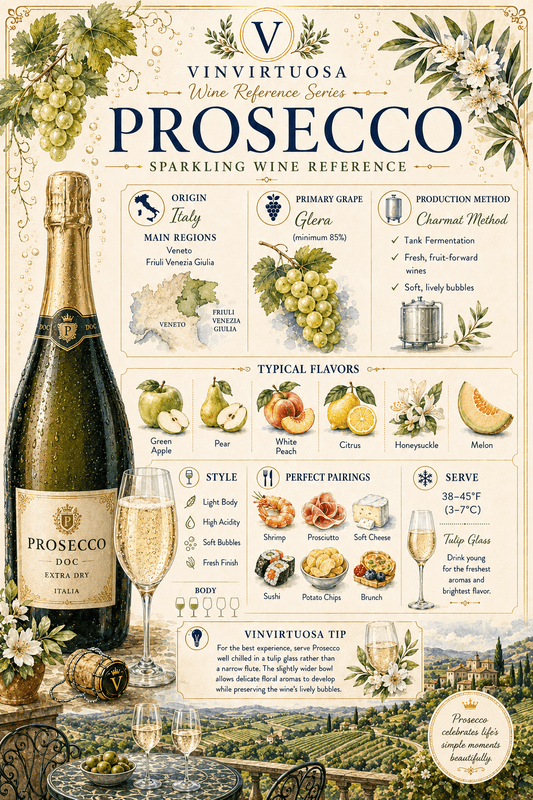
At its core, Prosecco is a sparkling wine produced in northeastern Italy, primarily in the regions of Veneto and Friuli Venezia Giulia. Known for its fresh fruit flavors, delicate bubbles, and easy-drinking style, Prosecco has become synonymous with celebration while remaining one of the most accessible sparkling wines in the world.
Unlike Champagne, which is made from grapes such as Chardonnay and Pinot Noir, Prosecco is produced primarily from the Glera grape. By law, Glera must make up at least 85% of the blend, although small amounts of other approved grape varieties may also be included.
The result is a wine that tends to emphasize freshness, fruit, and vibrant aromatics rather than the toasty, yeasty characteristics often associated with traditional-method sparkling wines. While every producer has their own style, most Proseccos showcase a bright, inviting personality that makes them incredibly versatile at the table.
Pour a glass and you’ll often encounter aromas and flavors such as:
- Crisp green apple
- Juicy pear
- White peach
- Honeysuckle
- Citrus zest
- Honeydew melon
These fruit-forward flavors are one reason Prosecco appeals to such a wide audience. The wine is refreshing without being overly serious, elegant without being intimidating, and festive without requiring a special occasion.
For many wine drinkers, Prosecco serves as an introduction to the world of sparkling wine. Yet the category offers far more depth than many people realize. Behind those cheerful bubbles lies a rich history, distinctive production methods, and a fascinating system of quality classifications that can dramatically influence what’s in your glass.

Meet the Glera Grape
Every great wine begins in the vineyard, and for Prosecco, that story starts with a grape called Glera.
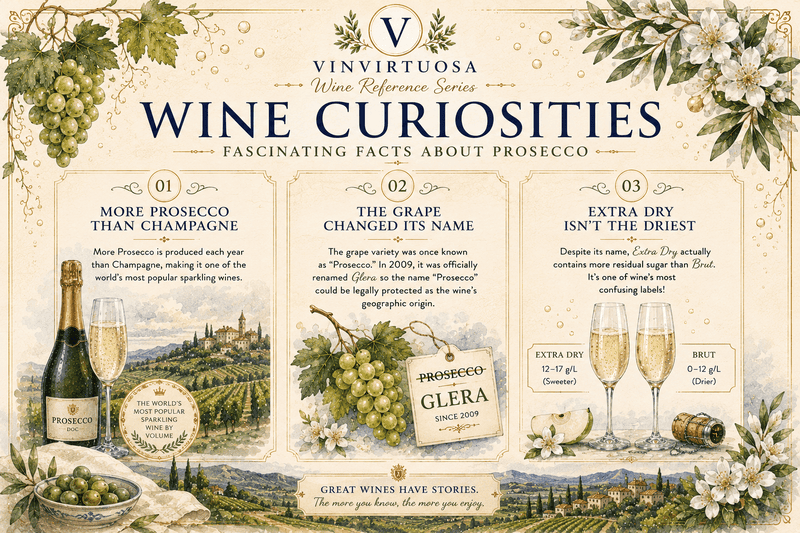
Today, wine lovers recognize Glera as the primary grape behind Prosecco’s fresh, fruity personality, but that wasn’t always its name. In fact, until relatively recently, the grape itself was commonly referred to as “Prosecco.” This created a problem as the wine’s popularity exploded around the world. Producers wanted to protect the identity of Prosecco as a specific wine tied to a specific place, much like Champagne in France.
To strengthen those protections, the grape was officially renamed Glera in 2009, allowing “Prosecco” to refer exclusively to wines produced within the designated regions of northeastern Italy. This helped safeguard the authenticity and reputation of one of Italy’s most successful wine exports.
Today, regulations require that Glera comprise at least 85% of any wine labeled Prosecco, though small amounts of other approved grape varieties may be included in the blend. Despite its relatively simple reputation, Glera is remarkably well suited to sparkling wine production and plays a major role in shaping the style that millions of people enjoy around the world.
So what makes Glera so special?
Unlike some grape varieties that produce powerful, intensely flavored wines, Glera is naturally expressive in a lighter, more delicate way. It tends to produce wines with bright acidity, moderate alcohol levels, and vibrant fruit aromas that feel refreshing rather than heavy. These qualities make it an ideal candidate for sparkling wine, where freshness and drinkability are often the goal.
In the glass, Glera commonly delivers aromas and flavors of:
- Green apple
- Ripe pear
- White peach
- Citrus blossom
- Honeysuckle
- Melon
Its naturally aromatic character means that even young wines can feel lively and expressive, while its crisp acidity provides the refreshing backbone that keeps each sip bright and energetic.
Perhaps most importantly, Glera creates wines that feel approachable. You don’t need years of wine knowledge to appreciate a well-made Prosecco. The grape’s fruit-forward profile and easygoing nature are part of what has made Prosecco one of the world’s most beloved sparkling wines.
“The secret to Prosecco’s easy-drinking charm starts in the vineyard with the Glera grape.”
Where Prosecco Comes From
When most people think about Prosecco, they focus on the bubbles. But understanding where Prosecco comes from can be just as important as understanding how it’s made.
All authentic Prosecco originates in northeastern Italy, primarily within the regions of Veneto and Friuli Venezia Giulia. This picturesque corner of the country is known for rolling hills, historic villages, and a long tradition of winemaking that stretches back centuries.
Not all Prosecco, however, comes from the same place.
As with many wine regions around the world, geography plays a significant role in quality, style, and price. While you can certainly find excellent bottles across the category, understanding the different production zones can help you shop more confidently and identify wines that may offer greater complexity.
Prosecco DOC
The majority of Prosecco sold around the world falls under the Prosecco DOC designation.
Established in 2009, the DOC covers a broad area spanning much of Veneto and Friuli Venezia Giulia. Because of its larger size and higher production volume, this is the designation you’ll encounter most often on retail shelves and restaurant wine lists.
Many DOC wines are designed to be fresh, approachable, and affordable. They emphasize the bright fruit character that has made Prosecco so popular and are ideal for everyday enjoyment, brunch cocktails, celebrations, and casual entertaining.
For many consumers, a DOC bottle serves as their first introduction to Prosecco—and often a very enjoyable one.
Conegliano Valdobbiadene Prosecco Superiore DOCG
If Prosecco DOC is the broad introduction, Conegliano Valdobbiadene Prosecco Superiore DOCG represents the historic heart of the region.
Located in a series of steep hillside vineyards between the towns of Conegliano and Valdobbiadene, this area has long been considered one of Italy’s premier sparkling wine regions. The dramatic slopes often require hand harvesting, making vineyard work significantly more challenging than in flatter areas.
The reward is often greater concentration, complexity, and character in the finished wines.
While still unmistakably Prosecco, DOCG wines from this region frequently display:
- More pronounced minerality
- Greater depth of flavor
- Enhanced aromatic complexity
- Increased structure and persistence
For wine lovers looking to explore Prosecco beyond the everyday bottle, Conegliano Valdobbiadene is often the perfect next step.
Asolo Prosecco DOCG
Smaller and less widely known than Conegliano Valdobbiadene, Asolo Prosecco DOCG is one of Italy’s hidden sparkling wine treasures.
Centered around the historic hill town of Asolo, this DOCG zone produces wines that many enthusiasts consider among the best values in Italian sparkling wine.
Because the region receives less international attention, consumers can often find bottles with DOCG-level quality at surprisingly reasonable prices. Many Asolo Proseccos showcase exceptional freshness, elegance, and balance while offering a slightly different expression of the Glera grape.
If you’re browsing a wine shop and spot an Asolo DOCG bottle, it’s often worth a closer look.
Why These Designations Matter
Think of Prosecco’s classifications as a roadmap.
- DOC offers reliable, approachable sparkling wine for everyday enjoyment.
- Conegliano Valdobbiadene DOCG highlights the historic hillside vineyards that many consider the pinnacle of Prosecco production.
- Asolo DOCG delivers outstanding quality and value from a smaller, often overlooked corner of the region.
Understanding these labels won’t guarantee you’ll love every bottle, but it will give you valuable clues about where the wine comes from and what style you can expect in your glass.
The Charmat Method: Why Prosecco Tastes Different
If you’ve ever tasted Prosecco and Champagne side by side, you’ve probably noticed that they feel quite different in the glass.
Champagne often displays aromas of brioche, toast, roasted nuts, and pastry, while Prosecco tends to emphasize fresh fruit, flowers, and youthful vibrancy. The reason isn’t simply the grapes or the region—it’s also the way the bubbles are created.
The key lies in a production technique known as the Charmat Method, sometimes called the Tank Method.
To understand why this matters, let’s briefly look at how sparkling wine is made.
All sparkling wines begin as still wine. The bubbles are created during a second fermentation, when yeast consumes sugar and produces carbon dioxide. Because the carbon dioxide is trapped, it dissolves into the wine and creates the bubbles we see in the glass.
Where Prosecco and Champagne diverge is where that second fermentation takes place.
For Champagne, the second fermentation occurs inside each individual bottle. The wine then spends months—or often years—aging on the yeast, developing the rich, complex flavors that Champagne is famous for.
Prosecco takes a different approach.
Instead of fermenting in individual bottles, the second fermentation occurs in large stainless steel pressurized tanks. Once the desired level of sparkle is achieved, the wine is filtered and bottled under pressure to preserve its freshness.
This method may sound simpler, but it’s perfectly suited to the personality of the Glera grape.
Rather than encouraging toasty, yeasty flavors, the Charmat Method preserves the grape’s naturally fresh and aromatic character. The result is a wine that feels bright, lively, and fruit-driven.
Why the Charmat Method Works So Well
The Charmat Method offers several important advantages:
Preserves Fresh Fruit Flavors
Glera’s greatest strength is its vibrant fruit character. Tank fermentation helps maintain aromas of pear, apple, peach, melon, and citrus rather than masking them with extended yeast influence.
Produces Softer, Friendlier Bubbles
Many wine lovers notice that Prosecco’s bubbles feel gentler and less intense than those found in traditional-method sparkling wines. This softer mousse contributes to the wine’s easy-drinking appeal.
Keeps Costs More Accessible
Because producers can ferment larger volumes of wine at once, the process is generally more efficient. This helps explain why consumers can often find excellent bottles of Prosecco at a fraction of the cost of Champagne.
Creates a Youthful, Vibrant Style
Most Prosecco is intended to be enjoyed young, when its fruit flavors are at their most expressive. The Charmat Method helps capture that freshness from vineyard to glass.
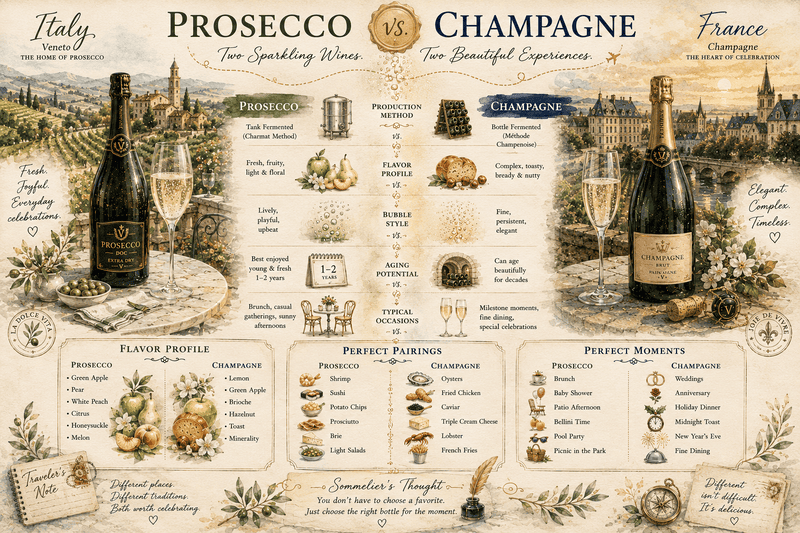
The important thing to remember is that these wines aren’t competing with one another—they simply offer different experiences.
VinVirtuosa Tip
🍷 Neither method is better—just different. Think fresh fruit versus fresh-baked brioche.
One celebrates freshness and vibrancy. The other emphasizes complexity and age-worthy character. The best choice simply depends on what you’re in the mood to drink.
Decoding Prosecco Sweetness Levels
If there’s one thing that confuses wine drinkers more than any other aspect of Prosecco, it’s the sweetness scale.
The culprit?
A label that says “Extra Dry.”
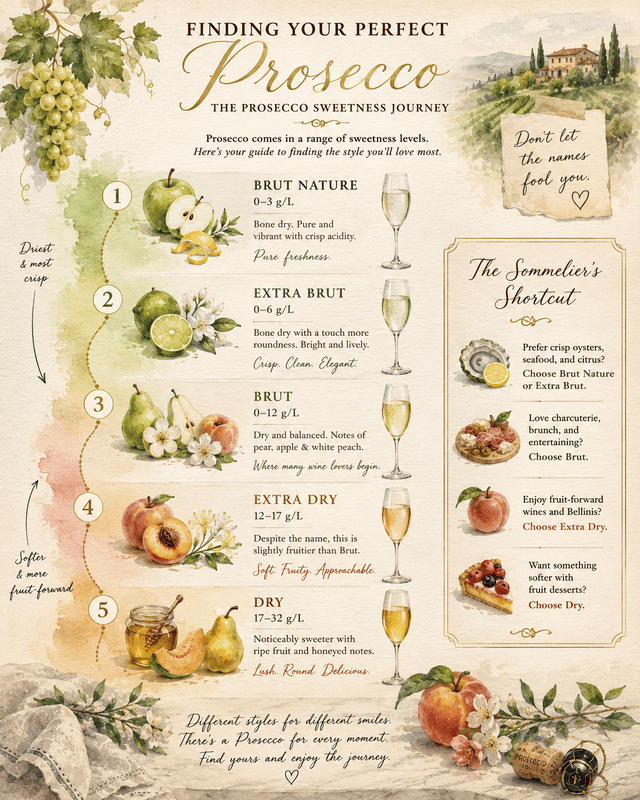
Most consumers naturally assume that Extra Dry must be drier than Brut. After all, that’s how the words sound. Yet in the world of sparkling wine, the opposite is true.
Yes, really.
A bottle labeled Brut is actually drier than a bottle labeled Extra Dry.
This is one of the most common misconceptions in wine and one of the easiest ways for shoppers to accidentally purchase a bottle that doesn’t match their preferences.
Understanding the Sweetness Scale
These terms refer to the amount of residual sugar left in the wine after fermentation.
While the differences may seem subtle, they can significantly influence how a wine tastes.
For many consumers, Brut and Extra Dry are the two styles they’ll encounter most frequently on store shelves.
What Does That Mean in the Glass?
Brut Nature & Extra Brut
These styles contain very little residual sugar.
Expect:
- Crisp acidity
- Lean structure
- Refreshing finish
- Minimal sweetness
These wines often appeal to fans of dry white wines such as Sauvignon Blanc, Albariño, or dry Riesling.
Brut
Brut strikes a balance between freshness and approachability.
Most Brut Proseccos still showcase generous fruit flavors, but the overall impression remains dry and refreshing.
This style has become increasingly popular as consumers gravitate toward drier sparkling wines.
Extra Dry
Here’s where things get confusing.
Despite its name, Extra Dry contains more residual sugar than Brut.
That doesn’t necessarily make it sweet in the dessert-wine sense. Instead, many Extra Dry Proseccos show a subtle touch of sweetness that enhances their fruit-forward character.
You might notice:
- Riper pear notes
- Softer acidity
- A slightly rounder mouthfeel
- Greater perceived fruitiness
Historically, Extra Dry was actually the traditional style of Prosecco and remains enormously popular today.
Dry
Dry Prosecco contains even more residual sugar and presents a noticeably sweeter profile. While less common, these wines can pair beautifully with certain desserts, spicy dishes, and fruit-based appetizers.
Why It Matters
Understanding these terms can make wine shopping much easier.
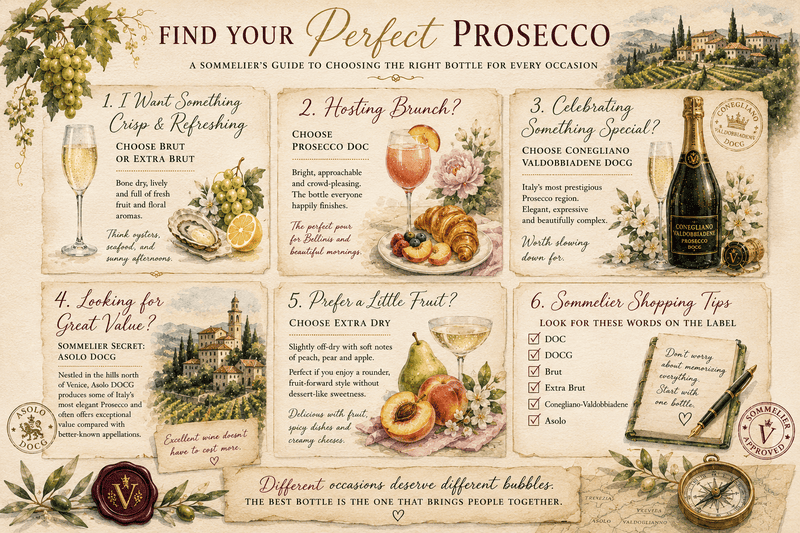
If you prefer crisp, refreshing wines with little perceived sweetness, look for:
✔ Brut Nature
✔ Extra Brut
✔ Brut
If you enjoy a touch of softness and fruit sweetness, consider:
✔ Extra Dry
Neither style is inherently better. They’re simply designed for different palates and occasions.
A Quick Shopping Trick
When standing in front of a wine shelf, don’t focus solely on the word “Dry.”
Instead, look for the term Brut if you’re seeking the driest style that is widely available.
It may be the single most useful Prosecco buying tip you’ll learn.
“The biggest Prosecco secret: Extra Dry is actually sweeter than Brut.”
How to Serve Prosecco
You’ve selected the perfect bottle, chilled it properly, and are ready to pop the cork. Now comes an often-overlooked question:
Are you serving it in a way that allows it to shine?
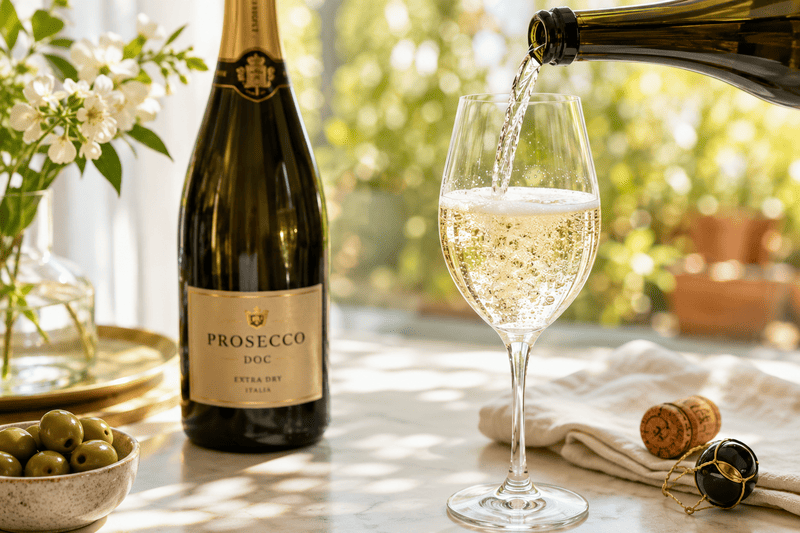
The good news is that Prosecco is one of the most forgiving sparkling wines to serve. Unlike some wines that require decanting, lengthy aging, or specialized handling, Prosecco is all about freshness, spontaneity, and enjoyment. A few simple serving tips can help ensure you’re getting the most from every glass.
Serve It Cold, But Not Ice Cold
Temperature has a significant impact on how a wine tastes.
If Prosecco is served too warm, the bubbles can feel aggressive and the wine may seem overly fruity or alcoholic. If it’s served too cold, many of its delicate aromas become muted and difficult to appreciate.
The sweet spot is:
🥂 38–45°F (3–7°C)
At this temperature range, Prosecco’s refreshing acidity, lively bubbles, and bright fruit flavors remain balanced and expressive.
If your bottle has been sitting at room temperature, place it in the refrigerator for several hours before serving. Need to chill it quickly? An ice bucket filled with ice and water can bring the temperature down in about 20 to 30 minutes.
Choosing the Right Glass
The glass you use can influence how you experience both the bubbles and the aromas.
The Classic Flute
The flute has long been associated with sparkling wine.
Its tall, narrow shape helps preserve carbonation and creates that beautiful stream of rising bubbles that many people associate with celebration.
While visually elegant, flutes aren’t always ideal for capturing aromas.
The Tulip Glass
Many wine professionals consider the tulip-shaped sparkling wine glass the best all-around choice.
Its slightly wider bowl allows aromas to gather and develop, while the narrower opening helps retain bubbles and direct those aromas toward the nose.
The result is a glass that offers the best of both worlds:
- Excellent aromatic expression
- Good bubble retention
- Enhanced tasting experience
If you enjoy paying attention to a wine’s flavors and aromas, a tulip glass is often the ideal choice.
The White Wine Glass
Surprisingly, a standard white wine glass can also work beautifully with Prosecco.
A slightly larger bowl gives the wine room to breathe and allows delicate floral and fruit notes to emerge more clearly.
This can be particularly enjoyable when serving higher-quality DOCG Proseccos, where aromatic complexity plays a larger role in the experience.
Drink It While It’s Young
Unlike many fine Champagnes, most Prosecco is not designed for long-term aging.
Its greatest strengths are freshness, fruit, and vibrant energy. Those qualities are most expressive when the wine is young.
As a general rule:
✔ Enjoy within 1–2 years of release
✔ Store unopened bottles in a cool, dark place
✔ Consume shortly after purchase whenever possible
While some premium examples can evolve for a few years, most Prosecco is crafted with immediate enjoyment in mind.
Think of it as a wine that celebrates the moment rather than one that waits for a distant occasion.
What Foods Pair Best with Prosecco?
One of the reasons Prosecco has become such a beloved entertaining wine is its remarkable versatility at the table.
Its bright acidity refreshes the palate. Its fruit-forward flavors complement a wide variety of foods. And its bubbles add a sense of celebration to almost any meal.
In many ways, Prosecco is one of the easiest wines in the world to pair with food.
Whether you’re hosting brunch, preparing appetizers for guests, or simply opening a bottle on a Friday evening, there’s a good chance Prosecco will fit right in.
Brunch’s Best Friend
If sparkling wine had an official brunch ambassador, Prosecco would be a leading candidate.
Its fresh fruit flavors and lively acidity pair beautifully with many of the dishes that dominate brunch menus.
Try it with:
🍳 Eggs Benedict
🥧 Quiche
🍓 Fresh seasonal fruit
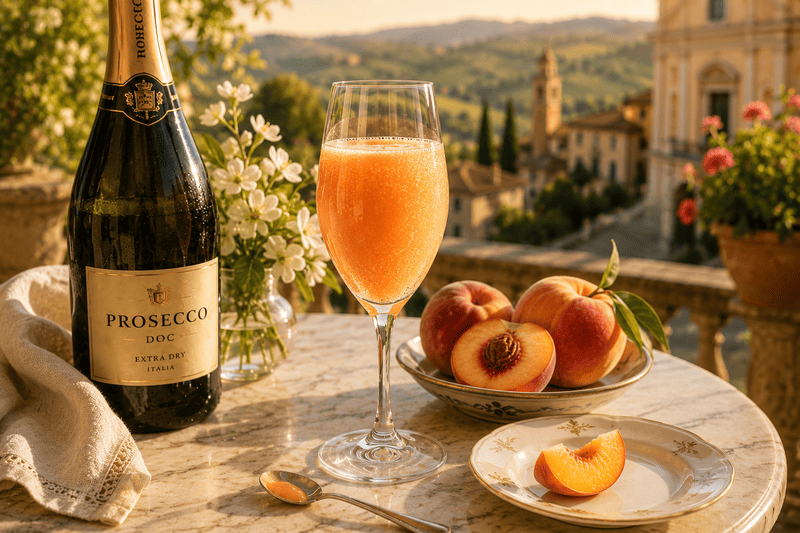
🥂 Mimosas and Bellinis
The wine’s brightness helps cut through rich egg dishes while complementing fruit-based flavors and pastries.
It’s no coincidence that so many brunch celebrations begin with a bottle of Prosecco.
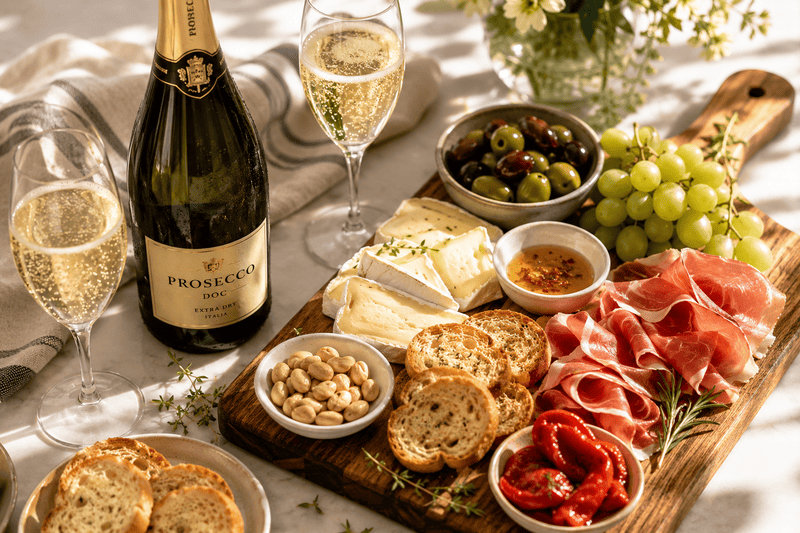
Perfect for Appetizers
Prosecco truly shines when served before a meal.
Its refreshing character awakens the palate without overwhelming delicate flavors, making it a natural companion for appetizer spreads.
Excellent pairings include:
- Prosciutto
- Mild cheeses
- Crostini
- Charcuterie boards
- Marinated olives
- Light vegetable antipasti
The wine’s fruit and acidity provide balance while its bubbles keep each bite feeling fresh and inviting.
A Natural Match for Seafood
Few pairings feel as effortless as Prosecco and seafood.
The wine’s citrusy freshness and delicate body complement ocean flavors without overpowering them.
Consider pairing Prosecco with:
🦐 Shrimp cocktail
🦀 Crab cakes
🍣 Sushi
🦑 Fried calamari
The bubbles also act as a palate cleanser, helping each bite taste as vibrant as the first.
The Surprising Power of Salty Foods
Here’s a pairing secret that many wine lovers discover only after years of tasting:
Prosecco loves salty snacks.
In fact, salty foods may be one of the wine’s greatest superpowers.
The combination of crisp acidity, fruit-forward flavors, and sparkling bubbles creates a beautiful contrast with salty, crunchy foods.
Don’t be afraid to serve Prosecco alongside:
🥔 Potato chips
🍿 Popcorn
🍗 Fried chicken
These casual pairings often surprise people because they work so incredibly well.
Sometimes the most memorable wine pairings aren’t elaborate at all—they’re simply delicious.
Why Prosecco Works So Well at Parties
When planning a gathering, many hosts worry about finding a wine that appeals to everyone.
Prosecco solves that problem better than almost any other wine style.
Its approachable flavors, moderate alcohol, food-friendly acidity, and celebratory bubbles make it a crowd-pleaser across a wide range of tastes and cuisines.
Whether guests are nibbling on charcuterie, enjoying seafood appetizers, or reaching for another handful of potato chips, Prosecco can comfortably accompany the entire experience.
Entertaining Tip
🥂 A bottle of Prosecco can carry an entire appetizer spread from start to finish.
Few wines offer that kind of flexibility, which is one reason Prosecco remains a favorite choice for celebrations both large and small.
“Prosecco doesn’t need a special occasion—but it has a way of making any occasion feel special.”
Three Proseccos to Try
Now that you understand what Prosecco is, where it comes from, and how sweetness levels work, the next question is obvious:
Which bottle should you buy?
The good news is that Prosecco offers excellent value across a wide range of price points. Whether you’re looking for an affordable bottle for brunch, a versatile option for entertaining, or something a little more special for a celebration, there’s a Prosecco that fits the occasion.
Here are three excellent examples to help guide your next purchase.
Budget-Friendly Pick
La Marca Prosecco
Approximate Price: $15–18
If you’ve spent any time browsing wine shops or grocery store wine aisles, you’ve likely seen La Marca’s distinctive pale blue label. Its widespread availability and approachable style have helped make it one of America’s most recognizable Prosecco brands.
But popularity alone isn’t what earns it a place on this list.
La Marca consistently delivers exactly what many consumers are seeking from Prosecco: fresh fruit flavors, lively bubbles, and an easy-drinking personality that works for almost any occasion.
Expect notes of:
- Green apple
- Citrus
- Pear
- White flowers
Its clean, approachable profile makes it an excellent introduction to the category and a dependable choice for everything from brunch cocktails to casual gatherings.
Best For:
- Mimosas
- Bellinis
- Brunches
- Large gatherings
- First-time Prosecco drinkers
Mid-Range Pick
Ruggeri Argeo Prosecco Brut
Approximate Price: $18–25
For wine lovers ready to explore beyond entry-level Prosecco, Ruggeri Argeo is a fantastic next step.
Produced by one of the region’s respected houses, this Brut bottling offers a wonderful balance between freshness, elegance, and value. It showcases the vibrant fruit character that makes Prosecco so appealing while adding a touch more refinement and structure.
Look for flavors of:
- Crisp pear
- White peach
- Green apple
- Citrus zest
The Brut designation also provides a drier profile that many modern wine drinkers prefer.
What makes this bottle particularly appealing is its versatility. It’s sophisticated enough to enjoy on its own yet approachable enough to pair with a wide variety of foods.
Best For:
- Dinner parties
- Seafood pairings
- Aperitivo hour
- Wine enthusiasts seeking value
Premium Pick
Bisol Crede Valdobbiadene Prosecco Superiore DOCG
Approximate Price: $25–40
When people say that Prosecco can be serious wine, bottles like Bisol Crede are exactly what they mean.
Produced within the prestigious Conegliano Valdobbiadene DOCG zone, this wine comes from hillside vineyards that many consider the heartland of premium Prosecco production.
While still unmistakably fresh and fruit-driven, Bisol Crede offers an added layer of complexity that separates it from many everyday examples.
Expect:
- White peach
- Golden apple
- Citrus blossom
- Floral notes
- Subtle minerality
The wine displays greater depth, texture, and persistence on the palate, making it a wonderful bottle to enjoy slowly and thoughtfully.
It’s the kind of Prosecco that surprises people who assume sparkling wine from Italy is simply a casual alternative to Champagne.
Best For:
- Celebrations
- Gifts
- Special occasions
- Wine lovers looking to explore premium Prosecco
A Quick Buying Tip
If you’re standing in front of a wine shelf and aren’t sure what to choose, look beyond the price tag.
Check for:
✔ Brut or Extra Brut if you prefer drier wines
✔ DOCG on the label if you want to explore premium regions
✔ Conegliano Valdobbiadene or Asolo for higher-quality examples
A little label knowledge can go a long way.
Common Prosecco Myths
Despite its popularity, Prosecco remains one of the most misunderstood wine categories in the world.
Let’s separate fact from fiction.
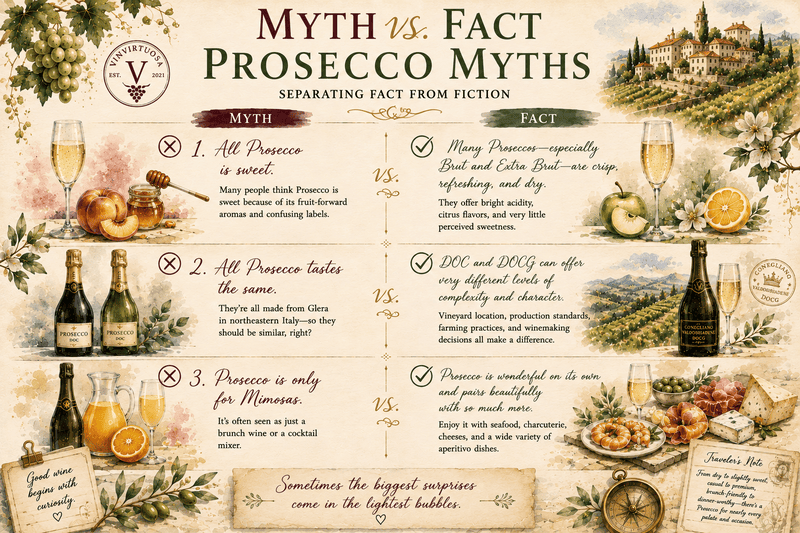
Myth #1: All Prosecco Is Sweet
This may be the most common misconception of all.
Many people associate Prosecco with sweetness because of its fruit-forward aromas and the confusing terminology found on sparkling wine labels.
The reality is that many Proseccos are quite dry.
Brut and Extra Brut bottlings often display crisp acidity, refreshing citrus flavors, and very little perceived sweetness. While some styles contain more residual sugar than others, Prosecco spans a broad range of sweetness levels.
The key is understanding the label.
Reality: Many excellent Proseccos are dry, crisp, and refreshingly balanced.
Myth #2: Cheap Prosecco and Premium Prosecco Taste the Same
At first glance, one bottle may seem similar to another.
After all, they’re all made primarily from Glera and produced in northeastern Italy.
However, vineyard location, production standards, farming practices, and winemaking decisions can dramatically influence quality and character.
A basic DOC Prosecco may emphasize straightforward fruit and freshness, while a premium DOCG bottling can showcase greater concentration, complexity, minerality, and length.
This doesn’t mean expensive always equals better.
It simply means there are meaningful differences worth exploring.
Reality: Vineyard sites and production quality matter—and they can significantly affect what’s in your glass.
Myth #3: Prosecco Is Only for Mimosas
There’s no denying that Prosecco makes an excellent Mimosa.
Its affordability and fruit-forward style make it a natural choice for brunch cocktails.
But limiting Prosecco to Mimosa duty overlooks the tremendous diversity within the category.
Many DOCG examples offer enough complexity and character to stand proudly on their own. These wines can be paired with seafood, charcuterie, cheeses, and a wide variety of appetizers without needing orange juice anywhere nearby.
The best Proseccos deserve to be appreciated as wines first and cocktail ingredients second.
Reality: While Prosecco is wonderful in Mimosas, many examples are equally rewarding enjoyed on their own.
The Bottom Line
The more you learn about Prosecco, the more you realize it’s far more diverse than its reputation suggests.
From dry to slightly sweet, casual to premium, brunch-friendly to dinner-worthy, Prosecco offers something for nearly every palate and occasion.
Final Thoughts
It’s easy to understand why Prosecco has become one of the world’s favorite sparkling wines.
It combines refreshing acidity, lively bubbles, approachable flavors, and remarkable value in a way few wine categories can match. Whether you’re raising a glass at a wedding, hosting a brunch, relaxing on a summer patio, or simply celebrating the end of a long week, Prosecco brings an effortless sense of joy to the occasion.
Along the way, we’ve learned that Prosecco is much more than a simple sparkling wine. Behind every bottle is the Glera grape, the rolling hills of northeastern Italy, the Charmat Method that preserves fresh fruit character, and a system of classifications that can help guide your buying decisions.
Understanding a few key concepts—such as the difference between DOC and DOCG, the meaning of Brut versus Extra Dry, and the role geography plays in quality—can transform the way you shop for and enjoy Prosecco.
Most importantly, it can help you choose bottles that match your personal taste and occasion.
Whether you’re planning brunch, hosting friends, or simply looking for an affordable sparkling wine, Prosecco offers remarkable versatility and value. Understanding the Glera grape, the Charmat Method, sweetness levels, and quality classifications can help you choose a bottle with confidence—and enjoy every bubble along the way.
So the next time you’re standing in front of a wine shelf, don’t just reach for the nearest bottle.
Take a closer look at the label, explore a new producer, and discover for yourself why Italy’s favorite sparkling wine has captured the hearts of wine lovers around the world.
🥂 Salute!