Introduction
Every wine lover has a grape they feel deserves more attention. For me, Chenin Blanc is near the top of that list.
While Chardonnay and Sauvignon Blanc often steal the spotlight, Chenin Blanc quietly produces some of the most versatile, food-friendly, and value-driven wines in the world. Whether you’re looking for a crisp white to enjoy on a warm summer evening, a sparkling wine for a celebration, or even a luscious dessert wine to pair with a special treat, Chenin Blanc has a style to suit nearly every occasion.
Despite its versatility, Chenin Blanc often flies under the radar. That’s a shame because this remarkable grape offers incredible quality, complexity, and value for wine lovers willing to explore beyond the familiar.
In honor of Drink Chenin Blanc Day, let’s take a closer look at why this underrated grape deserves a place in your glass.
What Is Chenin Blanc?
If Chenin Blanc has a superpower, it’s versatility.
Many grape varieties are known for doing one thing exceptionally well. Sauvignon Blanc is celebrated for its bright citrus and herbaceous character. Chardonnay is prized for its ability to express both rich, oaked styles and crisp, unoaked versions. Riesling is famous for producing wines that range from bone dry to intensely sweet.
Chenin Blanc, however, seems to do everything.
In fact, few grapes in the wine world can successfully produce such a remarkable range of styles while maintaining quality and character. From refreshing dry wines and delicate sparkling bottlings to luscious dessert wines capable of aging for decades, Chenin Blanc consistently proves that it is one of wine’s most adaptable grapes.
Dry Chenin Blanc
For many wine lovers, dry Chenin Blanc is where the journey begins.
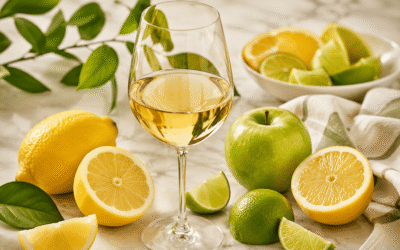
These wines are often crisp, refreshing, and bursting with energy. Expect flavors of green apple, pear, lemon, and quince, often accompanied by floral notes and a distinctive mineral character. In cooler regions such as France’s Loire Valley, dry Chenin Blanc can display a fascinating combination of fruit and minerality that makes each sip feel both vibrant and elegant.
One of the reasons dry Chenin Blanc is so enjoyable is its naturally high acidity. The acidity gives the wine a refreshing lift, making it perfect for warm-weather sipping while also allowing it to pair beautifully with a wide variety of foods. Seafood, poultry, salads, and creamy cheeses all find a willing partner in a well-made dry Chenin Blanc.
Many wine enthusiasts who enjoy Sauvignon Blanc often discover that Chenin Blanc offers a similar freshness, but with a bit more texture and complexity.
Off-Dry Chenin Blanc
One of Chenin Blanc’s most charming expressions is found in off-dry styles.
These wines contain a touch of residual sugar, creating a subtle sweetness that enhances the fruit flavors without making the wine taste sugary. Notes of ripe pear, honeyed apple, peach, and citrus become more pronounced, while the grape’s naturally bright acidity keeps everything balanced and refreshing.
This balance is what makes off-dry Chenin Blanc so appealing. The sweetness softens the wine’s edges, but the acidity prevents it from feeling heavy or cloying. The result is a wine that feels both rich and lively at the same time.
Off-dry Chenin Blanc is particularly versatile at the dinner table. It can complement spicy dishes, Asian cuisine, glazed pork, and dishes with a touch of sweetness that often challenge other wines. For those who find bone-dry wines a little austere but don’t want a fully sweet wine, off-dry Chenin Blanc offers a delicious middle ground.
Sweet and Dessert Styles
If you’ve only experienced dry Chenin Blanc, you may be surprised to learn that some of the world’s most age-worthy sweet wines are made from this grape.
In regions such as Vouvray and Coteaux du Layon in the Loire Valley, Chenin Blanc can produce extraordinary dessert wines with layers of honey, apricot, peach, tropical fruit, marmalade, and floral notes. These wines possess remarkable concentration and depth while retaining the acidity necessary to keep them fresh and vibrant.
The combination of sweetness and acidity is what makes these wines so special. Rather than feeling syrupy, they maintain a beautiful sense of balance that allows the flavors to unfold gracefully on the palate.
Many of these wines can age for decades, developing additional notes of nuts, caramel, dried fruits, and spice over time. For collectors and wine enthusiasts, aged sweet Chenin Blanc can be one of the wine world’s hidden treasures.
Sparkling Chenin Blanc
As if producing exceptional still wines in multiple styles weren’t enough, Chenin Blanc also excels as a sparkling wine grape.
In France’s Loire Valley, Chenin Blanc is frequently used in Crémant de Loire and other traditional method sparkling wines. These wines often showcase bright citrus flavors, crisp apple notes, delicate floral aromas, and a refreshing mineral backbone.
South Africa also produces outstanding sparkling examples, many crafted using the same traditional method employed in Champagne. The grape’s naturally high acidity provides the structure and freshness needed to create lively, elegant sparkling wines with excellent aging potential.
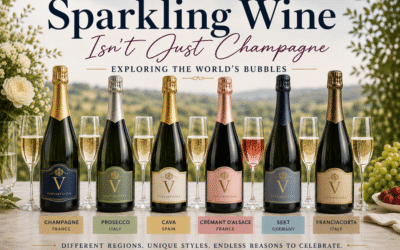
Sparkling Chenin Blanc offers an appealing alternative for wine lovers looking to explore beyond Prosecco or Champagne. It often delivers exceptional quality and complexity while remaining surprisingly affordable.
A Grape Unlike Any Other
When you step back and consider the full picture, Chenin Blanc’s versatility is truly remarkable.
The same grape can produce a crisp aperitif, a food-friendly dinner wine, a sparkling celebration wine, or a luxurious dessert wine. Few grape varieties can claim such a diverse portfolio while consistently delivering quality across every style.
This adaptability is one of the reasons wine professionals and enthusiasts hold Chenin Blanc in such high regard. It is a grape that rewards curiosity, offering something new to discover with every bottle.
Whether you prefer your wines dry, slightly sweet, sparkling, or decadently rich, there is likely a Chenin Blanc waiting to become your next favorite wine.
Flavor Profile: What Does Chenin Blanc Taste Like?
One of the reasons Chenin Blanc is so fascinating is that there is no single flavor profile that defines the grape. Its versatility allows it to express itself differently depending on where it is grown, how ripe the grapes become, and the style of wine being produced.
That said, there are several characteristics that frequently appear in Chenin Blanc and help make it instantly recognizable to those familiar with the grape.
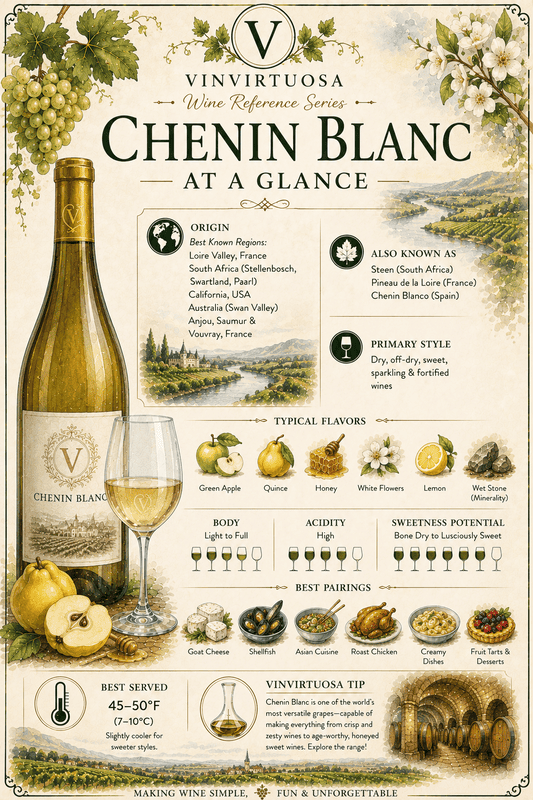
In its youthful and dry forms, Chenin Blanc often displays vibrant aromas of green apple, pear, quince, and lemon. These bright fruit notes are frequently accompanied by floral aromas such as honeysuckle and chamomile, adding elegance and complexity to the wine.
As the wines become riper or develop with age, flavors of honey, baked apple, apricot, and tropical fruits may emerge. In sweeter styles, these flavors become even more pronounced, creating wines that are rich and concentrated while still maintaining freshness.
One of the hallmarks of many Chenin Blancs, particularly those from the Loire Valley, is a distinct mineral character. Wine lovers often describe these wines as having notes reminiscent of wet stone, chalk, or flint. These mineral qualities contribute to the wine’s sense of place and are part of what makes many Loire Chenins so compelling.
Some Chenin Blancs can also display subtle wool or wet wool aromas. While that description may sound unusual at first, experienced wine drinkers often associate these savory, earthy notes with complexity and authenticity. Similar to the petrol notes found in aged Riesling, these characteristics can add another layer of intrigue to the wine without overwhelming the fruit.
Climate also plays a significant role in shaping Chenin Blanc’s personality.
In cooler climates, such as many areas of France’s Loire Valley, the wines tend to emphasize citrus, green apple, mineral notes, and vibrant acidity. These wines are often elegant, precise, and refreshing.
In warmer regions, including many parts of South Africa, Chenin Blanc develops riper flavors of pear, peach, pineapple, melon, and tropical fruit. While the wines often remain fresh thanks to the grape’s naturally high acidity, they can display a richer texture and more generous fruit profile.
This ability to express both freshness and richness is part of what makes Chenin Blanc such an exciting grape to explore. No matter where it is grown, it manages to retain its signature vibrancy while reflecting the unique conditions of its vineyard and climate.
Loire Valley vs. South Africa
If Chenin Blanc has two spiritual homes, they are undoubtedly France’s Loire Valley and South Africa.
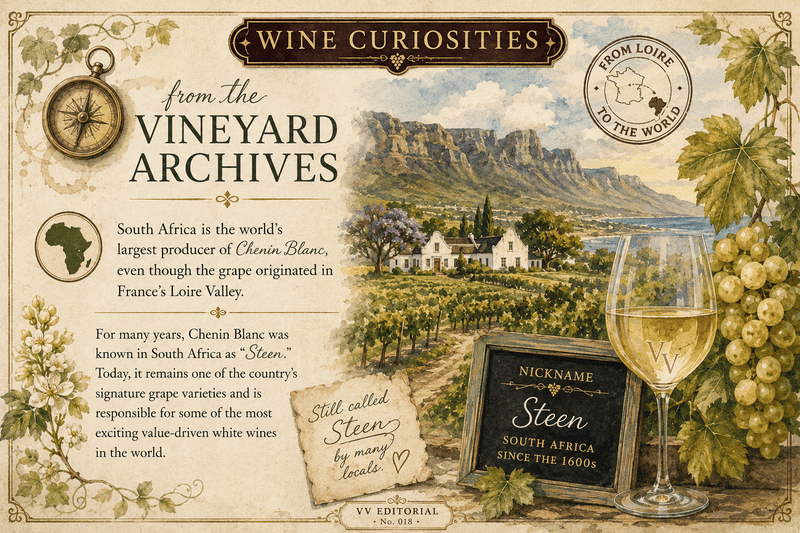
While the grape originated in the Loire Valley centuries ago, South Africa has embraced Chenin Blanc so enthusiastically that it is now the largest producer of the variety in the world. Exploring wines from both regions offers an excellent lesson in how climate, geography, and winemaking traditions can shape the personality of a grape.
Loire Valley, France
The Loire Valley is the birthplace of Chenin Blanc and remains one of the world’s most prestigious sources for the variety.
Here, Chenin Blanc produces some of its most elegant and age-worthy expressions. The region’s cooler climate helps preserve the grape’s naturally high acidity, resulting in wines that are fresh, focused, and often intensely mineral.
Two of the Loire’s most famous Chenin Blanc appellations are Vouvray and Savennières.
Vouvray is known for producing an impressive range of styles, from sparkling and dry wines to off-dry and sweet examples. Depending on the producer and vintage, a Vouvray can showcase flavors of green apple, quince, honey, chamomile, and wet stone, often developing remarkable complexity with age.
Savennières, by contrast, is typically associated with dry Chenin Blanc. These wines are often powerful, structured, and intensely mineral, earning a devoted following among wine enthusiasts who appreciate complex white wines capable of long aging.
For many wine lovers, Loire Valley Chenin Blanc represents the grape at its most refined and terroir-driven.
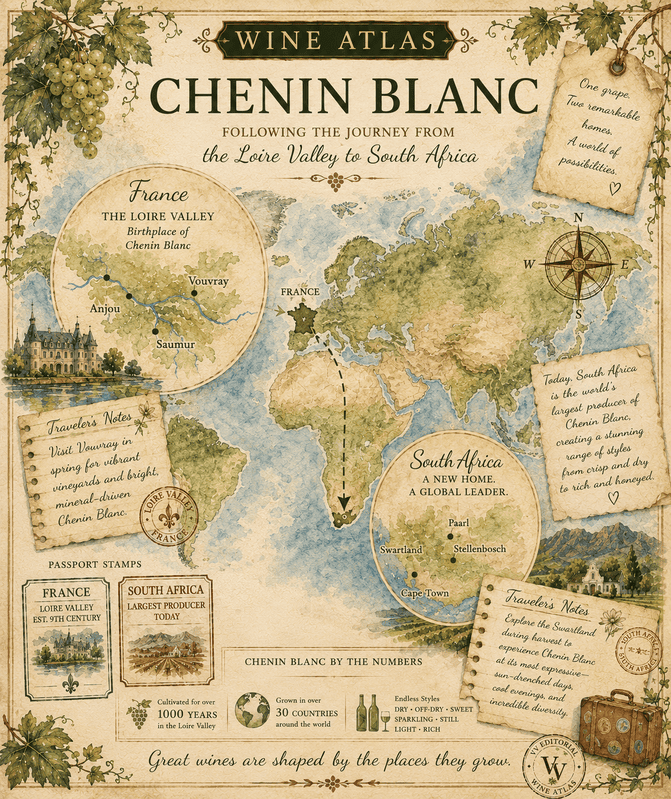
South Africa
While France may be Chenin Blanc’s birthplace, South Africa has become its modern champion.
Known locally as “Steen” for much of its history, Chenin Blanc is planted throughout many of South Africa’s most important wine regions and is often simply labeled as Chenin Blanc today. The grape has become one of the country’s signature varieties and is responsible for some of its most celebrated wines.
South African Chenin Blancs often display a more fruit-forward personality than their Loire counterparts. Ripe pear, peach, melon, pineapple, and tropical fruit notes are common, often accompanied by subtle floral and honeyed characteristics.
Despite this generous fruit profile, the wines typically retain enough acidity to remain balanced and refreshing. Many producers are also crafting increasingly sophisticated examples that combine richness, texture, and complexity with excellent aging potential.
Perhaps most impressive is the value South African Chenin Blanc offers. Time and time again, these wines deliver exceptional quality at prices that often surprise consumers accustomed to paying much more for wines of similar character.
Two Regions, Two Personalities
Rather than viewing Loire Valley and South African Chenin Blanc as competitors, it’s better to think of them as two distinct expressions of the same remarkable grape.
Loire Valley Chenin Blanc tends to emphasize elegance, minerality, and precision. South African Chenin Blanc often highlights ripe fruit, texture, and approachability. Both styles can be exceptional, and each offers a unique perspective on what makes Chenin Blanc so special.
The beauty of exploring Chenin Blanc is that there is no wrong choice. Whether you are drawn to the mineral-driven sophistication of a Loire Valley Vouvray or the vibrant fruit and outstanding value of a South African bottling, you are experiencing one of the wine world’s most versatile and rewarding grape varieties.
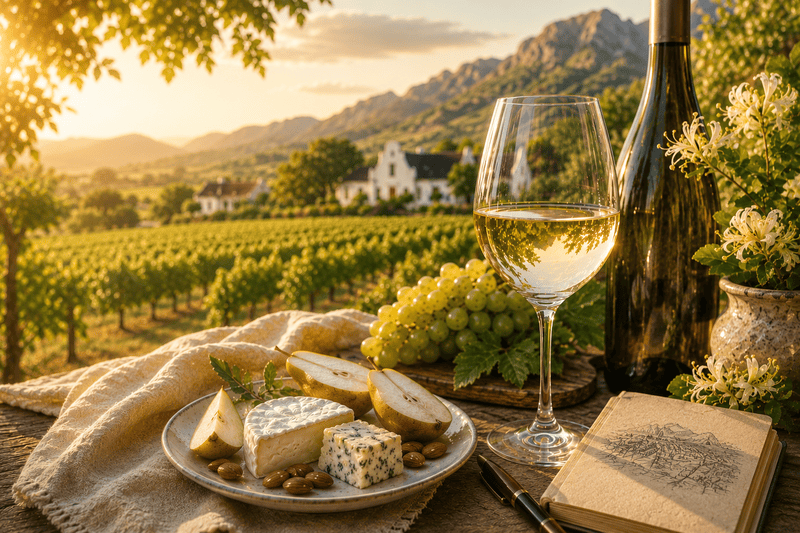
Why Wine Lovers Should Pay More Attention to Chenin Blanc
With so many grape varieties competing for attention, it’s easy to understand how Chenin Blanc can be overlooked. Yet for those willing to venture beyond the familiar labels and varieties, Chenin Blanc offers an impressive combination of quality, versatility, and value that is difficult to match.
One of the biggest reasons wine lovers should pay more attention to Chenin Blanc is the exceptional value it often provides. While premium Chardonnay can easily command prices of $30, $50, or significantly more, many excellent Chenin Blancs remain surprisingly affordable. Whether you’re exploring a Loire Valley Vouvray or a South African Chenin Blanc, it’s possible to find bottles that deliver complexity and character well above their price point.
For consumers looking to stretch their wine budget without sacrificing quality, Chenin Blanc can be one of the wine world’s best-kept secrets.
Its versatility is another reason the grape deserves greater recognition. As we’ve already seen, Chenin Blanc can produce dry, off-dry, sweet, sparkling, and dessert wines, each with its own unique personality. Few grape varieties offer such a broad spectrum of styles while maintaining a clear sense of identity.
Chenin Blanc is also remarkably food-friendly. Its naturally high acidity allows it to pair successfully with everything from seafood and poultry to spicy cuisine and rich cheeses. This adaptability makes it a valuable addition to any wine lover’s repertoire, especially for those who enjoy pairing wine with meals.
Perhaps most importantly, Chenin Blanc appeals to a wide range of wine drinkers. Beginners often appreciate its approachable fruit flavors and refreshing character, while more experienced enthusiasts enjoy exploring its complexity, ageability, and diverse expressions from different regions around the world.
For me, Chenin Blanc is one of those wines I genuinely enjoy recommending because it so often surprises people. Many wine drinkers have never explored the grape in depth, and it’s always rewarding to watch someone discover a wine that exceeds their expectations. Whether it’s a crisp Loire Valley bottling, a vibrant South African example, or a beautifully balanced off-dry style, Chenin Blanc has a way of winning people over once they give it a chance.
In a wine world that sometimes focuses heavily on a handful of popular grape varieties, Chenin Blanc serves as a reminder that some of the most rewarding discoveries are hiding just beyond the familiar.
“The same grape can produce a crisp aperitif, a food-friendly dinner wine, a sparkling celebration wine, or a luxurious dessert wine.”
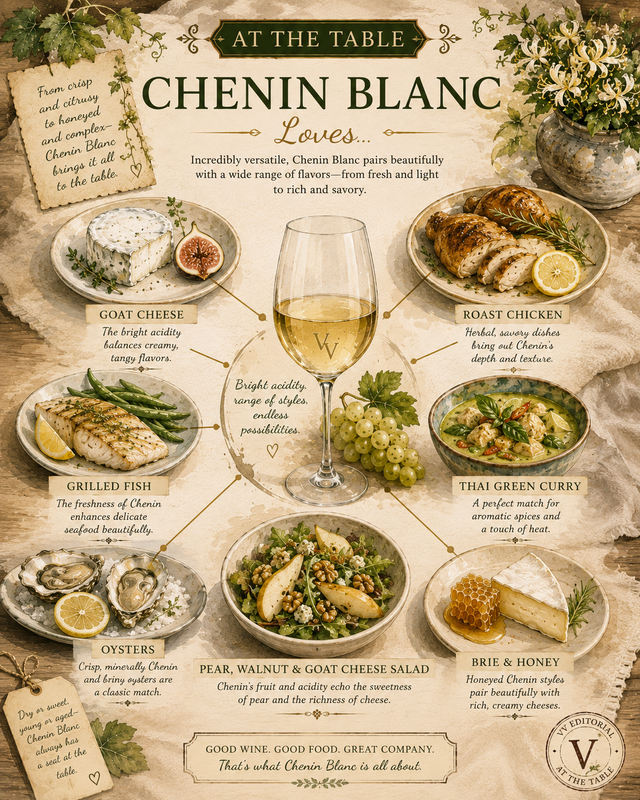
What Foods Pair Well with Chenin Blanc?
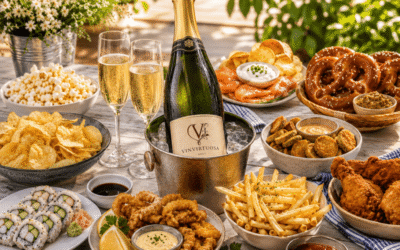
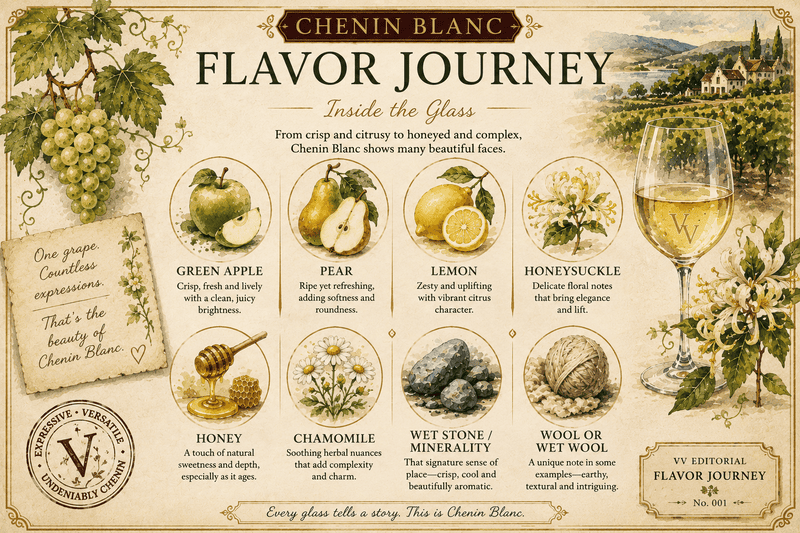
One of the greatest strengths of Chenin Blanc is its ability to pair effortlessly with a wide variety of foods. Thanks to its naturally high acidity, the wine can complement many dishes without overwhelming them, making it one of the most versatile partners at the dining table.
Acidity acts much like a squeeze of fresh lemon on food. It brightens flavors, refreshes the palate, and helps balance richness in a dish. This is one of the reasons Chenin Blanc can pair successfully with everything from delicate seafood to richer poultry and pork dishes.
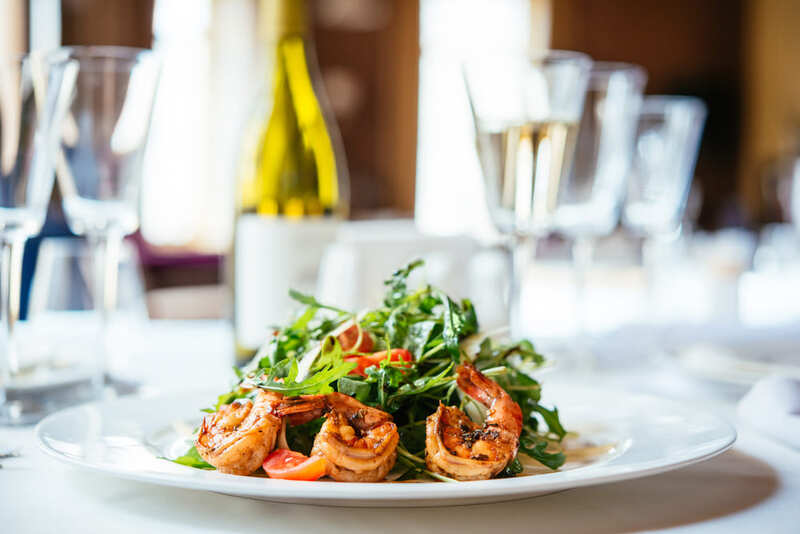
For lighter meals, dry Chenin Blanc is a natural match for seafood. Grilled fish, shrimp, scallops, oysters, and crab all benefit from the wine’s crisp acidity and citrus-driven character. The freshness of the wine enhances the delicate flavors of the seafood while cleansing the palate between bites.
Roast chicken is another classic pairing. The wine’s bright fruit and acidity complement the savory flavors of the chicken without competing with them. Whether the chicken is simply roasted with herbs or served with a creamy sauce, Chenin Blanc often proves to be an excellent choice.
Pork tenderloin also pairs beautifully with Chenin Blanc, particularly when accompanied by fruit-based sauces or glazes. The wine’s natural fruit notes echo flavors such as apple, pear, or apricot while its acidity helps balance the richness of the meat.
For sushi lovers, Chenin Blanc offers an appealing alternative to more commonly recommended white wines. Its freshness works well with delicate fish, while its texture can stand up to richer selections such as salmon or tuna. The wine’s versatility makes it a wonderful companion to a wide variety of sushi and sashimi preparations.
Cheese lovers will also find much to appreciate. Soft cheeses such as Brie, Camembert, goat cheese, and triple-cream varieties pair especially well with Chenin Blanc. The wine’s acidity cuts through the richness of the cheese while enhancing its creamy texture.
Even simple salads can become memorable pairings. Chenin Blanc’s bright character works particularly well with salads featuring fruit, nuts, goat cheese, citrus vinaigrettes, or fresh herbs.
Perhaps one of Chenin Blanc’s most underrated talents is its ability to pair with spicy foods. Many dry wines can struggle with heat, but off-dry Chenin Blanc’s touch of sweetness and lively acidity make it an excellent companion for spicy Asian cuisine. Thai curries, Vietnamese dishes, spicy Chinese preparations, and many Indian-inspired recipes can all find harmony with the right Chenin Blanc.
Ultimately, few wines are as adaptable at the table as Chenin Blanc. Whether you’re planning an elegant dinner party, enjoying takeout on a weeknight, or assembling a simple cheese board, there’s a good chance a bottle of Chenin Blanc will rise to the occasion. It’s yet another reason this versatile grape deserves far more attention than it often receives.
Three Chenin Blancs to Try
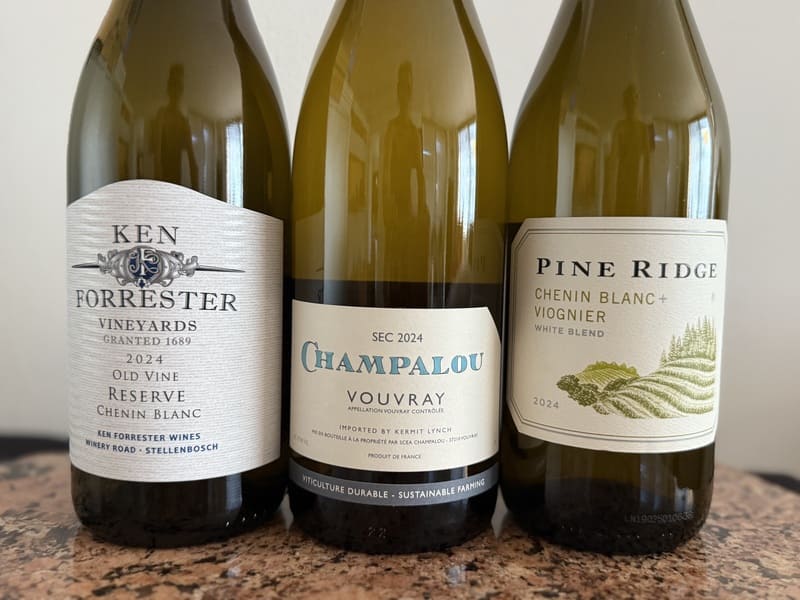
If all this talk of Chenin Blanc has inspired you to explore the grape for yourself, here are three excellent bottles that showcase its versatility and provide a great introduction to different expressions of the variety.
Pine Ridge Chenin Blanc + Viognier, California
For wine lovers looking for an affordable and approachable introduction to Chenin Blanc, Pine Ridge Chenin Blanc + Viognier is an excellent place to start.
This popular California blend combines Chenin Blanc’s bright acidity with the aromatic richness of Viognier, resulting in a wine that is fresh, fruit-forward, and incredibly easy to enjoy. Expect flavors of citrus, white peach, melon, and pear, supported by refreshing acidity and a smooth finish.
One of the reasons I often recommend this wine is that it consistently delivers outstanding value. It’s widely available, food-friendly, and approachable for both newer wine drinkers and seasoned enthusiasts looking for an easy-drinking white wine.
A Vouvray from the Loire Valley
To experience Chenin Blanc closer to its historic roots, seek out a bottle of Vouvray from France’s Loire Valley.
Vouvray can range from dry to sweet, but even many of the drier examples display a beautiful richness and complexity. Typical flavors include green apple, quince, honey, chamomile, and mineral notes, often accompanied by the vibrant acidity that makes Chenin Blanc so distinctive.
One of the joys of Vouvray is its ability to evolve over time. Even relatively affordable bottles can offer remarkable depth and character, making them a wonderful introduction to the elegance and age-worthiness of Loire Valley Chenin Blanc.
A South African Chenin Blanc
South Africa has become one of the most exciting sources of Chenin Blanc in the world, producing wines that combine generous fruit flavors with excellent value.
Look for examples from regions such as Stellenbosch, Swartland, or Paarl. These wines often showcase flavors of ripe pear, peach, pineapple, melon, and tropical fruit while maintaining enough acidity to remain lively and balanced.
For many wine lovers, South African Chenin Blanc represents one of the best quality-to-price ratios available in white wine today. If you’re searching for a bottle that overdelivers for the price, this is an excellent place to begin your exploration.
The beauty of these three recommendations is that each offers a different perspective on Chenin Blanc. Together, they provide a fascinating glimpse into the many personalities of this versatile grape.
Final Thoughts
Chenin Blanc may not receive the same attention as Chardonnay or Sauvignon Blanc, but it offers something many wine lovers are searching for: diversity, value, and remarkable food-pairing versatility.
From crisp and mineral-driven wines of the Loire Valley to fruit-forward South African bottlings and everything in between, Chenin Blanc consistently rewards curiosity. It is a grape capable of producing refreshing summer sippers, elegant dinner companions, celebratory sparkling wines, and even age-worthy dessert wines.
Perhaps that is what makes Chenin Blanc so special. No matter your experience level or preferred wine style, there is likely a Chenin Blanc that will appeal to your palate. It’s a grape that invites exploration and often surprises those willing to venture beyond the familiar.
Whether you’re new to wine or simply looking to expand your horizons, Drink Chenin Blanc Day is the perfect opportunity to discover why this underrated grape has earned such a devoted following among wine lovers around the world.
If it’s been a while since you’ve had a glass of Chenin Blanc—or if you’ve never tried one at all—consider this your invitation. You just might discover your next favorite white wine.
Cheers!
A Personal Tasting Note
While preparing this article, I revisited Domaine Champalou Vouvray for the first time in several years, sampled the latest vintage of Pine Ridge Chenin Blanc + Viognier, and explored South Africa’s Ken Forrester Chenin Blanc. Although each wine expressed the grape differently, they all showcased the bright acidity, versatility, and food-friendly nature that make Chenin Blanc such a rewarding variety to explore.