
Introduction
Have you ever stood in a wine shop looking at a bottle labeled Syrah and another labeled Shiraz and wondered what the difference was?
If so, you’re not alone. Many wine drinkers assume they are two completely different grape varieties, much like Cabernet Sauvignon and Merlot. The truth, however, often comes as a surprise: Shiraz and Syrah are exactly the same grape.
So why the different names?
The answer lies in a fascinating combination of geography, climate, winemaking philosophy, and tradition. Over time, winemakers in different parts of the world began using different names for the grape, and as the wines evolved in their respective regions, distinct styles emerged. Today, the name on the label often provides a clue about what awaits inside the bottle.
Generally speaking, wines labeled Syrah tend to be more restrained, savory, and peppery, reflecting the grape’s French heritage. Wines labeled Shiraz, particularly those from Australia, often showcase richer fruit flavors, fuller body, and a more opulent personality. Yet despite these differences, they share the same DNA and trace their roots back to a single origin.
Think of it like identical twins raised in different countries. They may share the same genetic makeup, but their experiences, environment, and culture shape who they become. The same is true for Syrah and Shiraz.
In this article, we’ll explore the history of this remarkable grape, uncover why it has two names, examine the differences between Syrah and Shiraz, and discover how climate and winemaking choices can dramatically influence the final wine. We’ll also put the styles head-to-head with a side-by-side tasting of a Northern Rhône Syrah and an Australian Shiraz to see just how different the same grape can taste.
Let’s begin where the story starts: in the rugged hills of France’s Rhône Valley.
The Origins of Syrah
Like many famous wine grapes, Syrah has inspired its fair share of legends.
For centuries, stories circulated claiming the grape originated in Persia, specifically the ancient city of Shiraz in modern-day Iran. Others suggested it was brought to France by returning Crusaders or introduced by Roman soldiers centuries ago. These romantic tales helped fuel the mystery surrounding the grape, but modern science eventually revealed a different story.
Syrah is, in fact, a native French variety.
Its birthplace is the Northern Rhône Valley, a dramatic wine-growing region in southeastern France characterized by steep vineyard slopes overlooking the Rhône River. Here, Syrah has been cultivated for centuries and remains the only red grape permitted in some of the region’s most prestigious appellations, including Saint-Joseph, Cornas, Côte-Rôtie, and Hermitage.
The grape’s true origins were finally uncovered in the late 1990s through DNA analysis conducted by grape geneticists at the University of California, Davis. Their research determined that Syrah is the offspring of two obscure French varieties: Dureza, a dark-skinned grape from the Ardèche region, and Mondeuse Blanche, a white grape native to southeastern France.
The discovery put to rest the long-standing theories about Persian origins and confirmed that Syrah is thoroughly French.
From its home in the Rhône Valley, Syrah gradually spread throughout France and eventually to vineyards around the world. During the nineteenth century, vine cuttings found their way to Australia, where the grape adapted exceptionally well to the country’s warm climate and diverse growing regions.
Australian winemakers embraced the variety and began referring to it as Shiraz. Over time, the name became synonymous with a bolder, fruit-forward style that reflected Australia’s unique terroir and winemaking traditions. Today, Shiraz is Australia’s signature red grape and one of the country’s most important wine exports.
Meanwhile, Syrah continued its global journey. It established successful homes in Washington State, California, South Africa, New Zealand, Chile, and Argentina, with each region interpreting the grape in its own way.
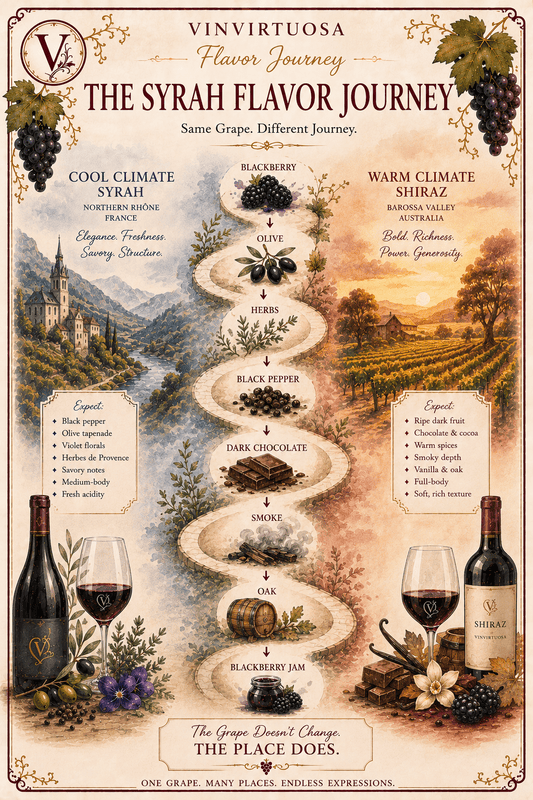
What makes Syrah so fascinating is its ability to act like a chameleon. In cooler climates, it can produce wines bursting with black pepper, violets, olives, and smoky complexity. In warmer regions, it transforms into a richer expression filled with blackberry jam, chocolate, and spice. Few grape varieties showcase the influence of place as clearly as Syrah.
And that adaptability is precisely why one grape can wear two names—and develop two very different personalities.
Why Two Different Names?
If Shiraz and Syrah are the same grape, why do we use two different names?
The answer is part history, part geography, and part marketing.
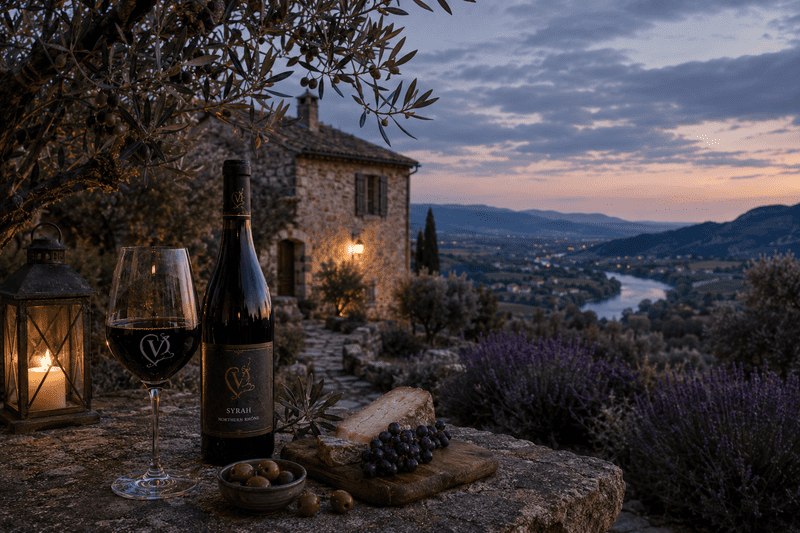
In France, where the grape originated, it has always been known as Syrah. The name appears throughout the Northern Rhône Valley, where some of the world’s most celebrated expressions of the grape are produced. For centuries, French winemakers focused on showcasing the influence of place—or terroir—allowing vineyard location, climate, and soil to take center stage.
When the grape arrived in Australia during the nineteenth century, however, a different identity began to emerge. Australian growers adopted the name Shiraz, though the exact reason remains somewhat unclear. Some believe the name was inspired by the old legends linking the grape to the Persian city of Shiraz, while others suggest it evolved naturally through local usage.
Regardless of its origin, the name stuck.
As Australian winemaking matured, Shiraz became the country’s flagship red grape. Regions such as Barossa Valley, McLaren Vale, and Heathcote developed bold, expressive styles that differed noticeably from the wines of the Northern Rhône. The warmer climate produced riper fruit flavors, higher alcohol levels, and a richer, more powerful profile.
Over time, consumers began associating the two names with two distinct styles of wine.
Today, while there are exceptions, the name on the label often serves as a clue to the winemaker’s intended style.
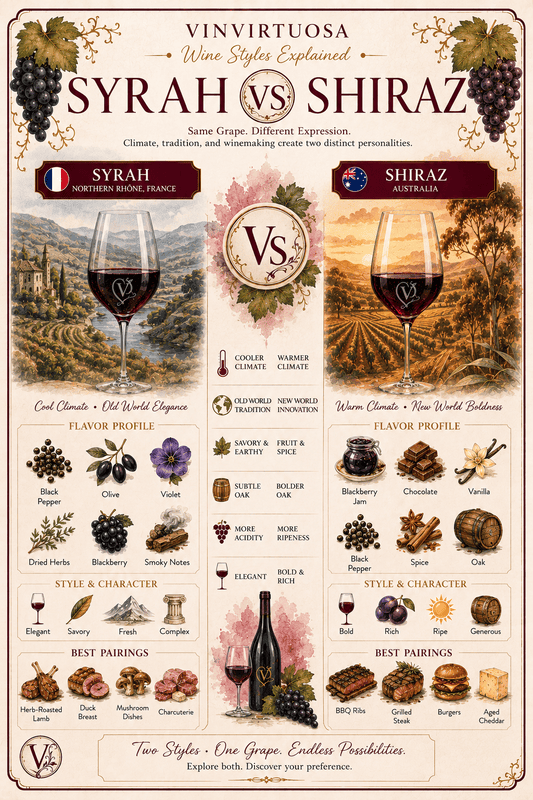
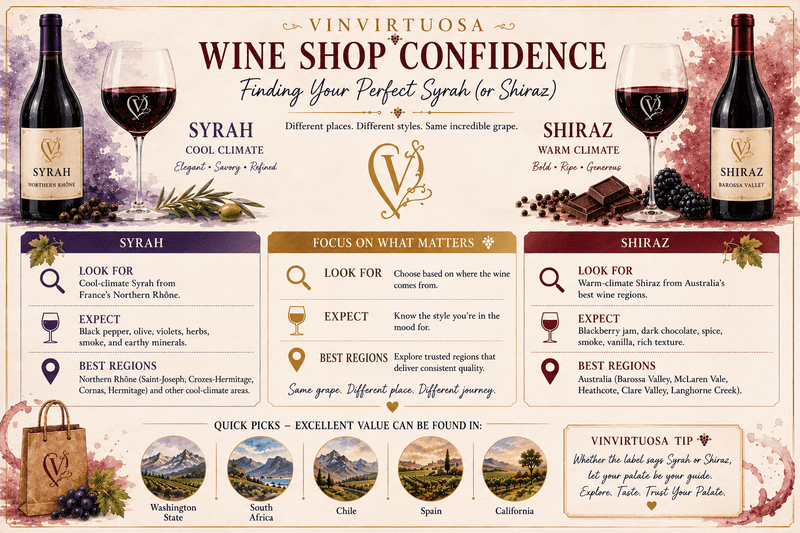
A bottle labeled Syrah frequently signals a wine inspired by Old World traditions. These wines often emphasize elegance, structure, acidity, and savory complexity. You may encounter aromas of black pepper, smoked meat, olives, herbs, and violets alongside dark fruit flavors.
A bottle labeled Shiraz, on the other hand, often suggests a riper, more fruit-forward experience. Expect generous blackberry and plum flavors, notes of chocolate and baking spice, a fuller body, and a plush, approachable texture.
Think of it this way: Syrah and Shiraz are like two siblings who grew up in different environments. One developed a taste for tailored suits, classical music, and thoughtful conversation. The other loves barbecue, live concerts, and making a memorable entrance. Neither is better than the other—they simply express their personality differently.
Interestingly, many winemakers outside of France and Australia now choose between the two names strategically. A California producer crafting a peppery, Rhône-inspired wine may label it Syrah, while another seeking to emphasize richness and ripe fruit may opt for Shiraz.
In other words, the name isn’t just about geography anymore. It’s often a stylistic choice that helps set expectations before the cork is even pulled.
Syrah: The Elegant Side of the Grape
If Shiraz is the bold extrovert at the party, Syrah is the sophisticated guest quietly captivating everyone with fascinating stories and effortless charm.
Syrah has earned a reputation as one of the world’s most compelling red wines because of its remarkable balance between power and elegance. It possesses plenty of concentration and structure, yet it rarely feels heavy-handed. Instead, the best examples reveal layers of complexity that unfold gradually in the glass.
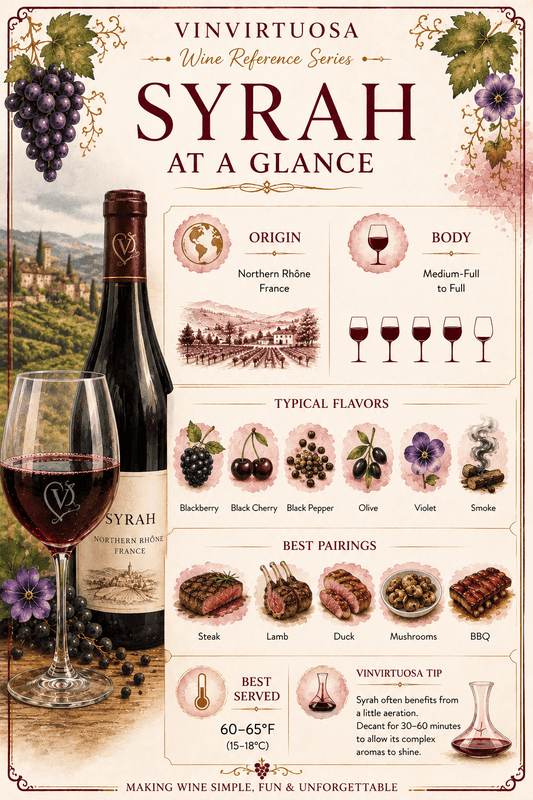
At first swirl, Syrah often offers aromas of blackberry, black cherry, and ripe plum. These dark fruit notes provide a rich foundation, but what truly sets Syrah apart are the savory characteristics that emerge alongside them.
Freshly cracked black pepper is perhaps the grape’s most famous signature. Depending on the region and vintage, you may also discover aromas of violet, smoked meat, olive tapenade, leather, herbs, and even hints of bacon fat. These savory notes create a level of complexity that wine enthusiasts often find irresistible.
On the palate, Syrah is typically medium- to full-bodied with moderate to high tannins and bright acidity. This combination gives the wine both structure and freshness, allowing it to pair beautifully with food and age gracefully over time.
Unlike some powerful red wines that rely solely on fruit intensity, Syrah often delivers a fascinating contrast between ripe fruit and earthy, savory elements. One sip may showcase juicy blackberry and plum, while the next reveals pepper, olive, smoke, or mineral notes. This constant interplay is part of what makes Syrah so intriguing.
Climate plays a significant role in shaping the style. In cooler growing regions, Syrah tends to lean toward pepper, herbs, floral notes, and higher acidity. The fruit profile remains vibrant but restrained, allowing savory nuances to shine. These wines often feel elegant, food-friendly, and highly expressive of their terroir.
Key Regions for Syrah
Northern Rhône, France
The spiritual home of Syrah remains the benchmark for many wine lovers. Appellations such as Saint-Joseph, Crozes-Hermitage, Cornas, Côte-Rôtie, and Hermitage produce wines that range from approachable and peppery to profound and age-worthy. Here, Syrah often displays notes of black fruit, violet, olive, smoke, and spice with exceptional complexity.
Washington State
Washington has become one of the premier regions for Syrah outside of France. The state’s warm days and cool nights allow grapes to achieve ripeness while maintaining freshness. Washington Syrahs frequently combine ripe fruit with peppery and savory characteristics, creating a bridge between Old World and New World styles.
Sonoma Coast and Cooler California Regions
While California is often associated with rich, fruit-driven wines, cooler areas such as the Sonoma Coast can produce Syrahs with remarkable elegance and restraint. These wines often showcase vibrant acidity, floral aromatics, and peppery complexity while still retaining California’s generous fruit character.
New Zealand
Although less famous for Syrah than Sauvignon Blanc, New Zealand produces some exceptional examples. Regions such as Hawke’s Bay create Syrahs noted for their freshness, vibrant fruit, peppery spice, and silky texture. Many wine enthusiasts consider these wines among the hidden gems of the Syrah world.
Notable Syrah Producers
For readers looking to explore the elegant side of the grape, these producers are excellent places to start:
- E. Guigal – One of the most respected names in the Rhône Valley, producing Syrahs that range from approachable to legendary.
- M. Chapoutier – Known for expressive wines that highlight terroir and showcase the depth of Northern Rhône Syrah.
- Delas Frères – Consistently produces classic Rhône Syrahs with excellent quality and value.
- K Vintners – A Washington State producer celebrated for bold yet balanced Syrah expressions.
- Gramercy Cellars – Renowned for Rhône-inspired wines that emphasize structure, elegance, and complexity.
Whether you’re discovering Syrah for the first time or revisiting an old favorite, these wines demonstrate why this grape has captivated wine lovers for centuries. They are thoughtful, layered, and endlessly fascinating—proof that power and elegance can coexist beautifully in a single glass.
Shiraz: The Bold and Fruit-Driven Personality
If Syrah is the elegant dinner guest discussing art and philosophy over a leisurely meal, Shiraz is the life of the party—confident, energetic, and impossible to ignore.
While Syrah and Shiraz share the same genetic roots, Shiraz has developed a distinctive personality of its own, particularly in Australia, where the grape has become a national icon. Thanks to abundant sunshine, warm growing conditions, and a winemaking culture that embraces richness and generosity, Shiraz often expresses itself in a dramatically different way than its French counterpart.
From the moment the wine is poured, Shiraz tends to announce its presence. Deep ruby to nearly opaque purple in color, it often hints at the concentration and intensity waiting in the glass.
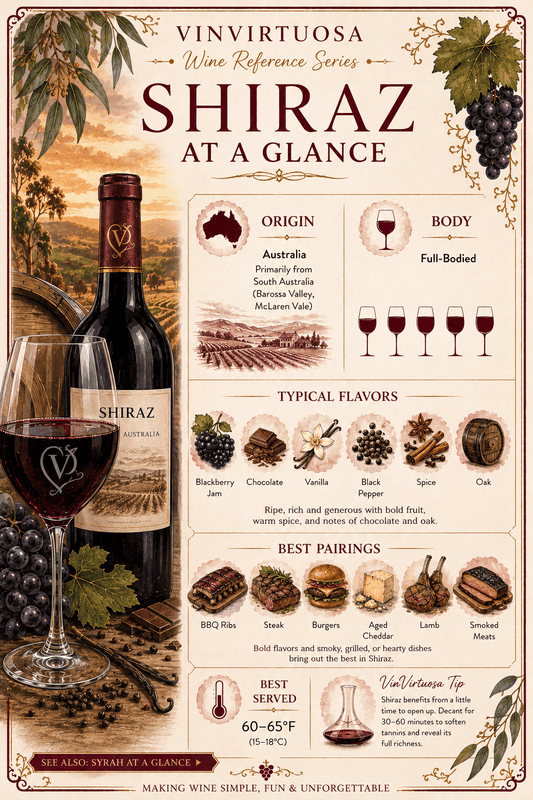
Aromatically, Shiraz is all about bold fruit. Blackberry jam, blueberry compote, and ripe plum frequently dominate the nose. These lush fruit flavors are often joined by notes of chocolate, licorice, mocha, and sweet baking spices such as cinnamon, clove, and nutmeg. When aged in oak, additional layers of vanilla, toasted coconut, and caramel may emerge, adding further richness and complexity.
On the palate, Shiraz is typically full-bodied with a plush, velvety texture that feels luxurious and satisfying. Compared to many Syrahs, the fruit flavors are riper and more pronounced, often creating an impression of sweetness even when the wine is technically dry. Higher alcohol levels are also common, contributing to the wine’s warmth and weight.
What makes Shiraz so appealing is its generosity. These are wines that rarely ask you to search for their flavors. Instead, they deliver wave after wave of ripe fruit, spice, and richness from the first sip to the last. They are approachable when young, crowd-pleasing at gatherings, and perfectly suited to hearty meals and outdoor barbecues.
Key Regions for Shiraz
Barossa Valley
Perhaps no region is more closely associated with Shiraz than Barossa Valley. Located in South Australia, Barossa produces some of the world’s most powerful and age-worthy examples. Wines from this region often showcase concentrated blackberry fruit, dark chocolate, licorice, baking spice, and impressive structure. Many of Australia’s most iconic Shiraz wines originate here.
McLaren Vale
Situated south of Adelaide, McLaren Vale produces Shiraz that combines richness with freshness. The wines often display ripe black fruit flavors alongside hints of herbs, spice, and chocolate. Compared to Barossa, McLaren Vale Shiraz can sometimes exhibit a slightly softer, more approachable style while maintaining impressive depth.
Clare Valley
Known primarily for Riesling, Clare Valley also produces exceptional Shiraz. The region’s higher elevations and cooler nights help preserve acidity, creating wines that balance ripe fruit with elegance and structure. Clare Valley Shiraz often occupies a stylistic middle ground between the power of Barossa and the restraint of cooler-climate Syrah.
Heathcote
Located in Victoria, Heathcote has earned a reputation for producing some of Australia’s most exciting Shiraz. The region’s distinctive ancient Cambrian soils contribute depth, structure, and minerality to the wines. Heathcote Shiraz often combines ripe fruit with peppery spice, making it an excellent example of how Australian Shiraz can deliver both power and sophistication.
Notable Shiraz Producers
For readers interested in exploring classic Australian Shiraz, these producers offer outstanding examples of the style:
- Penfolds – Perhaps Australia’s most internationally recognized winery, famous for its iconic Grange and a wide range of exceptional Shiraz bottlings.
- d’Arenberg – Known for producing distinctive wines from McLaren Vale that combine concentration, character, and age-worthiness.
- Torbreck – Specializes in powerful, richly textured Barossa Shiraz wines that have earned a devoted global following.
- Henschke – One of Australia’s most historic wineries, celebrated for elegant and long-lived Shiraz expressions.
- Mollydooker – Renowned for bold, fruit-driven wines that showcase the exuberant side of Australian Shiraz.
Whether enjoyed with a perfectly grilled steak, smoky barbecue ribs, or simply on its own, Shiraz offers a bold and memorable experience. It is a wine that embraces abundance, proving that sometimes bigger really can be beautiful.
Climate: The Biggest Difference Maker
If there is one factor responsible for the dramatic differences between Syrah and Shiraz, it is climate.
While winemaking choices certainly play a role, the environment in which the grapes are grown has the greatest influence on the final wine. Temperature affects everything from sugar accumulation and acidity levels to tannin development and flavor intensity.
The same grape grown in a cool vineyard and a warm vineyard can produce wines that seem worlds apart.
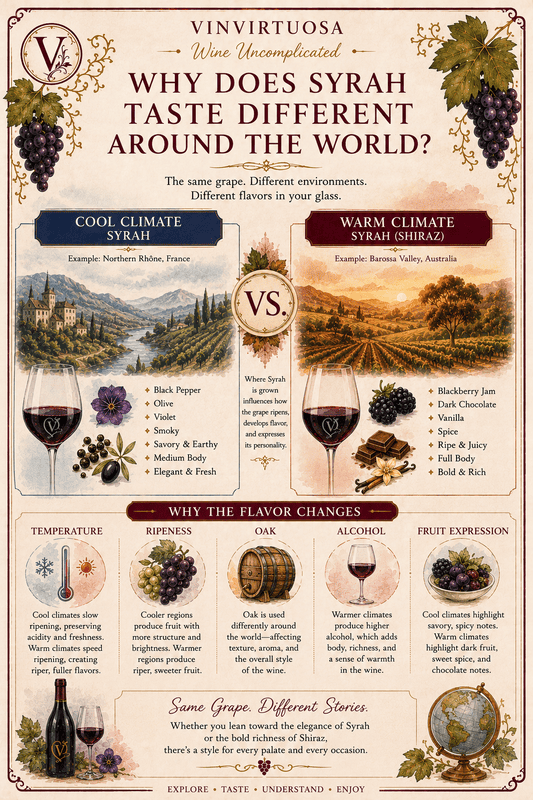
In cooler regions, such as France’s Northern Rhône or New Zealand’s Hawke’s Bay, grapes ripen more slowly. The extended growing season allows flavors to develop gradually while preserving natural acidity. As a result, Syrah from these regions often displays black pepper, violet, olive, smoked meat, and other savory characteristics alongside fresh dark fruit flavors.
In warmer regions such as Barossa Valley and McLaren Vale, grapes accumulate sugar more quickly and achieve greater ripeness before harvest. This leads to richer fruit flavors, softer acidity, fuller body, and higher alcohol levels. The resulting wines often emphasize blackberry jam, blueberry, chocolate, and sweet spice notes.
How Climate Shapes the Wine
Fruit Ripeness
Cool climates tend to produce fresher fruit flavors such as blackberry, black cherry, and plum. Warm climates encourage riper, richer expressions reminiscent of blackberry jam, blueberry preserves, and stewed fruits.
Alcohol Levels
As grapes ripen, they accumulate sugar. During fermentation, yeast converts sugar into alcohol. Warmer growing regions generally produce grapes with higher sugar levels, resulting in wines with greater alcohol content.
Acidity
Cool climates help grapes retain acidity, giving Syrah freshness, vibrancy, and excellent food-pairing potential. Warmer climates often produce softer acidity, contributing to the rounder, more generous mouthfeel commonly associated with Shiraz.
Tannin Structure
Syrah from cooler regions often exhibits firmer, more structured tannins that support aging and add complexity. Shiraz from warmer regions typically develops softer, more approachable tannins that enhance the wine’s plush texture.
Flavor Development
Perhaps the most noticeable difference lies in flavor. Cooler climates encourage savory, peppery, floral, and earthy notes, while warmer climates push the grape toward richer fruit, chocolate, licorice, and sweet spice characteristics.
Of course, wine is rarely black and white. Some Australian producers craft Shiraz with remarkable restraint, while some New World winemakers label their wines Syrah despite producing rich, powerful styles.
Still, understanding the role of climate provides the key to understanding why Syrah and Shiraz often feel like two entirely different wines. The grape may be the same, but the environment tells a very different story.
“The grape may be the same, but climate tells a very different story.”
Food Pairing Differences
One of the best ways to appreciate the differences between Syrah and Shiraz is to put them on the dinner table.
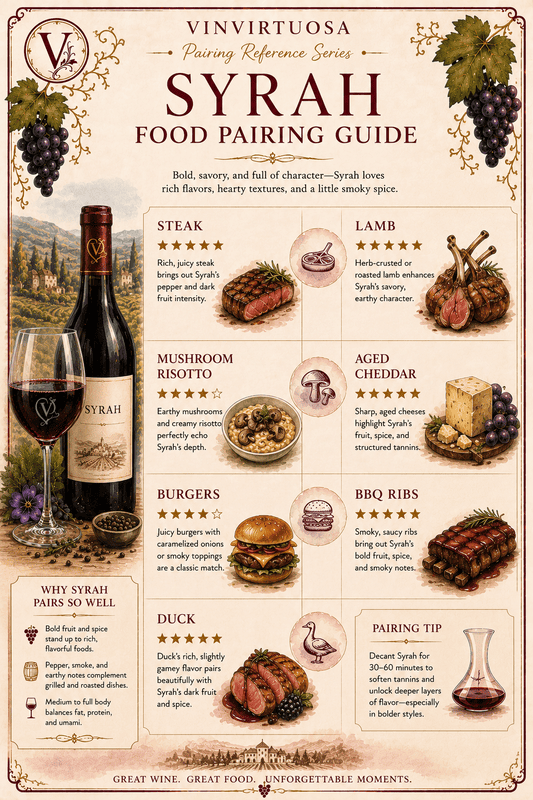
While both wines are versatile and food-friendly, their distinct personalities often make them shine alongside different types of dishes. Syrah’s higher acidity, savory complexity, and structured tannins allow it to complement foods with earthy and herbal flavors, while Shiraz’s rich fruit and plush texture make it a natural partner for bold, smoky, and hearty fare.
Think of Syrah as the wine you reach for when preparing a carefully crafted dinner. Shiraz, meanwhile, is the bottle you proudly bring to a backyard barbecue or a feast centered around the grill.
Pairing Syrah
The savory side of Syrah makes it one of the most rewarding food wines in the world.
Lamb Chops
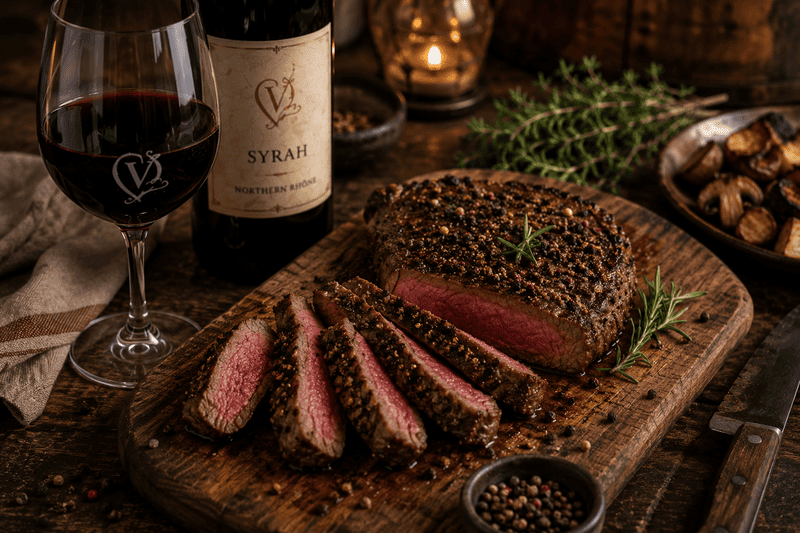
Few pairings are as classic as Syrah and lamb. The wine’s peppery character and firm structure beautifully complement the richness of the meat while enhancing herbal seasonings such as rosemary and thyme.
Duck Breast
Duck’s combination of richness and elegance mirrors many of Syrah’s own qualities. The wine’s dark fruit flavors provide contrast while its acidity helps cut through the richness of the dish.
Mushroom Dishes
Whether it’s mushroom risotto, roasted mushrooms, or a wild mushroom tart, Syrah’s earthy and savory notes often seem tailor-made for mushroom-based cuisine.
Charcuterie
Cured meats, pâtés, and artisan sausages highlight Syrah’s smoky and savory characteristics. The wine’s acidity also helps cleanse the palate between bites.
Aged Cheeses
Firm cheeses such as Manchego, Comté, Gouda, and aged Cheddar can bring out Syrah’s fruit while complementing its earthy complexity.
Pairing Shiraz
If Syrah is refined and contemplative, Shiraz is all about comfort, flavor, and abundance.
Barbecue Ribs
The smoky sweetness of barbecue sauce is a perfect match for Shiraz’s ripe fruit and spice. The wine’s richness stands up beautifully to bold flavors and charred meats.
Grilled Steak
A juicy ribeye and a glass of Shiraz are a classic combination. The wine’s plush fruit and generous body complement the steak’s richness while its tannins help balance the fat.
Burgers
Whether topped with cheddar, bacon, mushrooms, or caramelized onions, burgers pair effortlessly with Shiraz’s bold fruit profile and approachable texture.
Beef Brisket
Slow-cooked brisket with smoky, savory flavors allows Shiraz to showcase its depth and concentration. The combination is especially satisfying during cooler months.
Spicy Sausage Dishes
The fruit-forward nature of Shiraz can help tame heat while complementing the spice and richness of sausages and grilled meats.
Ultimately, neither style is limited to these pairings. The key is understanding the wine’s personality. Syrah tends to elevate nuanced, savory dishes, while Shiraz thrives alongside bold flavors and hearty meals.
What I’m Drinking: A Syrah vs. Shiraz Showdown
For this article, I decided to put the theory to the test by tasting two wines side-by-side:
Gaec du Lautaret “Expression” Saint-Joseph 2021
from France’s Northern Rhône Valley
versus
Kaesler “The Bogan” Barossa Valley Shiraz 2020
from South Australia’s renowned Barossa Valley.
Both wines are made from the same grape variety, yet they represent dramatically different interpretations of Syrah/Shiraz.
Wine #1: Gaec du Lautaret “Expression” Saint-Joseph 2021
Appearance
Deep ruby with purple highlights, showing moderate concentration and youthful vibrancy.
Aromas
The nose immediately reveals classic Northern Rhône character. Blackberry, black cherry, and plum are joined by freshly cracked black pepper, violets, and subtle hints of olive tapenade. As the wine opens, savory notes emerge, adding complexity and intrigue.
Palate
Medium- to full-bodied with bright acidity and structured tannins. The fruit remains fresh and focused rather than overly ripe. Flavors of dark berries mingle with black pepper, herbs, and earthy undertones, creating a wine that feels both elegant and energetic.
Finish
Long and persistent with lingering pepper, dark fruit, and savory spice.
Food Pairing Recommendation
Lamb chops with rosemary, duck breast, mushroom risotto, or a well-curated charcuterie board.
Wine #2: Kaesler “The Bogan” Barossa Valley Shiraz 2020
Appearance
Deep, nearly opaque ruby-purple, hinting at the concentration within the glass.
Aromas
Powerful and expressive from the first swirl. Blackberry jam, blueberry compote, dark plum, chocolate, licorice, and sweet baking spices leap from the glass. Notes of vanilla and toasted oak add another layer of richness.
Palate
Full-bodied, plush, and intensely flavored. Ripe dark fruit dominates the palate, supported by velvety tannins and warming alcohol. Chocolate, mocha, and spice notes contribute to a luxurious, almost decadent texture.
Finish
Long, rich, and mouth-coating, with lingering blackberry, dark chocolate, and sweet spice.
Food Pairing Recommendation
Barbecue ribs, grilled ribeye steak, smoked brisket, gourmet burgers, or spicy sausages fresh from the grill.
“If the Saint-Joseph was a finely tailored French suit, The Bogan was a custom-built Australian muscle car.”

Which Style Is Right for You?
After exploring the history, flavors, regions, and personalities of Syrah and Shiraz, you may be wondering which style deserves a place in your glass.
The good news is that there isn’t a wrong answer.
Both wines are made from the same grape variety, and both are capable of producing exceptional wines. The choice ultimately comes down to your personal taste preferences, the foods you enjoy, and even the occasion.
Think of Syrah and Shiraz as two different moods. Some days call for elegance and complexity; other days call for richness and indulgence.
Choose Syrah If You Enjoy:
If you love wines that feature distinctive spice characteristics, Syrah is likely to become a favorite. Notes of freshly cracked black pepper are one of the grape’s most recognizable signatures, particularly in cooler-climate examples.
Earthy Complexity
Syrah often reveals layers of olive tapenade, smoked meat, herbs, leather, violets, and mineral notes beneath its fruit. These savory elements create a fascinating wine that continues to evolve in the glass.
Higher Acidity
Wine lovers who appreciate freshness and vibrancy will often gravitate toward Syrah. Its bright acidity helps keep the wine balanced and lively while making it particularly versatile at the dinner table.
Food-Friendly Wines
Syrah excels alongside a wide range of dishes, from roasted meats and mushrooms to charcuterie and aged cheeses. If pairing wine with food is one of your passions, Syrah offers endless possibilities.
You may be a Syrah fan if you enjoy wines that are thoughtful, nuanced, and capable of revealing something new with every sip.
Choose Shiraz If You Enjoy:
Rich Fruit Flavors
If you find yourself drawn to bold expressions of blackberry, blueberry, plum, and dark fruit, Shiraz delivers those flavors in abundance.
Full-Bodied Wines
Shiraz is often generous and powerful, filling the palate with concentration and intensity. These are wines that make a statement from the first sip.
Smooth, Plush Textures
Many Shiraz wines offer velvety tannins and a luxurious mouthfeel that make them approachable and immensely satisfying, even when young.
Barbecue-Friendly Reds
Few wines pair as naturally with grilled meats, smoky barbecue, burgers, and hearty comfort foods as Shiraz. Its rich fruit and spice profile can stand up to bold flavors without being overwhelmed.
You may be a Shiraz enthusiast if you enjoy wines that are expressive, comforting, and unapologetically bold.
Why Not Both?
The beauty of wine is that our preferences can change depending on the season, the meal, or even our mood.
A peppery Saint-Joseph might be perfect for a cool autumn evening, while a plush Barossa Shiraz may be exactly what you want at a summer barbecue with friends.
Rather than choosing sides, many wine lovers discover that there is a time and place for both.
Final Thoughts
At first glance, the names Syrah and Shiraz might suggest two different grapes. As we’ve discovered, however, they are simply two expressions of the same remarkable variety.
Their shared DNA tells one story, but climate, culture, terroir, and winemaking tradition tell many others.
In the steep vineyards of France’s Northern Rhône Valley, Syrah often emerges as elegant, savory, and peppery. In the sun-drenched regions of Australia, Shiraz frequently becomes rich, fruit-forward, and powerful. Neither style is more authentic than the other, and neither is inherently better.
They are simply different interpretations of the same grape.
One of the greatest joys of wine is discovering how dramatically a grape can change when grown in a different environment or crafted by a different winemaker. Few varieties demonstrate this more clearly than Syrah and Shiraz.
If you’ve never tasted them side-by-side, consider making it your next wine adventure. Pour a glass of each, compare the aromas, explore the flavors, and see which style speaks to you. You may find yourself firmly in one camp—or, like many wine enthusiasts, happily enjoying both.
After all, wine is at its most enjoyable when approached with curiosity rather than certainty.
So the next time you see a bottle labeled Syrah or Shiraz, you’ll know the secret: same grape, different personality.
And that’s what makes wine so fascinating.